
Stainless Steel Wire Mesh
AISI 304 / 316 · 4–325 Mesh in Plain Weave; Down to 5 µm with Dutch Weave
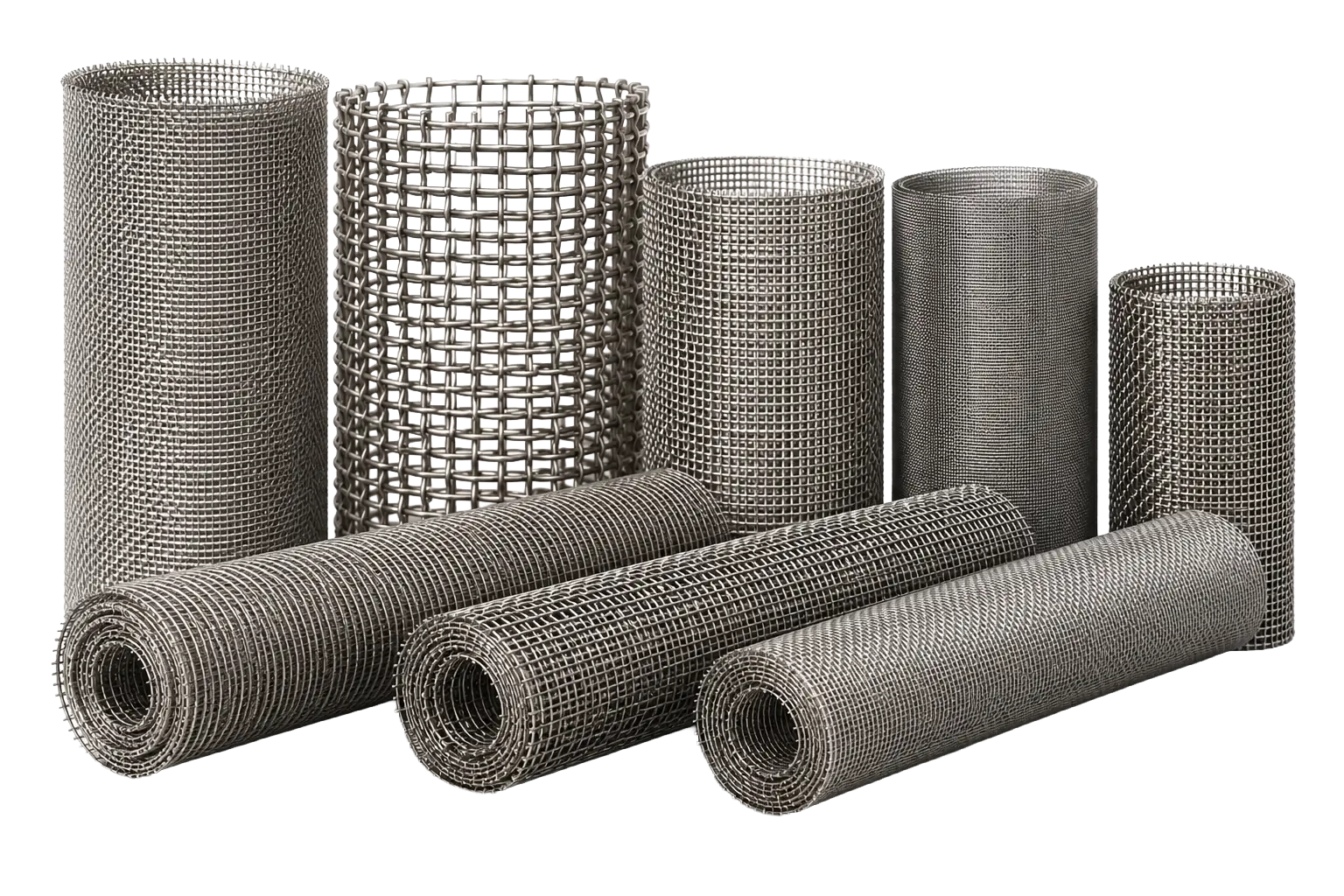
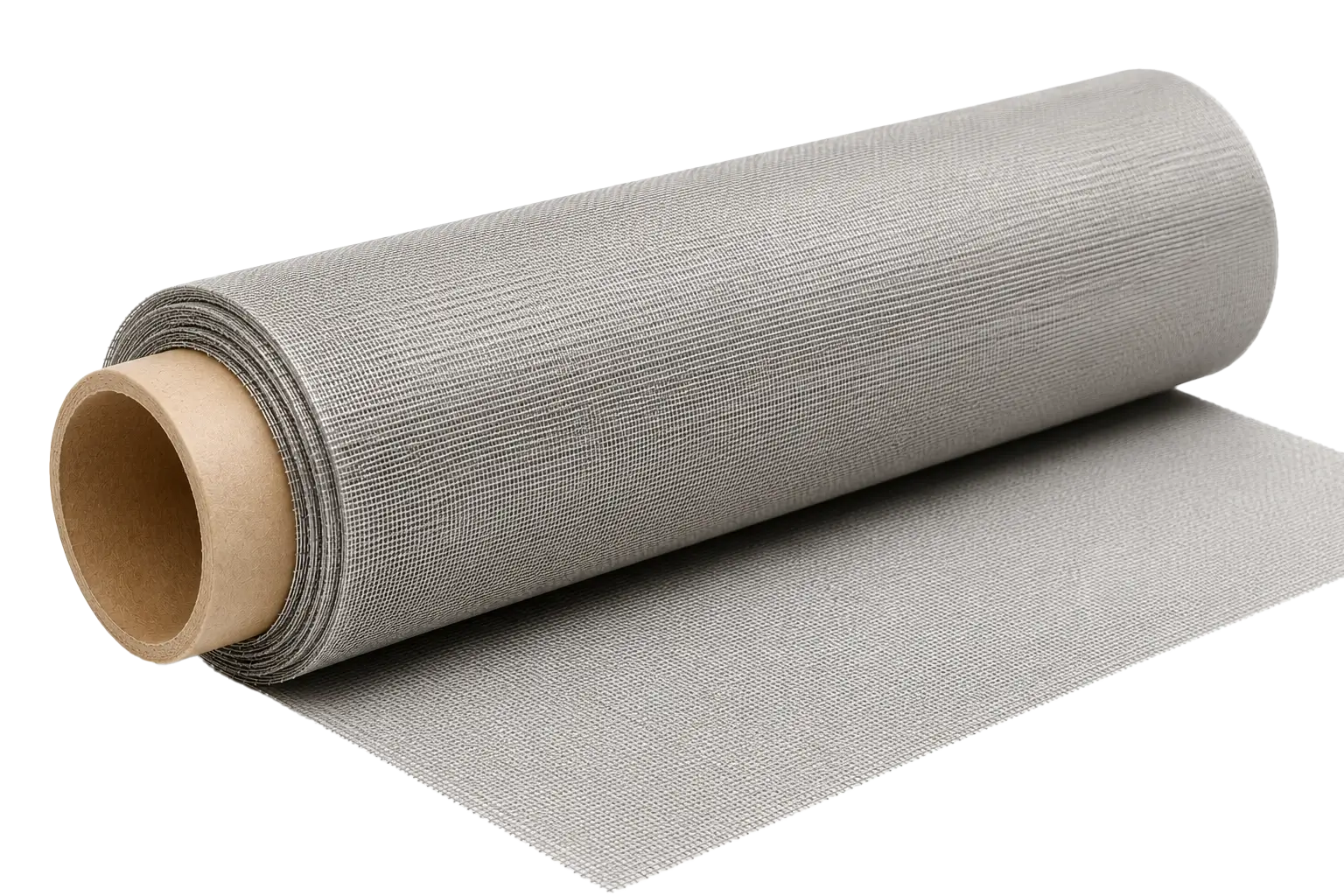
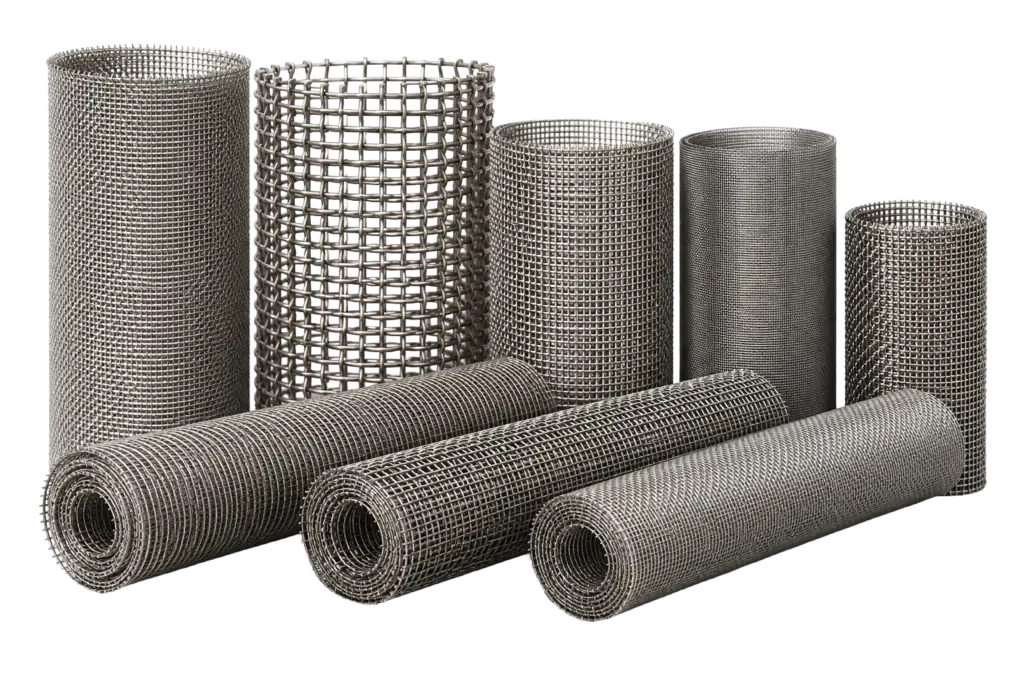
Stainless steel wire mesh is a screening and filtration mesh woven from AISI 304 and 316 wire. Available from 4 to 325 mesh in plain square weave and down to 5 µm with Dutch weave, it is supplied in rolls up to 1 m wide and cut to the length you need, for customers across Türkiye and for export projects.
AISI 304, 316
5–10,000 micron
4–325 Mesh (5 µm with Dutch)
Plain, Twill, Dutch, Twilled Dutch
What Is Stainless Steel Wire Mesh?
Stainless steel wire mesh is a durable mesh product made by weaving stainless steel wires in a set pattern or by welding them at their crossing points. It is used for screening, straining, separation and filtration in the food, chemical, pharmaceutical, plastics, mining, automotive, laboratory and machinery industries.
Our wire mesh is woven on wire looms in several weave types. AISI 304 grade mesh contains 18% chromium and 8% nickel. AISI 316 grade mesh contains 18% chromium and 10% nickel plus 2% molybdenum, which makes it markedly more resistant to salt water and acids than other stainless grades.
Because stainless mesh withstands high temperatures, it is ideal for hot processes where filter media with a low temperature limit, such as polypropylene, cannot be used. It also releases nothing into the process, so it is preferred in food, pharmaceutical and drinking water applications.
What does mesh mean?
Mesh is the number of openings in one linear inch (25.4 mm). The higher the mesh count, the smaller the aperture and the finer the filtration. Because different wire diameters can be used at the same mesh count, the mesh number alone is not enough: real straining performance has to be judged together with the wire diameter and the aperture in microns. For example, 20 mesh gives a 1,020 micron aperture with 0.25 mm wire and an 820 micron aperture with 0.45 mm wire.
Key Technical Features
- Corrosion Resistance
- High alloy resistance to corrosion, chemicals and moisture.
- Temperature Resistance
- Usable at high temperatures; fully suited to polymer, oven and hot process lines.
- Mechanical Strength
- High mechanical strength, tension stability and abrasion resistance.
- Cleanability
- Smooth, hygienic surface that can be cleaned, washed and reused many times.
- Service Life
- Long service life, minimal downtime and low operating cost.
- Production Options
- Plain Weave
- Twill Weave
- Dutch Weave
- Filtration Compatibility
- Suitable for separating liquids, gases and solid particles to micron precision.
- Process Safety
- Inert metal surface that releases nothing into the process and leaves no odour or taste.
Stainless Grade Options
- AISI 304 / 304L Stainless Steel
- 18% chromium, 8% nickel. The most common and economical grade, with good general-purpose corrosion resistance.
Typical Use: Food, general filtration, machine guarding, plastics and dry screening. - AISI 316 / 316L Stainless Steel
- 18% chromium, 10% nickel, 2% molybdenum. Superior resistance to chloride, saline and aggressive acidic environments.
Typical Use: Marine, chemical industry, pharmaceuticals, petrochemicals and processes with a high corrosion risk.
Weave Types
Our stainless filter mesh is woven in four ways: PLAIN, DUTCH, TWILLED and TWILLED DUTCH. Plain weave is the type most commonly used in filtration.
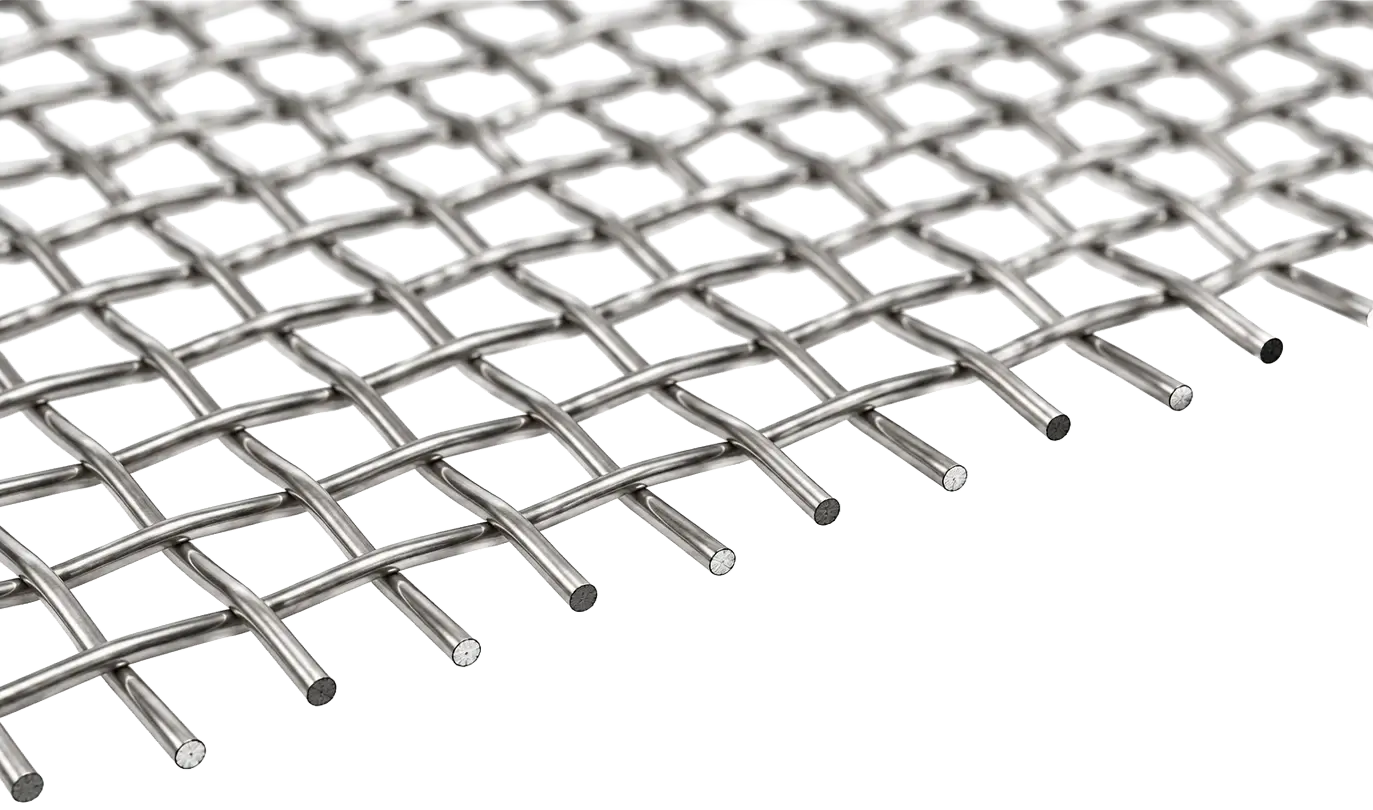
Plain — square-aperture plain weave
The most common type. Each wire passes alternately over and under the next, forming square apertures that can be measured by eye. Used for general screening, straining and machine protection.
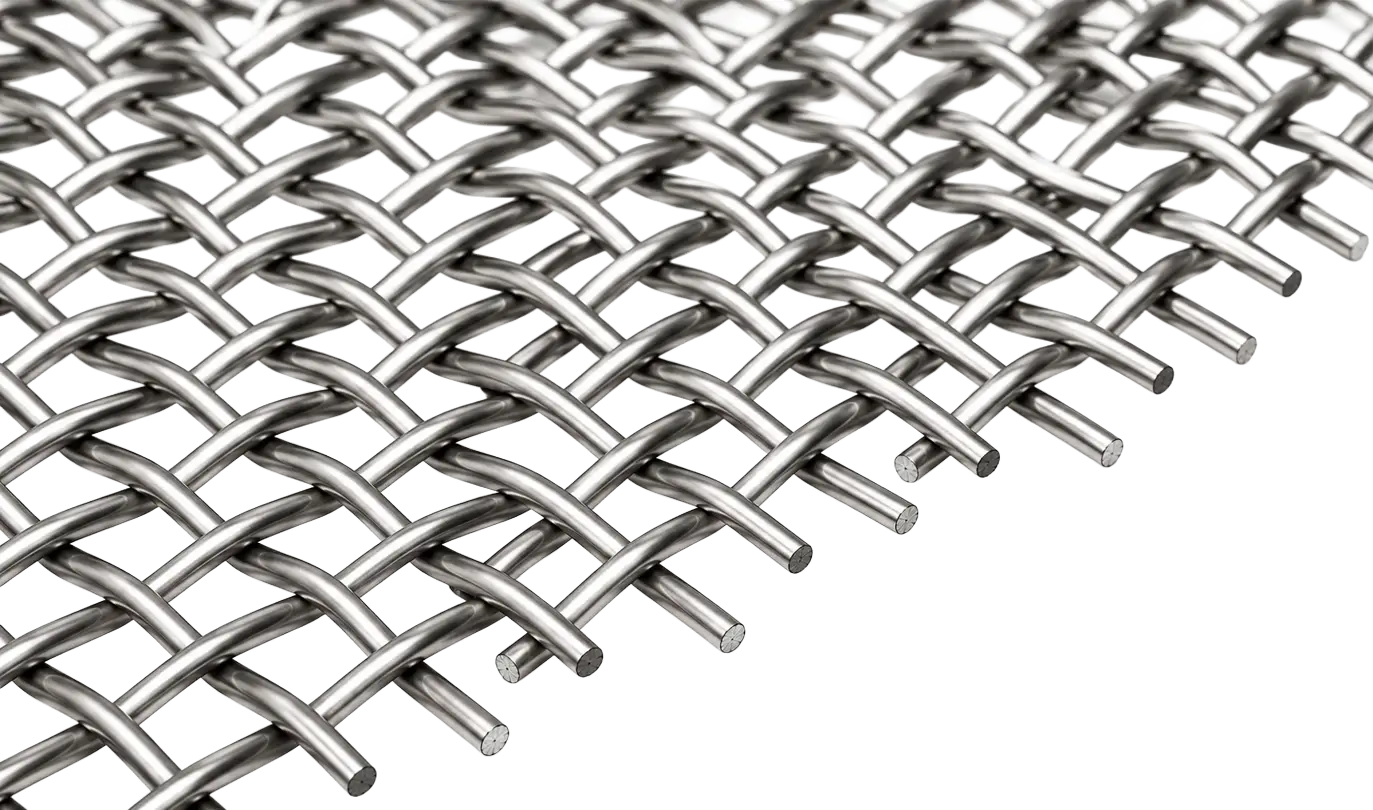
Twill — twill weave
Each wire passes over two wires and under two. Because it allows thicker wire at the same aperture, it gives a higher wire density and smaller openings. Preferred for applications that need high pressure resistance.
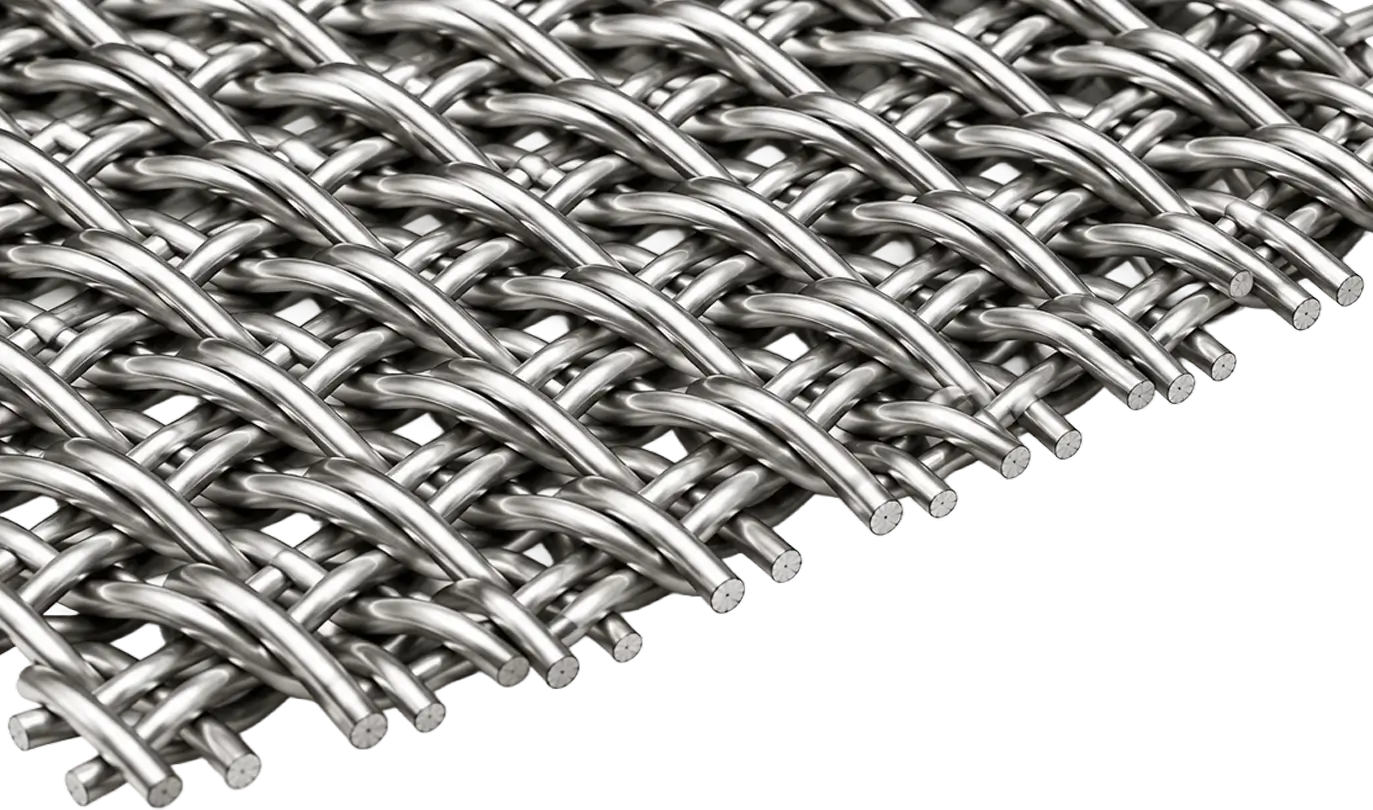
Dutch — Dutch weave
The warp and weft wires have different diameters, so the aperture is much smaller than in plain weave. Used where fine filtration at micron level is needed; it reaches straining ranges that plain weave cannot.
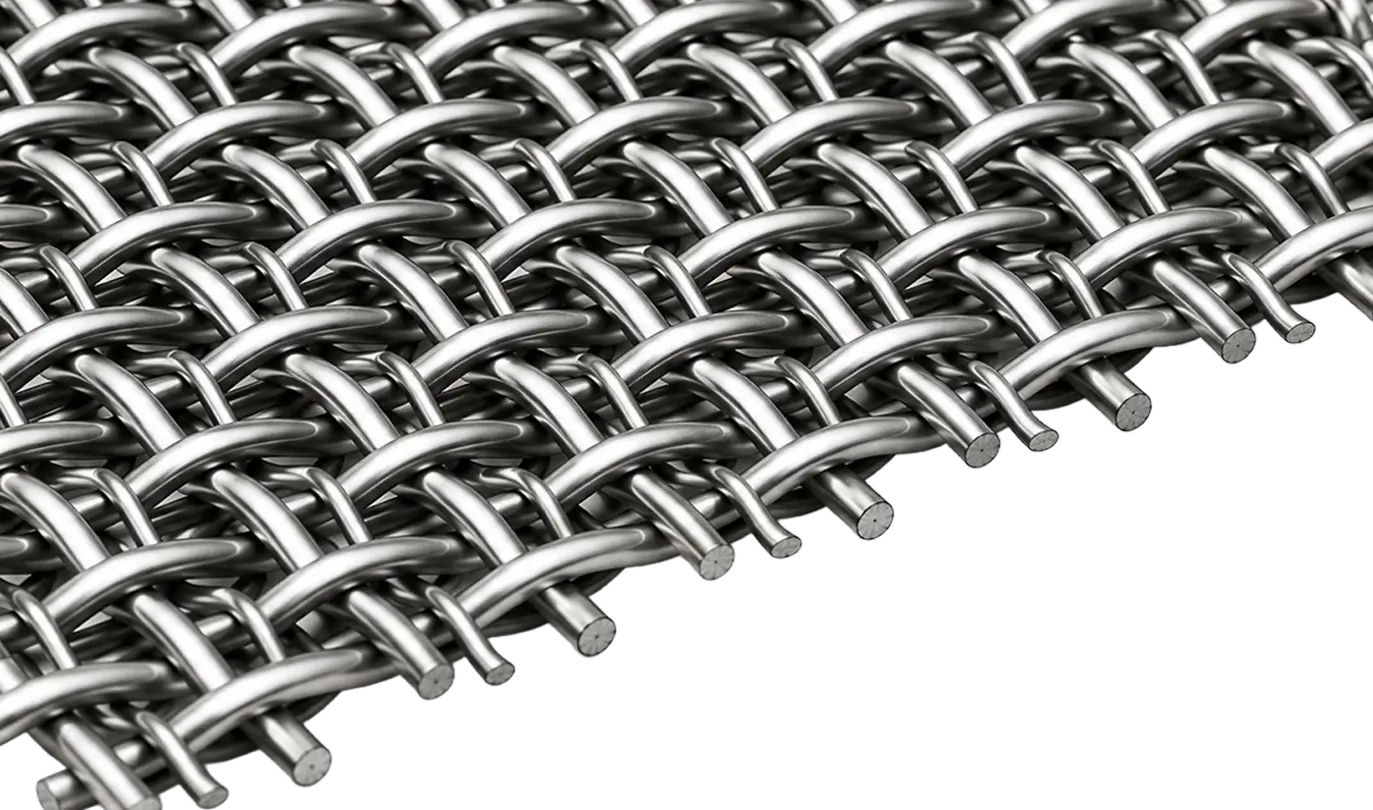
Twilled Dutch — twilled Dutch weave
The twill version of Dutch weave. Used in processes that need fine micron ratings and high-pressure filtration.
Welded, crimped and pressed wire mesh
Welded mesh, with its wires welded at the crossing points, is more rigid and suits heavy-duty applications. Crimped and pressed mesh is used in mining, quarrying and guarding applications that need larger apertures and high mechanical strength. These types are assessed project by project.
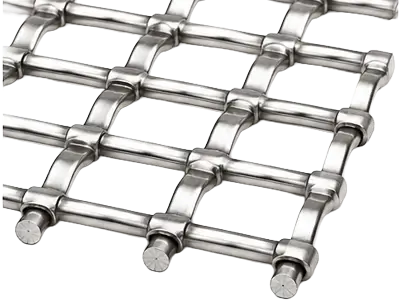
Welded Wire Mesh
The wire crossings are welded; its rigid structure suits heavy-duty, guarding and conveying applications.
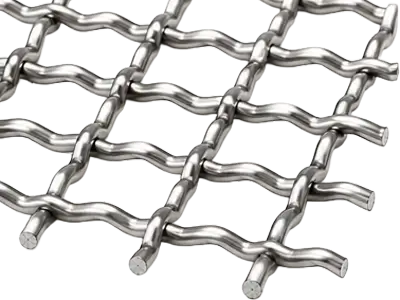
Crimped Wire Mesh
The wires are crimped into a wave before weaving, which keeps the aperture stable with thick wire. Used in mining and quarry screens.
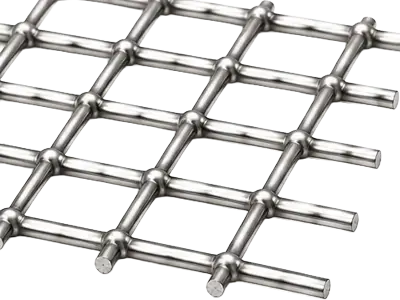
Pressed Wire Mesh
The crossing points are pressed and locked; used for screening that needs high mechanical strength and a flat surface.
Mesh – Micron – Wire Diameter Selection Table
The table below shows the actual aperture, open area and openings per square centimetre for each mesh count at different wire diameters. As the open area rises, flow rate increases and pressure drop falls; thicker wire increases mechanical strength but reduces open area.
Enter the particle you want to retain
Matching rows are highlighted as you type, and the live view of the weave on the right updates.
Weave preview
The selected aperture compared with everyday particles
| Mesh | Wire Diameter | Aperture (Micron) | Open Area % | Openings / cm² |
|---|---|---|---|---|
| 4 | 1 mm | 5350 µm | 71% | 2.48 |
| 4 | 1.5 mm | 4850 µm | 58% | 2.48 |
| 5 | 1 mm | 4080 µm | 65% | 3.87 |
| 6 | 1 mm | 3230 µm | 58% | 5.58 |
| 7 | 0.8 mm | 2830 µm | 61% | 7.59 |
| 7 | 1 mm | 2630 µm | 52% | 7.59 |
| 8 | 0.65 mm | 2530 µm | 63% | 10.01 |
| 8 | 0.8 mm | 2380 µm | 56% | 10.01 |
| 8 | 1 mm | 2180 µm | 51% | 10.01 |
| 10 | 0.57 mm | 1970 µm | 58% | 15.5 |
| 10 | 0.9 mm | 1644 µm | 48% | 15.5 |
| 12 | 0.57 mm | 1547 µm | 53% | 22.32 |
| 12 | 0.6 mm | 1520 µm | 51% | 22.32 |
| 12 | 1 mm | 1120 µm | 28% | 22.32 |
| 14 | 0.47 mm | 1340 µm | 55% | 30.38 |
| 14 | 0.7 mm | 1100 µm | 42% | 30.38 |
| 14 | 0.8 mm | 1010 µm | 31% | 30.38 |
| 16 | 0.37 mm | 1220 µm | 59% | 39.68 |
| 16 | 0.47 mm | 1120 µm | 50% | 39.68 |
| 18 | 0.37 mm | 1040 µm | 54% | 50.22 |
| 18 | 0.47 mm | 940 µm | 44% | 50.22 |
| 20 | 0.25 mm | 1020 µm | 58% | 64 |
| 20 | 0.3 mm | 970 µm | 56% | 64 |
| 20 | 0.37 mm | 900 µm | 54% | 64 |
| 20 | 0.45 mm | 820 µm | 42% | 64 |
| 25 | 0.3 mm | 716 µm | 52% | 100 |
| 25 | 0.35 mm | 666 µm | 50% | 100 |
| 30 | 0.3 mm | 545 µm | 42% | 144 |
| 30 | 0.35 mm | 497 µm | 32% | 144 |
| 30 | 0.4 mm | 450 µm | 30% | 144 |
| 35 | 0.22 mm | 505 µm | 45% | 196 |
| 35 | 0.25 mm | 475 µm | 43% | 196 |
| 40 | 0.2 mm | 425 µm | 51% | 256 |
| 40 | 0.22 mm | 415 µm | 43% | 256 |
| 40 | 0.25 mm | 385 µm | 37% | 256 |
| 50 | 0.18 mm | 330 µm | 42% | 400 |
| 50 | 0.22 mm | 290 µm | 32% | 400 |
| 60 | 0.14 mm | 280 µm | 44% | 576 |
| 60 | 0.18 mm | 240 µm | 35% | 576 |
| 70 | 0.12 mm | 242 µm | 43% | 784 |
| 80 | 0.12 mm | 200 µm | 39% | 1024 |
| 90 | 0.1 mm | 182 µm | 38% | 1255 |
| 100 | 0.1 mm | 154 µm | 37% | 1600 |
| 120 | 0.09 mm | 120 µm | 37% | 2304 |
| 150 | 0.06 mm | 109 µm | 39% | 3600 |
| 180 | 0.05 mm | 90 µm | 42% | 5184 |
| 200 | 0.05 mm | 77 µm | 37% | 6400 |
| 250 | 0.04 mm | 61 µm | 36% | 10000 |
| 300 | 0.04 mm | 45 µm | 32% | 14400 |
| 325 | 0.035 mm | 43 µm | 32% | 16900 |
Click a row to see that mesh in the preview above. Table values are nominal and may vary within production tolerances.
Applications and Industries
Pharmaceuticals and Healthcare
Filtration processes in the pharmaceutical and healthcare sector
Hospitals
Filtration needs in healthcare and hospitals
Dialysis Systems
Dialysis water systems
Biochemistry and Biotechnology
Filtration in biochemical and biotechnological processes
Water Treatment and RO
Water treatment, seawater desalination and reverse osmosis (RO) systems
Water Filtration
Drinking water, process water, cooling water and wastewater filtration
Pool Systems
Pool water filtration
Power Plants
Processes in power plants and electricity generation
Nuclear Processes
Filtration in nuclear processes
Refining and Petrochemicals
Refineries and the petrochemical industry
Storage and Transfer
Storage and transfer facilities for liquid chemicals and fuels
Oil and Fuel Recycling
Recycling of machine oil, waste oil and fuel
Solvents
Solvent production and recovery
Chemical Industry
Filtration of process fluids
Paint and Varnish
Sediment filtration in paint and varnish production
Polymers
Filtration of polymer liquids and solutions
Printing and Ink
Filtration in printing inks and printing processes
Food and Beverage
Filtration of oils, milk, fruit juices and alcoholic beverages
Cosmetics
The cosmetics industry
Metal Plating
Filtration in metal plating, galvanising, nickel plating and cataphoresis systems
Electronics Industry
The electronics industry and electrolysis baths
Machinery Industry
Filtration for machine tools and plastic injection machines
Industrial Oil and Hydraulics
Filtration of industrial oils and hydraulic fluids
Marine
Ships, yachts, shipyards, slipways and marinas
Defence Industry
Filtration for military facilities and vehicles
Dry Food
Screening flour, sugar, coffee and other dry food products
Dry screeningPlastics and Rubber
Separating plastic granules and rubber raw materials
Dry screeningMining and Aggregates
Screening ore, sand and aggregates
Dry screeningLaboratory
Laboratory test sieves and sample preparation
Dry screeningVentilation and Machine Guarding
Ventilation and machine guard panels
Dry screeningHigh-Temperature Systems
Ovens, dryers and high-temperature systems
Dry screeningFilter and Sieve Manufacturing
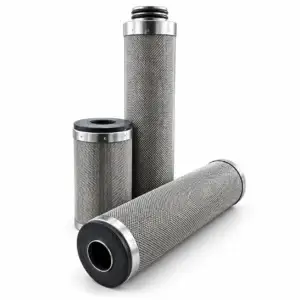
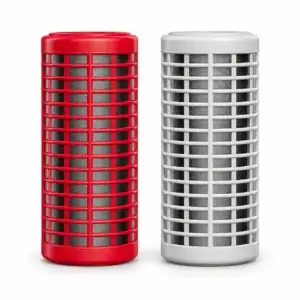
Manufacture of strainers, filter cartridges and sieve cassettes
Dry screening304 or 316? Decision Guide
For general, dry or slightly humid environments, AISI 304 is usually enough. For salt water, sea air, chlorides, heavy chemical contact or processes where hygiene is critical, AISI 316 / 316L is the safer choice. Where screening involves heavy impact or heavy material, wire diameter, support structure and weave type matter as much as the grade.
- Dry Food Screening (Flour, Sugar, Coffee)
- Recommended Grade: AISI 304 (plain weave).
Why: Low corrosion risk; suitable for food contact, hygienic and economical. - Salt Water and Seawater Filtration
- Recommended Grade: AISI 316 or 316L.
Why: Molybdenum prevents pitting corrosion caused by salt and chlorides. - Pharmaceutical and Biotechnology Processes
- Recommended Grade: AISI 316L low-carbon alloy.
Why: Very smooth surface, easy sterilisation and full compatibility with CIP/SIP lines. - Plastic Injection and Polymer Melt
- Recommended Grade: AISI 304 (thick or reinforced wire).
Why: Keeps its shape under high temperature and pressure and releases nothing into the melt. - Acidic Chemicals and Electrolysis Baths
- Recommended Grade: AISI 316.
Why: Markedly higher acid resistance; extends bath life. - Mining, Aggregate and Heavy-Impact Screening
- Recommended Grade: AISI 304 (thick wire / crimped or pressed mesh).
Why: Wire diameter and pressing maximise resistance to impact and abrasion.
Technical Details Needed for a Quote
- Stainless Grade
- AISI 304 / 304L
- AISI 316 / 316L
- Weave Type
- Plain
- Twill
- Dutch and Twilled Dutch
- Welded or Pressed
- Aperture
- The target clear opening in millimetres (mm) or microns (µm).
- Mesh Count
- Number of openings per inch (for example 10, 40, 100 or 325 mesh).
- Wire Diameter
- Nominal diameter of the wire in mm and the required strength.
- Mesh Size
- Width × length, circle diameter, panel size, or roll width and total square metres.
- Fluid or Material to Be Filtered
- Type of process fluid, its chemical content, viscosity and operating temperature.
- Purpose
- Fine particle filtration, dry screening, classification or pump and machine protection.
Woven stainless mesh is available on the market in many wire diameters and mesh ranges; the actual range depends on the manufacturer and the application. Prosestim supplies 4–325 mesh in plain square weave and down to 5 µm in Dutch and Twilled Dutch weave; special requests are assessed project by project.
Delivery, Size and Ordering Terms
- Width: up to 1,000 mm (1 metre)
- Length: cut to order, delivered in rolls
- Unit: square metre (m²)
Products that work with this product
Stainless Steel Wire Mesh
What is stainless steel wire mesh?
What is the difference between mesh and micron?
What is the difference between AISI 304 and AISI 316 wire mesh?
AISI 304 wire mesh contains 18% chromium and 8% nickel. AISI 316 contains 18% chromium and 10% nickel plus 2% molybdenum, which increases resistance to salt water and acids. AISI 316 is preferred for seawater, chloride environments and chemical and pharmaceutical processes; AISI 304 for general and dry applications.
What is the finest micron rating available?
Our plain square weave mesh ranges from 4 to 325 mesh (down to 43 µm); 5 µm is achieved with Dutch and Twilled Dutch weaves. Tell us the micron rating you need and we will choose the right weave and grade together.
In what sizes is wire mesh delivered?
Does stainless steel wire mesh withstand high temperatures?
Can wire mesh be washed and reused?
Which weave type is best for filtration?
Why does open area matter?
Does wire mesh release anything into the process?
How is the price of wire mesh calculated?
Stainless Steel Wire Mesh RFQ Configurator
Configure your variation dimensions and technical specifications to receive an instant quote directly on WhatsApp and via email.