What is the difference between an O-ring and a flat gasket?
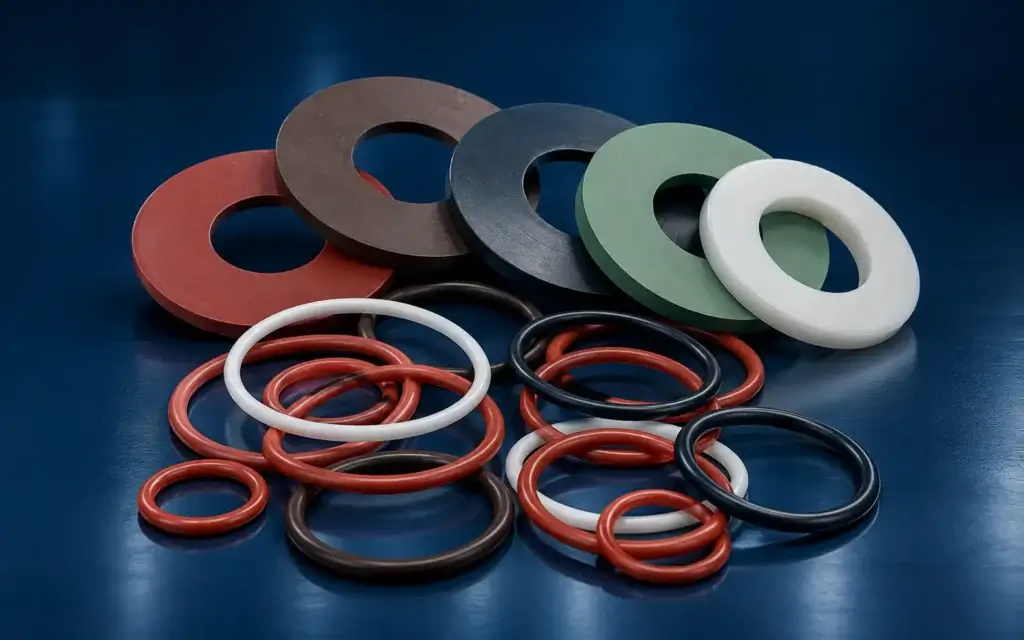
An O-ring is a ring-shaped seal with a round cross-section. It sits in a groove or socket, fills the groove as it is compressed between two surfaces, and stops leaks. This is the type most often used on cartridge filter end caps and filter housing lids.
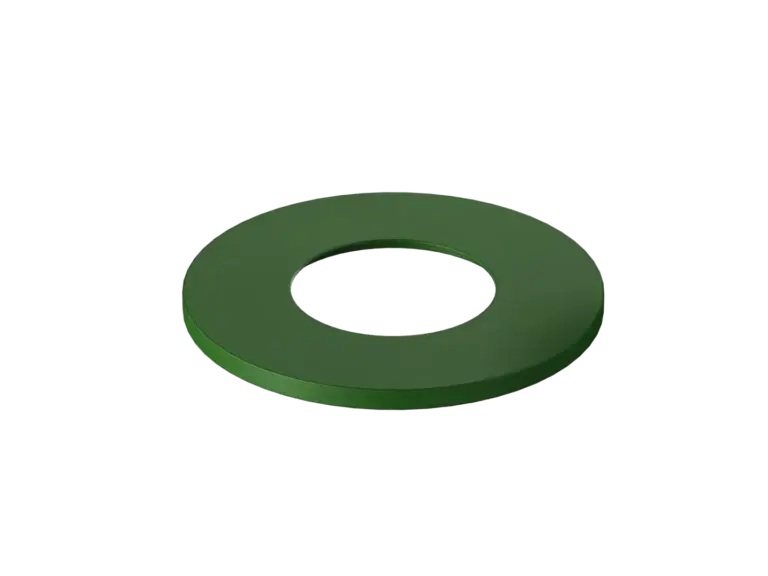
A flat gasket, by contrast, is a flat ring. It seals by being pressed against a surface. Flat gaskets are found on the ends of double open end (DOE) cartridges, on flange connections and on some lid types.
Both types are made from the same materials. When choosing, first look at the seal type (O-ring or flat gasket), then at the material.
Where are seals used in a filtration system?
On a liquid filtration line, seals are usually found at four points:
- Cartridge end: The cartridge sits in the socket of the filter housing with an O-ring or a flat gasket. The pleated micro cartridge filter, melt blown cartridge filter and string-wound cartridge filter are made with different end options.
- Filter housing lid: On cartridge filter housing and bag filter housing lids, an O-ring seals the gap between body and lid.
- Bag filter collar: Where the bag sits in the housing, the seal comes from the bag collar and the housing design.
- Pipe connections: Flat gaskets are used on flange, union and clamp connections. For connection options, see the filter housing connection fittings page.
If the seal at any of these points is not compatible with the fluid, it swells, hardens or cracks. As a result, dirty liquid escapes to the outlet without passing through the filter. This is called bypass, and however fine the filter, the clarity target will not be met.
Seal materials and their properties
The temperature ranges below are typical values for standard compounds. They vary by manufacturer and compound; for critical processes, confirm with our technical team.
NBR (nitrile) gaskets and O-rings
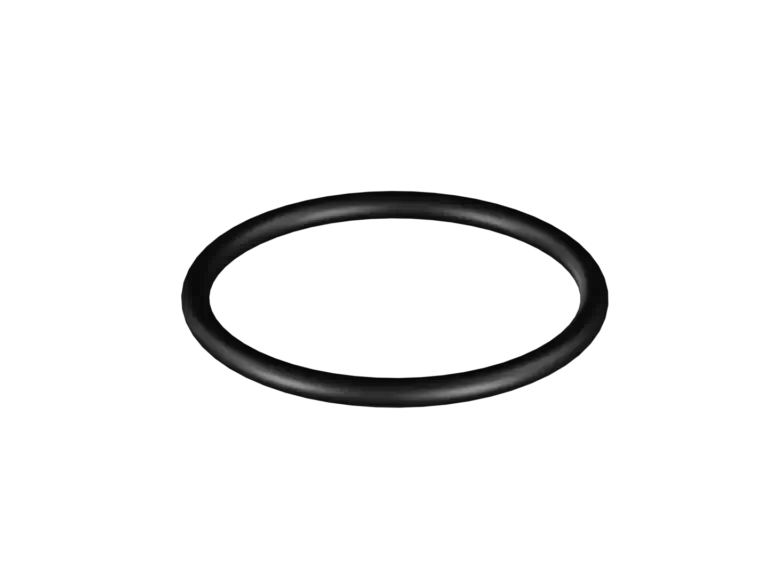
NBR is the most common seal material, resistant to oils and fuels. It is the first choice on lines carrying mineral oil, hydraulic oil, diesel and grease. Its typical operating range is -30 °C to +100 °C, and it withstands slightly higher temperatures for short periods. It is weak against ozone and sunlight, and is not used on steam or ketone (acetone, MEK) lines. It is usually black.
EPDM gaskets and O-rings
EPDM is the best material for hot water and steam. It is often used on water treatment, boiler feed water and CIP-cleaned lines. Its typical operating range is -40 °C to +130 °C. It resists alkalis, dilute acids, ozone and weathering. However, it swells on contact with mineral oil and fuel; it must never be chosen for oily lines. It is black.
Viton (FKM) gaskets and O-rings
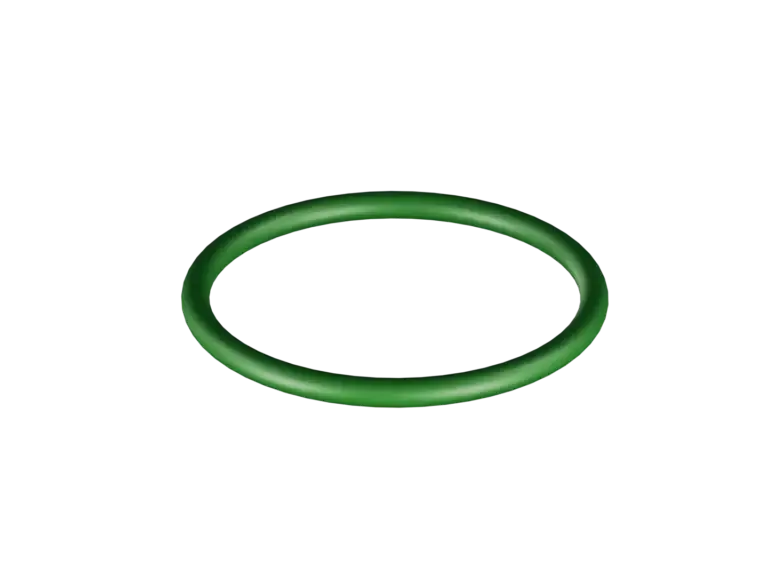
Viton is the most reliable elastomer at high temperatures and in acidic media. Its typical operating range is -20 °C to +200 °C. It resists strong acids, fuels, most solvents and oils. It is weak in strong alkalis such as caustic soda, in steam and with ketones. Prosestim uses Viton gaskets and O-rings in green and brown.
Silicone (VMQ) gaskets and O-rings
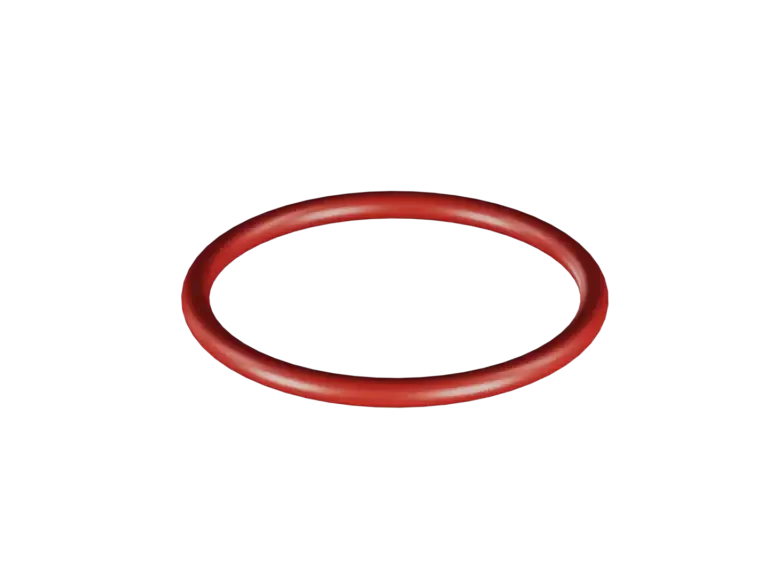
Silicone is known for its wide temperature range and its widespread use in food applications. Its typical operating range is -55 °C to +200 °C. Because it is odourless and tasteless, it is preferred on food, beverage and pharmaceutical lines. Its mechanical strength is low and it tears easily under friction; it does not last long in oil, fuel or steam. It is usually red.
PTFE (Teflon) gaskets and O-rings
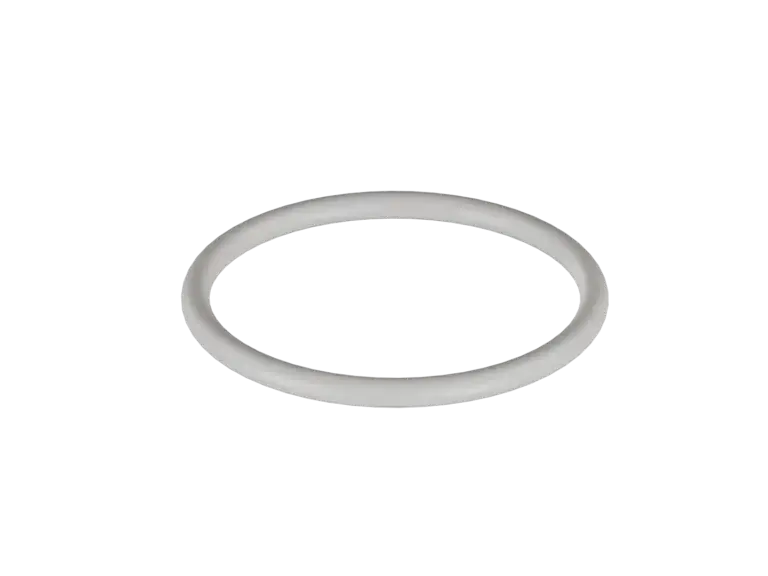
PTFE is the seal material with the highest chemical resistance. It withstands almost all acids, alkalis and solvents. Its operating range is about -200 °C to +260 °C. However, PTFE is not a rubber; it does not stretch and does not return to its original shape after compression. This makes it hard to fit as an O-ring, and the groove dimensions must be exact. It is used on aggressive chemical lines where elastomer seals cannot cope. It is white.
Temperature and chemical resistance chart
The chart gives general guidance for standard compounds. Always check compatibility for a specific chemical and concentration.
| Property | NBR | EPDM | Viton (FKM) | Silicone | PTFE |
|---|---|---|---|---|---|
| Typical temperature range | -30 / +100 °C | -40 / +130 °C | -20 / +200 °C | -55 / +200 °C | -200 / +260 °C |
| Water and hot water | Good | Very good | Good | Good | Very good |
| Steam | Not suitable | Very good | Fair | Fair | Good |
| Mineral oil and fuel | Very good | Not suitable | Very good | Poor | Very good |
| Dilute acids | Fair | Good | Very good | Fair | Very good |
| Strong acids | Poor | Fair | Good | Poor | Very good |
| Alkalis (caustic) | Fair | Very good | Poor | Fair | Very good |
| Ketones and esters (acetone, MEK) | Not suitable | Good | Not suitable | Poor | Very good |
| Ozone and weathering | Poor | Very good | Very good | Very good | Very good |
| Typical colour | Black | Black | Green, brown | Red | White |
How do you choose a seal material?
The choice comes down to four questions. Answered in order, they usually leave a single material.
- What passes through the filter? The chemistry of the fluid is the first factor. Oily liquids rule out EPDM, caustic cleaning water rules out Viton, and solvent lines usually leave only PTFE.
- How hot is it? Consider both the normal operating temperature and the highest temperature during cleaning. A line running at 80 °C that is sterilised with steam needs EPDM or PTFE.
- Is the line cleaned regularly? On lines where CIP applies caustic and acid in turn, the seal must withstand the cleaning chemicals as well as the process liquid.
- Is there food or pharmaceutical contact? Lines in contact with food use a food-contact compound, and its certification is confirmed. Silicone and EPDM are the materials most often chosen for these lines.
A quick guide for common situations:
- Water treatment and process water: EPDM
- Hydraulic oil, diesel, cutting fluid: NBR
- Acid baths, surface treatment, high temperature: Viton
- Beverages, syrups, pharmaceuticals: Silicone or food-grade EPDM
- Solvents, paint thinners, mixed chemicals: PTFE
What do the O-ring codes 215, 222 and 226 mean?
The codes 215, 222 and 226 seen in cartridge filter catalogues do not describe the O-ring material; they describe how the cartridge end sits in the housing. When you replace a cartridge, this code must match the socket in the housing.
- 215 and 222: O-ring ends. The number is the standard size number of the O-ring; 215 has a smaller diameter and 222 a larger one. The cartridge is pushed into the socket.
- 226: An O-ring end and the only type that locks with a twist once seated in the socket. It is preferred on lines with vibration and in processes that need a critical micron rating.
- Fin and flat: These describe the shape of the cap at the closed end of the cartridge. Fin has a finned cap, flat a flat cap.
- DOE (double open end): Instead of O-rings, there is a flat gasket at each end. The cartridge seals by being pressed down by the compression rod in the housing.
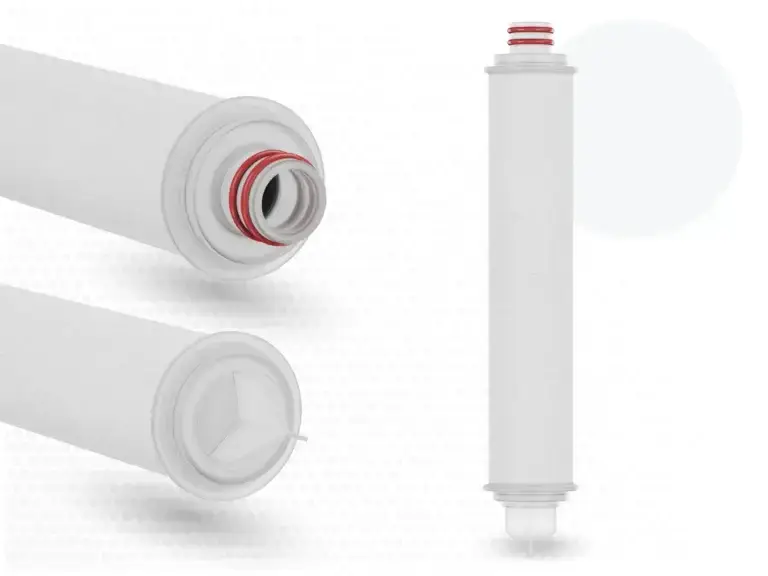
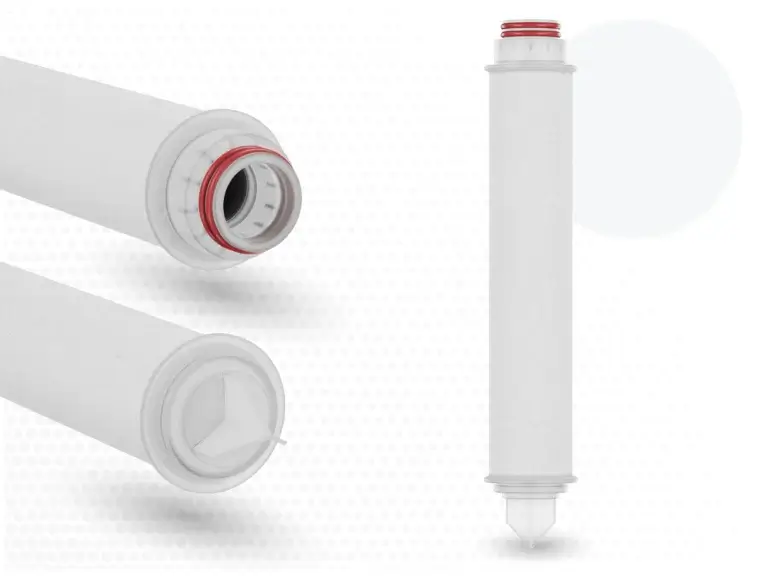
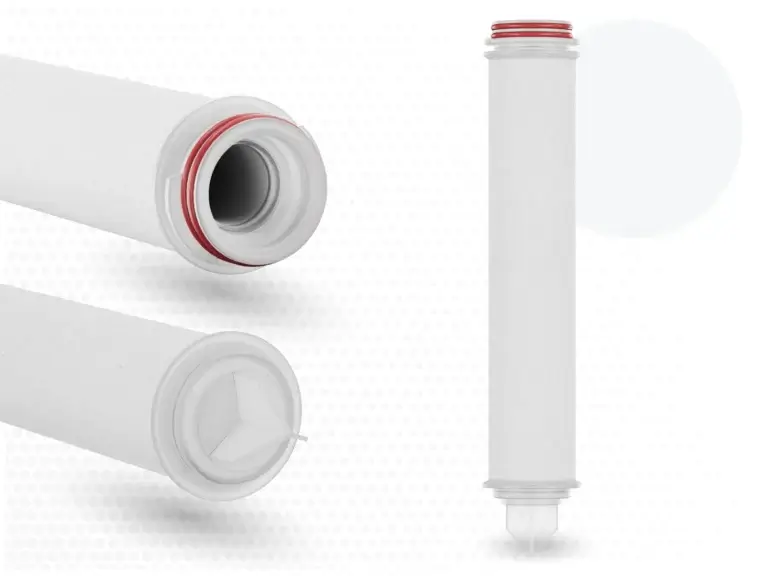
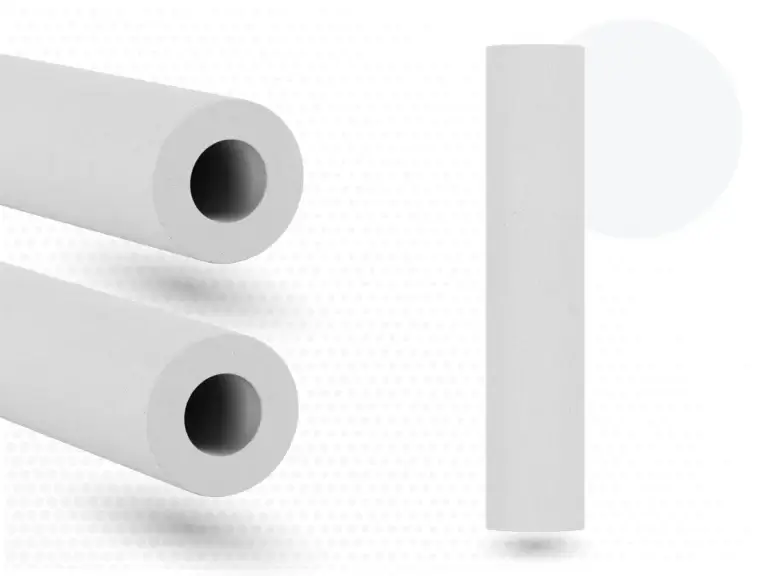
The end code and the seal material are chosen separately. For example, a cartridge with a 222 end can be made with an EPDM, Viton or silicone O-ring. If you are not sure of your housing’s end type, simply send us a photo of the cartridge. You can find compatible cartridges in the cartridge filter category.
When should a seal be replaced?
A seal is a consumable and should be replaced when you see any of these signs:
- The seal has swollen, softened or is bulging out of its groove (a sign of chemical incompatibility; the material must change)
- It has hardened, cracked or its surface is turning powdery (the effect of temperature or ozone)
- It has a permanent compression mark and does not return to its original shape
- There is a leak even though the lid is closed, or clarity after the filter has dropped
Check the lid O-ring every time the lid is opened. When you replace a cartridge, its own seal is replaced too; never remove a seal from an old cartridge and fit it to a new one. Do not use sharp tools such as knives or screwdrivers when fitting an O-ring into its groove; scratches are the most common cause of leaks.
Frequently asked questions
Which O-ring material is the most durable?
What is the difference between Viton and EPDM seals?
Which seal is suitable for food contact?
Does the colour of an O-ring indicate its material?
What should I do if the cartridge O-ring is leaking?
How often should the filter housing lid seal be replaced?
Let’s choose the right seal for your process together
Share your fluid, operating and cleaning temperatures and the end type of your current cartridge, and we will recommend the cartridge, filter housing and seal material together. A photo of your current consumables is often enough. Ask our team.