
Shell Cartridge Filter
Empty, Siliphos, Microphos, Activated Carbon and Resin
A shell cartridge filter is a refillable mineral cartridge that fits inside standard filter housings. Siliphos and dolomite-based Microphos prevent limescale, activated carbon removes chlorine, taste and odour, and resin softens water by reducing hardness. The empty cartridge is for your own filling.
5 Filling Types
5" · 10" · 20"
15 Models
Standard housing
Shell Cartridge Filter: Definition and Purpose
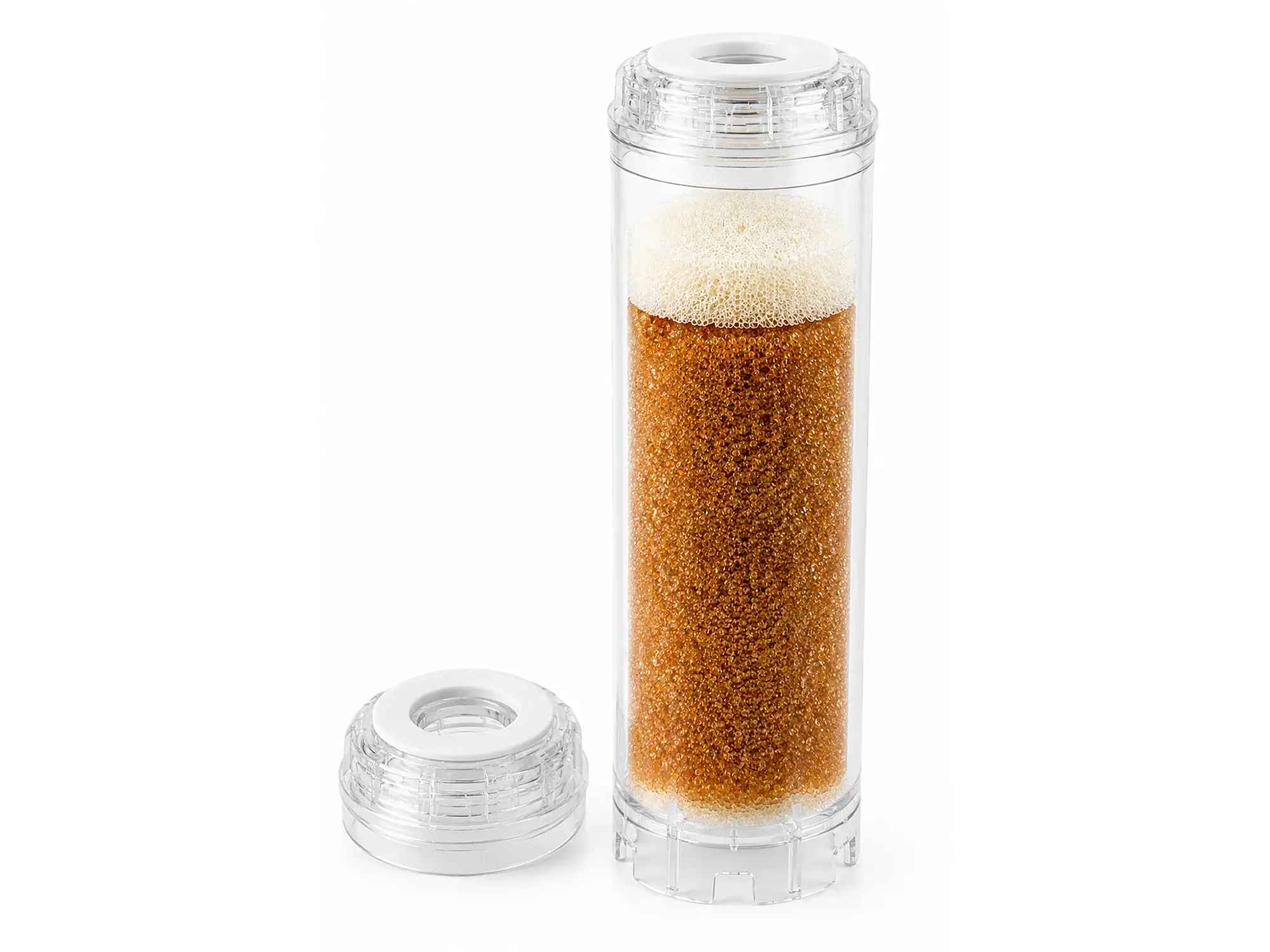
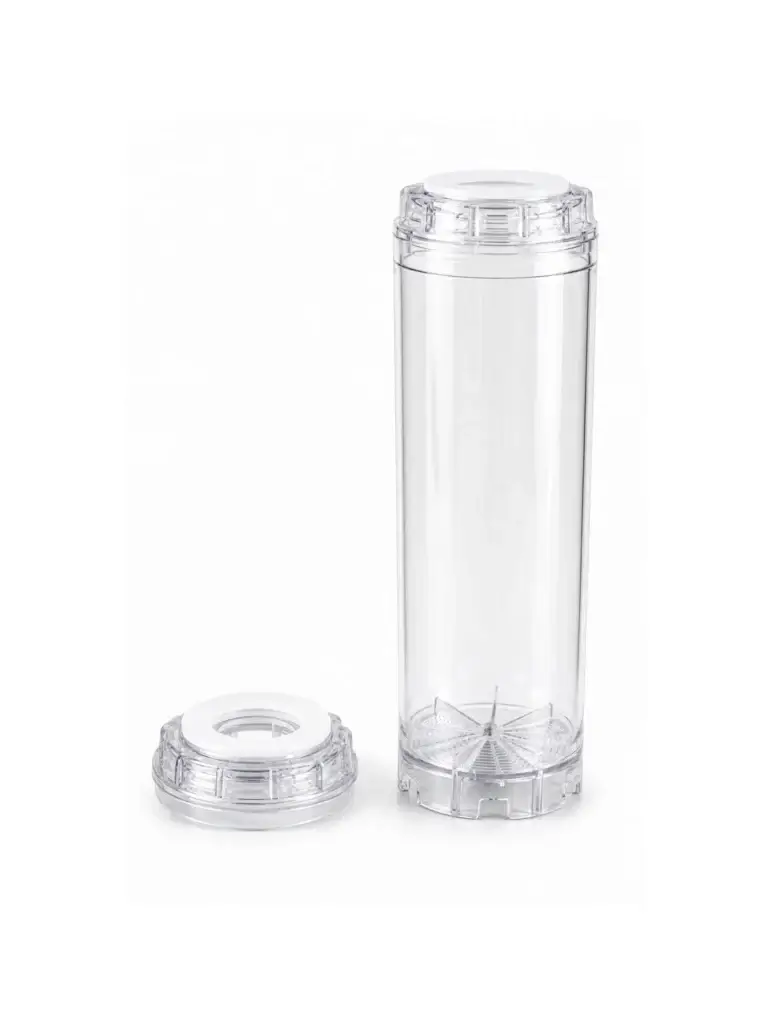
A shell cartridge is a clear chamber designed to hold and use granular minerals that cannot be placed directly inside a filter housing. When granular minerals are put straight into the housing, there is no suitable retaining strainer, so the water flow can carry them into the pipework. The shell cartridge keeps the minerals inside its own body while the water passes between the granules and makes contact with them. This supports controlled use of the mineral within the system.
The shell cartridge is reusable. When the mineral inside is used up, you do not need to replace the whole chamber; you simply renew the mineral filling and keep using the same cartridge. This helps reduce consumable costs and simplifies maintenance.
- Function and Working Principle
- The shell cartridge is a clear chamber that holds granular mineral or resin in place inside the housing. As water passes between the granules it contacts the filling; the filling inside conditions the water.
- Purpose Set by the Filling
- The same body is used for limescale prevention (Siliphos and Microphos), chlorine, taste and odour removal (activated carbon) or hardness reduction (resin), depending on its filling.
- Holds Granules Securely
- When granular mineral is placed directly inside the housing, the water flow can carry it into the pipework. The shell cartridge holds the granules in its own body, so the water only contacts the filling.
- Refillable Body
- When the filling is used up, the cartridge is not replaced; the lid is opened and only the mineral or resin is renewed. The body is used many times over and consumable costs fall.
- Monitoring Through a Clear Body
- The mineral level can be seen without opening the cartridge. Renewal time is checked by eye, so no unnecessary replacements are made.
- Fits Existing Housings
- Fits 5″, 10″ and 20″ standard filter housings. No extra connections, pipework changes or energy are needed.
Products and Filling Types
Empty Shell Cartridge Filter
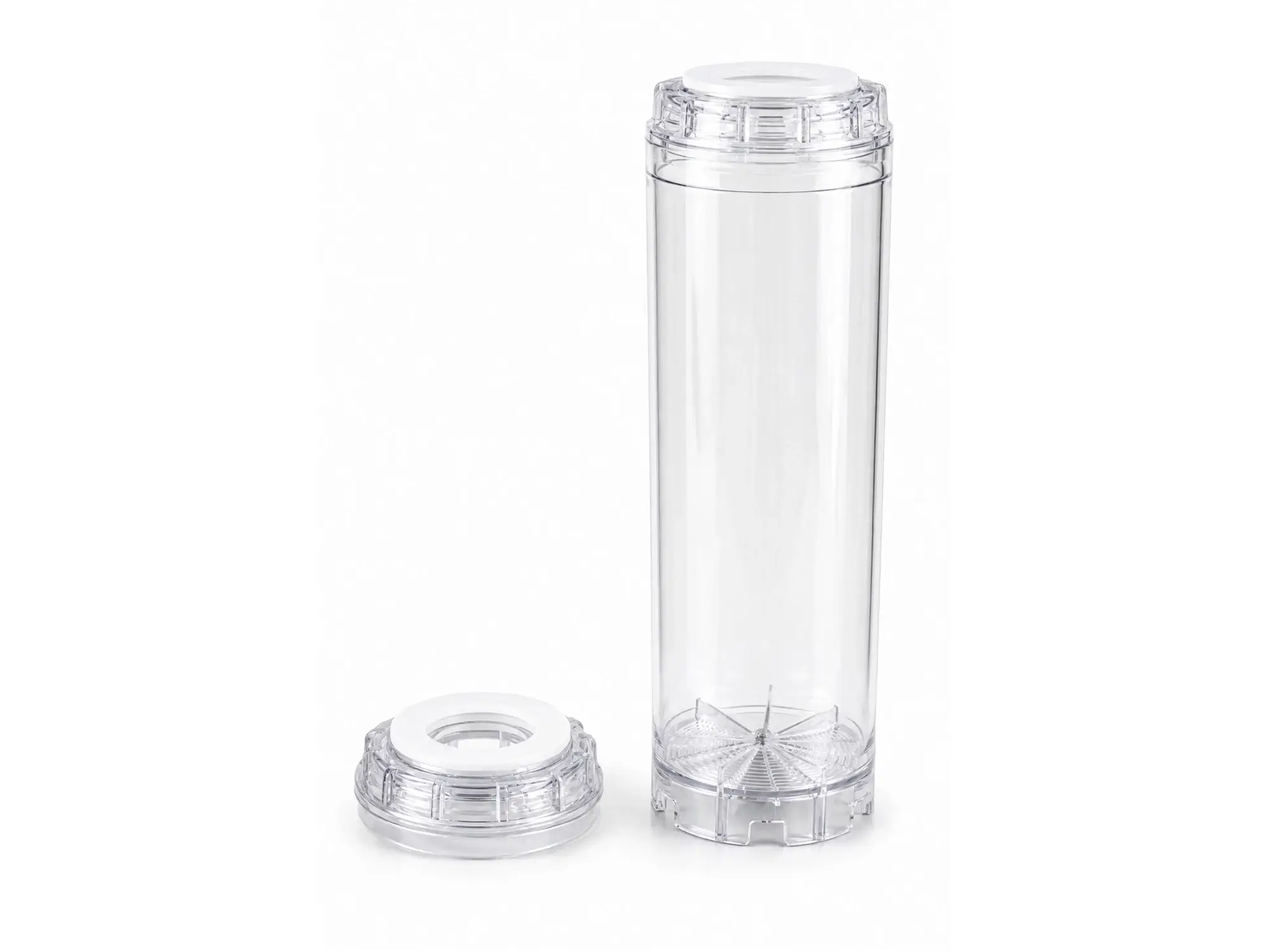
Function: Empty body for your own filling
Body without filling. Made for dealers, service companies and installers who source their own minerals. It can be filled with Siliphos, dolomite (Microphos), granular activated carbon or cation exchange resin; the cartridge acts only as a holder.
Siliphos Shell Cartridge Filter
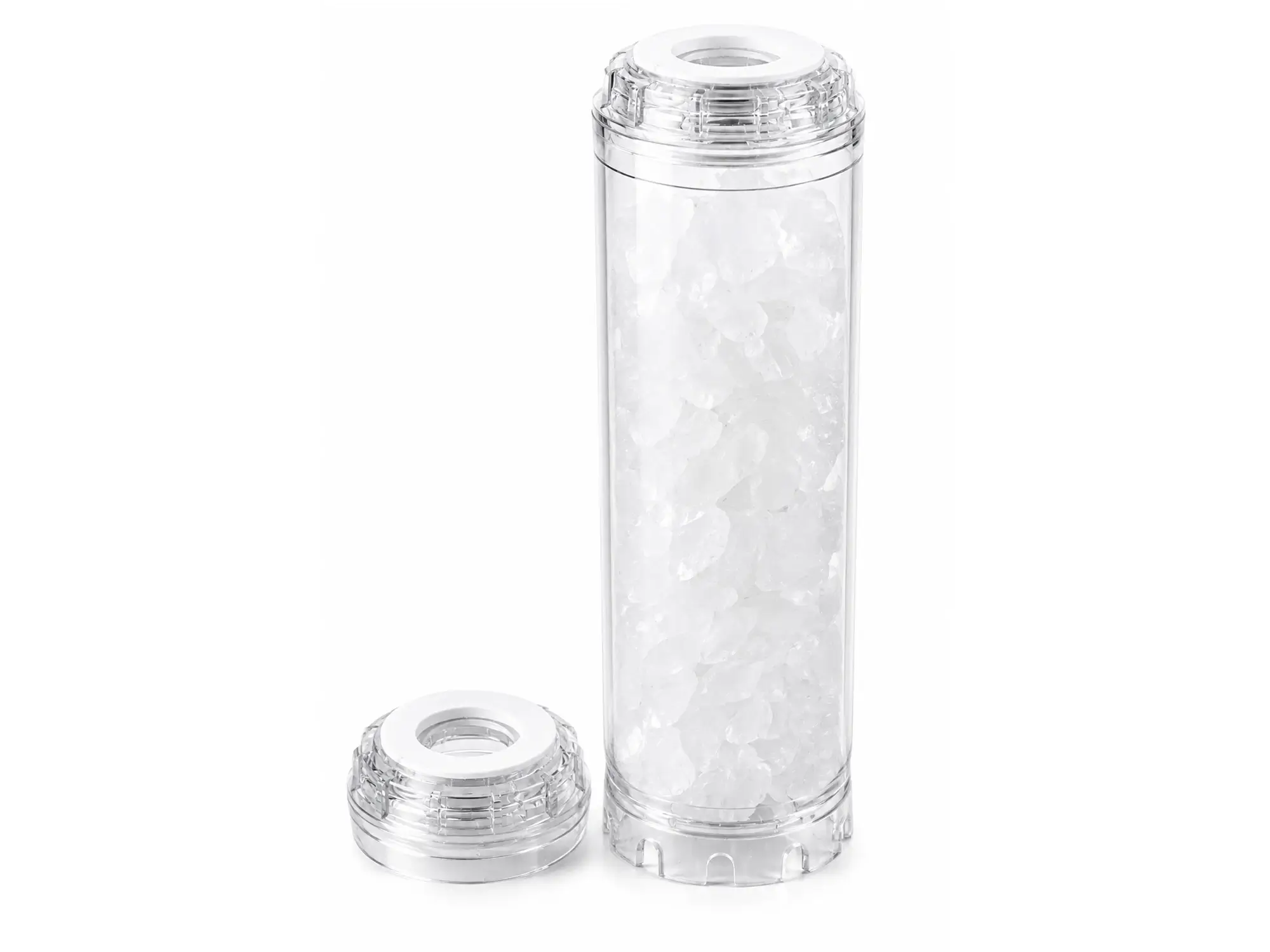
Function: Scale inhibitor (limescale prevention), corrosion protection
Polyphosphate crystal filling. It dissolves slowly in water, binds calcium and magnesium and forms a thin protective film on metal surfaces; this stops limescale from sticking to pipes and heating elements and prevents corrosion. It does not reduce the hardness value. Preferred on residential inlets and general service water lines.
Microphos Shell Cartridge Filter
Function: Scale inhibitor (dolomite-based)
Dolomite-based fine-grained granular filling. By regulating the mineral balance of the water, it reduces limescale adhesion to surfaces and protects the installation against corrosion. It does not reduce the hardness value. Commonly used on combi boilers, water heaters and hot water lines.
Activated Carbon Shell Cartridge Filter
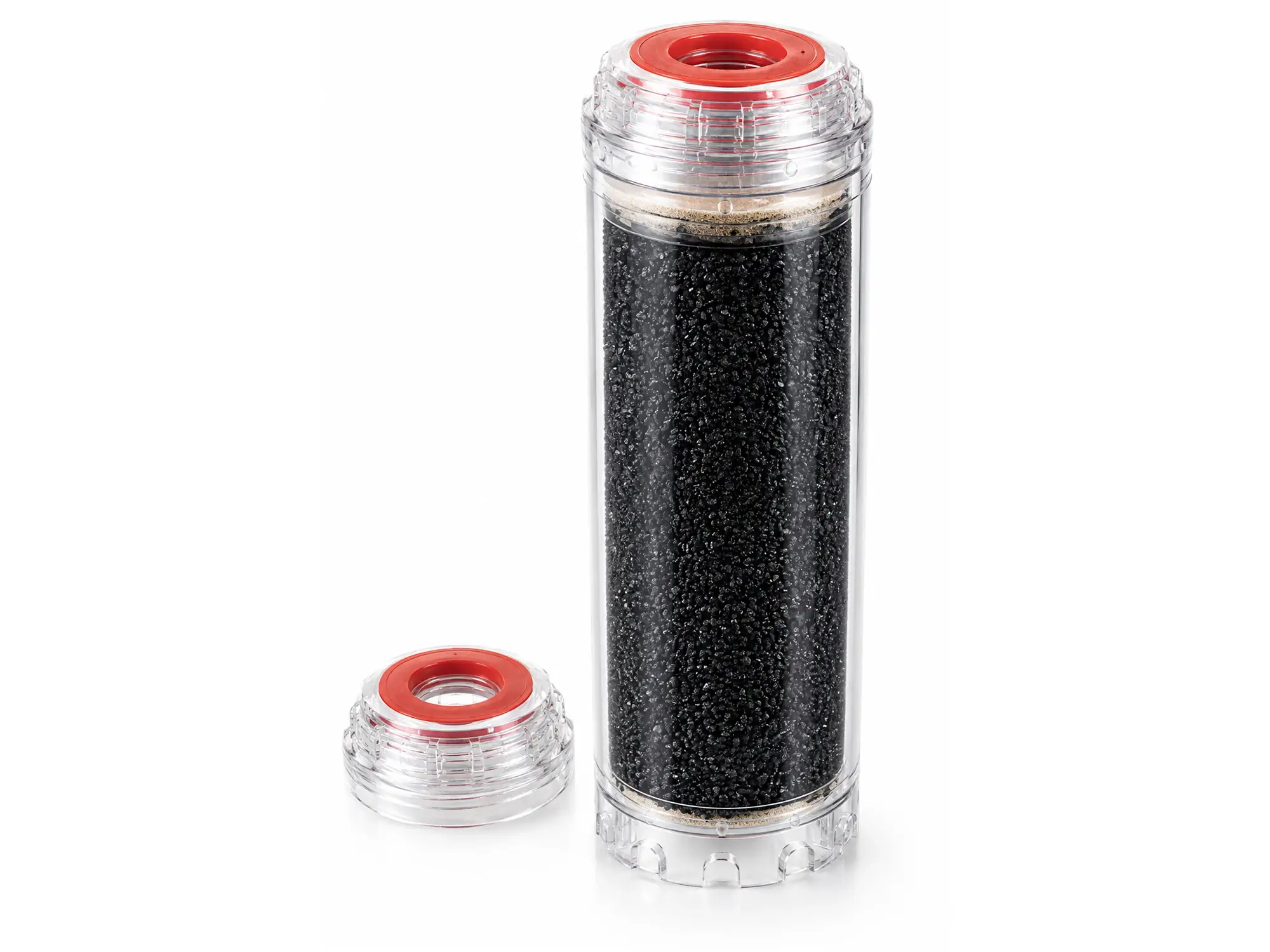
Function: Removes chlorine, taste and odour
Granular activated carbon filling. It removes free chlorine and chlorine compounds from water and retains taste- and odour-causing organic substances on its porous surface. It has no effect on limescale or hardness.
Resin Shell Cartridge Filter
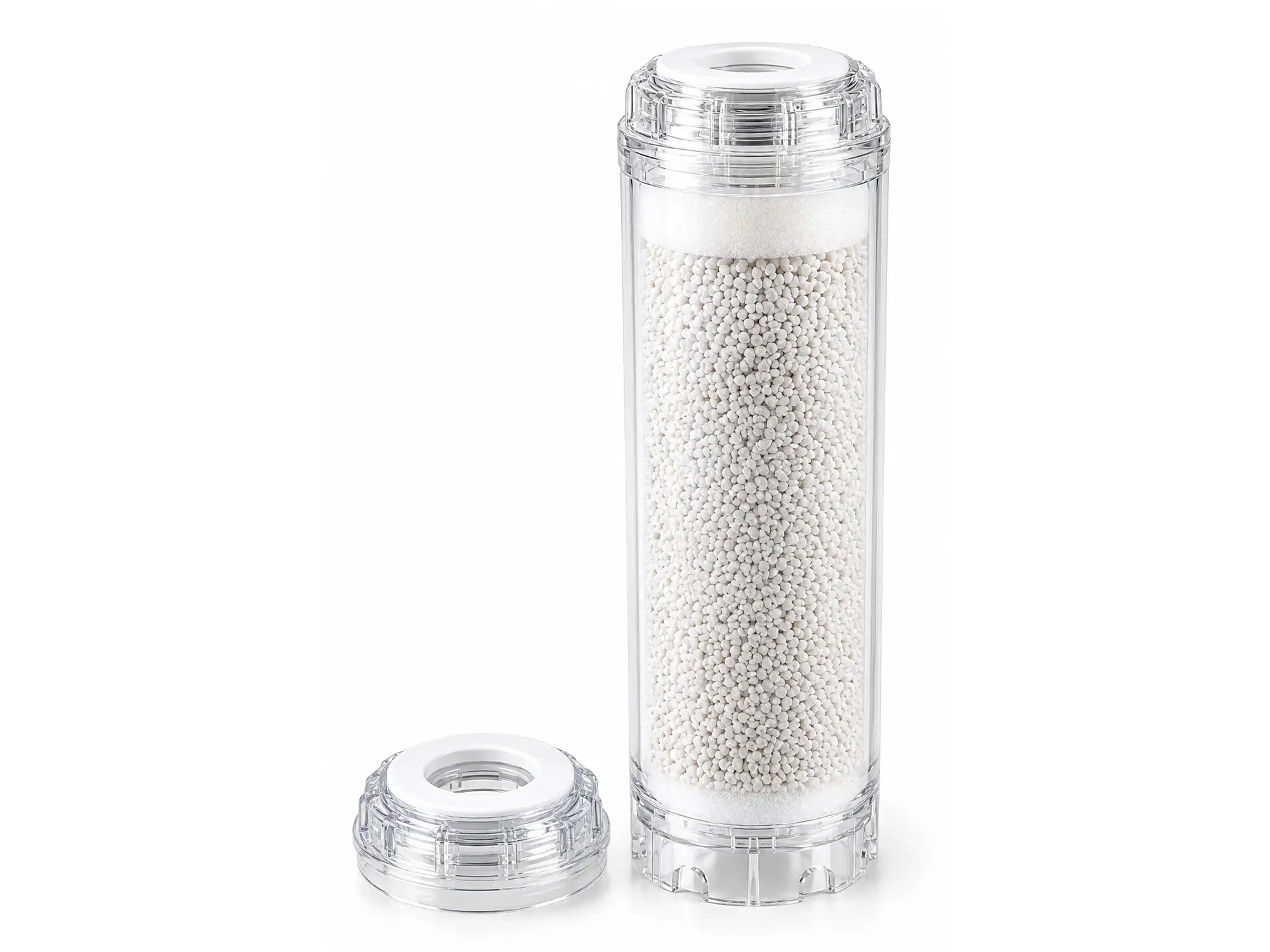
Function: Removes hardness, softens water
Cation exchange resin filling. It captures calcium and magnesium ions from the water and releases sodium in their place, directly reducing the hardness level. It is the only filling type that gives a measurable reduction in hardness.
Which filling suits your water?
Tell us your water hardness and point of use, and we will work out the right body and filling combination together.
| Model | Filling | Compatible Housing |
|---|---|---|
| Empty Shell Cartridge Filter 5" | No filling | 5" standard filter housing |
| Empty Shell Cartridge Filter 10" | No filling | 10" standard filter housing |
| Empty Shell Cartridge Filter 20" | No filling | 20" standard filter housing |
| Siliphos Shell Cartridge Filter 5" | Siliphos | 5" standard filter housing |
| Siliphos Shell Cartridge Filter 10" | Siliphos | 10" standard filter housing |
| Siliphos Shell Cartridge Filter 20" | Siliphos | 20" standard filter housing |
| Microphos Shell Cartridge Filter 5" | Dolomite (Microphos) | 5" standard filter housing |
| Microphos Shell Cartridge Filter 10" | Dolomite (Microphos) | 10" standard filter housing |
| Microphos Shell Cartridge Filter 20" | Dolomite (Microphos) | 20" standard filter housing |
| Activated Carbon Shell Cartridge Filter 5" | Granular activated carbon | 5" standard filter housing |
| Activated Carbon Shell Cartridge Filter 10" | Granular activated carbon | 10" standard filter housing |
| Activated Carbon Shell Cartridge Filter 20" | Granular activated carbon | 20" standard filter housing |
| Resin Shell Cartridge Filter 5" | Cation exchange resin | 5" standard filter housing |
| Resin Shell Cartridge Filter 10" | Cation exchange resin | 10" standard filter housing |
| Resin Shell Cartridge Filter 20" | Cation exchange resin | 20" standard filter housing |
Empty Shell Cartridge Filter · For your own filling
- Empty Shell Cartridge Filter 5″ · Fits 5″ standard filter housing
- Empty Shell Cartridge Filter 10″ · Fits 10″ standard filter housing
- Empty Shell Cartridge Filter 20″ · Fits 20″ standard filter housing
Siliphos Shell Cartridge Filter · Scale inhibitor
- Siliphos Shell Cartridge Filter 5″ · Fits 5″ standard filter housing
- Siliphos Shell Cartridge Filter 10″ · Fits 10″ standard filter housing
- Siliphos Shell Cartridge Filter 20″ · Fits 20″ standard filter housing
Microphos Shell Cartridge Filter · Scale inhibitor (dolomite)
- Microphos Shell Cartridge Filter 5″ · Fits 5″ standard filter housing
- Microphos Shell Cartridge Filter 10″ · Fits 10″ standard filter housing
- Microphos Shell Cartridge Filter 20″ · Fits 20″ standard filter housing
Activated Carbon Shell Cartridge Filter · Removes chlorine, taste and odour
- Activated Carbon Shell Cartridge Filter 5″ · Fits 5″ standard filter housing
- Activated Carbon Shell Cartridge Filter 10″ · Fits 10″ standard filter housing
- Activated Carbon Shell Cartridge Filter 20″ · Fits 20″ standard filter housing
Resin Shell Cartridge Filter · Removes hardness, softens water
- Resin Shell Cartridge Filter 5″ · Fits 5″ standard filter housing
- Resin Shell Cartridge Filter 10″ · Fits 10″ standard filter housing
- Resin Shell Cartridge Filter 20″ · Fits 20″ standard filter housing
Filling Types and How They Differ
- Working Mechanism
- Siliphos: Polyphosphate binds calcium and magnesium and prevents limescale crystals from forming.
Microphos (dolomite): The dolomite-based granules regulate the mineral balance of the water and reduce limescale adhesion to surfaces.
Activated carbon: Reduces chlorine on its surface and retains taste- and odour-causing organic substances by adsorption.
Resin: Captures calcium and magnesium ions and releases sodium in their place. - Problem Solved
- Siliphos: Limescale build-up and corrosion.
Microphos (dolomite): Limescale build-up and corrosion, especially on hot water lines.
Activated carbon: Chlorine, taste and odour.
Resin: High water hardness. - Effect on Measured Hardness
- Siliphos: Unchanged; the ions stay bound in the water.
Microphos (dolomite): Unchanged; limescale is prevented but the hardness value stays the same.
Activated carbon: No effect.
Resin: Falls to as low as 0–1 °fH. - Maintenance and Renewal
- Siliphos: The crystals diminish as they dissolve and are topped up.
Microphos (dolomite): The granules diminish as they dissolve and are topped up.
Activated carbon: Renewed when its retention capacity is reached; it is not regenerated.
Resin: Regenerated with brine or renewed at saturation. - Best Point of Use
- Siliphos: Protection of pipework, combi boilers, water heaters and household appliances.
Microphos (dolomite): Combi boilers, water heaters and hot water lines.
Activated carbon: Chlorine, taste and odour removal from mains water.
Resin: Equipment and process lines that need a definite reduction in hardness.
How the Fillings Work: Limescale, Chlorine, Taste-Odour and Hardness
| Criterion | Siliphos | Microphos (dolomite) | Activated Carbon | Resin |
|---|---|---|---|---|
| Function | Limescale prevention, corrosion protection | Limescale prevention, corrosion protection | Chlorine, taste and odour removal | Hardness removal (softening) |
| How it works | Polyphosphate binds calcium and magnesium | Dolomite regulates mineral balance and reduces limescale adhesion | Chlorine is reduced, organics are adsorbed | Calcium and magnesium are exchanged for sodium |
| Measured hardness | Unchanged | Unchanged | No effect | Falls to 0–1 °fH |
| Maintenance | Crystals are topped up as they are used | Granules are topped up as they are used | Renewed at saturation | Regenerated or renewed |
Siliphos: How Does Limescale Prevention Work?
Siliphos consists of polyphosphate-based crystals. As water passes through the cartridge, the crystals dissolve slowly and a small amount of polyphosphate enters the water. Polyphosphate binds the calcium and magnesium ions in the water; these ions cannot form limescale crystals during heating and evaporation. It also forms a thin protective film on pipe and heating element surfaces, reducing limescale adhesion and corrosion.
Siliphos does not remove hardness from water; the value stays the same in a hardness measurement. Its effect is that limescale does not stick to surfaces. The crystals diminish as they dissolve; the level is checked through the clear body and topped up when used up.
Microphos (Dolomite): How Does Limescale Prevention Work?
Microphos is a dolomite-based, fine-grained granular mineral. As water passes between the granules, the dolomite dissolves slowly and regulates the mineral balance of the water. This balance reduces the adhesion of calcium and magnesium as a hard limescale layer on pipe, heating element and heat exchanger surfaces during heating; it also protects the installation against corrosion.
Microphos does not remove hardness from water; the value stays the same in a hardness measurement. Thanks to its fine grain structure, its contact surface with water is high, which is why it is often preferred on combi boilers, water heaters and hot water lines. The granules diminish as they dissolve and are topped up when used up.
Activated Carbon: How Do Chlorine Removal and Taste-Odour Retention Work?
Granular activated carbon has a very large internal surface made up of millions of pores. Chlorine removal takes place through a chemical reaction: when free chlorine in the water contacts the carbon surface, it is reduced to odourless chloride. This removes the taste and smell of chlorine from the water.
Taste- and odour-causing organic compounds, by contrast, are retained by adsorption: the molecules attach to the pore surfaces and do not travel on with the water. Efficiency depends on contact time; as the flow rate increases, the water is in contact with the carbon for a shorter time. Activated carbon has no effect on limescale or hardness. When the pores are full, the carbon is renewed; it is not regenerated. On first use, the black water caused by carbon dust is run off until it clears.
Resin: How Does Water Softening Work?
Cation exchange resin consists of small polymer beads carrying sodium ions on their surface. As hard water passes through the resin, calcium and magnesium ions attach to the resin and sodium ions pass into the water in their place. Through this ion exchange, hardness is actually removed from the water and the measured value can fall to as low as 0–1 °fH.
The retention capacity of the resin is limited; when it reaches saturation, it is regenerated with brine or renewed. Because chlorine can damage the resin, an activated carbon cartridge is recommended before the resin cartridge on chlorinated mains water.
A user measuring hardness will see that, with Siliphos and Microphos fillings, the meter keeps reading the same value. This is not a fault: these fillings do not remove hardness, they prevent it from forming limescale. If a measurable reduction in hardness is needed, a resin filling should be chosen.
Working Principle and Installation
Place It in the Filter Housing
Shut off the water inlet and release the pressure. Open the filter housing, remove any filter element inside and seat the shell cartridge in the body.
Close the Housing and Open the Line
Monitor the Filling
The clear body lets you see the mineral level by eye. When the level runs out, you open the cartridge and add new filling.
Products that work with this product
Shell Cartridge Filter
We Answer Your Questions
Frequently Asked Questions
At Prosestim, we attach great importance to answering your questions and providing technical support on our filtration solutions.
Does a shell cartridge filter soften water?
It depends on the filling type. A resin filling removes hardness ions from the water, genuinely softening it and lowering the hardness value. Siliphos and Microphos (dolomite) do not reduce hardness; they prevent limescale from forming and sticking to surfaces, and the measured hardness stays the same. Activated carbon has no effect on hardness.
What is the difference between Siliphos and Microphos?
Both are scale inhibitors, but they are different minerals. Siliphos is polyphosphate-based; it binds calcium and magnesium and forms a protective film on surfaces. Microphos is a dolomite-based, fine-grained granule; it reduces limescale adhesion to surfaces by regulating the mineral balance of the water, and it has a high contact surface with water. Microphos is more often preferred on combi boilers, water heaters and hot water lines, and Siliphos for general service water.
What does an activated carbon shell cartridge do?
What is the difference between a resin shell cartridge and a water softener?
What is an empty shell cartridge used for?
Can different fillings be mixed in the same cartridge?
Is a shell cartridge used together with a sediment filter?
Yes, it is recommended on lines with a sediment load. The shell cartridge does not filter; sand, rust and sediment coat the surface of the filling and reduce its efficiency. For this reason, pre-filtration is carried out with a string-wound, melt-blown or washable cartridge in a separate housing, and the shell cartridge is used after it.
Which shell cartridge length should be chosen?
How often should the filling be changed?
There is no fixed interval. For Siliphos and Microphos, the deciding factors are water hardness, temperature and consumption; for activated carbon, chlorine concentration and flow rate; and for resin, hardness level and the volume of water treated. Because the body is clear, the level can be checked by eye.
Why is the 20-inch cartridge in two parts?
Shell Cartridge Filter RFQ Configurator
Configure your variation dimensions and technical specifications to receive an instant quote directly on WhatsApp and via email.