Product family · 19 media

Bag filters

Find the bag filter that suits your operating temperature, flow rate and chemical conditions in liquid and dust filtration. Compare 19 filter media on one screen.

up to 260 °C

Continuous operation

1–1000 µm

Liquid filtration

40+ countries

Nationwide in Türkiye and export

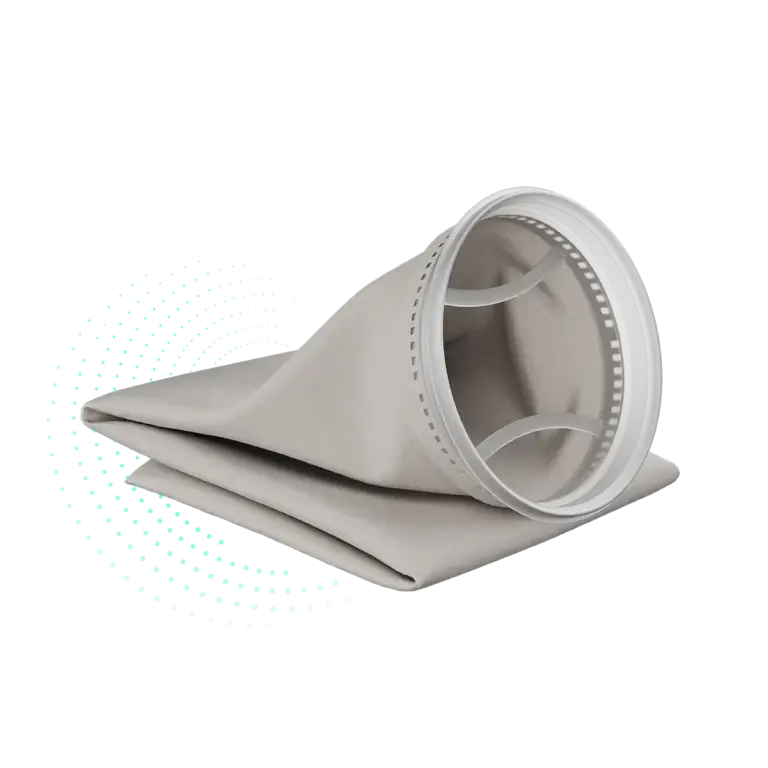
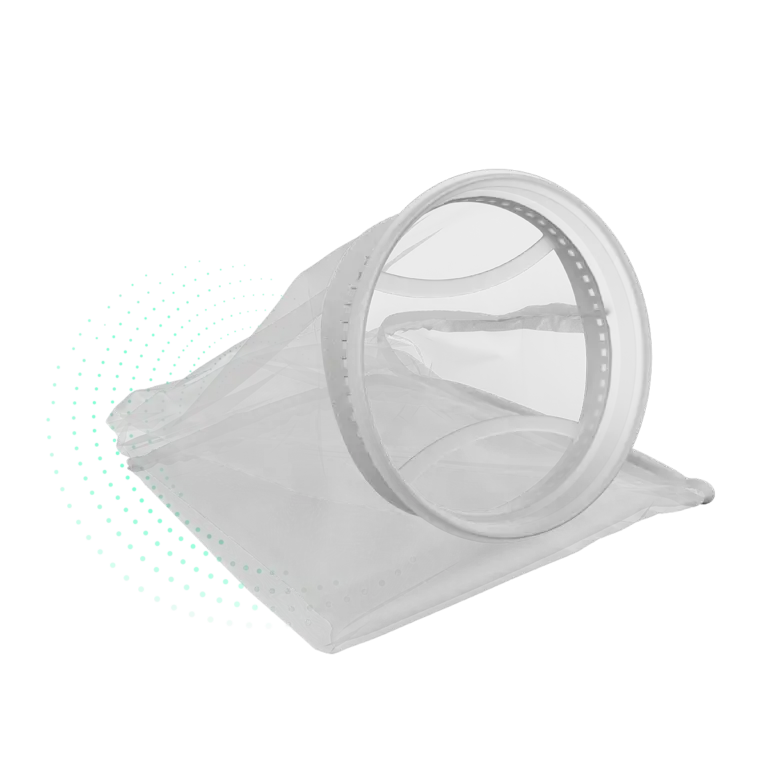
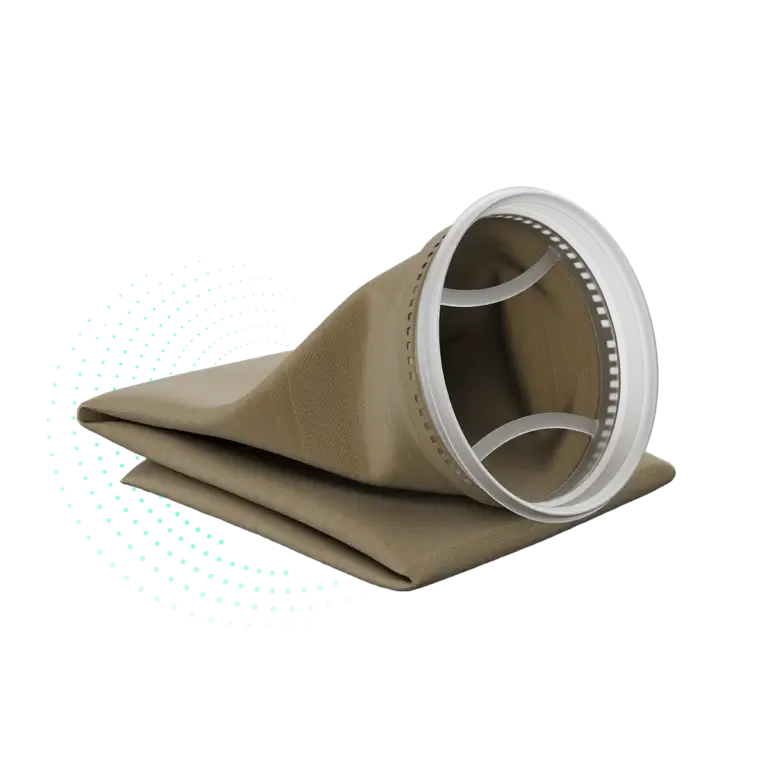
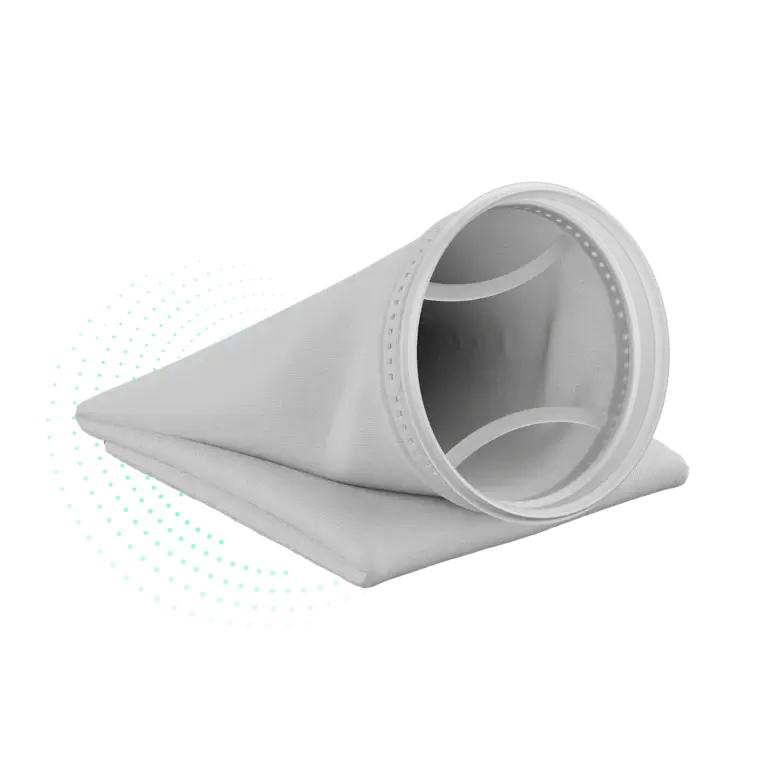
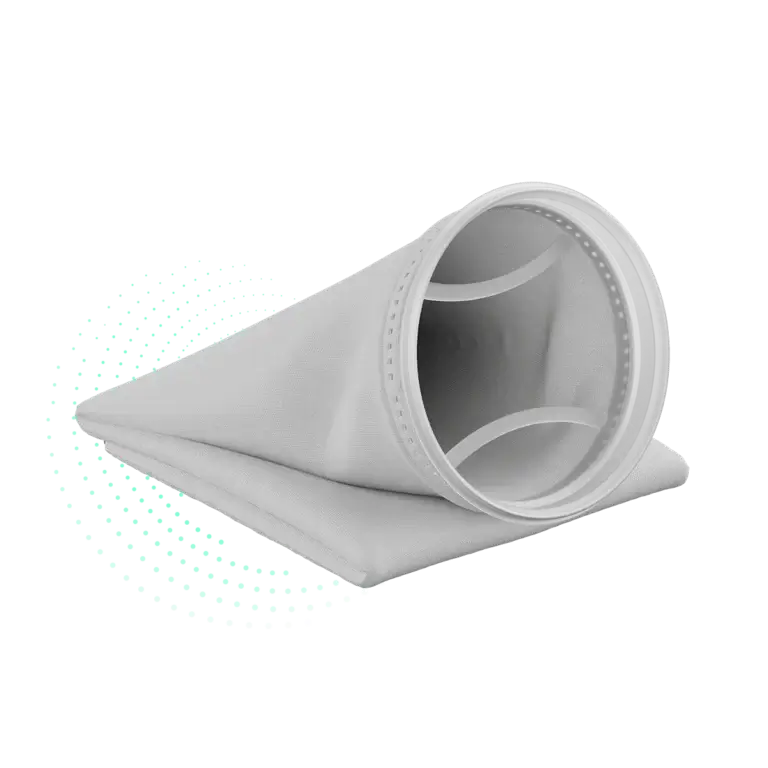
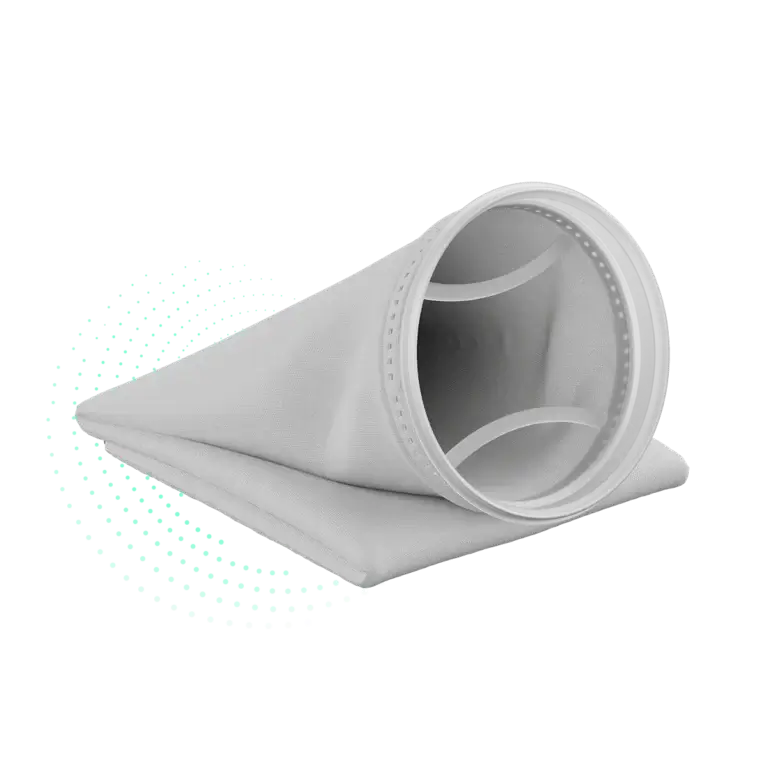
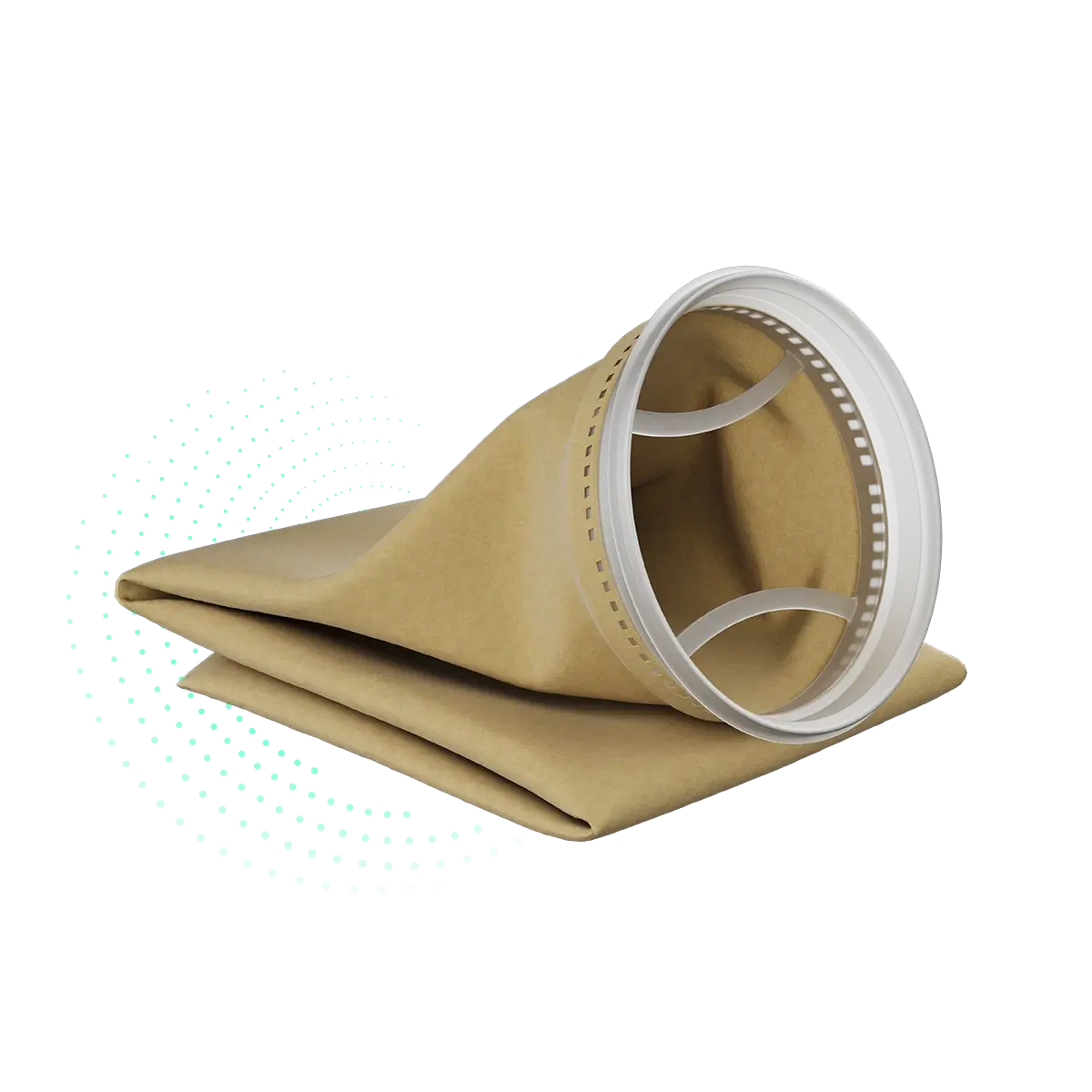
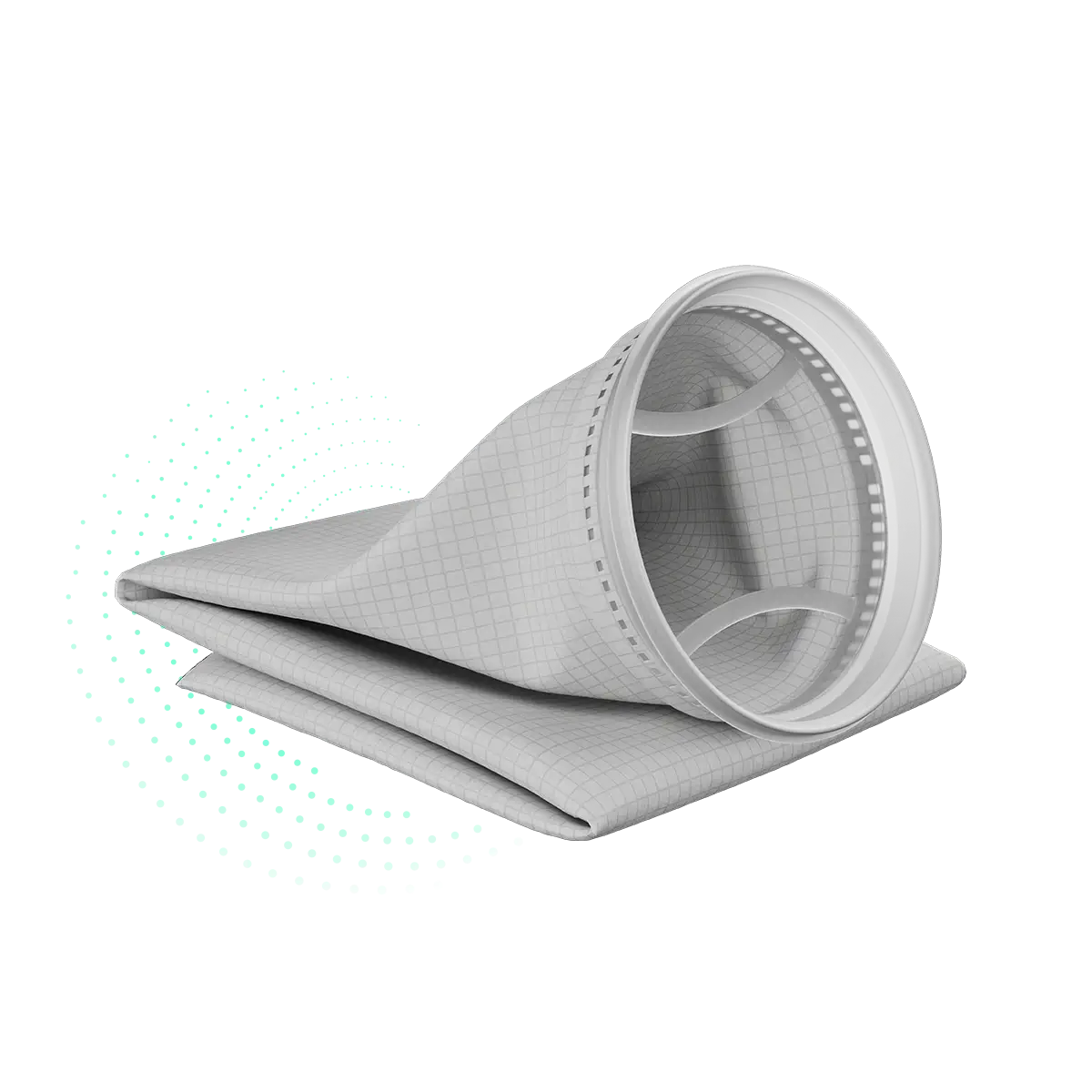
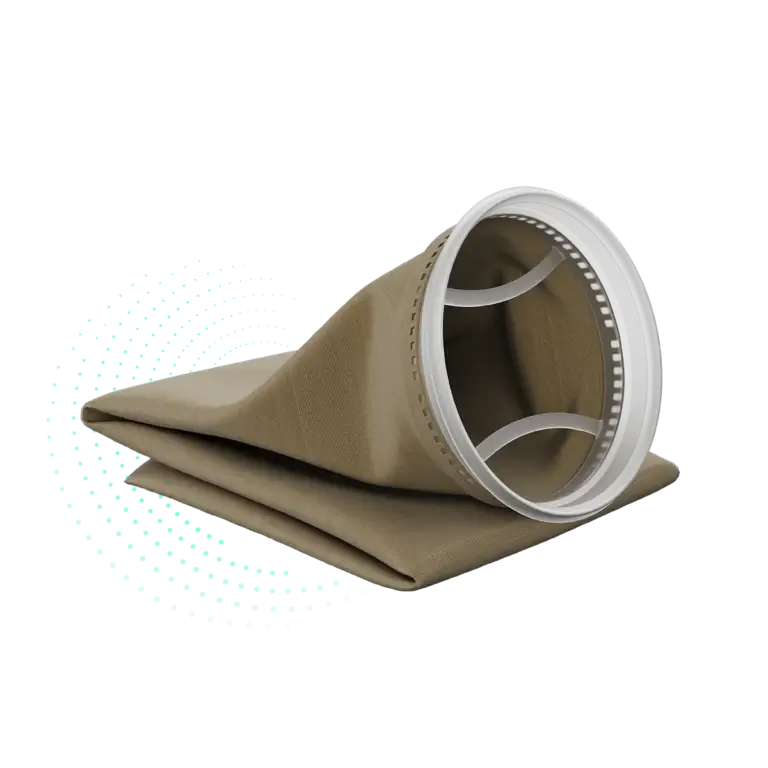
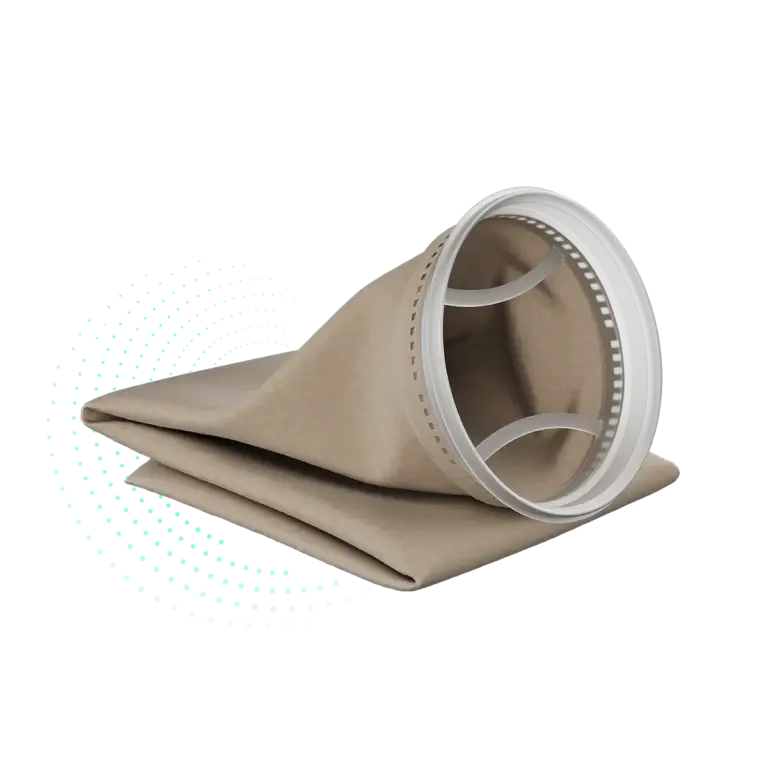
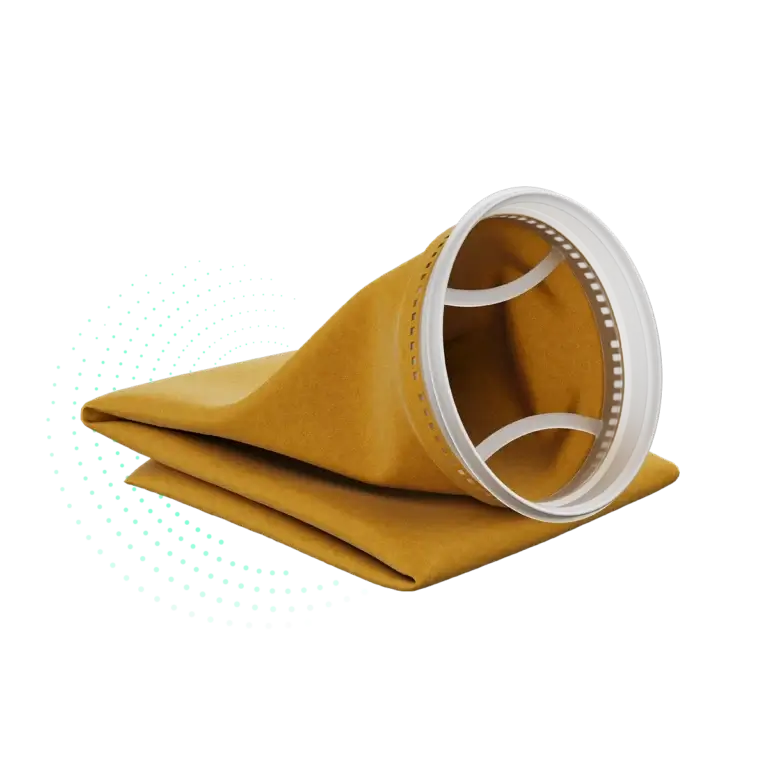
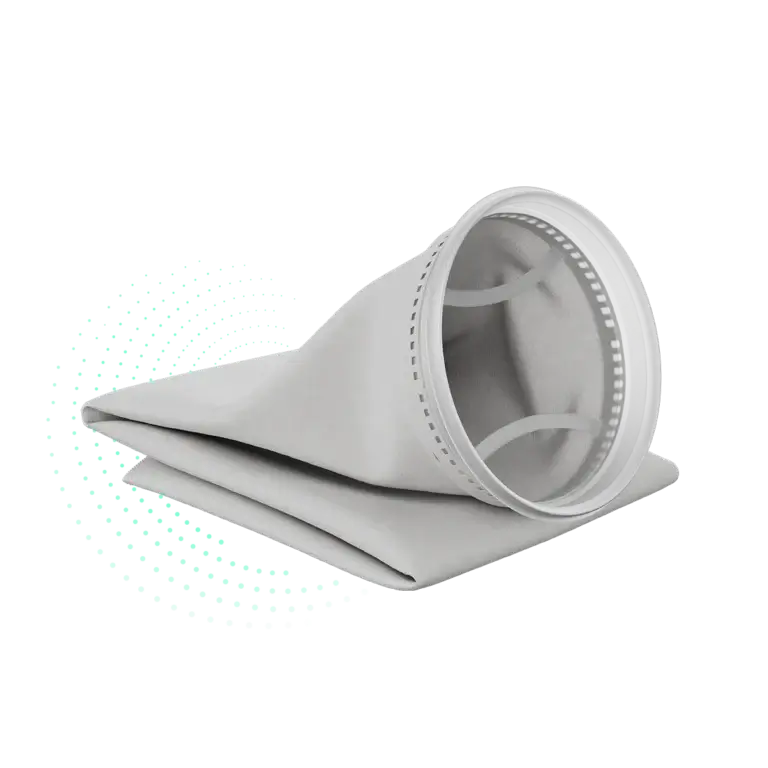
Polyester felt bag filter with white felt body and steel ring collar
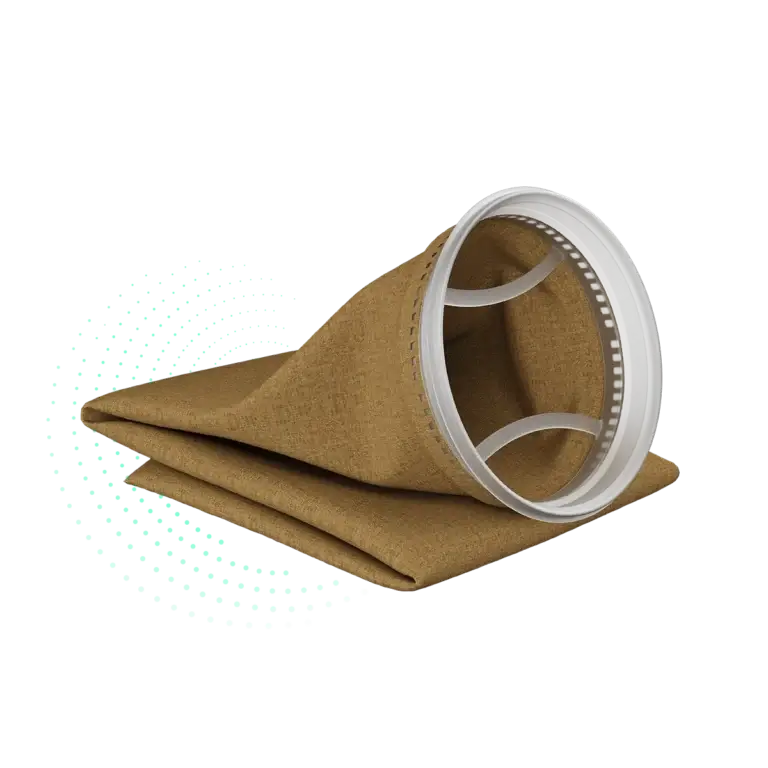
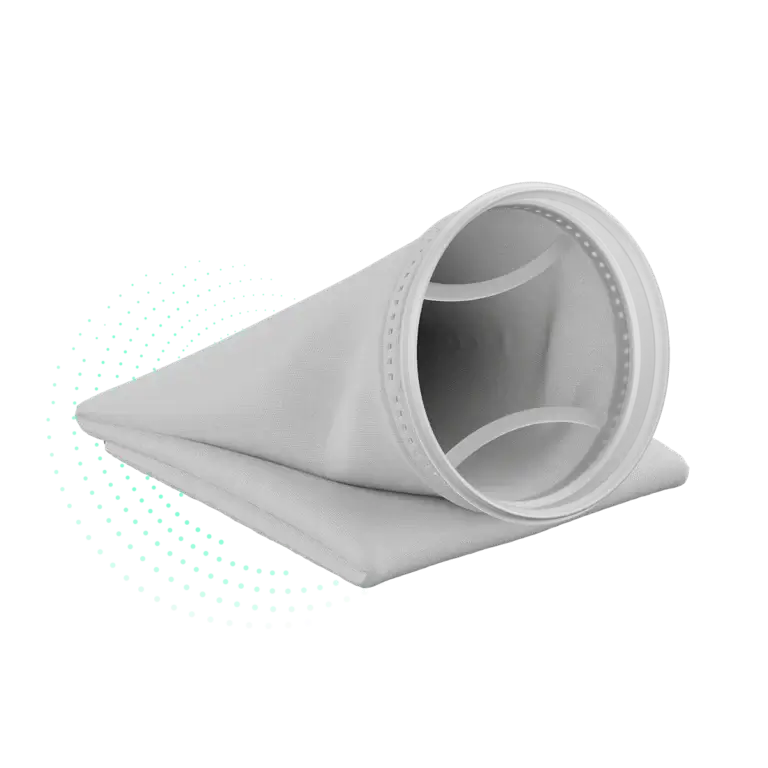
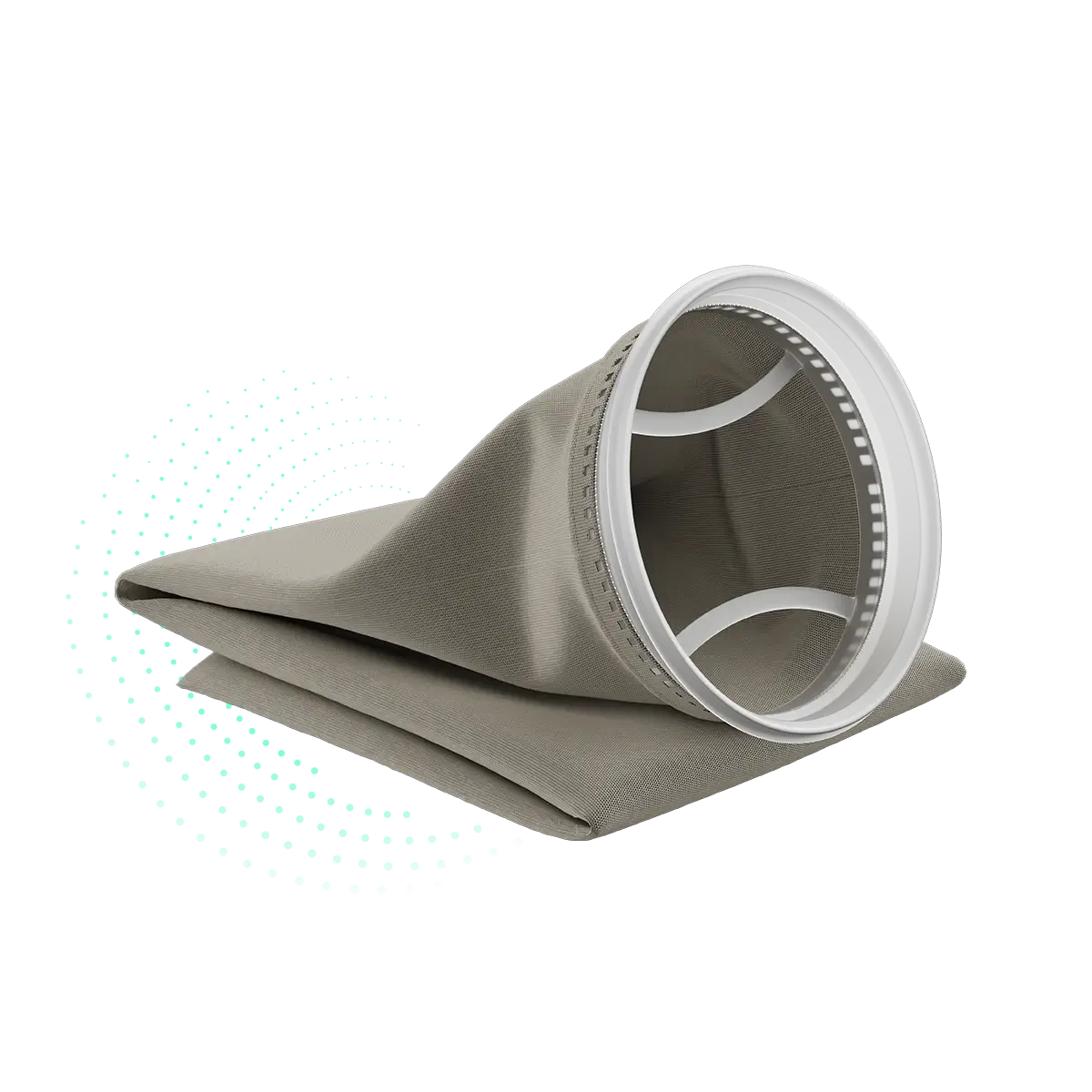
PTFE Teflon bag filter
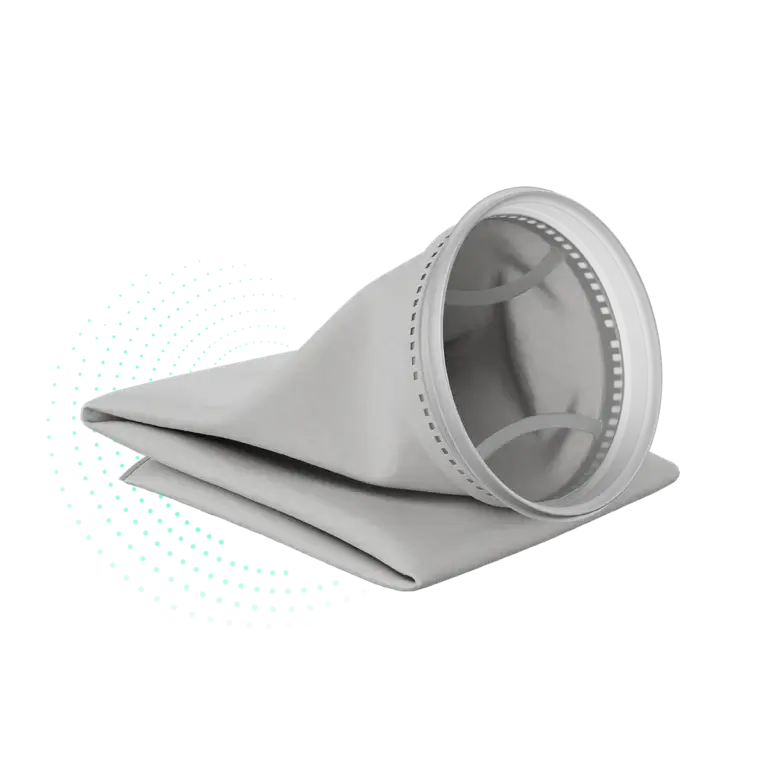
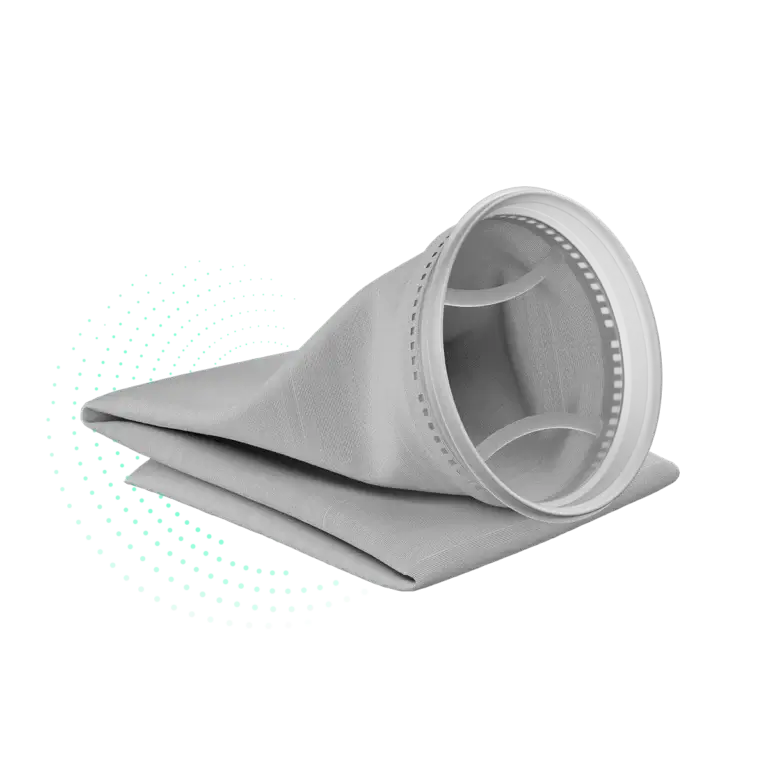
Meta-aramid Nomex bag filter

Temperature finder

Which media withstand this temperature?

Select your continuous operating temperature; the media that withstand it are highlighted.

120°C

    Temperature limit varies by product: Multifilament PE, Multifilament PP, PCP, SPS, SCS, Antistatic Felt and Cotton. For these media, confirm your operating conditions with our engineers.

    Values are continuous operating temperatures; peak temperature, moisture, acid and hydrolysis conditions can change the selection. Final suitability must be confirmed against product technical data.

    Bag filter types

    19 media, two applications.

    Liquid filtration

    11 media · in basket filter housings

    Polypropylene felt bag filter with white felt body and steel ring collar

    Chemical resistant

    Polypropylene Felt

    1–200 µm · pH 1–14

    100% PP needle felt; resistant to acids and alkalis, heat-treated surface prevents fibre release, ultrasonically welded body ensures sealing.

    Polyester felt bag filter with white felt body and steel ring collar

    Depth filtration

    Polyester Felt

    1–200 µm · 130–150 °C

    Industry's most common choice: high dirt-holding capacity for uses ranging from liquid filtration to gas dedusting.

    Polyester monofilament bag filter

    Surface filtration

    Polyester Monofilament

    20–1000 µm · washable

    Precise pore geometry; high-flow surface filtration in paints, inks, resins and coatings, washable and reusable.

    Nylon monofilament polyamide bag filter

    Abrasion resistance

    Polyamide Monofilament

    20–1000 µm · 115 °C

    Square-mesh nylon weave with high abrasion and hydrocarbon resistance. Washed and reused in water, solvent and fuel lines.

    SMS bag filter with white spunbond-meltblown-spunbond body

    Sub-micron depth

    SMS Multilayer

    0.5–10 µm · 90 °C

    Spunbond-meltblown-spunbond layers trap sub-micron particles; no fibre release, suitable for food and pure water lines.

    Multifilament polyester bag filter

    High-flow pre-filtration

    Multifilament PE

    Multi-filament polyester · flexible

    Tear-resistant structure with uniform permeability; protects lines and pumps by retaining coarse and medium particles.

    Multifilament PP bag filter

    Chemical resistant

    Multifilament PP

    100% PP · acid and alkali resistance

    Clean structure with no fibre release; process stability in paint, chemical coating and electroplating baths.

    Multifilament cotton bag filter

    Natural fibre

    Multifilament Cotton

    Natural cotton · 120 °C

    Eco-friendly, economical filtration of neutral and mildly acidic fluids; widely used in oil, varnish and paint industries.

    PCP bag filter

    Hybrid structure

    PCP Special Series

    PP + composite polymer

    Broad chemical compatibility and high particle retention; low pressure loss reduces pump load on high-flow lines.

    SPS bag filter

    Solvent resistance

    SPS Special Series

    Solvents and corrosive fluids

    Special stitching and welding technology eliminates bypass risk; stable performance in petrochemical and general industry.

    SCS bag filter

    Abrasion resistance

    SCS Special Series

    Silicon carbide / composite

    Robust body that does not deform with abrasive particles and hot chemical fluids; long service life.

    Dust and flue gas

    8 media · in pulse-jet filter units

    Selection guide

    The right filter is chosen with the right data.

    1

    Fluid / gas type

    What are you filtering?

    Define the chemical aggressiveness, pH and moisture/hydrolysis risk of the liquid or dust/flue gas environment.

    Liquid / gas

    pH

    Moisture

    2

    Process and temperature

    Under what conditions?

    Share the continuous and peak operating temperatures, flow rate, allowable pressure loss and cleaning method.

    Temperature

    Flow rate

    Cleaning

    3

    Filtration goal

    Expected micron rating and efficiency?

    Clarify the target particle size (1–1000 µm), surface or depth requirement and, for gas lines, emission limits.

    Micron

    Surface / depth

    Emissions

    Quick comparison

    See the media side by side.

    Media

    Principle

    Temperature

    Where it is used

    Polyester (PE) Felt

    Depth filtration

    130–150 °C

    Optimum cost and high dirt capacity for general industrial dusts and liquid filtration.

    Polypropylene (PP) Felt

    Chemical resistant

    90–100 °C

    Wide pH range (pH 1–14), aggressive acids and alkalis, food-approved processes.

    Polyester Monofilament

    Surface filtration

    130–150 °C

    Fixed, precise pores and a washable structure; paints, resins, inks.

    Polyamide (Nylon) Monofilament

    High abrasion resistance

    115 °C

    Abrasive particles, solvents, alkaline environments and mechanical strength.

    Multifilament Woven

    High-flow pre-filtration

    —

    Coarse particle retention, low differential pressure and economical operation.

    SMS Multilayer

    Sub-micron depth

    90 °C

    No fibre release; precise protection in food, pharmaceutical, cosmetics and pure water lines.

    Special Hybrid (PCP / SPS / SCS)

    Dual-function special filtration

    —

    Particle retention combined with hydrocarbon/oil absorption or high viscosity.

    Acrylic Felt

    Humid & acidic gas

    125–135 °C

    High hydrolysis resistance; lime plants, dryers and fertiliser lines.

    Nomex / Meta-Aramid

    High-temperature dry dust

    200–220 °C

    Asphalt plants, metal foundries, cement clinker kilns; gas free of moisture and acid.

    PPS / Ryton

    Sulphurous acidic gas

    160–190 °C

    Coal-fired boilers, thermal power plants; acid and hydrolysis resistance against SOx gases.

    P84 / Polyimide

    Trilobal high efficiency

    240–260 °C

    Large filtration area, low emissions; hazardous waste incineration and cement.

    PTFE / Teflon

    Absolute chemical resistance

    240–260 °C

    Full resistance across the whole pH scale (pH 0–14), non-stick surface, the toughest chemical gases.

    Glass Fibre

    Hot flue gas

    260 °C

    High tensile strength; thermal power plant and flue gas filtration.

    Antistatic Felt / Bag

    ATEX / static discharge

    —

    Conductive fibre structure; flammable dust atmospheres with explosion risk.

    General selection summary. Final suitability must be confirmed against product technical data and process conditions.

    Questions before you choose.

    What is the difference between a liquid bag filter and a dust collection bag filter?
    Liquid bag filters are used inside pressurised basket filter housings (bag vessels) to retain solid particles in liquid lines. Dust collection bag filters are fitted over cages in pulse-jet or reverse-air filter units to capture flue gas and industrial process dust.
    In liquid filtration, the micron rating is set between 1 and 1000 microns according to the particle size to be retained and the liquid’s viscosity. In dust filtration, fabric (air) permeability and filtration velocity (air-to-cloth ratio, m³/m²·min) are optimised by engineering calculation according to the process gas flow, dust concentration and operating temperature.
    Polyester and polyamide (nylon) monofilament woven bag filters have a fixed, single-fibre pore geometry, so they can be washed and reused. Needle-felt depth filters (polyester, polypropylene, etc.) trap particles deep between the fibres, so washing damages the pore structure; washing is therefore not recommended and they should be replaced at the end of their life.
    Share the fluid or gas type, continuous and peak operating temperature, flow rate (m³/h or L/min), operating pressure, chemical content/pH range, target retention micron rating or emission limit, and existing filter housing/cage dimensions (diameter and length).

    Engineering support

    Share your process and we'll choose the bag filter together.

    With these six details, our engineers recommend the right media, micron rating and housing.

    Fluid / gas

    Temperature

    Flow rate

    pH / chemistry

    Target µm

    Housing size

    Accounting

    Billing Details

    Copy our registered company name, tax and e-invoice details with one click using the button on each row.

    Invoice name (registered company name)

    PROSES TİCARET, İMALAT, MÜHENDİSLİK ENDÜSTRİYEL MADDE VE MALZEME İMALATI İNŞAAT VE SANAYİ LİMİTED ŞİRKETİ

    Billing address

    Musa Gündüz Cad. No:14 Taşköprü – Çiftlikköy – YALOVA, TÜRKİYE

    E-invoice / e-archive email address

    Tax office

    Yalova Tax Office (Yalova V.D.)

    Tax ID number

    7330379514

    MERSIS number

    0733037951400013

    Please send BA/BS forms, current account reconciliations and any other emails for our Finance and Administrative Affairs Department to [email protected].

    Invoice name (registered company name): PROSES TİCARET, İMALAT, MÜHENDİSLİK ENDÜSTRİYEL MADDE VE MALZEME İMALATI İNŞAAT VE SANAYİ LİMİTED ŞİRKETİ Billing address: Musa Gündüz Cad. No:14 Taşköprü – Çiftlikköy – YALOVA, TÜRKİYE E-invoice / e-archive email address: [email protected] Tax office: Yalova Tax Office (Yalova V.D.) Tax ID number: 7330379514 MERSIS number: 0733037951400013

    Torba filtre nedir?

    Torba filtre, sıvı filtrasyon gövdelerinde (sepetli filtre kabı) veya toz toplama sistemlerinde (jet-pulse filtre üniteleri) kullanılan, yüksek kir tutma kapasitesi ve geniş süzme alanı sunan esnek filtre elemanıdır.

    Keçe

    İğneli keçe partikülü derinlikte tutar.

    Monofilament

    Dokuma gözenek yüzeyde tutar, yıkanabilir.

    Çok katman

    SMS mikron altı partikülü hapseder.