Choose your target retention rating; the families that can achieve it are highlighted.
0.1 µm1101001,00010,000
Logarithmic scale (0.1–10.000 µm). Ranges are the general limits of each product family; nominal and absolute ratings must be confirmed against product technical data.
Define the chemical content, temperature, viscosity and type of contaminant.
Chemistry
Temperature
Viscosity
2
Process
Under what conditions?
Share the flow rate, pressure, allowable pressure loss and existing filter housing dimensions.
Flow rate
Pressure
Housing size
3
Target
What must it retain?
Clarify the goal (particle retention, pre-filtration or adsorption) and the required retention rating.
Micron
Nominal / absolute
Adsorption
Quick comparison
See the families side by side.
Family
Principle
Range
Check when selecting
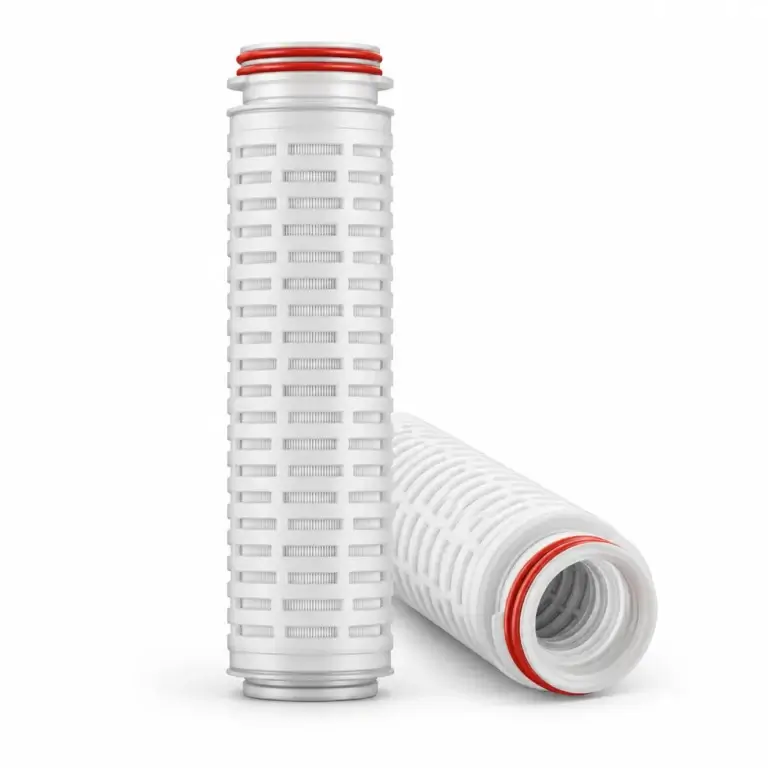
Pleated Micro
Large surface area
0.11–50 µm
Media compatibility, nominal/absolute retention and validation data
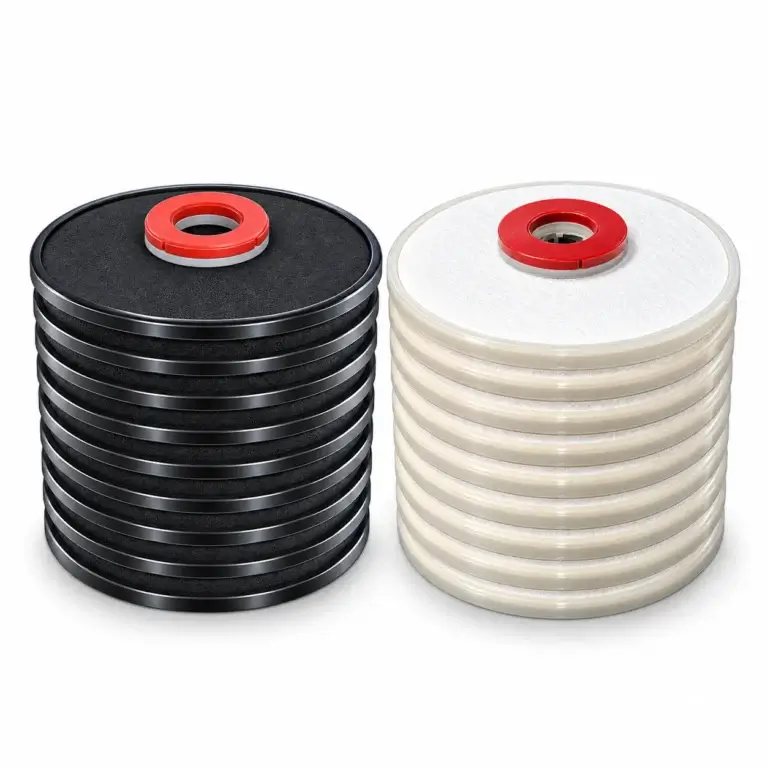
Stacked Disc Module
Disc structure
0.2–60 µm
Disc material, process purpose and operating conditions
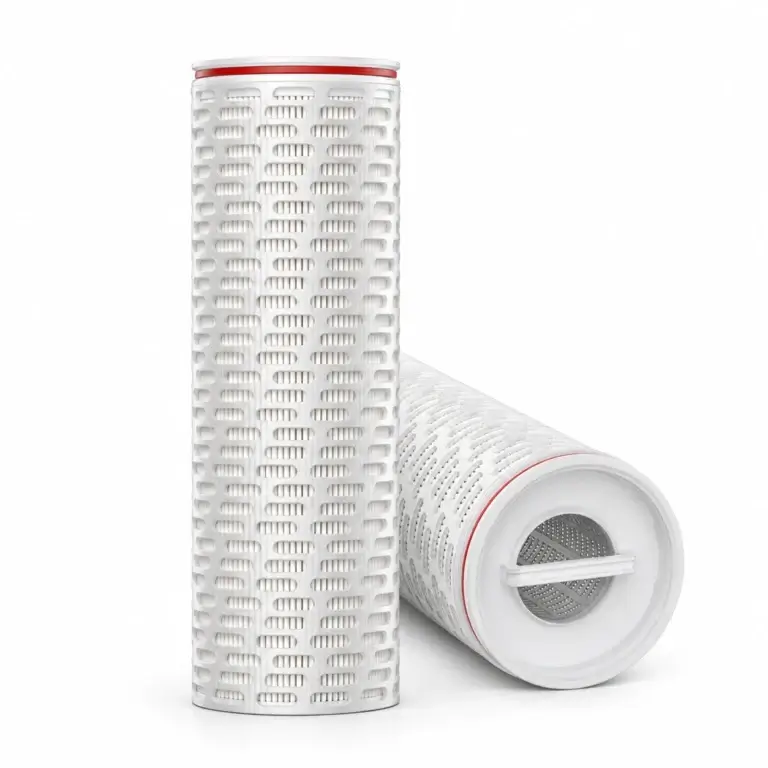
High Flow
High flow
0.5–100 µm
Flow rate, allowable pressure loss and housing compatibility
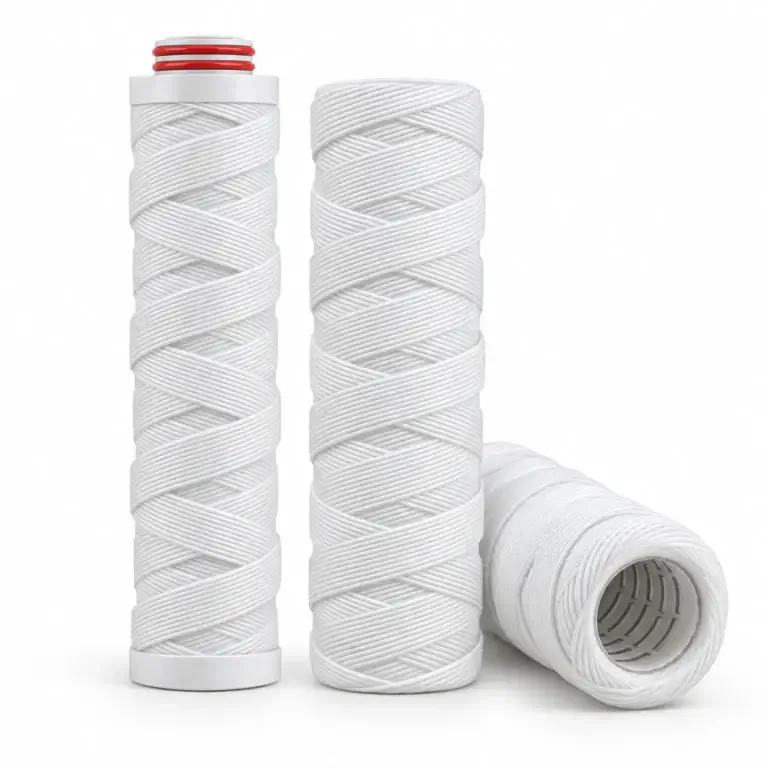
String-Wound
Depth filtration
0.8–150 µm
Compatibility of fibre and core material with the fluid and temperature
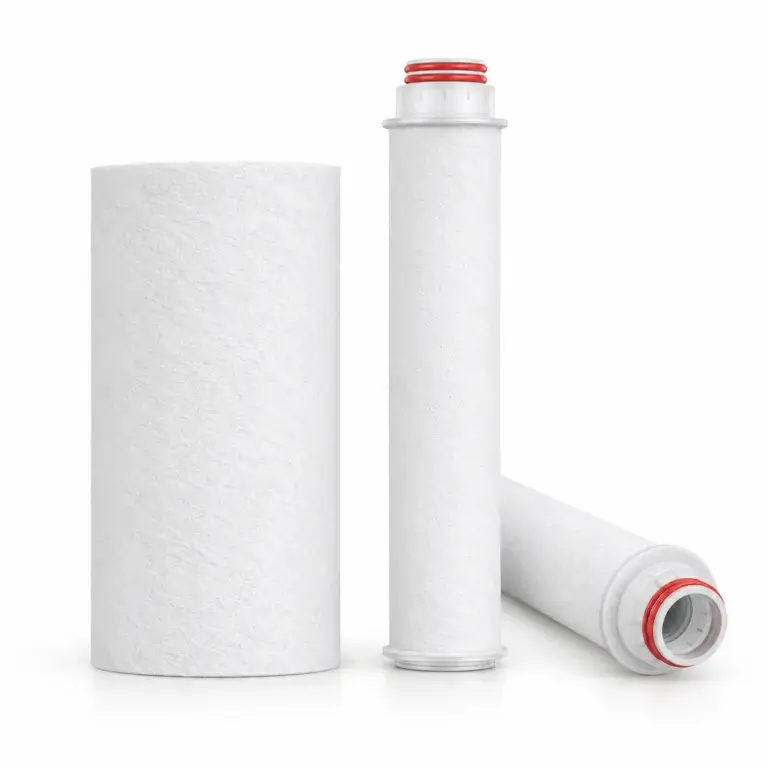
Melt Blown
Particle control
1–150 µm
Micron rating, dirt load and operating flow rate
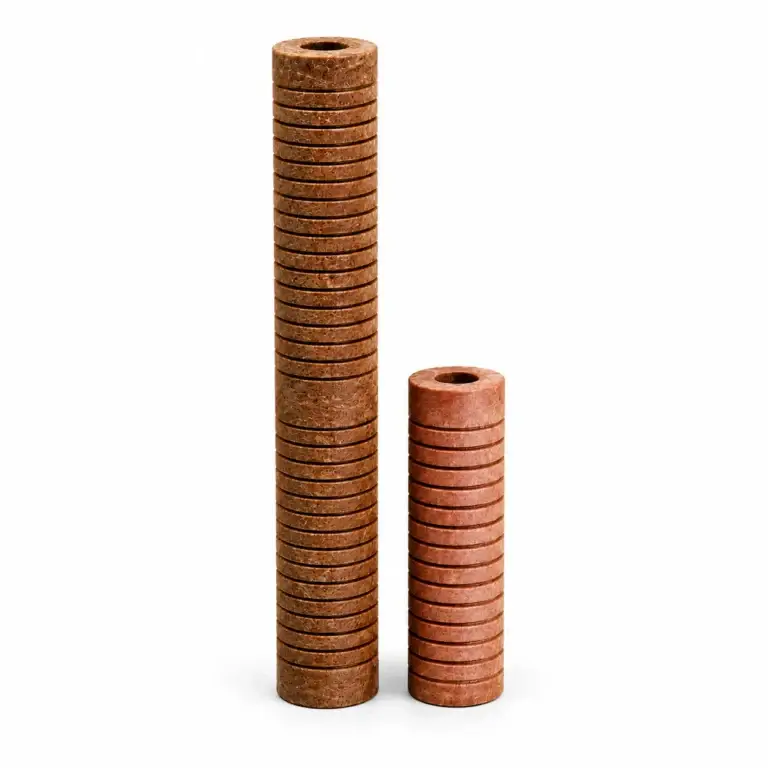
Resin-Bonded
Bonded fibre structure
1–150 µm
Chemical compatibility, viscosity and pressure loss
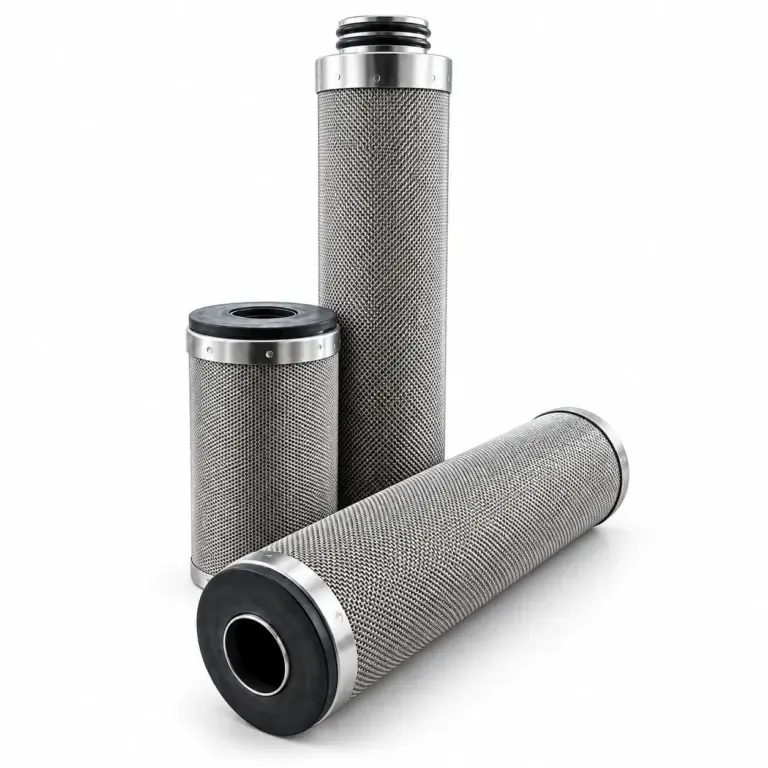
Stainless Steel
Metal filter element
5–10.000 µm
Alloy, filter construction and cleaning method
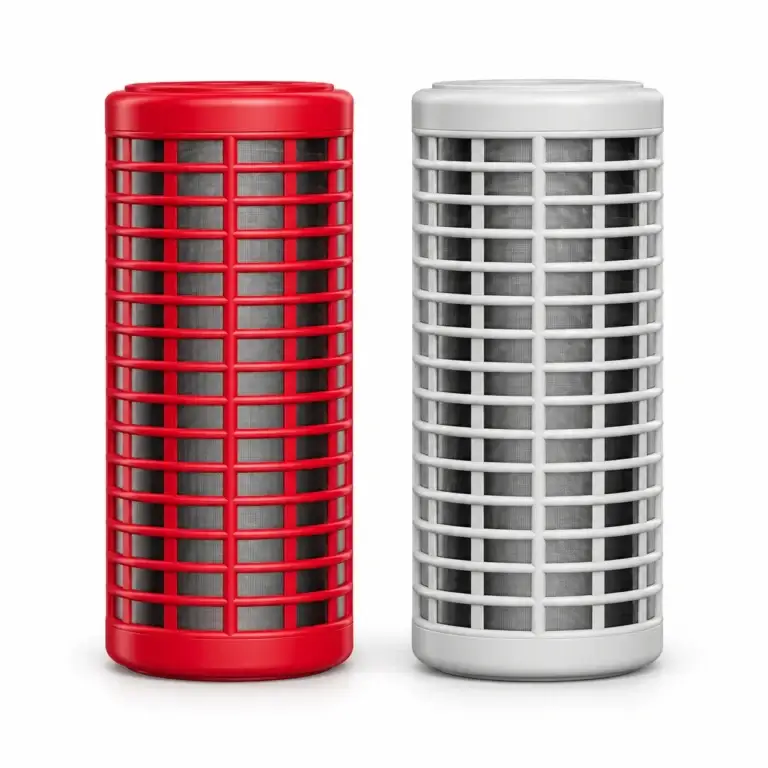
PP Washable
Washable design
50–300 µm
Contaminant type, cleaning method and reuse conditions
Activated Carbon
Adsorption
—
Contact time, inlet concentration and carbon capacity
General selection summary. Final suitability must be confirmed against product technical data and process conditions.
Questions before
you choose.
How do I choose the micron rating of a cartridge filter?
The micron rating is set by the particle size to be retained and the process outlet quality target. Nominal and absolute ratings do not mean the same thing; the manufacturer’s retention efficiencies and test conditions should be assessed together.
Can every cartridge filter be washed and reused?
No. Reuse depends on the filter media, the contaminant and the cleaning method approved by the manufacturer. For cartridges not specified as washable, cleaning should not be assumed to restore performance.
How do high flow and standard cartridges compare?
Required flow rate, effective filtration area, pressure loss, retention efficiency and housing compatibility are compared together. The suitability of a high flow cartridge is not determined by cartridge length or quantity alone.
What information is needed for a quote?
Share the fluid type, flow rate, temperature, pressure, target micron rating and existing housing details. Viscosity, dirt load and the required material compatibility also affect the technical selection.
Engineering support
Share your process and we'll choose the cartridge together.
With these six details, our engineers recommend the right family, micron rating and housing.
Please send BA/BS forms, current account reconciliations and any other emails for our Finance and Administrative Affairs Department to [email protected].
Invoice name (registered company name): PROSES TİCARET, İMALAT, MÜHENDİSLİK ENDÜSTRİYEL MADDE VE MALZEME İMALATI İNŞAAT VE SANAYİ LİMİTED ŞİRKETİ
Billing address: Musa Gündüz Cad. No:14 Taşköprü – Çiftlikköy – YALOVA, TÜRKİYE
E-invoice / e-archive email address: [email protected]
Tax office: Yalova Tax Office (Yalova V.D.)
Tax ID number: 7330379514
MERSIS number: 0733037951400013
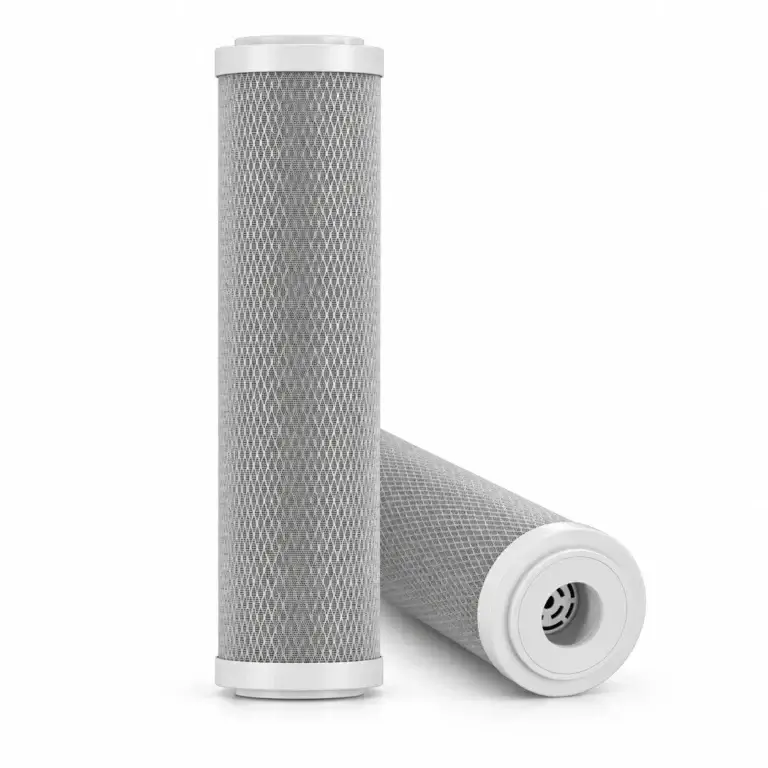
A cartridge filter is a replaceable filter element used inside a filter housing. Depending on the selected media, it captures particles in the fluid or, with materials such as activated carbon, helps reduce certain dissolved components.
Depth
Captures particles throughout the thickness of the media.
Surface
Pleated media captures particles across a large surface area.