Resin-Bonded Cartridge Filter: Paints, Inks and Viscous Fluids

Channel-Free Filtration in Viscous Fluids with a Phenolic and Acrylic Resin Matrix

The resin-bonded cartridge filter is a coreless depth filter hardened with phenolic or acrylic resin. It keeps its form under pressure in viscous fluids such as paints, inks, resins and adhesives; 1–150 µm.

Wide Micron Range

1–150 µm

Maximum Differential Pressure

2.5 bar

Maximum Operating Temperature

80 °C

pH COMPATIBILITY

5–9

Resin-Bonded Cartridge Filter

Product Identity and Technical Summary Panel

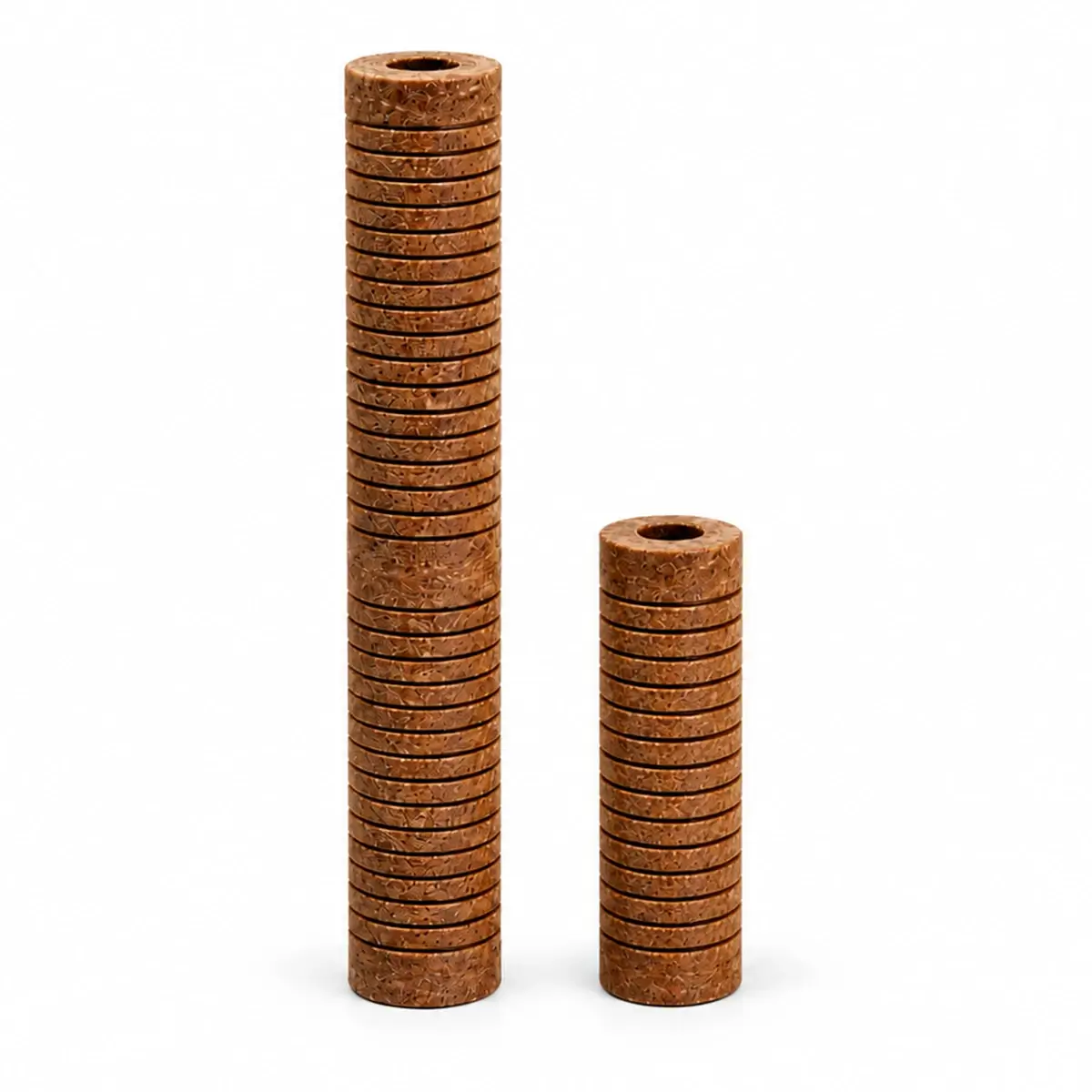
The resin-bonded cartridge filter is made by impregnating long cellulose and synthetic fibres with phenolic or acrylic resin and curing them with heat. It is a rigid-bodied depth filter that needs no internal support core. It was developed for heavy process conditions where soft cartridges such as melt-blown and string-wound compress or shed fibres. It replaces these cartridges on lines filtering thick fluids such as paints, varnishes, inks, adhesives, resins and petroleum derivatives.

Options from 1 µm to 150 µm can be used at different stages, from coarse filtration that separates pigment and gel agglomerates to fine final filtration such as inkjet ink. The resin type is chosen according to the line’s chemistry. The phenolic body stands out in solvent- and oil-dominated fluids, the acrylic body in water-based and saline solutions. Cartridges are made in 10″, 20″, 30″ and 40″ lengths, in standard and Big Blue diameters, with DOE or SOE ends. NBR, EPDM, Viton, silicone and PTFE gasket options are also available.

Further down the page you will find the cartridge’s working principle, operating limits, a chemical compatibility table by resin type and gasket options. Once you have settled on the right combination for your process, you can request a quote directly from the configurator at the end of the page by selecting resin type, length, micron rating and quantity.

Key Technical and Structural Features

Filter Media
  • Phenolic Resin-Bonded Long Fibre
  • Acrylic Resin-Bonded Synthetic / Cellulose Fibre
  • Coreless Rigid Composite Construction
Filtration Range
Nominal filtration precision from 1 µm to 150 µm; graded density from outside to inside.
Filter Lengths
  • 10"
  • 20"
  • 30"
  • 40"
Operating Compatibility
  • Solvent-Based Paints and Printing Inks
  • Resins, Polymers and Adhesives
  • Mineral Oils and Lubricants
  • Aggressive Chemical and High-Viscosity Lines
Construction Type
A coreless, very rigid thermoset cylindrical design that does not channel under high pressure.
Connection Options
  • DOE (Double Open End, Double Gasket)
  • SOE Bayonet End Cap
  • High-Temperature-Resistant Gasket / Adapter
Production Model
Standard series production and custom configurations made to process samples/technical drawings.
Mechanical Strength
The rigid resin-bonded structure keeps its form and micron rating up to a differential pressure of 2.5 bar at 25 °C (max. 1.0 bar at 80 °C).
Resin-bonded cartridge filters with grooved surfaces and inner diameter cross-sections on a dark background

Flow and Pressure Drop Performance in Viscous Fluids

Prosestim resin-bonded cartridge filters offer flow performance optimised with rigid depth filtration technology. Unlike conventional filters, the fibre structure fixed with phenolic or acrylic resin keeps its pore structure even with high-viscosity liquids and rising differential pressure values. Our micron options from 1 µm to 150 µm form a stable filtration layer, giving consistent efficiency throughout the cartridge’s service life. This rigidity reduces the risk of channelling, especially in processes with pressure fluctuations, improving operational safety and energy efficiency.

Filtration Architecture and Working Principle

Prosestim resin-bonded filters have a very rigid structure because their fibres are fixed with acrylic or phenolic resin. This rigid architecture keeps the fibres bonded together even under high pressure when filtering viscous fluids, preventing channel (bypass) formation.

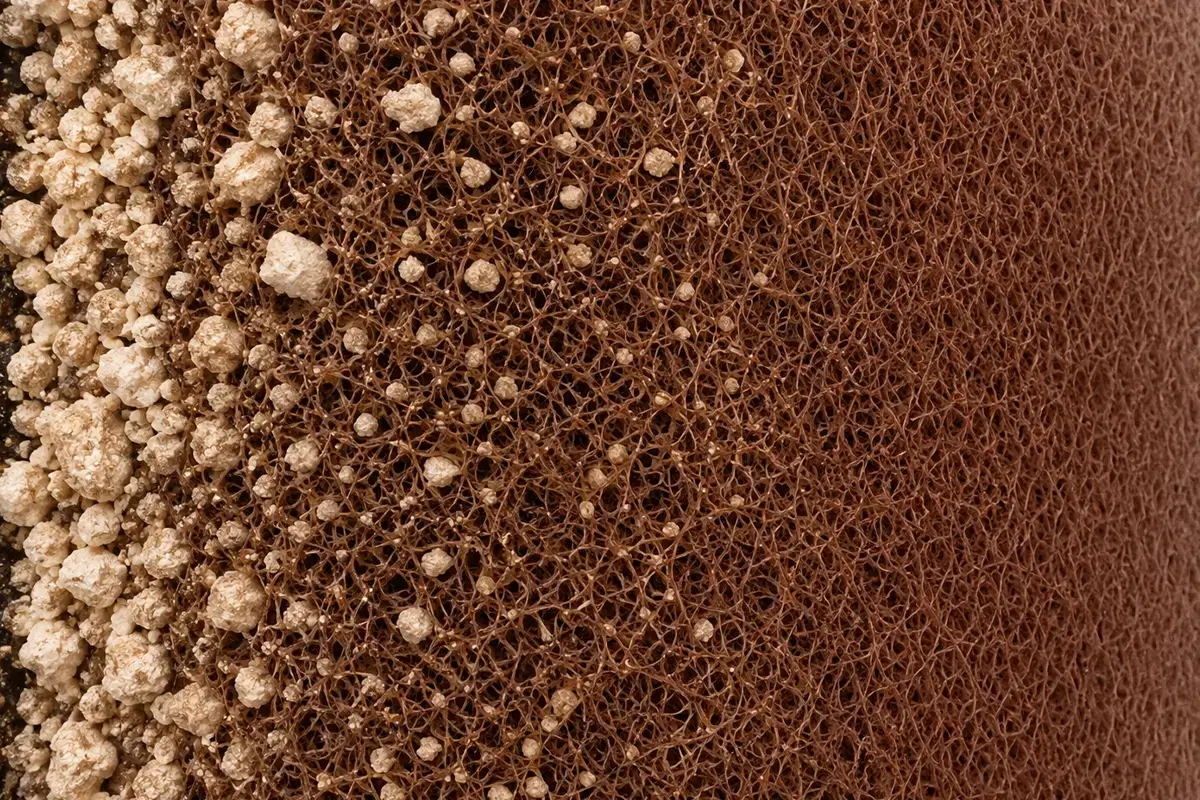
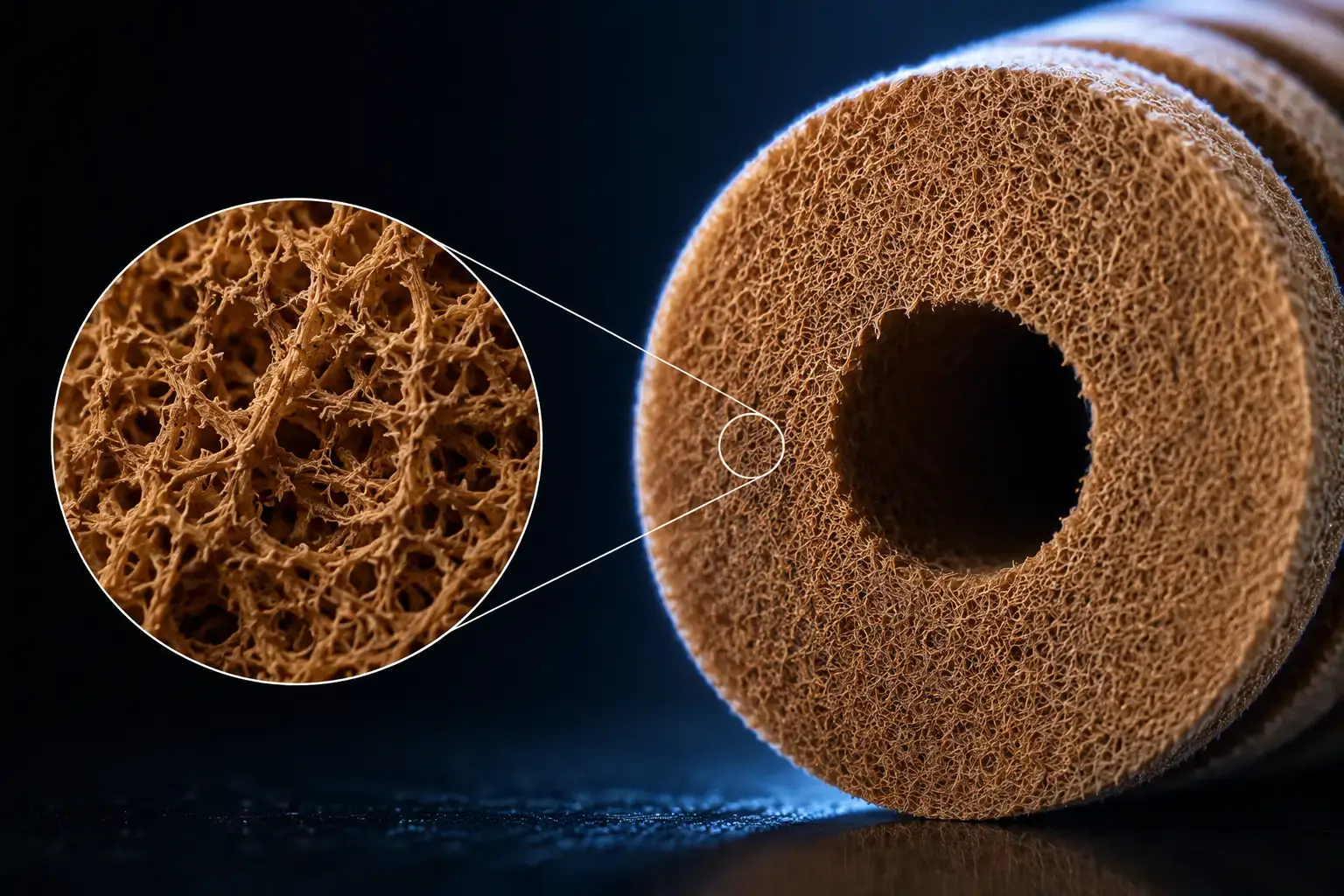
Macro pore view showing the graded rigid depth structure of a resin-bonded cartridge filter
STEP 01

Graded Rigid Depth and Pressure Stabilisation

Unlike standard polypropylene filters, Prosestim resin-bonded cartridge filters work with a “rigid graded density” architecture that does not collapse under pressure in high-viscosity fluids (paints, inks, adhesives). As the fluid moves from the outer surface of the rigid matrix towards its inner diameter, it meets a progressively narrowing labyrinth; this depth filtration principle keeps the pores stable even under high differential pressure and offers high dirt-holding capacity.

Macro close-up of a resin-bonded cartridge filter cross-section, magnifying the thermally bonded microfibre matrix
STEP 02

Resin-Bonded Fibre Matrix and Structural Reliability

Industrial filter cartridge performance depends not only on the architecture but on how stable that architecture stays under high differential pressure (ΔP) and chemical solvents. The key difference of Prosestim resin-bonded filters is their rigid matrix, cross-linked with phenolic or acrylic resin. This production method directly meets the high strength and thermal stability requirements of paint, solvent and petrochemical applications.

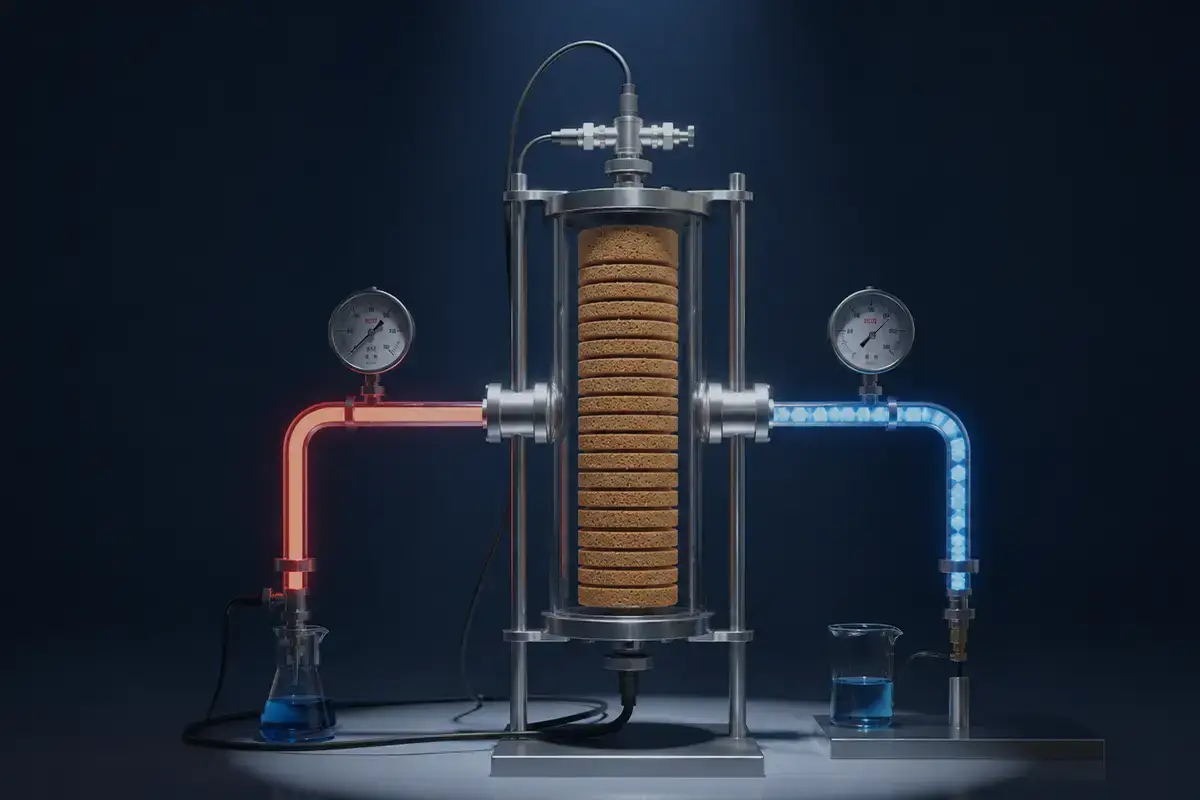
Illustration of loading and pressure difference with a resin-bonded cartridge filter in a test rig with pressure gauges
STEP 03

Predictable Loading Curve and Controlled Service Life

The biggest operational risk in industrial filter systems is not knowing when the filter will reach its capacity. In standard filters, when the fibre matrix collapses under pressure, ΔP jumps suddenly and bypass begins; by the time the operator notices, the process is already contaminated. In Prosestim resin-bonded filters, the rigid matrix reduces this uncertainty: as the cartridge starts to load, differential pressure rises linearly and predictably, with no sudden collapse.

Raw Material and Structural Engineering Design

Long cellulose and synthetic fibres form the filter’s skeleton. The longer the fibres, the more points at which each fibre bonds to its neighbours, and the greater the mechanical strength of the matrix. Phenolic or acrylic resin locks these fibres together at their crossing points and, when cured with heat, turns into a thermoset structure. This structure does not soften when heated again, does not break down on contact with solvents, and fibres do not break loose into the filtered fluid.

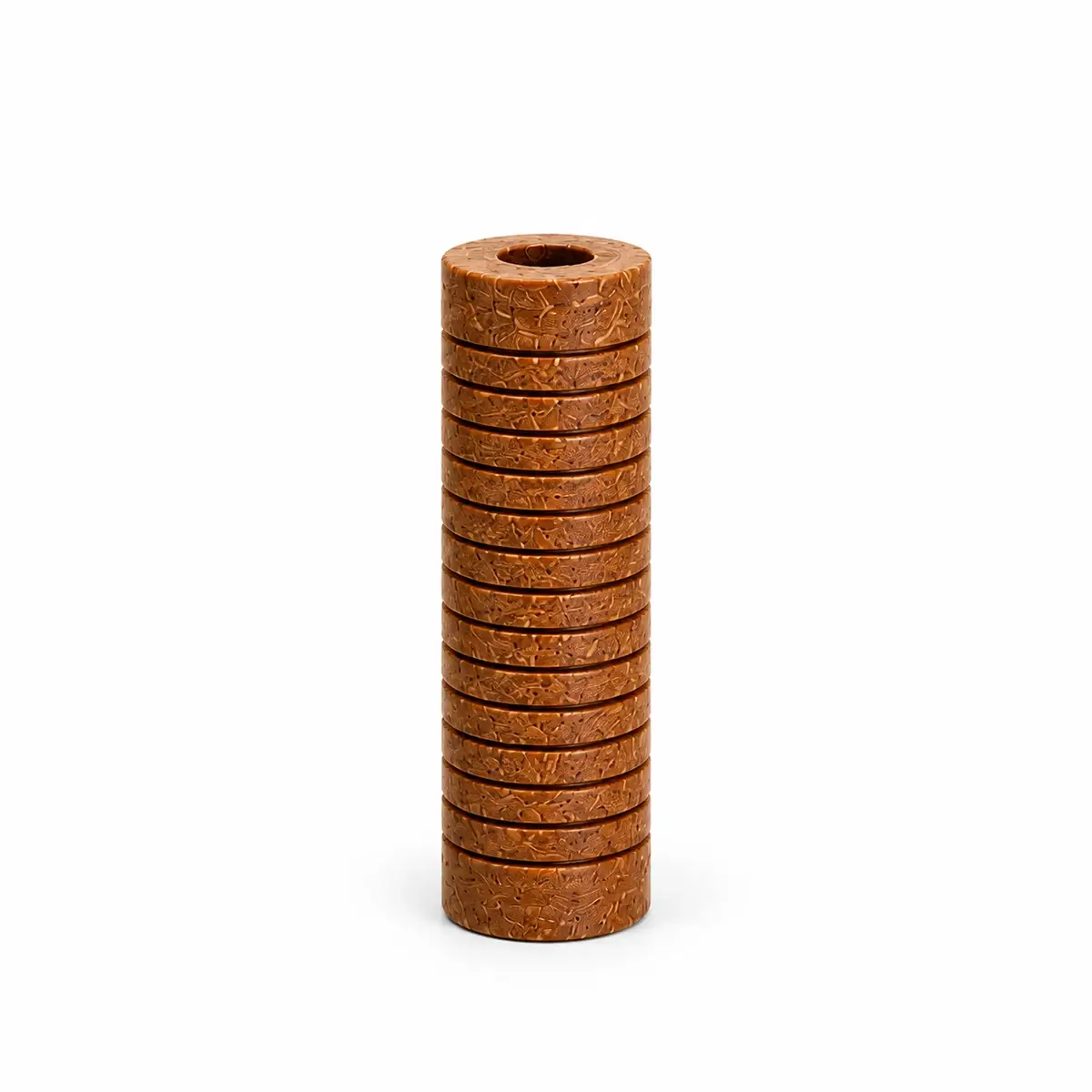
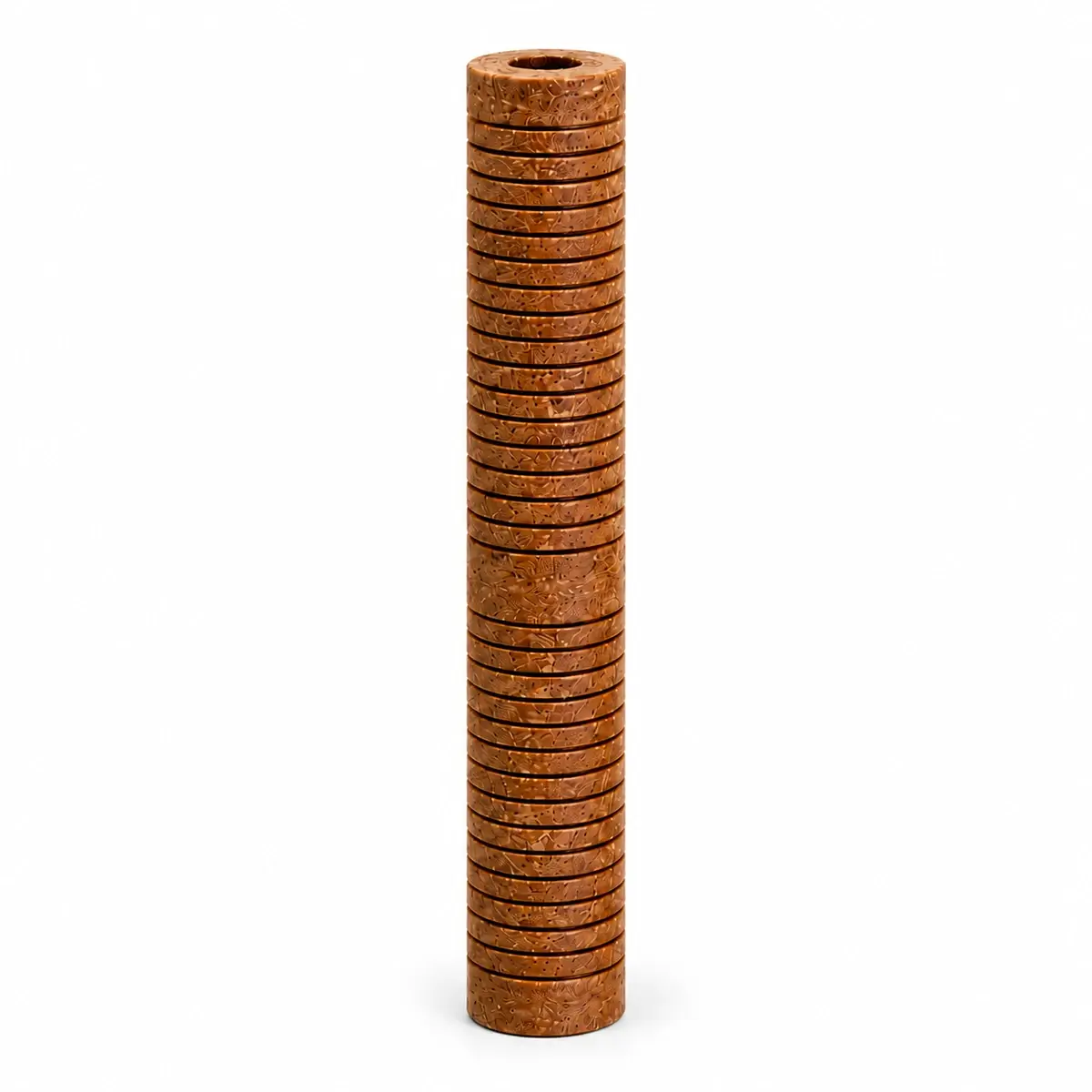
The body is made without a separate support core, and the entire thick wall works as filter media. Particles are therefore retained not only at the surface but across the full cross-section of the wall. Because there is no core, only fibre and resin come into contact with the fluid, so no separate core material has to be considered for chemical compatibility. The grooved outer surface enlarges the filtration area and holds large particles at the surface, so the deeper layers fill later. The rigid body also helps during installation. Because the cartridge ends are not crushed under pressure, the gasket seats evenly on the surface, and in DOE models the clamping pressure is distributed evenly all round. This helps maintain the seal throughout the cartridge’s life.

Parameter Resin-Bonded Filter Specification
Matrix Composition Long-Fibre Filter Media Impregnated with Phenolic or Acrylic Resin
Micron Ratings 1 µm, 5 µm, 10 µm, 25 µm, 50 µm, 75 µm, 100 µm, 125 µm, 150 µm
Surface Structure Grooved – increased effective filtration area
Internal Support Coreless, high-rigidity body
Max. Differential Pressure 2.5 bar @ 25 °C
Standard Diameters Outer Diameter: 65 mm · Inner Diameter: 27 mm
Big Blue Diameters Outer Diameter: 115 mm · Inner Diameter: 28 mm
Length Options 10", 20", 30", 40"

Physical Construction and Filtration Surface Area

In a resin-bonded cartridge, the fibres are fixed with an acrylic or phenolic matrix, so the body does not collapse under pressure. All lengths from 10 to 40 inches are made with a one-piece body with no joints, which reduces the risk of bypass at high differential pressure. The rigid body keeps its form even with high-viscosity liquids, increasing the amount of particles retained per unit volume. The length is chosen according to the fluid’s viscosity and the line flow.

Filter Length Area of Use Construction Architecture
10 Inch Sampling lines, pilot production of paints and inks One-Piece Rigid Body
20 Inch Medium-flow paint, varnish and resin lines One-Piece Rigid Body
30 Inch Central paint and solvent distribution systems One-Piece Rigid Body
40 Inch High-flow viscous fluid lines One-Piece Rigid Body

Filter Material Chemical Compatibility Guide

The special acrylic- and phenolic-based matrix of resin-bonded filters is compatible with industrial solvents and aggressive chemical process fluids, preventing the material structure from breaking down. Showing high resistance to chemical attack when filtering aggressive industrial oils and high-viscosity liquids, this stable structure reduces the risk of fibre migration or foreign contaminants getting into the fluid.

E: Excellent  ·  G: Good  ·  F: Fair  ·  P: Poor  ·  N/R: Not recommended

Water and Inorganic Chemicals

Chemical Group Example Chemical Acrylic Resin Phenolic Resin
Drinking / Process Water Process water, condensates E E
Organic Acids Acetic acid (20%), citric acid E E
Dilute Inorganic Acids Dilute HCl, H₂SO₄ (<10%) F F
Strong Inorganic Acids Concentrated H₂SO₄, HCl P P
Alkalis Ammonia, dilute NaOH P F
Strong Alkalis NaOH 50%, concentrated KOH N/R N/R
Oxidising Agents H₂O₂ (30%+), hypochlorite, ozone N/R N/R
Inorganic Salt Solutions NaCl, CaCl₂, aluminium sulphate E E

E: Excellent  ·  G: Good  ·  F: Fair  ·  P: Poor  ·  N/R: Not recommended

Organic Solvents and Oils

Chemical Group Example Chemical Acrylic Resin Phenolic Resin
Organic Solvents (Polar) Acetone, MEK, IPA, ethanol F G
Aprotic Polar Solvents DMF, DMSO, NMP N/R G
Organic Solvents (Aliphatic) Hexane, heptane, white spirit G E
Organic Solvents (Aromatic) Toluene, xylene, benzene G E
Chlorinated Solvents DCM, TCE, perchloroethylene N/R G
Glycols Ethylene glycol, propylene glycol E E
Mineral and Industrial Oils Machine oil, hydraulic oil, fuel oil E E
Vegetable and Animal Oils Olive oil, soybean oil, tallow E E

Operating Conditions

Resin-bonded cartridge filters are depth filtration elements that offer high differential pressure resistance, chemical stability and the ability to keep their structural integrity under heavy process conditions. Thanks to their fibre matrix bonded with phenolic or acrylic resin, they perform reliably with solvent-based fluids, paint systems, resin applications and high-viscosity liquids.

The resin-reinforced rigid structure reduces media deformation under pressure fluctuations while offering stable flow distribution and a long service life. With different micron ratings, end cap options and elastomer compatibilities, it can be adapted and optimised for a range of industrial processes.

Operating Parameter Technical Value
Nominal Operating Temperature 60 °C (140 °F)
Maximum Operating Temperature 80 °C (176 °F) @ 1.0 bar (14.5 psi)
Maximum Operating Pressure (Forward Flow) 4.2 bar (60.9 psi) @ 25 °C (77 °F)
Maximum Operating Pressure (Reverse Flow) 2.1 bar (30.5 psi) @ 25 °C (77 °F)
Maximum Differential Pressure 2.5 bar (36.3 psi) @ 25 °C (77 °F)
Operating Parameter Technical Value
pH Compatibility 5–9
Filter Media Phenolic or Acrylic Resin-Bonded Fibre
End Cap Options DOE / SOE
Gasket and O-Ring Compatibility NBR, EPDM, Viton, Silicone, PTFE
TECHNICAL ASSESSMENT BASED ON FIELD EXPERIENCE

Engineer's Note

Thanks to their reinforced fibre matrix, resin-bonded cartridge filters provide stable depth filtration in processes with a high particle load. The structure bonded with phenolic or acrylic resin reduces deformation under high differential pressure and maintains filtration continuity.

The most common operational mistake with paints, resins, solvents and viscous chemical fluids is delaying filter replacement even though ΔP has reached a critical level. Differential pressure that stays high for a long time compacts the media and shortens service life. For optimum performance, keeping system flow at 70–75% of the filter’s capacity is recommended.

When should it be chosen?

Used in chemical processes with a high particle load, in filtering paints, resins, varnishes and solvents, and with high-viscosity liquids; also serves as a protective stage before final filtration.

Application and Selection Criteria

Differential Pressure (ΔP) and Replacement Monitoring
With high-viscosity fluids, monitor ΔP regularly; plan replacement at the critical pressure limit before the rigid matrix breaks down.
Solvent and Elastomer Compatibility
In solvent-based applications, confirm the chemical compatibility of the elastomer in advance so that the gasket and O-ring material do not react with the fluid.
Gasket Selection with Aggressive Chemicals
To ensure sealing on high-temperature and corrosive lines, FKM (Viton®) or PTFE-encapsulated gaskets should be chosen.

Industry Applications

Resin-bonded cartridge filters are used on paint, varnish, resin, ink, solvent, adhesive, petroleum derivative and high-viscosity chemical process lines. Thanks to their rigid fibre matrix impregnated with phenolic and acrylic resin, they keep their form under high differential pressure and in aggressive chemical environments, delivering stable, long-lasting filtration performance.

1–6 / 24
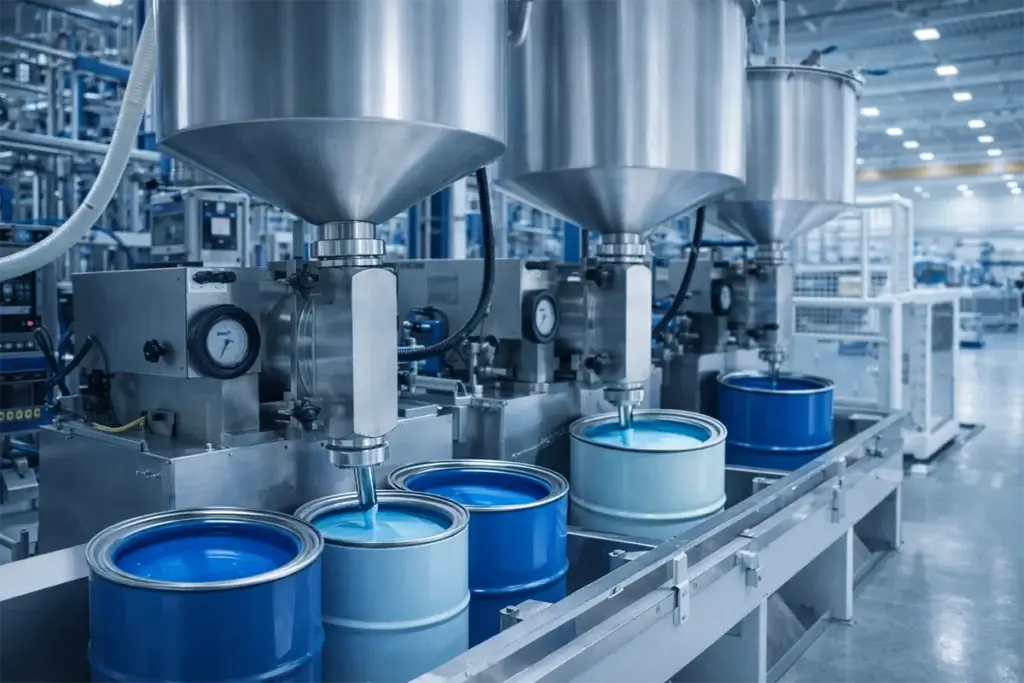
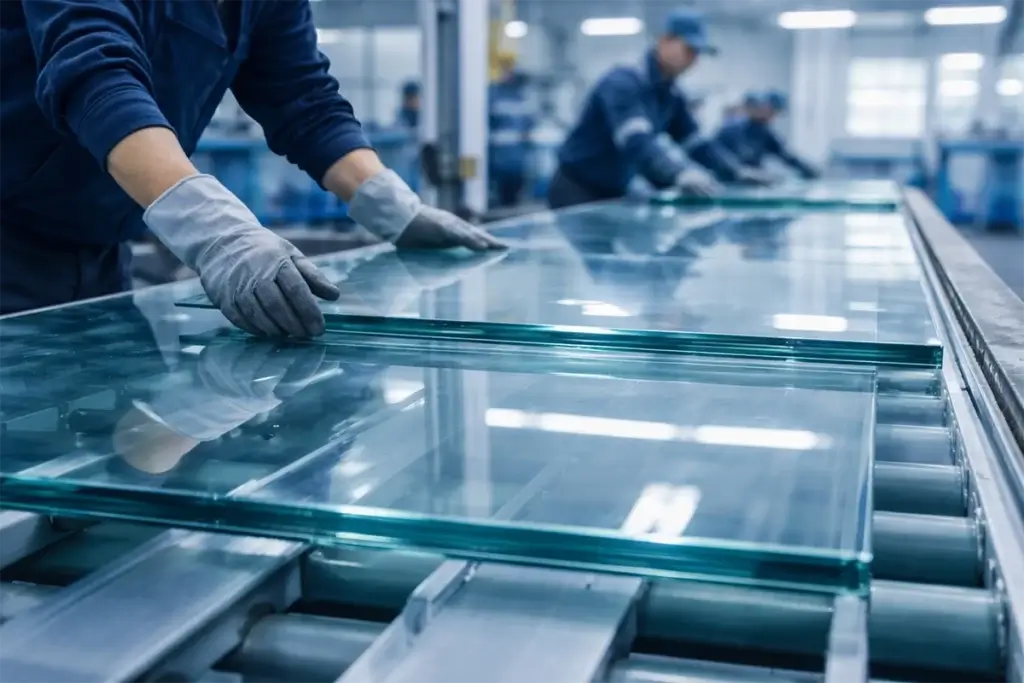
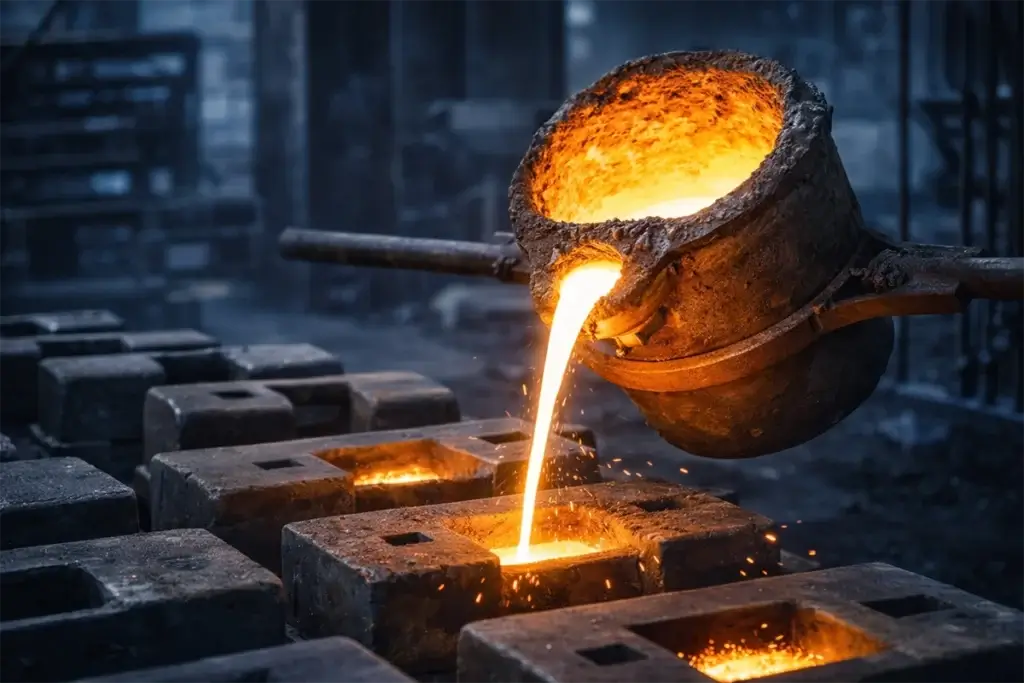
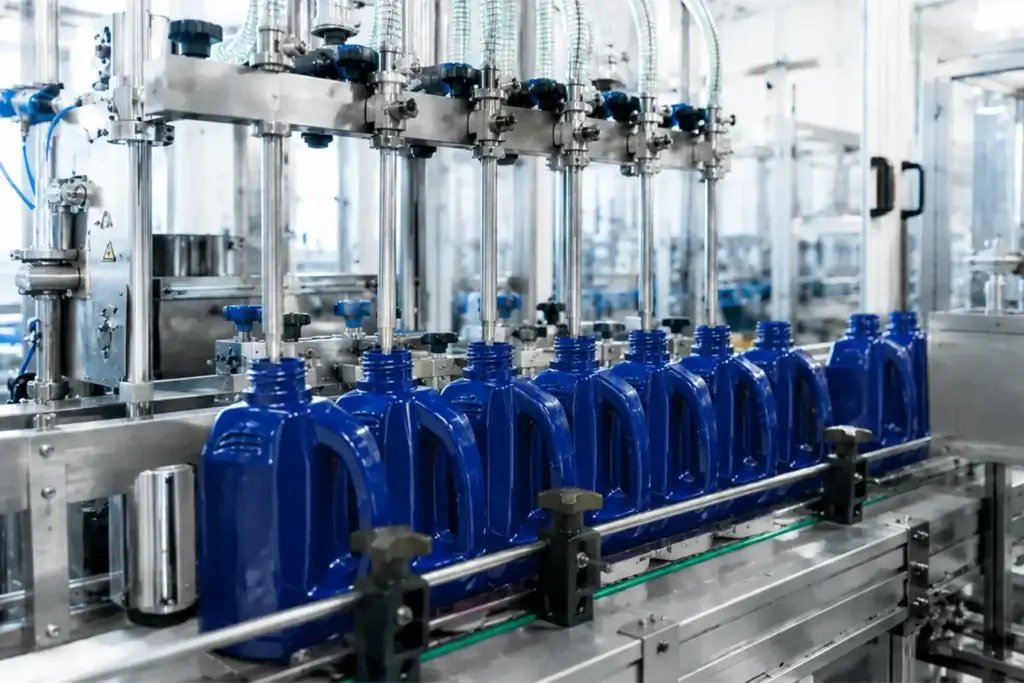
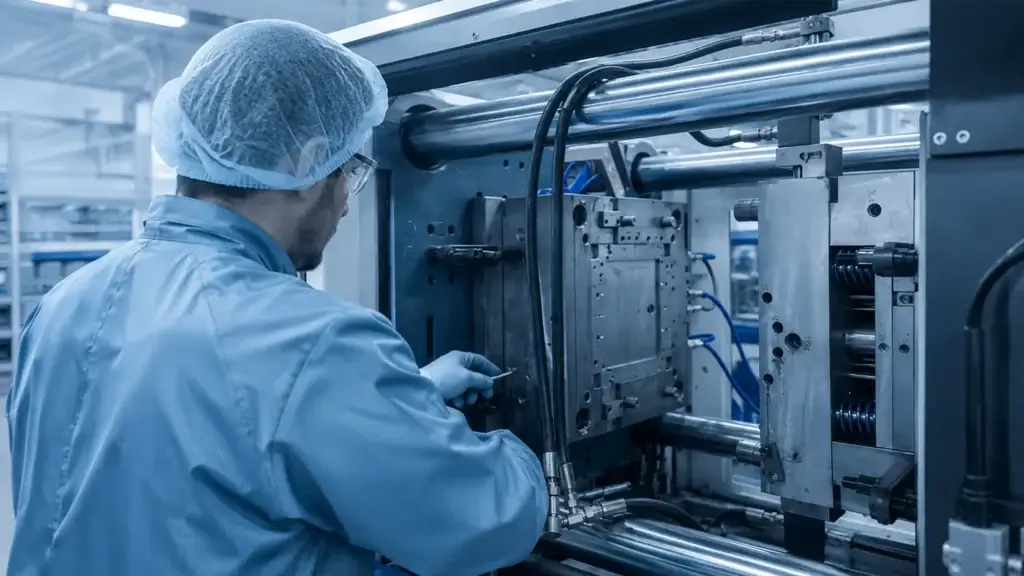
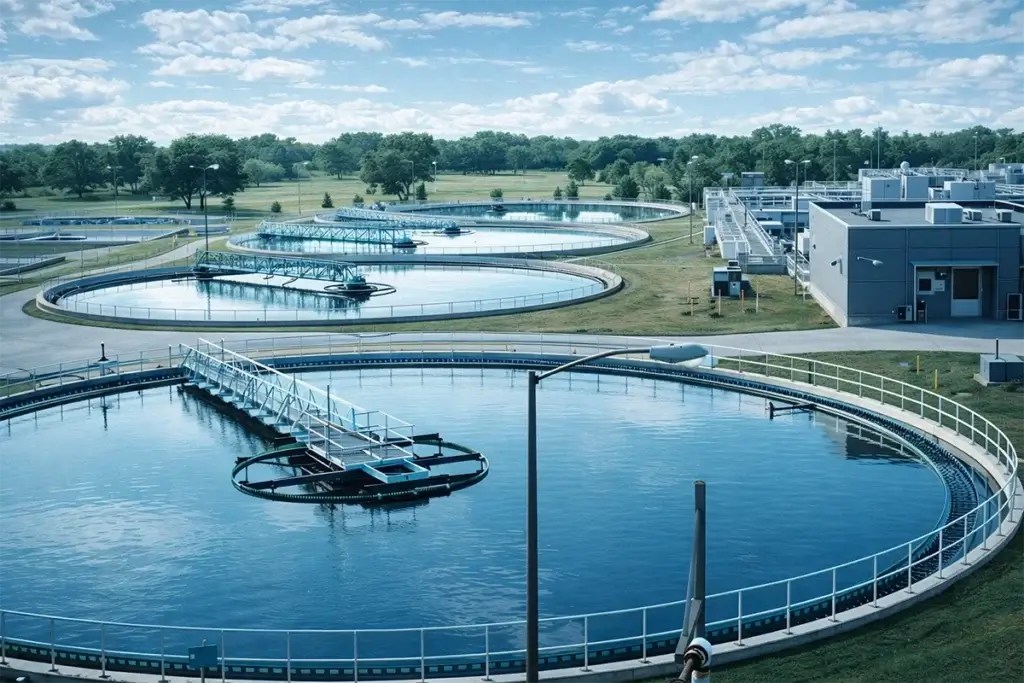
Vegetable Oil 01 Vegetable Oil Clarity, purity and shelf life in vegetable oil and refining. Explore solutions Pipe and Profile 02 Pipe and Profile Cooling water filtration in pipe and profile extrusion. Explore solutions Paint Industry 03 Paint Industry Surface quality and pigment filtration in the paint industry. Explore solutions Glass Industry 04 Glass Industry Furnace and process filtration in the glass industry. Explore solutions Dialysis Centers 05 Dialysis Centers Water preparation and process filtration in dialysis centers. Explore solutions Foundry Industry 06 Foundry Industry Equipment protection and dust filtration in foundries. Explore solutions Industrial Oil 07 Industrial Oil Filtration in industrial oil production and recovery. Explore solutions Energy and Biogas 08 Energy and Biogas Maximum efficiency and turbine protection in energy and biogas. Explore solutions Recycling 09 Recycling Filtration for efficiency and environmental compliance in recycling. Explore solutions Food and Beverage 10 Food and Beverage Hygienic filtration in food and beverage. Explore solutions Pharmaceuticals and Biotechnology 11 Pharmaceuticals and Biotechnology GMP-compliant sterile filtration in pharmaceuticals and biotechnology. Explore solutions Paper and Packaging 12 Paper and Packaging Process water filtration in paper and packaging. Explore solutions Chemical Industry 13 Chemical Industry Corrosion-resistant, safe filtration in the chemical industry. Explore solutions Cosmetics 14 Cosmetics Microbiological safety and precision filtration in cosmetics. Explore solutions Machinery 15 Machinery Precision and technical filtration in the machinery industry. Explore solutions Printing and Ink 16 Printing and Ink Flawless color and print quality in printing and ink. Explore solutions Metal and Surface Treatment 17 Metal and Surface Treatment Flawless surfaces and bath stability in metal and surface treatment. Explore solutions Forest Products 18 Forest Products Resin and glue filtration in forest products and furniture. Explore solutions Automotive 19 Automotive Precision process filtration for zero defects in automotive manufacturing. Explore solutions Oil and Petrochemicals 20 Oil and Petrochemicals Equipment protection and process safety in oil and petrochemicals. Explore solutions Plastic Packaging 21 Plastic Packaging Precision process filtration and raw material purity in plastic packaging. Explore solutions Plastic Injection Molding 22 Plastic Injection Molding Cooling and hydraulic filtration in plastic injection molding. Explore solutions Water and Environment 23 Water and Environment Recovery filtration in water and environmental technologies. Explore solutions Shipyards and Marine 24 Shipyards and Marine Operational safety and efficiency in shipyards and marine. Explore solutions








Products that work with this product

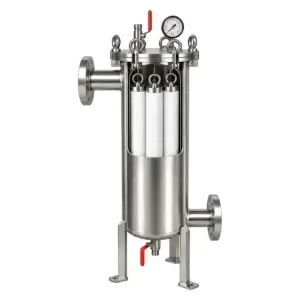
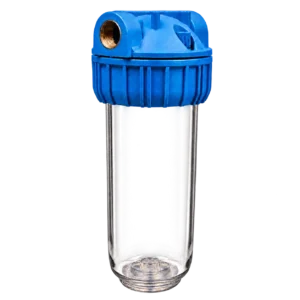
Housings the cartridge fits, alternatives with the same end-cap types and the parts needed for connection.
This product
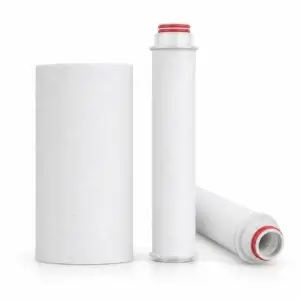
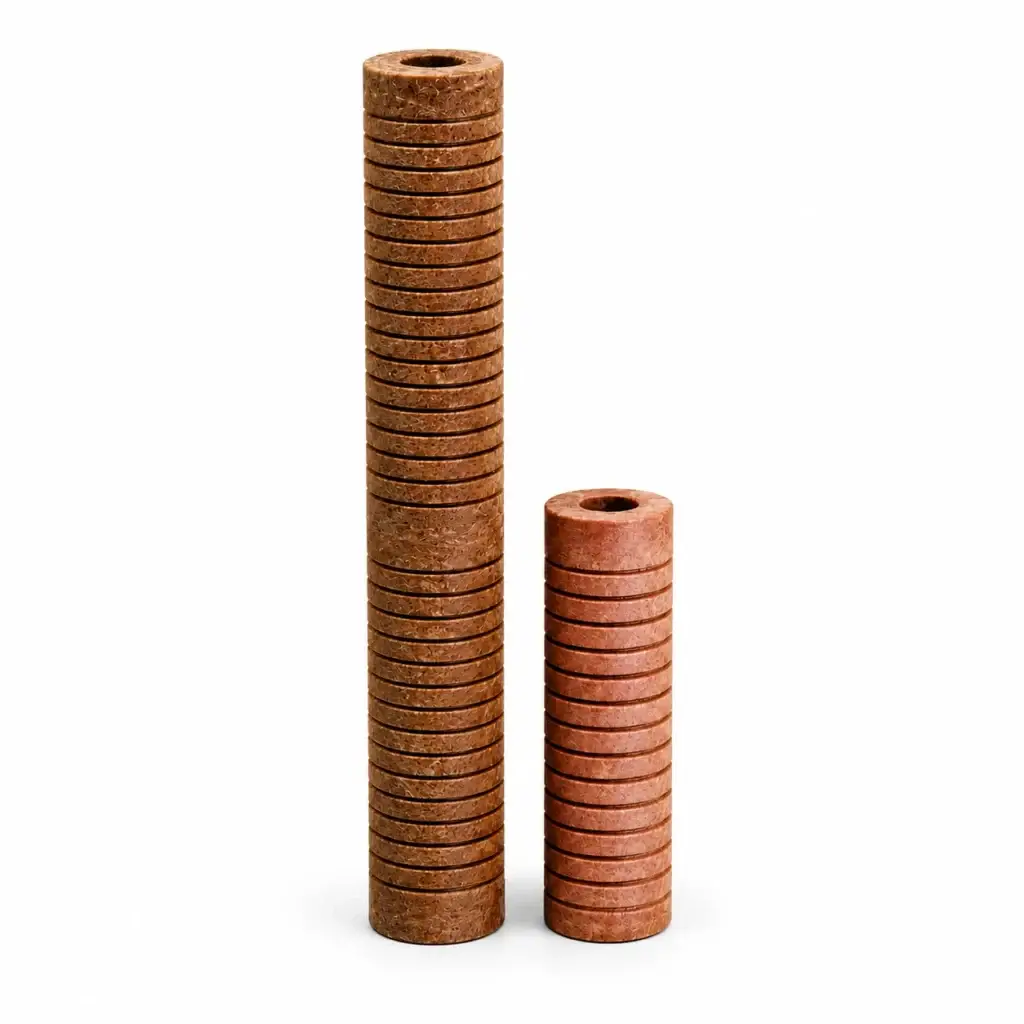
20-inch and 10-inch resin-bonded cartridge filters

Resin-Bonded Cartridge Filter

Cartridge Filters
Melt blown cartridge filter

Melt Blown Cartridge Filter

Economical depth filter, also used as a pre-filter.

View →
String-wound cartridge filter

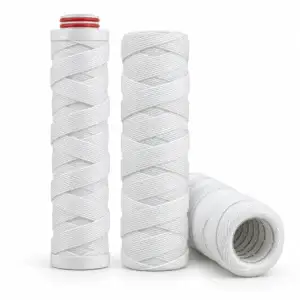
String-Wound Cartridge Filter

Graded-porosity depth filter, 0.8–150 µm.

View →
Request everything in one quote: let’s size the product, housing and connection parts together.

Your Questions Answered

Frequently Asked Questions

At Prosestim, we are committed to answering your questions and providing technical support for our filtration solutions.

Yes, resin-bonded filters are designed for such lines. With high-viscosity liquids (paints, varnishes, resins), when differential pressure rises quickly in standard PP melt-blown filters, the fibre matrix compresses, the pore size shrinks and channels (bypass) form. At that point the filter loses its micron rating and dirty liquid starts to pass.

In resin-bonded filters, acrylic or phenolic resin fixes the fibres rigidly. Even at a differential pressure of 2.5 bar the structure does not break down; pore size and micron precision are maintained. The difference documented in the field is that, in the same process, a service life 3–4 times longer than with a standard filter is achieved. When you run at 70–75% of your flow capacity, this ratio increases further.

The decision between the two depends on two questions: what is the liquid’s viscosity, and how high is the differential pressure?

A string-wound filter is sufficient: in applications requiring pre- and coarse filtration of low-viscosity liquids (water, dilute chemicals, oil-free condensate) under low ΔP conditions. The cost advantage is clear.

A resin-bonded filter is necessary: with paints, inks, varnishes, adhesives, crude oil or high-viscosity chemical liquids; on lines with pressure fluctuations; in processes where fibre migration (shedding) cannot be tolerated; and at final filtration stages that require reliable filtration below 10 µm.

A practical test: if the liquid flows like water at room temperature, string-wound is enough. If it pulls or leaves trails when you pour it, choose resin-bonded.

For solvent-based paint, ink and resin lines, phenolic resin is the first choice, because it shows high chemical resistance to toluene, xylene, white spirit, ethyl acetate and naphtha; the resin itself is thermally stable up to 121 °C, while the cartridge’s operating limit is 80 °C.

Choose acrylic resin for water-based fluids, mildly acidic processes (above pH 5) and inorganic salt solutions. Acrylic also works in solvent environments but is not as strong as phenolic and breaks down quickly in alkalis; even dilute NaOH can start hydrolysis. Lines with concentrated acids and oxidisers (nitric acid, hypochlorite, peroxide) are not suitable for either resin type.

If your line has both acids and solvents, choose phenolic, then confirm with a sample test.

The acrylic-bonded structure undergoes chemical hydrolysis in alkaline environments: the bond structure weakens, the fibre matrix loosens and particle release begins. Even dilute NaOH can start this breakdown. Acrylic filters should therefore not be used on lines with alkaline cleaning (CIP) steps.

Phenolic resin, on the other hand, breaks down in strong alkalis (NaOH 50%+, concentrated KOH): the bonds in the resin matrix hydrolyse, the resin detaches from the fibre matrix and the pore structure breaks down. Phenolic has moderate resistance to dilute alkalis (ammonia, dilute NaOH); this is where the two resin types differ. The recommended operating range for both types is pH 5–9.

Choose phenolic resin for all these applications. For mineral oils, hydraulic oil, fuel oil and crude oil, both resin types are rated Excellent (E) in the chemical compatibility table; the difference appears as temperature and solvent content increase. Both work with crude oil and refinery fluids; as the operating temperature approaches the 60–80 °C range, phenolic’s thermal advantage becomes clear.

Gasket selection is critical in this application: NBR is standard for mineral oil and hydraulic oil; switch to Viton if the aromatic hydrocarbon content is high. Silicone and EPDM swell in oil environments; do not use them.

These two values describe different operating conditions. The maximum operating temperature of 80 °C is the practical upper limit at which the filter can operate continuously and safely in process fluids.

121 °C, on the other hand, is the maximum structural thermal stability limit of the pure phenolic and acrylic resin media. However, because of the temperature limits of the gaskets/O-rings (EPDM, silicone, etc.) and end cap materials used in the field, 80 °C should not be exceeded in continuous liquid processes. In addition, because resin-bonded filters are not intended for food/pharmaceutical sterilisation, they are designed for use on solvent and chemical process lines rather than for steam sterilisation (SIP/autoclave).

The standard approach for printing processes is staged filtration with phenolic resin. By application:

  • Offset ink: Phenolic resin, 10–25 µm. A rigid structure is essential because of the high viscosity and pigment load.
  • Flexo / gravure ink: Phenolic resin, 5–25 µm. Phenolic for solvent-based systems; either type may suit water-based ones.
  • Inkjet / conductive ink: Very fine; 1–5 µm. There is no tolerance for fibre migration; a resin-bonded filter is mandatory, and standard melt-blown is not acceptable.
  • UV-curing ink: Phenolic resin, 5–25 µm. With these inks containing monomers and oligomers, chemical compatibility must be completed with a Viton® O-ring.

Replacement based on differential pressure (ΔP) gives more accurate results; a fixed schedule leads to both early and late replacement, and both are costly.

Practical thresholds for resin-bonded filters: recommended replacement ΔP of 2.0 bar; maximum ΔP of 2.5 bar. In this range the filter still works, but its life runs out quickly. Replace it when ΔP exceeds 2.0 bar; do not wait. Also replace it regardless of ΔP if you see a change of colour, turbidity or more particles in the outgoing liquid; this is a sign of micron loss.

Fit pressure gauges to the filter inlet and outlet. If you cannot, at least monitor the inlet pressure: at constant flow, a sudden pressure rise at the pump shows the cartridge is full.

No, attempting this creates a serious process risk. Resin-bonded filters perform depth filtration: particles penetrate into the inner layers of the matrix and stay there. Backwashing cannot remove these particles completely; it may release those near the surface, and they get into the filtrate.

There is also a clear technical limit: the reverse flow maximum is 2.1 bar, about half that of normal flow. Aggressive backwashing exceeds this limit and causes structural damage to the rigid resin matrix. If you are looking for a washable filter solution, consider woven-surface polypropylene or stainless steel cartridge filters; however, washable PP cartridges start at 50 µm and, because they perform surface filtration, their depth retention capacity is much lower.

A filter cartridge’s dirt-holding capacity is fixed; the amount of contamination passing per unit time determines how quickly that capacity is used. When you reduce the flow, two things happen: the flow velocity per unit surface falls and the filter loads more slowly, which extends service life disproportionately.

In practice: for example, if the max flow for a 10-inch cartridge is 30 L/min, run your system at 21–22 L/min. To do this you may need to throttle the pump or choose a longer cartridge (20″ or 30″). The second option is usually more economical, because although the cartridge costs more, change frequency and downtime fall significantly.

Fast Quote & WhatsApp Consultation

Resin-Bonded Cartridge Filter RFQ Configurator

Configure your variation dimensions and technical specifications to receive an instant quote directly on WhatsApp and via email.

1 Select Variation Type
2 Dimensional & Technical Specifications
Filter Length:
10 Inch
20 Inch
30 Inch
40 Inch
1 Micron
1 Micron 150 Micron
3 Required Quantity
QUICK QUOTE FORM

Resin-Bonded Cartridge Filter

Variation Type: Phenolic Resin-Bonded Cartridge Filter
Filter Length: 10 Inch
Micron Rating: 1 Micron
Request Quantity: 10 Units
ISO 9001:2015 Certified Production
Reply from Our Technical Team
Delivery Across Türkiye and Export

Accounting

Billing Details

Copy our registered company name, tax and e-invoice details with one click using the button on each row.

Invoice name (registered company name)

PROSES TİCARET, İMALAT, MÜHENDİSLİK ENDÜSTRİYEL MADDE VE MALZEME İMALATI İNŞAAT VE SANAYİ LİMİTED ŞİRKETİ

Billing address

Musa Gündüz Cad. No:14 Taşköprü – Çiftlikköy – YALOVA, TÜRKİYE

E-invoice / e-archive email address

Tax office

Yalova Tax Office (Yalova V.D.)

Tax ID number

7330379514

MERSIS number

0733037951400013

Please send BA/BS forms, current account reconciliations and any other emails for our Finance and Administrative Affairs Department to [email protected].

Invoice name (registered company name): PROSES TİCARET, İMALAT, MÜHENDİSLİK ENDÜSTRİYEL MADDE VE MALZEME İMALATI İNŞAAT VE SANAYİ LİMİTED ŞİRKETİ Billing address: Musa Gündüz Cad. No:14 Taşköprü – Çiftlikköy – YALOVA, TÜRKİYE E-invoice / e-archive email address: [email protected] Tax office: Yalova Tax Office (Yalova V.D.) Tax ID number: 7330379514 MERSIS number: 0733037951400013