Antistatic Bag Filter
Conductive Fibre That Safely Grounds Static Charges with Combustible and Explosive Dusts
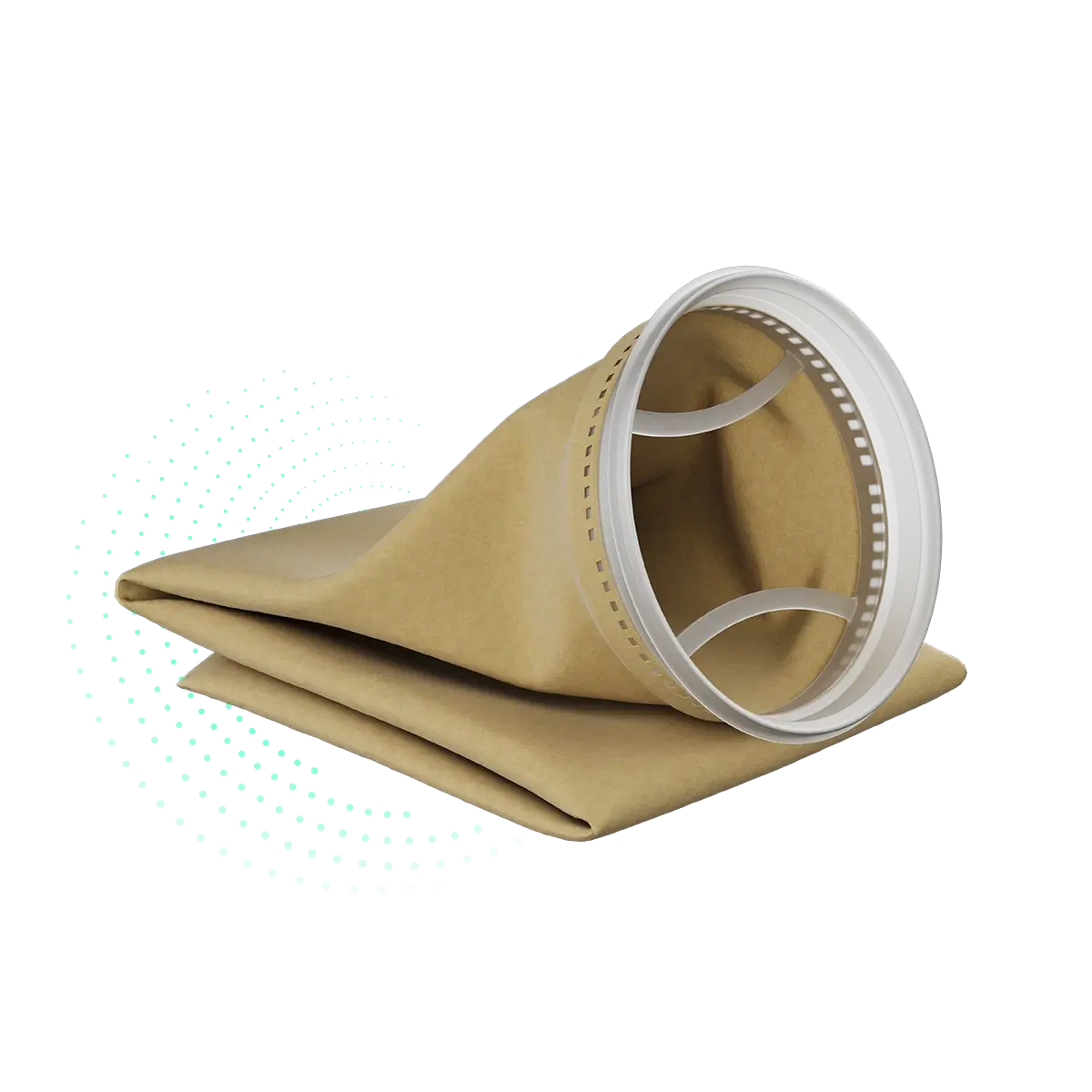
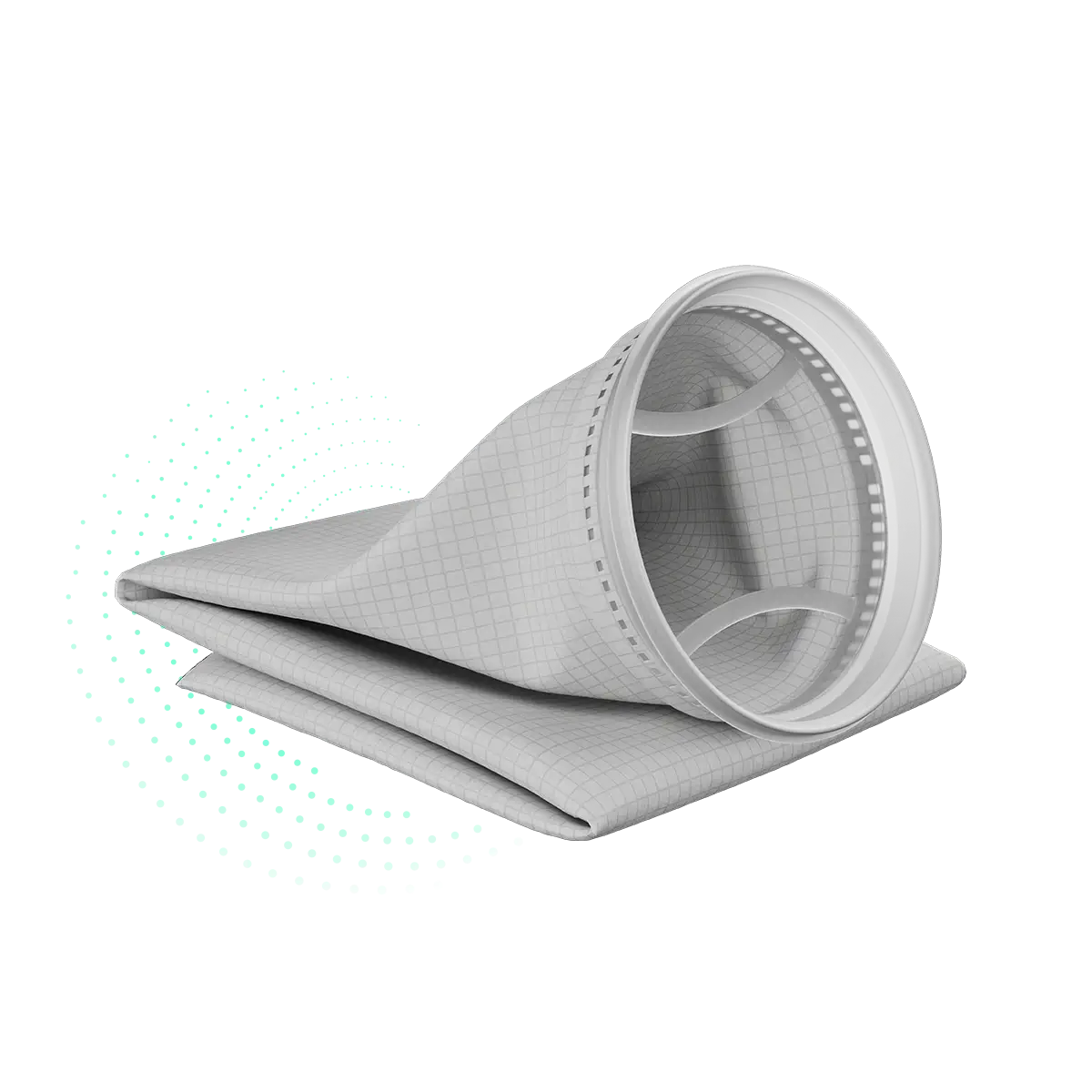
The antistatic bag filter is a dust filter with conductive fibres that helps dissipate the static charge building up on the filter media in a controlled way in systems with combustible or explosive dust.
6 Options
10³–10⁹ Ω
2–5%
ATEX 137 / DIN 54345
What Is an Antistatic Bag Filter?
Antistatic bag filters are a safety-focused filtration medium made by integrating conductive carbon fibre or stainless steel fibre into standard needle-punched felt media. The conductive fibre structure collects the static charge generated by dust-laden airflow and pulse-jet cleaning cycles from the filter surface and conducts it safely to the grounding system. This prevents charge build-up and the risk of sparks.
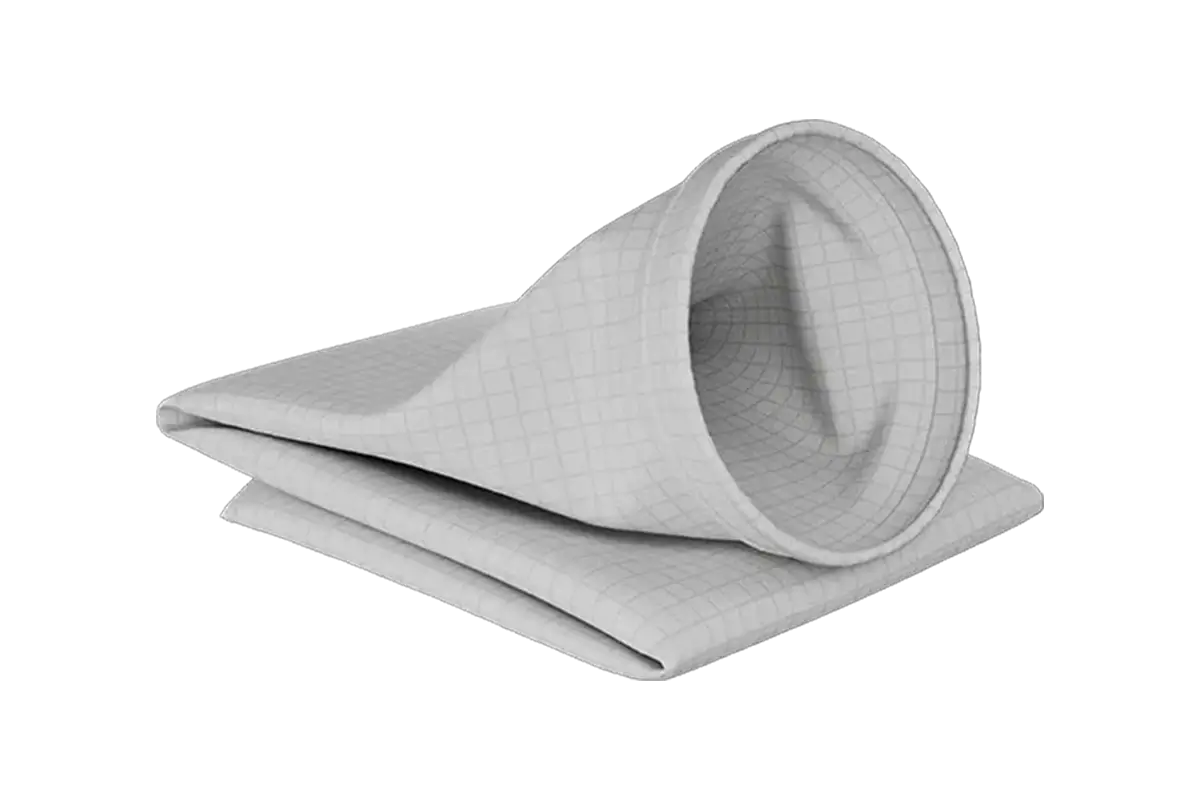
The antistatic property is not specific to one fibre type; it can be applied to all standard felt media such as polyester, acrylic, PPS, Nomex, P84 and PTFE. The conductive fibre structure is offered in three geometries: stripe, square grid and blending. Each geometry has a different conductivity level and suitability; the right geometry should be chosen according to the explosion risk classification and the dust characteristics.
Product Identity and Technical Summary
Key Technical and Structural Features
- Base Fibre Options
- Polyester (PE)
- Acrylic (PAN)
- PPS (Ryton)
- Meta-Aramid (Nomex)
- P84 (Polyimide)
- PTFE (Teflon)
- Conductive Fibre Type
- Carbon Fibre
- Stainless Steel Micro-Fibre
- Conductive Fibre Ratio
- 2–5%; more than 5% can be applied under special conditions.
- Conductive Fibre Structure
- Stripe
- Square Grid
- Blending (Homogeneous Mix)
- Surface Resistance
- Conductive: 10³–10⁵ Ω / Static dissipative: 10⁶–10⁹ Ω
- Grounding Requirement
- The resistance between the grounding terminal and the cage must be < 4 Ω.
- Standard Compliance
- ATEX 137 / DIN 54345 Parts 1 and 5
- Surface Treatment Options
- Calendering & Sintering
- Water- and Oil-Repellent (Hydrophobic and Oleophobic) Coating
- ePTFE Membrane Lamination
- Cleaning System Compatibility
- Pulse-Jet
- Reverse Air
- Shaker
- Temperature Limit
- Varies with the base fibre type; approximately 130 °C – 260 °C.
- Resistance Monitoring
- Grounding resistance should be measured monthly.
Conductive Fibre Types and Distribution Geometries
Conductive Fibre Types
| Fibre Type | Resistance Range | Property | Limitation |
|---|---|---|---|
| Stainless Steel Fibre | 10³–10⁵ Ω | Lowest resistance, highest conductivity; high chemical and mechanical resistance, compatible with high temperatures. | Higher cost than carbon fibre; risk of corrosion in aggressive chloride environments. |
| Carbon Fibre | 10⁵–10⁷ Ω | Provides good conductivity; lightweight, flexible and suitable for general-purpose applications. | Because of its brittle fibre structure, there is a risk of mechanical breakage and loss of conductivity under intensive pulse-jet cleaning; it is sensitive to oxidation in oxygen-rich and high-temperature environments; not suitable for food and pharmaceutical applications. |
Distribution Geometry
| Geometry | Construction | Advantage | Application |
|---|---|---|---|
| Stripe | Parallel vertical conductive stripes | Economical; provides conductivity in one direction. | Processes with a low to medium explosion risk |
| Square Grid | Intersecting horizontal and vertical stripes | Provides conductivity in two directions and more even charge distribution. | Processes with a medium to high explosion risk |
| Blending | The conductive fibre is distributed evenly throughout the media. | Provides three-dimensional (isotropic) conductivity and the highest uniformity. | Special conditions with a high explosion risk |
Filtration Architecture and Working Principle
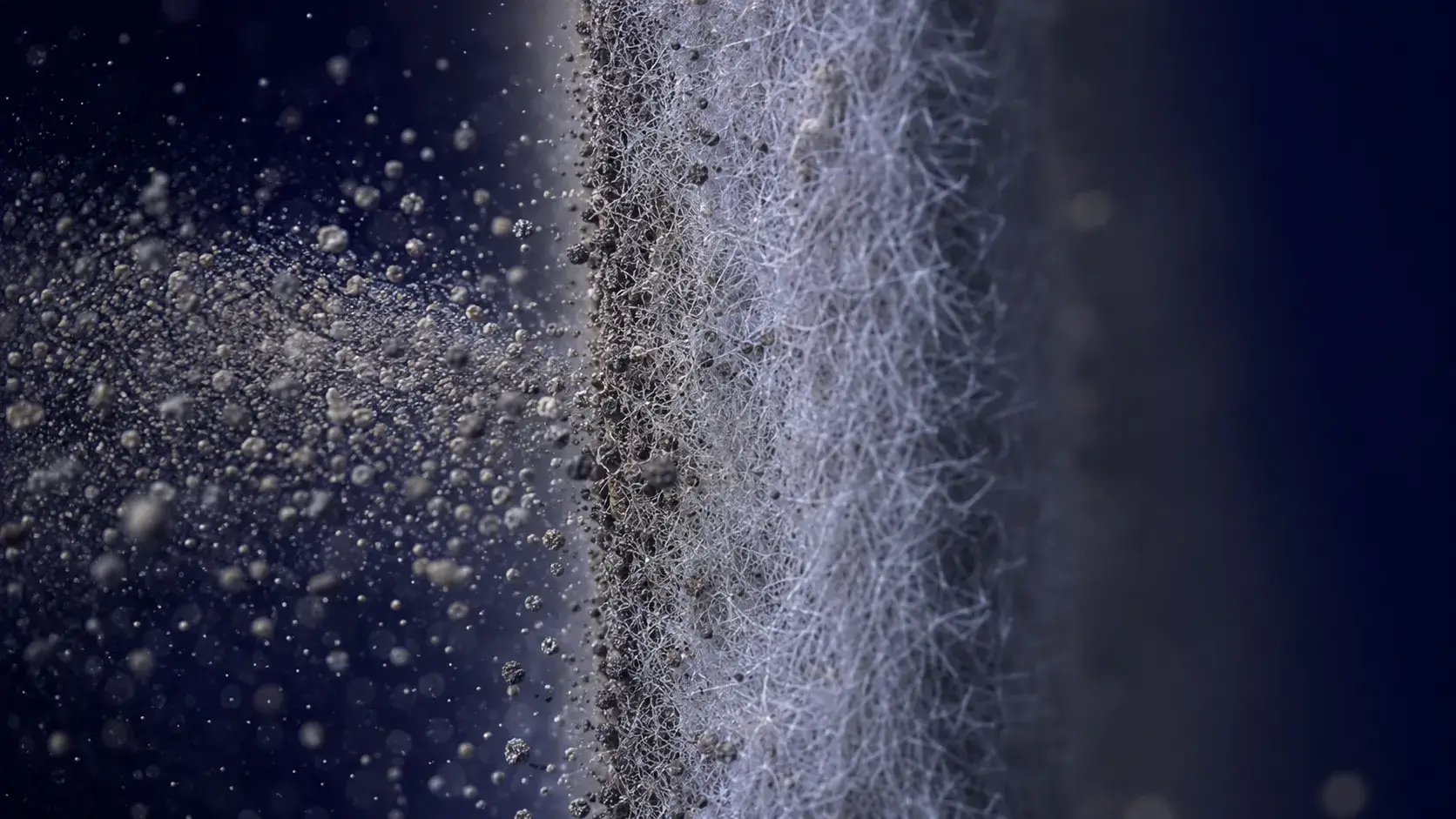
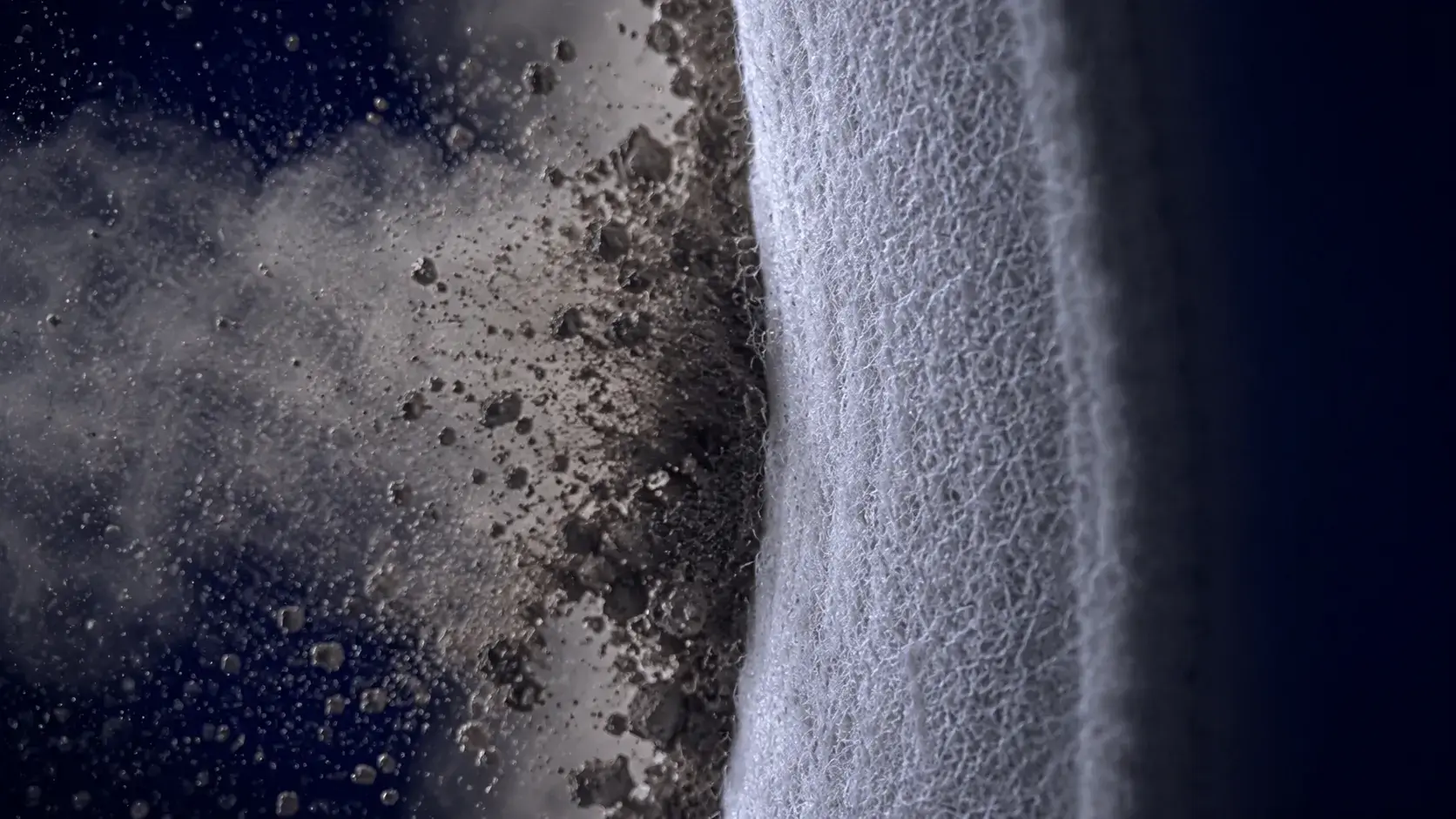
In terms of filtration mechanism, antistatic bag filters follow the same working principle as the felt media they are based on. The key difference lies not in the filtration mechanism but in static charge management: static electricity generated by the flow of dust-laden gas and pulse-jet cleaning cycles is continuously conducted through the conductive fibre network and discharged to ground.
Filtration takes place outside-in. Dust-laden gas meets the outer surface of the bag; particles are retained on the media surface, and the cleaned gas passes through the fibre structure into the bag and leaves the system at the top. Because the conductive fibre network is connected to the grounding system, accumulated charge is discharged safely before it reaches the spark threshold.
Static Charge Generation and Discharge
Dust-laden gas meets the outer surface of the bag. This friction and impact generate a static charge on the filter surface. The conductive carbon or stainless steel fibre network integrated into the media immediately collects the charge and conducts it to the grounding system, preventing sparks. Particles are retained on the media surface, and the cleaned gas passes into the bag and is discharged.
Cleaning Cycle and Grounding Check
During the pulse-jet cleaning cycle, the high-pressure air pulse flexes the media suddenly; this mechanical movement also generates static charge. The conductive fibre structure spreads this sudden charge rise evenly and conducts it to ground. As long as grounding continuity is maintained, the pulse-jet cleaning cycle is completed safely.
Advantages of the Antistatic Bag Filter
- Minimises the Risk of Explosion
- The conductive fibre network continuously discharges static charge, minimising the risk of spark-induced explosion in combustible dust environments.
- ATEX 137 Compliant
- Made in compliance with the ATEX directive and DIN 54345 Parts 1 and 5; meets legal safety requirements.
- Applicable to All Fibre Media
- Can be integrated into polyester, acrylic, PPS, Nomex, P84 and PTFE-based felt media; the choice is made to suit existing system conditions.
- Prevention of Electrostatic Clumping
- When static charge is removed, dust adheres less to the media through electrostatic forces and dust release improves.
- Low Differential Pressure
- With less electrostatic clumping, media blinding slows down, giving a more stable, lower ΔP profile.
- Three Geometry Options
- Stripe, square grid and blending geometries are adapted to different explosion risk classes and dust properties.
- Long-Term Conductivity Stability
- Stainless steel fibre offers longer-term conductivity stability than carbon fibre against chemical degradation and mechanical wear.
- Filtration Efficiency Maintained
- Integrating conductive fibres does not affect filtration efficiency.
- Integrated Grounding and Chassis Discharge
- A conductive grounding strip integrated into the cuff continuously conducts accumulated static charge to the body chassis, preventing the risk of arcing.
Antistatic Bag Filter Surface and Protection Options
Surface treatments applied on top of the basic conductivity structure of antistatic filter media improve dust cake release, prevent moisture and oil adhesion and keep emission values below legal limits. The four main surface treatments below are applied according to process conditions.
| Surface Finish | Property | Recommended Application |
|---|---|---|
| Singed Surface | Removes loose fibres, creates a smooth surface and makes dust cake release easier | General industrial explosive dusts, dry particle collection lines |
| Calendered Surface | Pores compressed by heat and pressure, dimensional stability, prevents deep clogging | Fine-grained dusts, wood, grain and flour silos |
| Water- and Oil-Repellent (Oleophobic) | Hydrophobic and oleophobic polymer coating; high resistance to moisture, oil and condensation | Coal mills, humid chemical processes, food dryers |
| ePTFE Membrane | Micro-porous surface filtration, PM2.5 retention, < 5 mg/Nm³ emissions, near-zero fibre penetration | Pharmaceutical, chemical, fine pigment and explosive-dust lines requiring precise emission control |
Engineer's Note
- Senior Process Engineer
- 15+ Years of Field Experience
- Field-Test Approved
The most common problem we see in the field with antistatic bag filters is neglect of the grounding system after installation. Even if the bag and cage have been chosen correctly and the conductive fibres are fully integrated, if the resistance between the grounding terminal and the cage goes above the < 4 Ω limit, the system becomes, in practice, no different from a standard bag filter and loses its static protection.
When to choose it: an antistatic bag filter is mandatory in any process where combustible or explosive dust is generated, conveyed or processed, in environments that require ATEX zone classification, and where static electricity causes dust clumping.
When not to choose it: in applications with completely inert dust, no risk of explosion and no ATEX requirement, the antistatic property creates unnecessary cost; a standard bag filter is sufficient.
Application and Selection Criteria
- Grounding Resistance
- Measure the resistance between the grounding terminal and the cage and tube sheet regularly; maintain the < 4 Ω safety threshold.
- Fibre and Geometry Selection
- Choose the conductive fibre type (carbon / stainless steel) and structure (stripe, square grid or homogeneous blend) according to the process's ATEX risk class.
- Oxygen-Rich Environment
- Carbon fibre is sensitive to oxidation in high-temperature and oxygen-rich environments; under these conditions, stainless steel fibre should be chosen.
Collar Types and Connections
Safe, leak-tight seating of the dust bag in the tube sheet starts with the right collar type. Snap band, clamped, flanged and corded collar options are chosen according to the tube sheet design of your filter unit and the pulse-jet cleaning system. If you are not sure which collar type fits your existing system, send us a sample or photo and we will make an exact replica.

PP Ring (Plastic Ring)
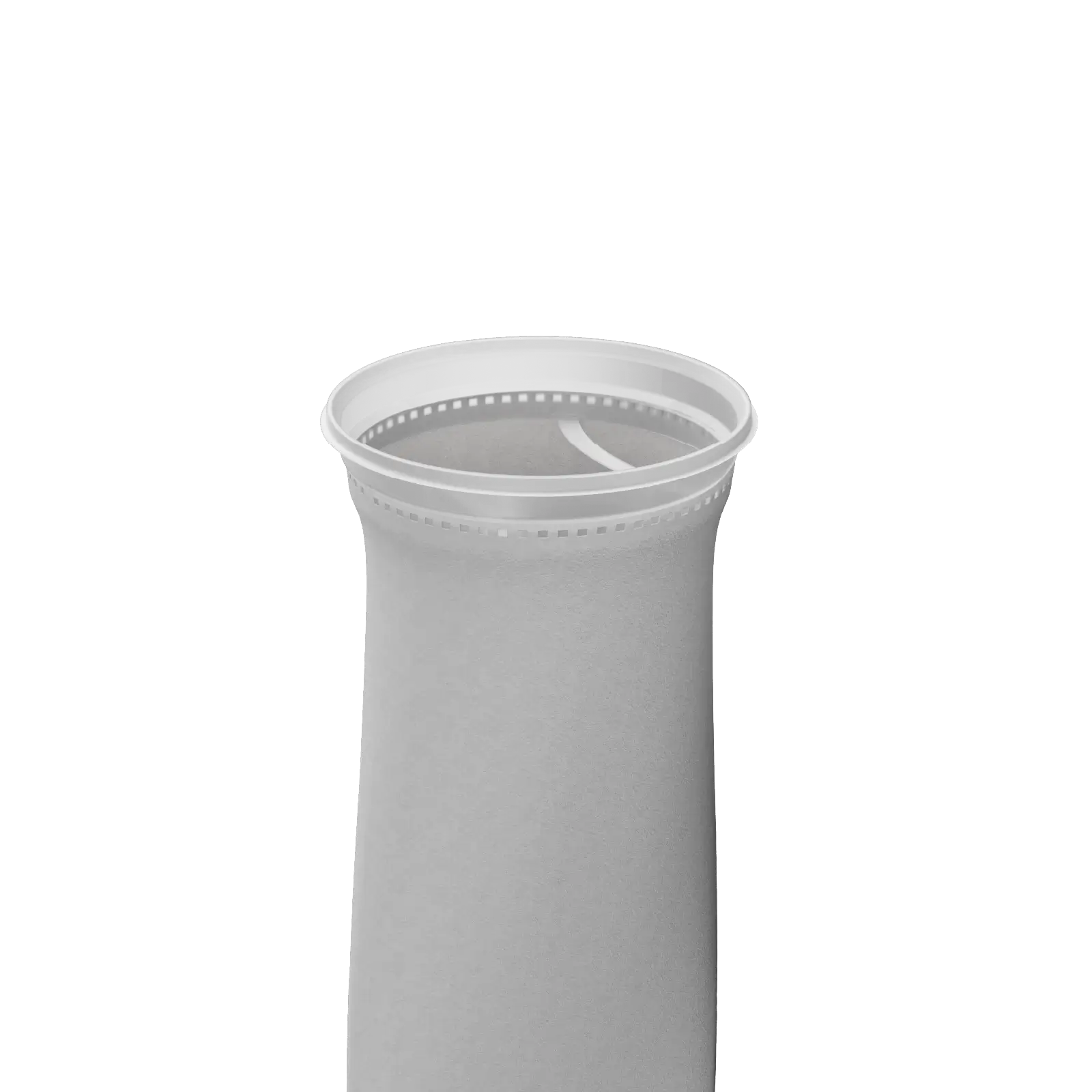
Leak-tight connection with a plastic PP flange ring.
Snap Ring (Steel Ring)
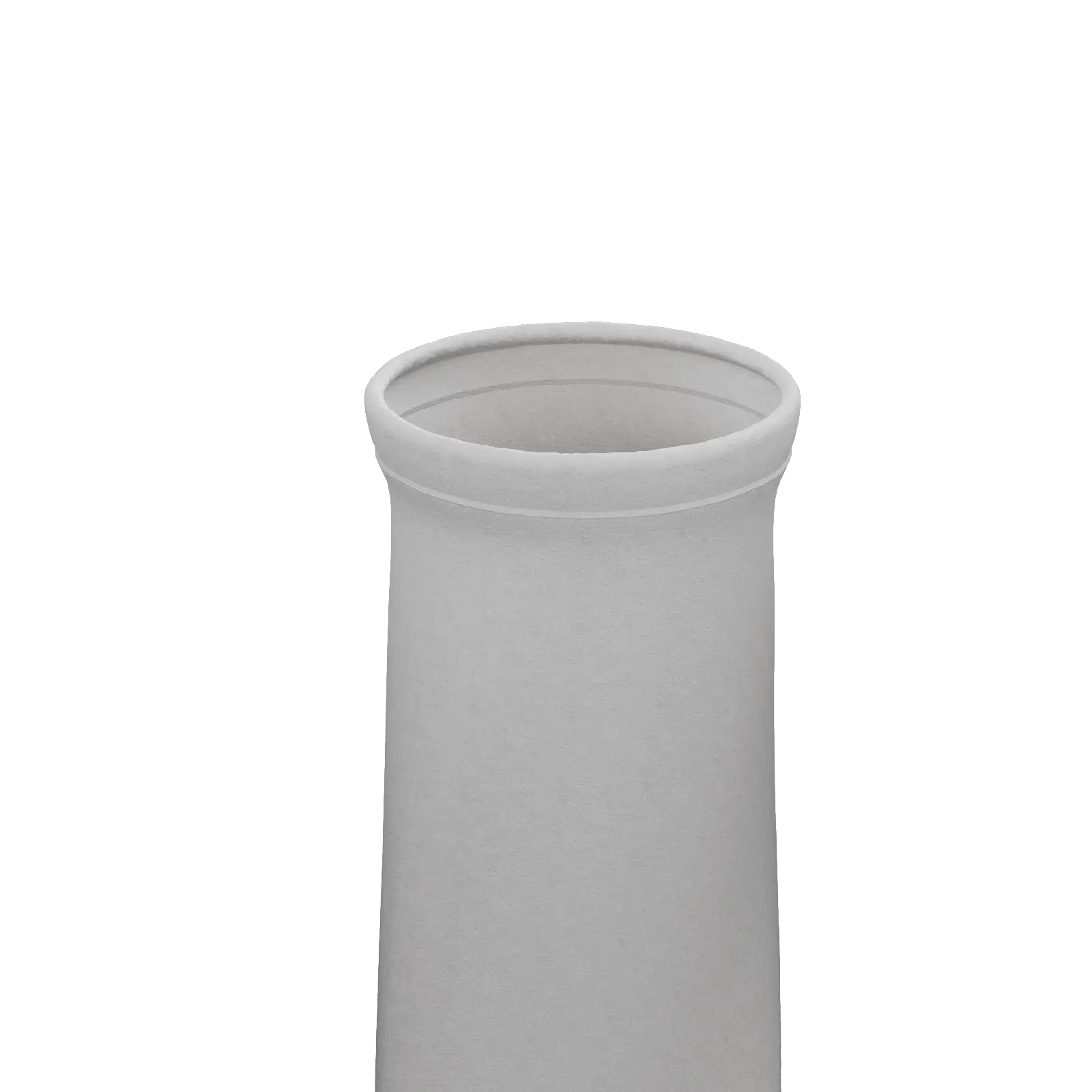
Leak-tight snap-in system with a flexible steel ring.
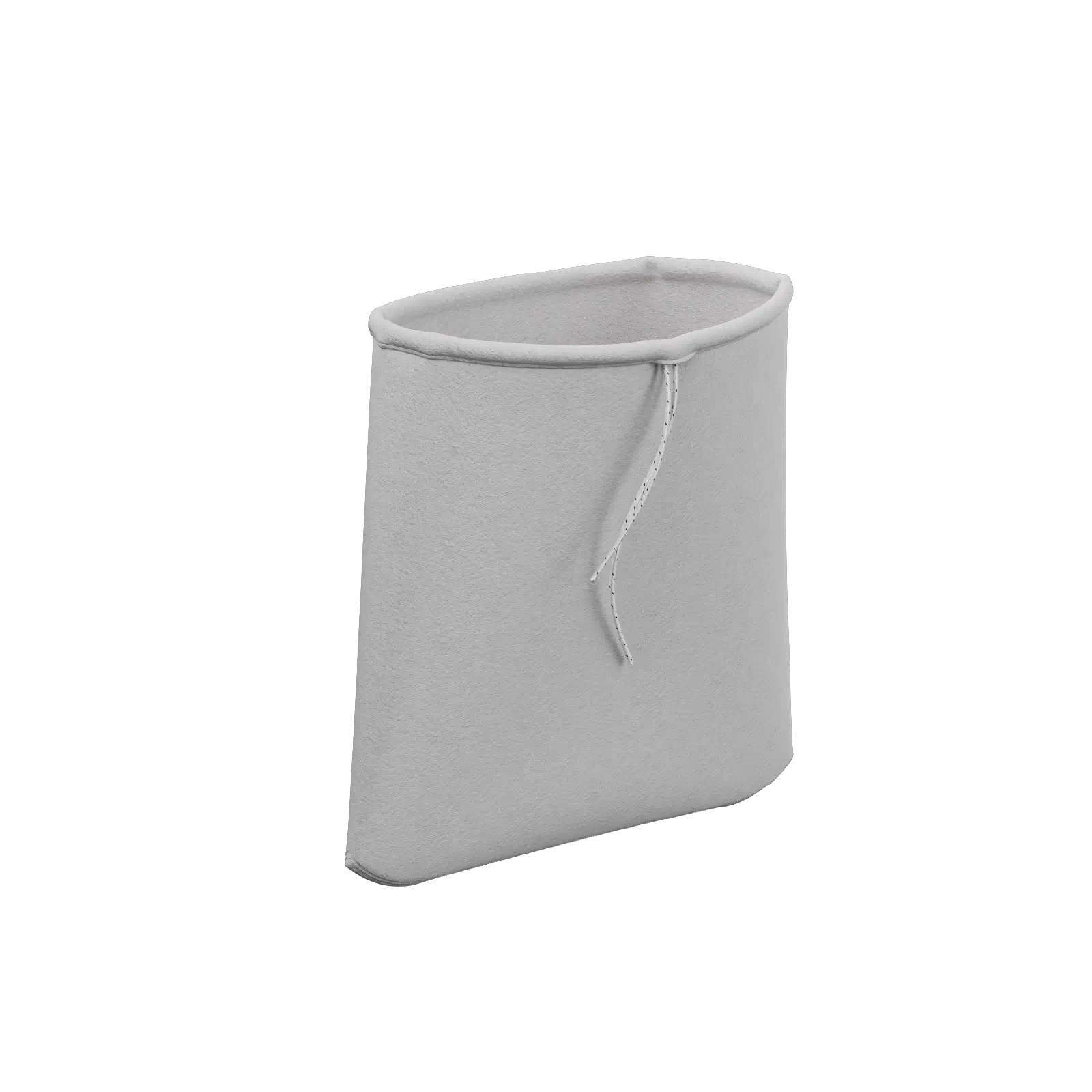
Drawstring
Tied to a pipe outlet or hangers with a drawstring.
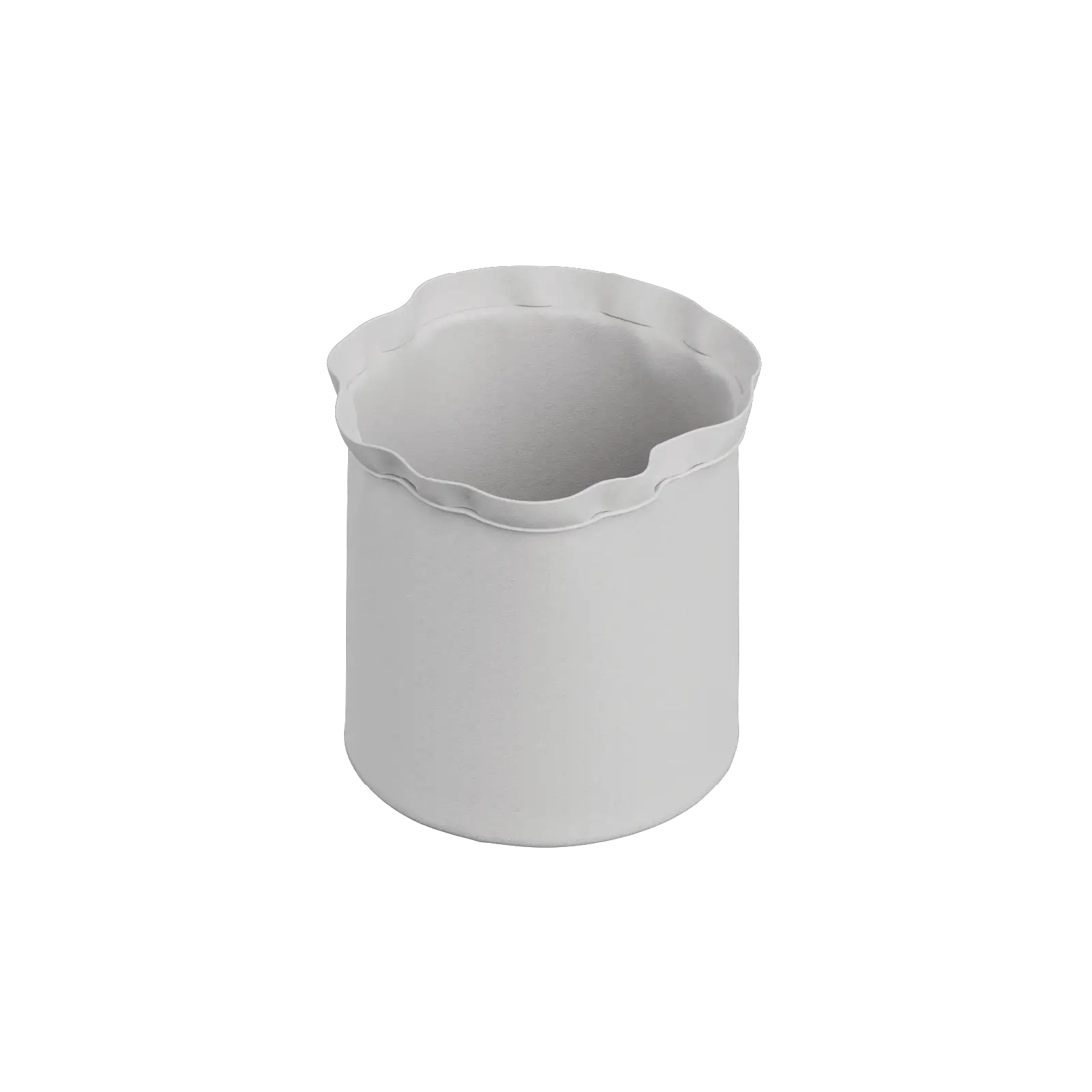
Flanged Collar (Flange Top)
Reinforced collar clamped by a venturi or top hold-down flange.
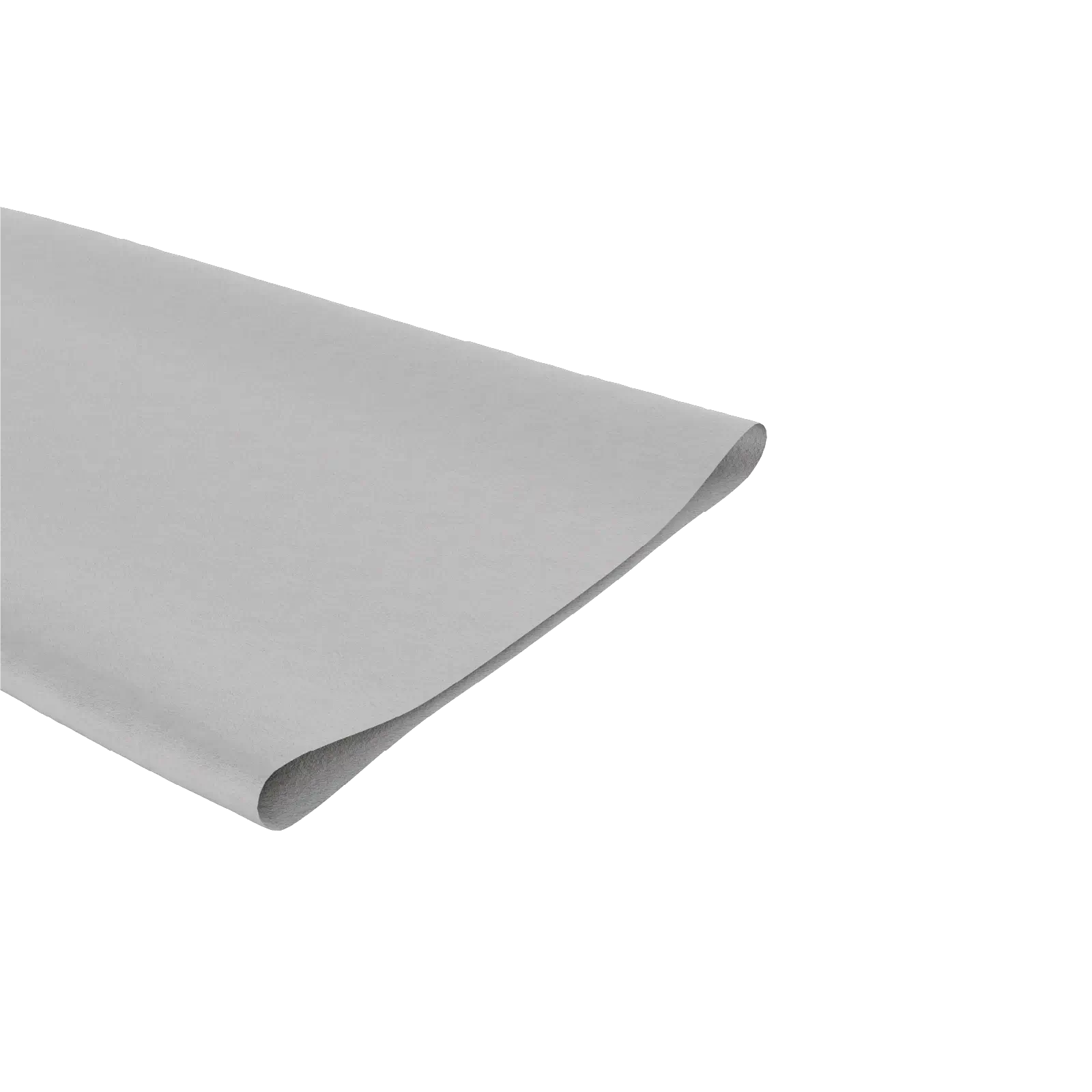
Plain Top
Plain-cut collar for special clamping devices and clamped connections.
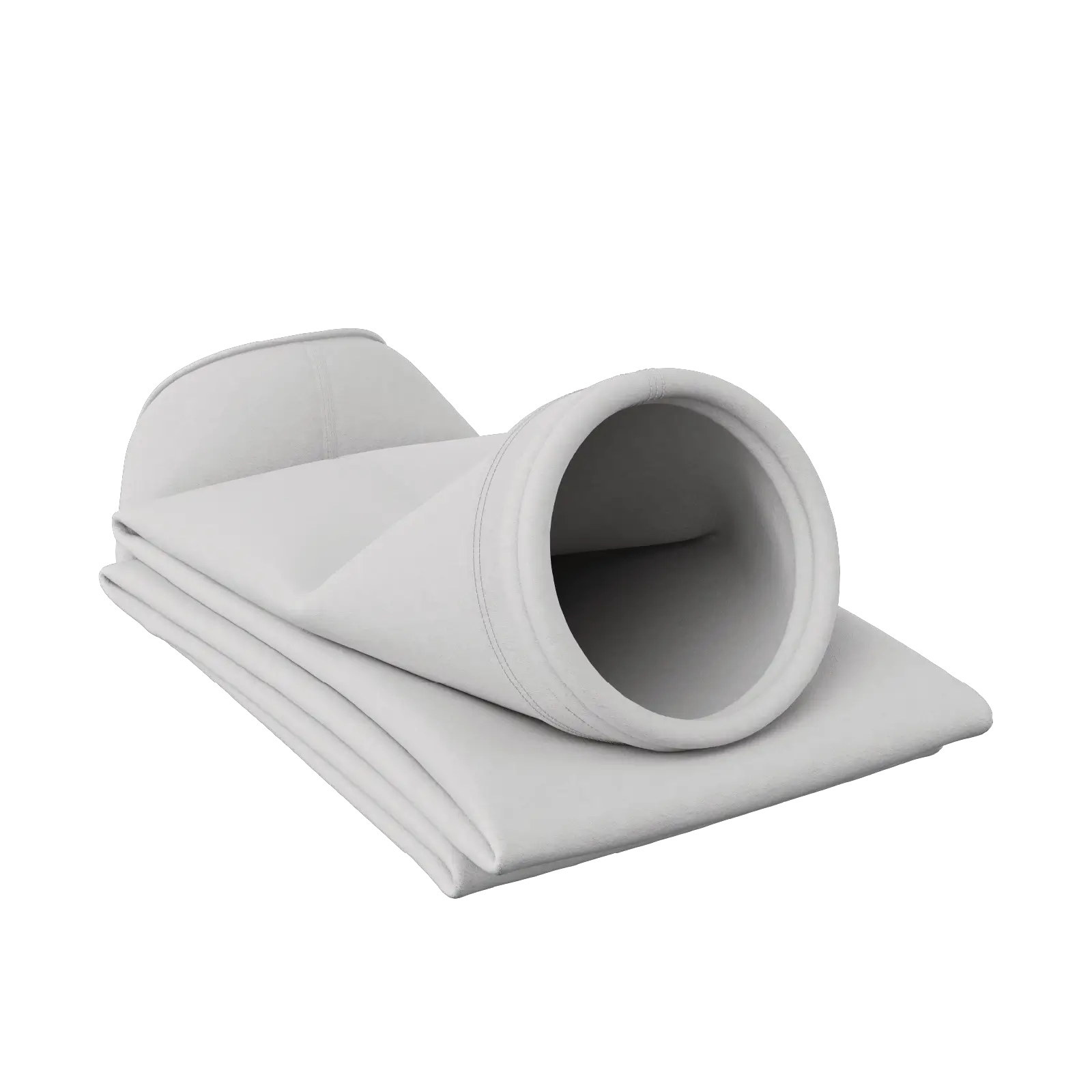
Snap Band (Snap Ring)
Leak-tight snap-in band that seats in the tube sheet hole with a flexible steel strip.
Performance Parameters
The field performance of antistatic bag filters is assessed on the controlled discharge of static electricity in explosive dust environments, the mechanical strength of the media under pulse-jet cleaning cycles and zero-leakage safety in the grounding line.
- Conductivity and Resistance
- Surface resistance is controlled in the 10³–10⁹ Ω range depending on the conductive fibre type and geometry. Stainless steel fibre gives the lowest resistance at 10³–10⁵ Ω, while carbon fibre works in the 10⁵–10⁷ Ω range. The resistance between the grounding terminal and the cage must be kept at < 4 Ω.
- Filtration Efficiency
- Integrating conductive fibres does not adversely affect filtration efficiency. Thanks to the anti-clumping effect, dust adheres less to the media, giving better dust release and a more stable differential pressure profile than standard bags.
- Conductivity Life and Monitoring
- Conductive fibres degrade just like the main media fibres; chemical corrosion, oxygen, water vapour and mechanical wear can reduce conductivity stability over time. Grounding resistance should therefore be measured monthly, and the bag replaced when the < 4 Ω threshold is exceeded.
Industry Applications
Bag filters suited to different process needs are used across a wide range of industrial applications to protect product quality, protect equipment and support production continuity.
01
Vegetable Oil
Vegetable Oil
Clarity, purity and shelf life in vegetable oil and refining.
Explore solutions
02
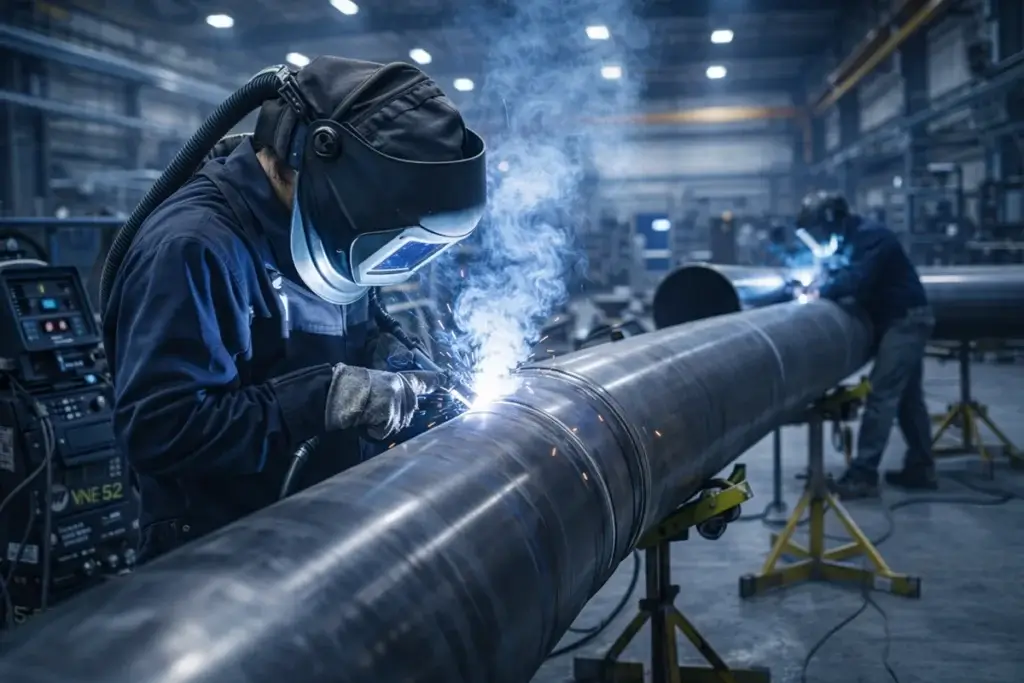
Pipe and Profile
Pipe and Profile
Cooling water filtration in pipe and profile extrusion.
Explore solutions
03
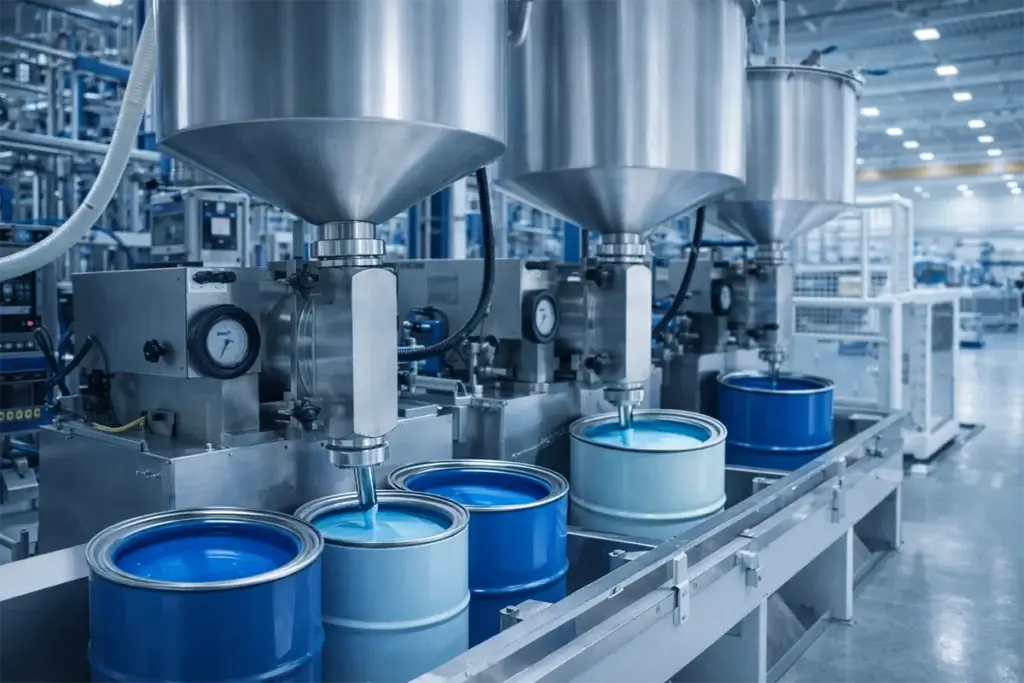
Paint Industry
Paint Industry
Surface quality and pigment filtration in the paint industry.
Explore solutions
04
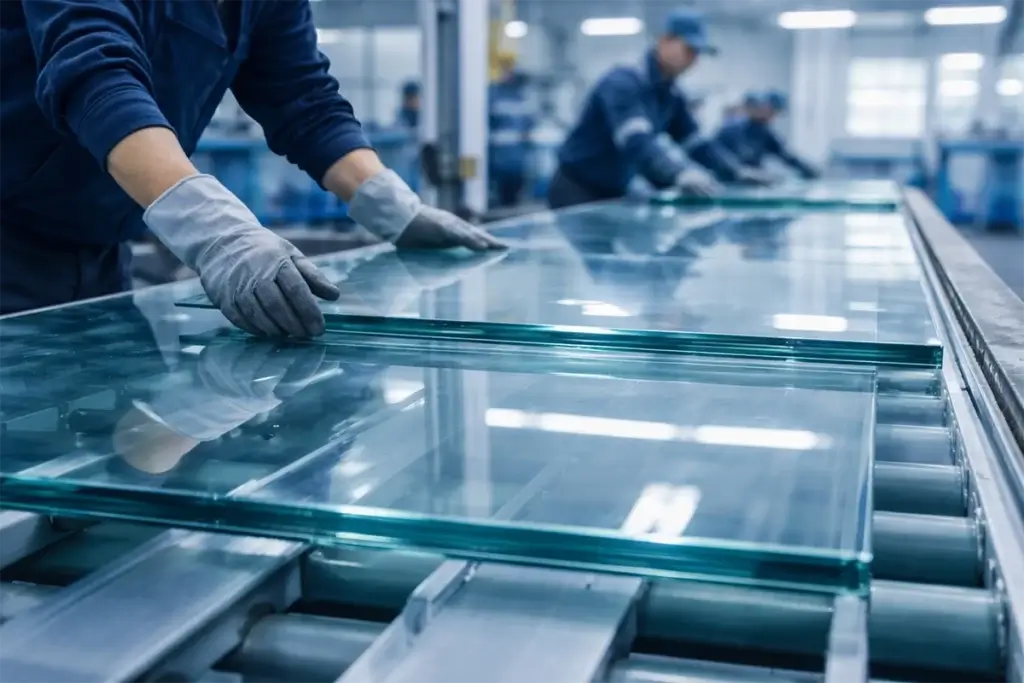
Glass Industry
Glass Industry
Furnace and process filtration in the glass industry.
Explore solutions

05
Dialysis Centers
Dialysis Centers
Water preparation and process filtration in dialysis centers.
Explore solutions
06
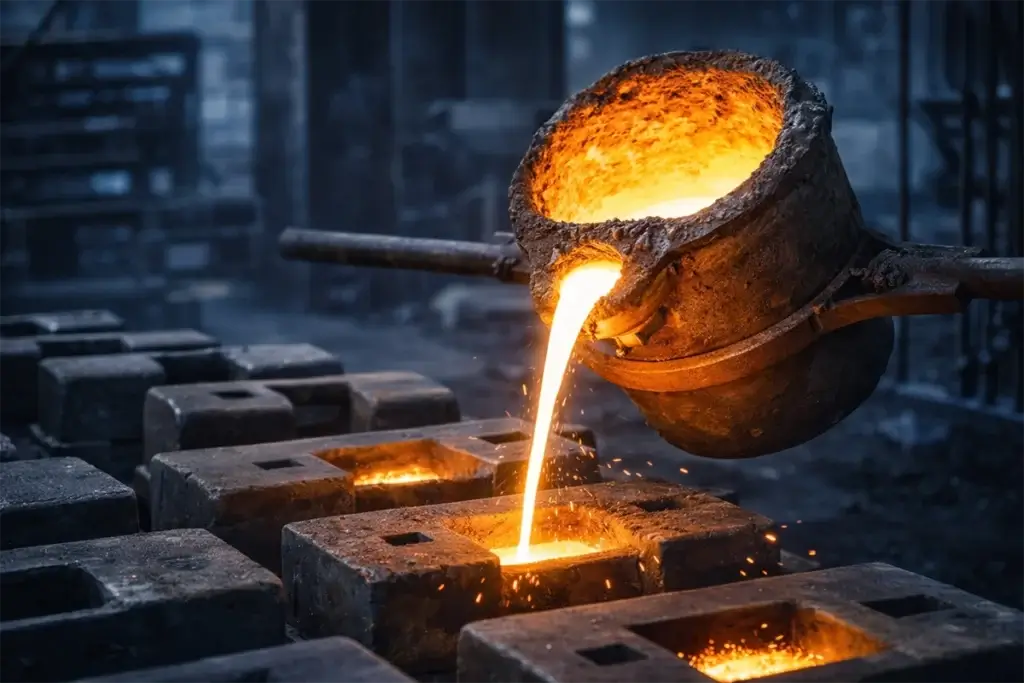
Foundry Industry
Foundry Industry
Equipment protection and dust filtration in foundries.
Explore solutions
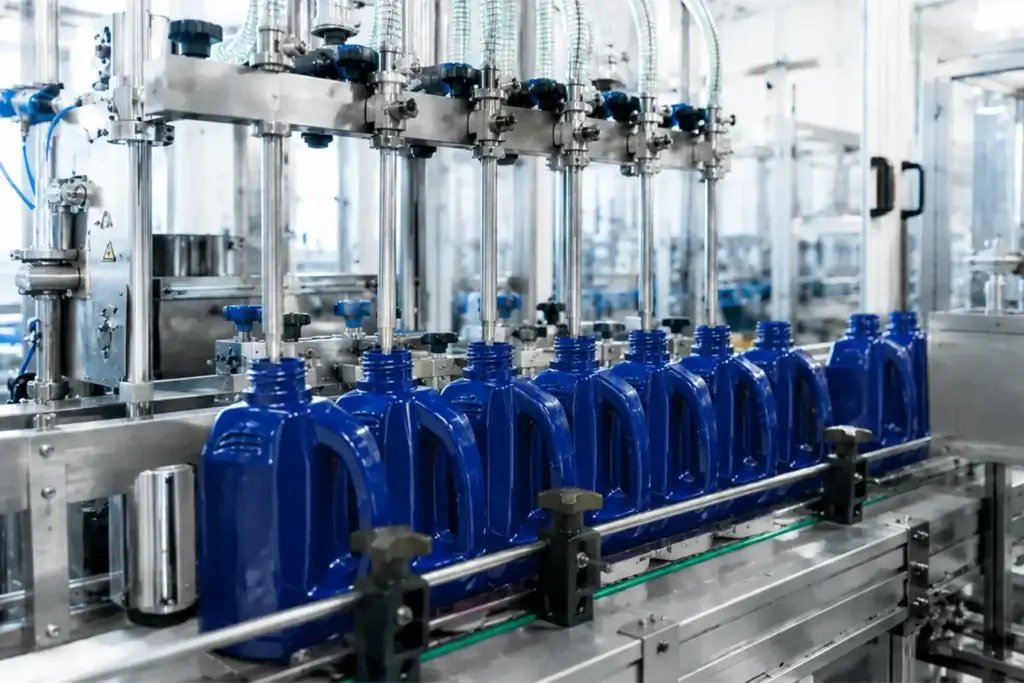
07
Industrial Oil
Industrial Oil
Filtration in industrial oil production and recovery.
Explore solutions

08
Energy and Biogas
Energy and Biogas
Maximum efficiency and turbine protection in energy and biogas.
Explore solutions
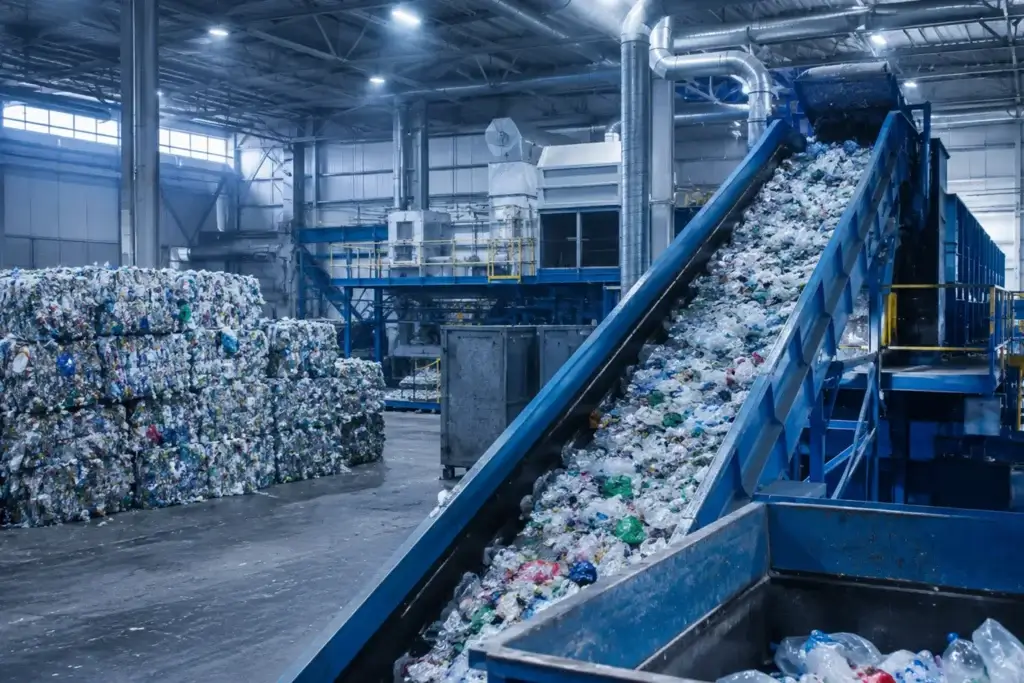
09
Recycling
Recycling
Filtration for efficiency and environmental compliance in recycling.
Explore solutions

10
Food and Beverage
Food and Beverage
Hygienic filtration in food and beverage.
Explore solutions

11
Pharmaceuticals and Biotechnology
GMP-compliant sterile filtration in pharmaceuticals and biotechnology.
Explore solutions
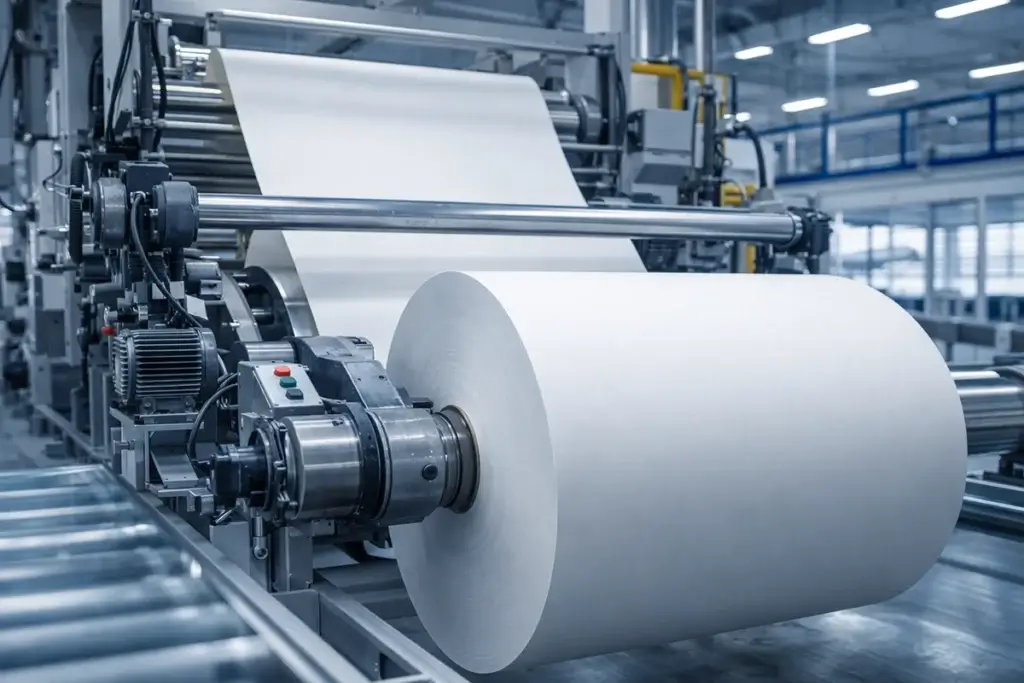
12
Paper and Packaging
Paper and Packaging
Process water filtration in paper and packaging.
Explore solutions

13
Chemical Industry
Chemical Industry
Corrosion-resistant, safe filtration in the chemical industry.
Explore solutions

14
Cosmetics
Cosmetics
Microbiological safety and precision filtration in cosmetics.
Explore solutions
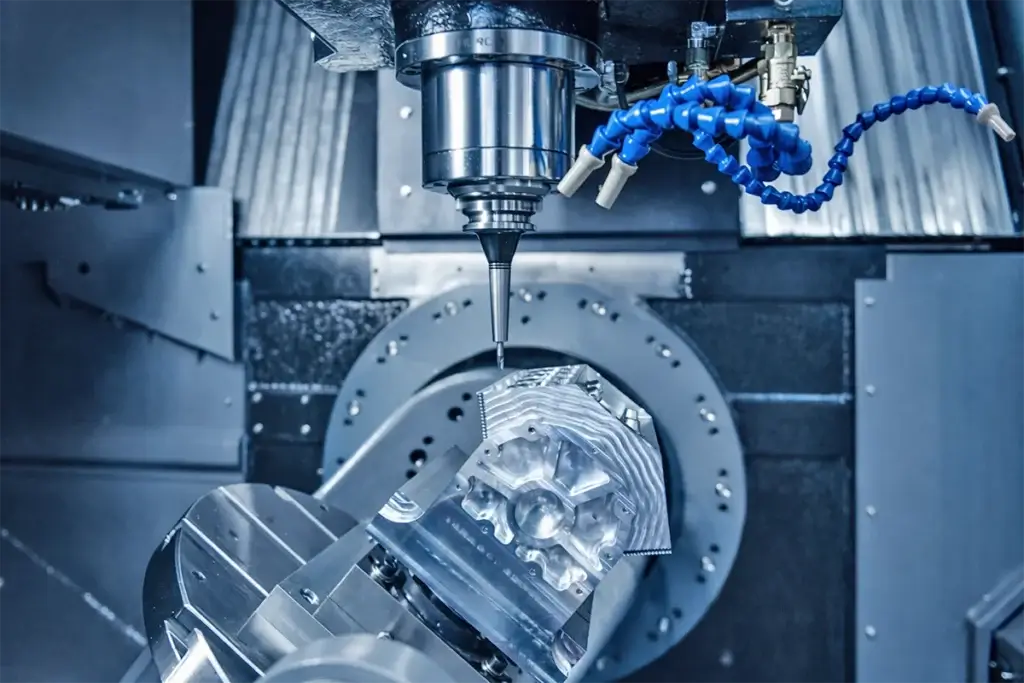
15
Machinery
Machinery
Precision and technical filtration in the machinery industry.
Explore solutions
16
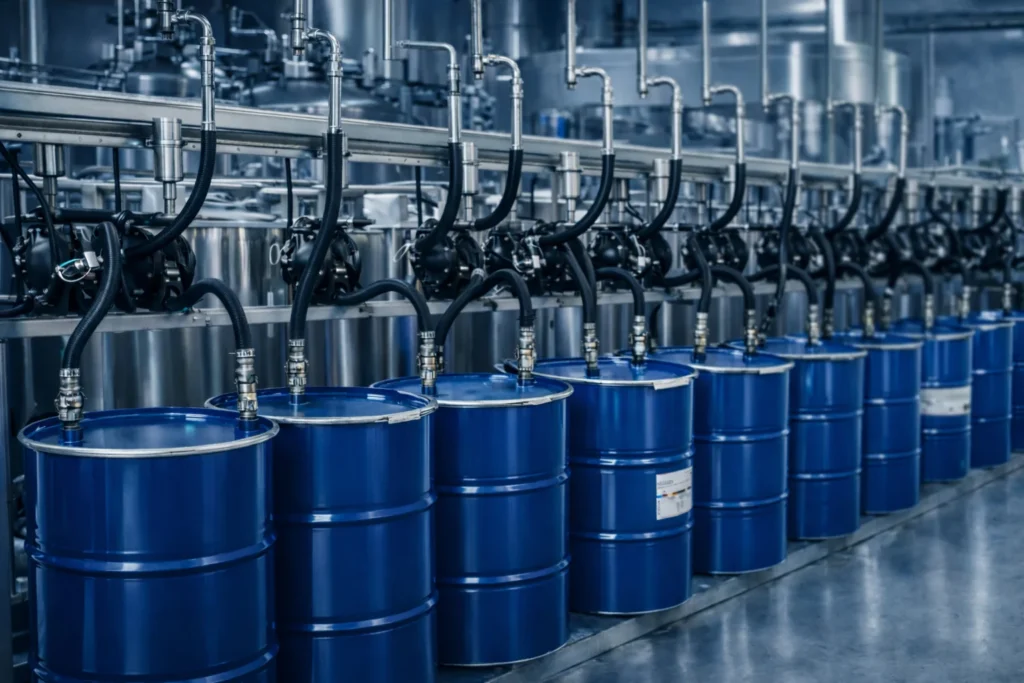
Printing and Ink
Printing and Ink
Flawless color and print quality in printing and ink.
Explore solutions
17
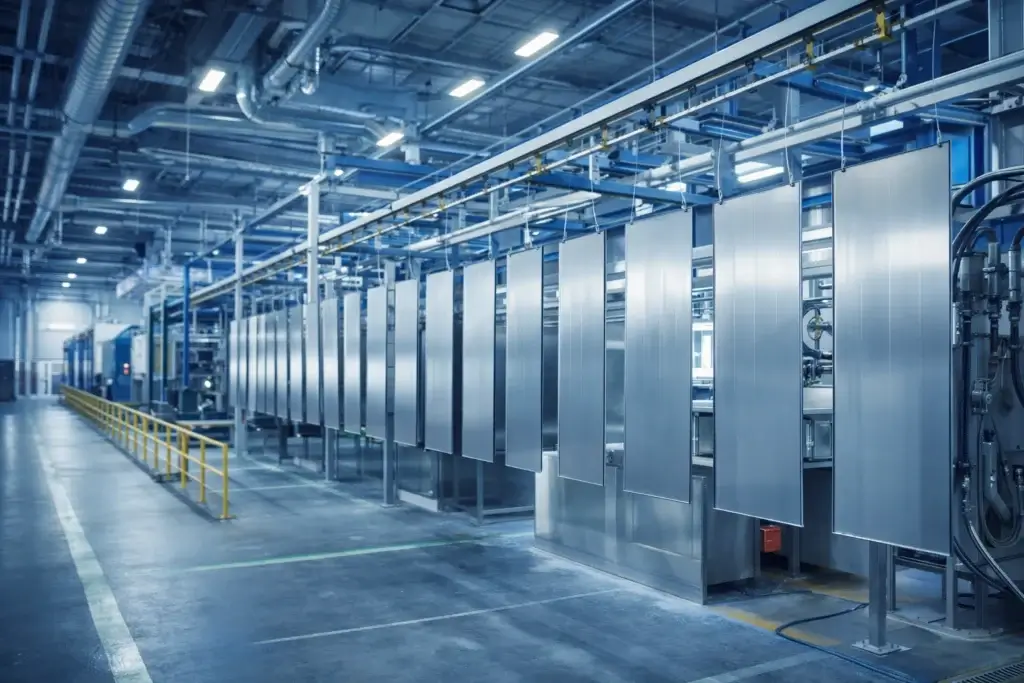
Metal and Surface Treatment
Flawless surfaces and bath stability in metal and surface treatment.
Explore solutions
18
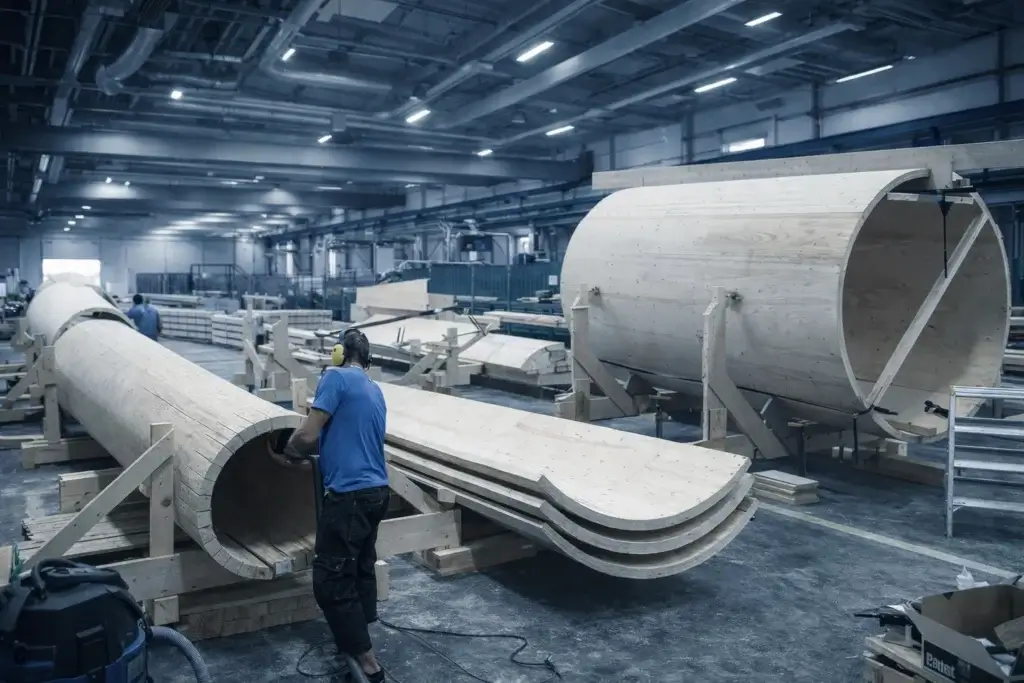
Forest Products
Forest Products
Resin and glue filtration in forest products and furniture.
Explore solutions

19
Automotive
Automotive
Precision process filtration for zero defects in automotive manufacturing.
Explore solutions
20
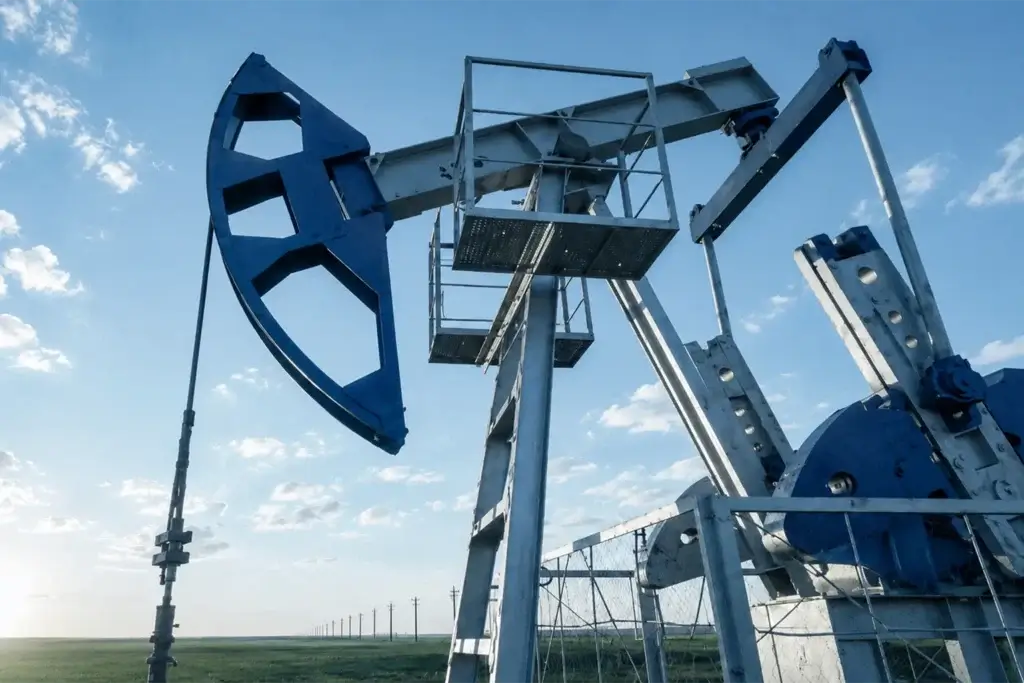
Oil and Petrochemicals
Equipment protection and process safety in oil and petrochemicals.
Explore solutions

21
Plastic Packaging
Plastic Packaging
Precision process filtration and raw material purity in plastic packaging.
Explore solutions
22
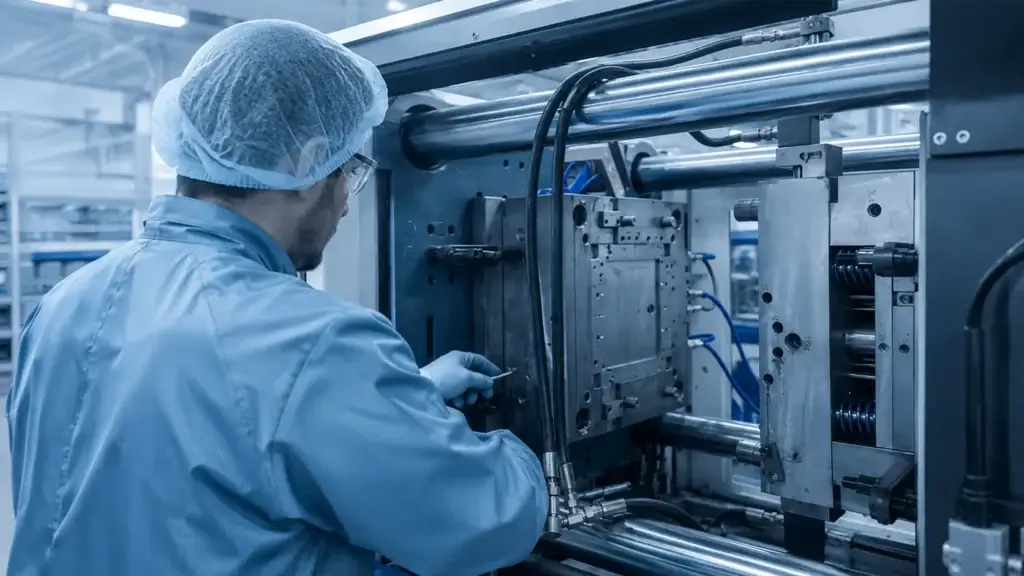
Plastic Injection Molding
Cooling and hydraulic filtration in plastic injection molding.
Explore solutions
23
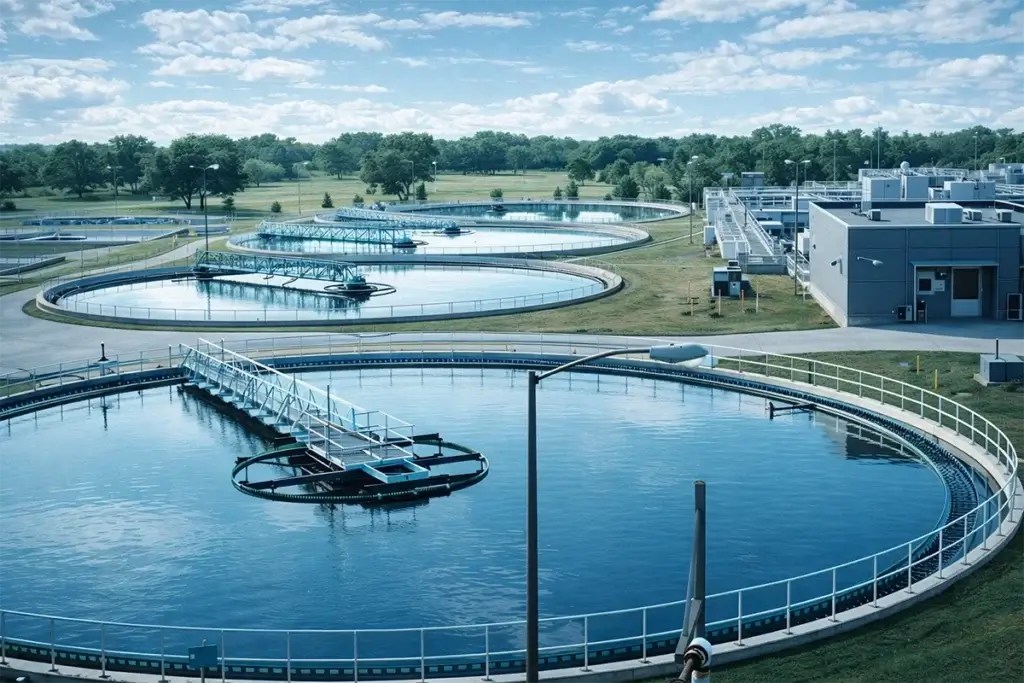
Water and Environment
Recovery filtration in water and environmental technologies.
Explore solutions

24
Shipyards and Marine
Operational safety and efficiency in shipyards and marine.
Explore solutions
Filter Selection Technical Checklist
- Explosion Risk Class
- Determine the ATEX zone classification (Zone 20/21/22); in high-risk zones, the blending geometry should be chosen.
- Dust Characteristics
- Check for the presence of combustible or explosive dust; confirm the MEC (Minimum Explosible Concentration) and MIE (Minimum Ignition Energy) values.
- Conductive Fibre Type
- Stainless steel fibre for oxygen-rich environments or high temperatures; carbon fibre can be chosen for general non-food/non-pharmaceutical applications.
- Base Fibre Medium
- Choose polyester, acrylic, PPS, Nomex, P84 or PTFE according to process temperature and chemical conditions.
- Grounding System
- Use galvanised or stainless steel cages; ensure a resistance of < 4 Ω between the grounding terminal and the cage.
- Food / Pharmaceutical Compatibility
- Carbon fibre may not be suitable for food or pharmaceutical applications; stainless steel fibre should be chosen.
- Monitoring Protocol
- Include monthly grounding resistance measurement in the maintenance plan and keep records.
- Cleaning System
- In systems with intensive pulse-jet cleaning, consider the risk of carbon fibre breakage; stainless steel fibre can be chosen.
Points to Watch During Use
Whether antistatic bag filters provide full protection against explosion and fire depends on correct mechanical installation, regular grounding line continuity and periodic resistance measurements. The operational checks below have been compiled to keep ATEX compliance and process safety sustainable.
- Initial Grounding Test
- After installation, measure the resistance between the grounding terminal and the cage and confirm the < 4 Ω threshold.
- Periodic Resistance Measurement
- Measure grounding resistance monthly and keep records; replace the bag immediately when the threshold is exceeded.
- Cage Material Compatibility
- Do not use painted or powder-coated cages; galvanised or stainless steel cages should be used.
- Fibre Type and Temperature Compatibility
- Bags containing carbon fibre should not be used in oxygen-rich, high-temperature environments.
- Food and Pharmaceutical Standards
- In food and pharmaceutical applications, choose stainless steel fibre instead of carbon fibre.
- Pulse-Jet Cleaning Pressure
- Keep the pulse-jet cleaning pressure within the recommended range; excessive pressure can cause conductive fibre breakage.
- Protection During Installation
- Protect bags and cages from damage during installation; a deformed cage can break grounding continuity.
- Grounding Maintenance Protocol
- Periodic checks of the grounding system should be tied to a formal maintenance protocol with auditable records.
Alternative media for the same application
Antistatic Bag Filter
Your Questions Answered
Frequently Asked Questions
At Prosestim, we are committed to answering your questions and providing technical support for our filtration solutions.
What is an antistatic bag filter?
For which types of dust is an antistatic bag filter mandatory?
Should carbon fibre or stainless steel fibre be chosen?
Why is grounding so critical?
How often should grounding resistance be measured?
Which fibre media can the antistatic property be applied to?
Is it ATEX compliant?
What is the difference between the stripe, grid and blending geometries?
Can painted cages be used?
Do you offer custom production?
Yes. Custom production is available in combinations of base fibre medium, conductive fibre type, geometry and surface treatment.
Antistatic Bag Filter RFQ Configurator
Configure your variation dimensions and technical specifications to receive an instant quote directly on WhatsApp and via email.