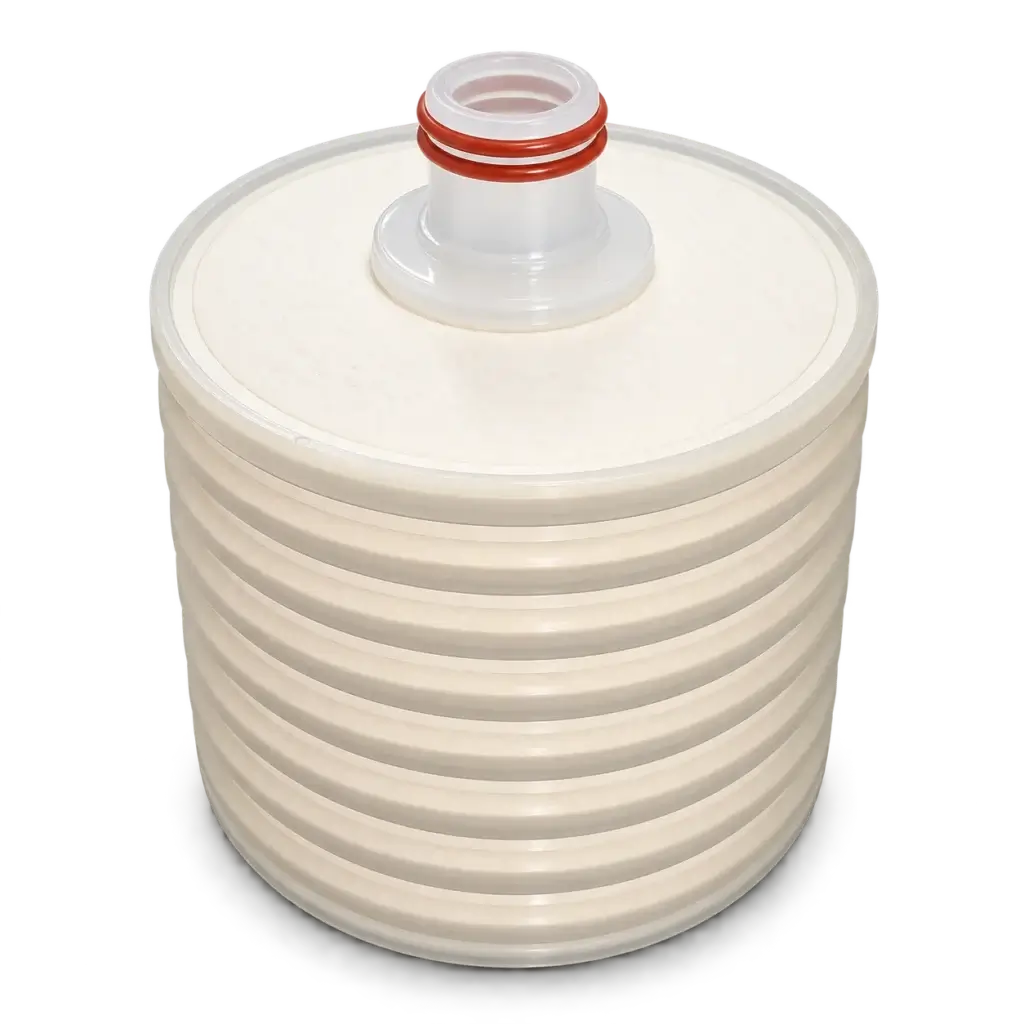
Stacked Disc Module Cartridge Filter

Depth Filtration and Adsorption in a Single Module: 0.2–60 µm

The stacked disc module cartridge filter is a lenticular depth module with cellulose, diatomaceous earth and activated carbon layers. On wine, beer, fruit juice, pharmaceutical and cosmetics lines, it is an enclosed, hygienic alternative to sheet filter presses.

Number of Configurations

30

Wide Micron Range

0.2–60 µm

WIDE pH COMPATIBILITY

2–11

Certificate No: 06009/PR09U

ISO 9001:2015

Stacked Disc Module Cartridge Filter

Stacked Disc Module Technical Specifications

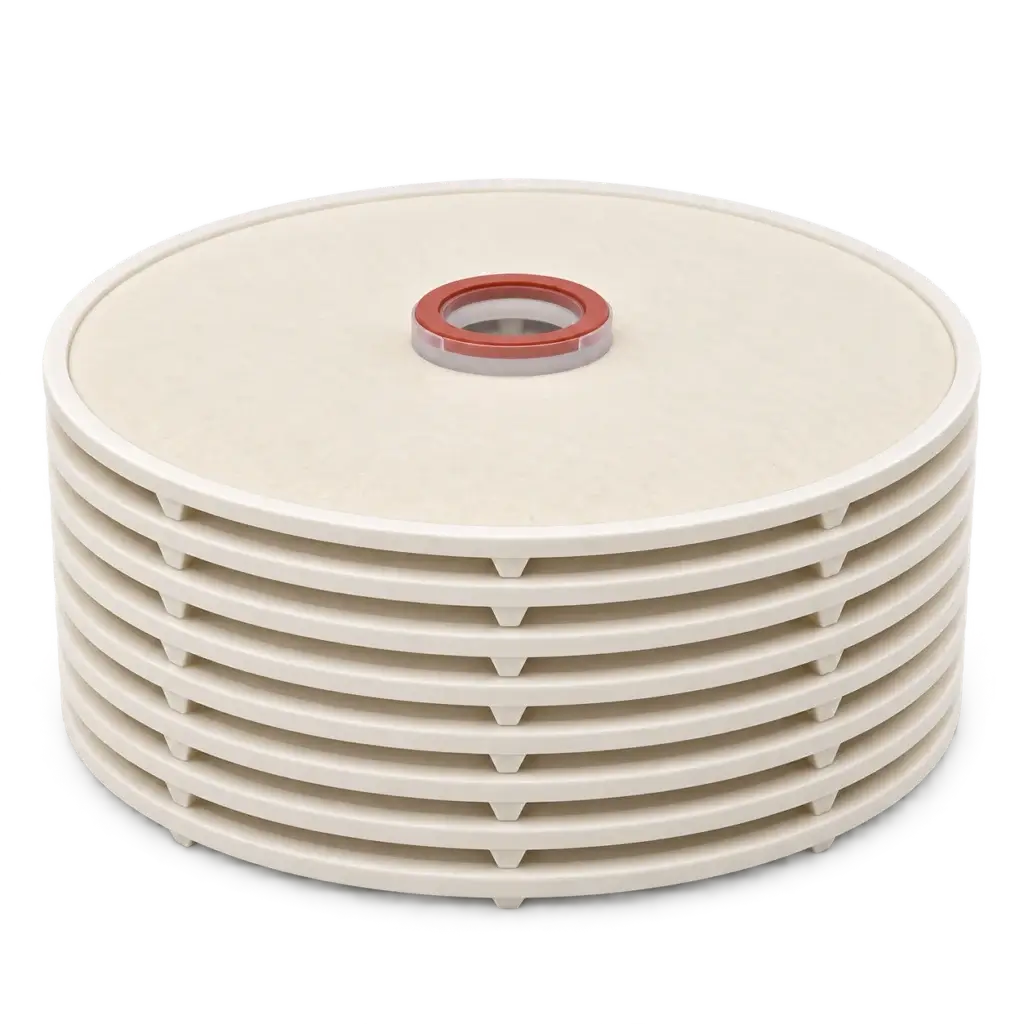
The stacked disc module cartridge filter is a compact depth filter module made of cellulose-based cells stacked between polypropylene separators and working in an enclosed stainless housing. The diatomaceous earth and resin-reinforced sheet reduces haze-forming colloids and yeast load along with particles, without affecting the product’s taste or colour. This makes it the hygienic, enclosed alternative to sheet filter presses on wine, beer, fruit juice, syrup, vegetable oil, pharmaceutical and cosmetics lines. 

Filtration grades from 0.2 µm to 60 µm, combined with cellulose fibre and activated carbon media series, suit coarse clarification, colour and odour removal and bioburden reduction tasks. Because the cartridges are made in 8″, 12″ and 16″ diameters, with 7 or 8 cells for 8″ and 9, 12, 15 or 16 cells for 12″ and 16″, with DOE or SOE (8″ only) connections and silicone, EPDM, NBR or Viton gasket options, they can be configured to suit your existing housing. 

The right module is not chosen by micron rating alone. The media must be matched to the clarity and adsorption requirement, the diameter and number of cells to the line flow, and the gasket to the fluid chemistry and sanitisation temperature. When this match is right, the module brings the product to the target clarity in a single pass and protects the membrane stage.

Key Technical and Structural Features

Filter Media
  • Natural Cellulose Fibre
  • With Diatomaceous Earth (DE / Perlite)
  • Activated Carbon Impregnated Depth Layer
Filtration Range
Grades for clarification, bioburden reduction and coarse particle retention in the 0.2–60 µm range.
Module Diameter and Dimensions
  • 8″, 12″ (Ø291 mm) and 16″ (Ø402 mm) Diameter
  • 8″: 7 / 8 Cells · 12″ and 16″: 9 / 12 / 15 / 16 Cells
Operating Compatibility
  • Food & Beverage Processes
  • Beer, Wine and Beverage Clarification
  • Biopharma and Pharmaceutical Industry
  • Cosmetics and Chemical Lines
Construction Type
Hermetically sealed stacked disc (lenticular) module architecture with double separator support.
Connection Types
  • DOE (Flat Gasket, Standard)
  • SOE (Double O-Ring, 8″ only)
Production Model
Standard industrial series production, with the flexibility to adapt lenses and housings to process flow.
Quality Control
Post-production verification of differential pressure integrity, appearance, dimensional tolerances and micron rating.
Initial Pressure Drop: Chart Data Points Flow and pressure drop values by cartridge diameter (clean water, 20 °C)
# 8" · 8 cells · Area 0.26 m² 12" · 16 cells · Area 1.8 m² 16" · 16 cells · Area 3.7 m²
1 10 L/min 0.20 bar 75 L/min 0.20 bar 145 L/min 0.20 bar
2 20 L/min 0.40 bar 150 L/min 0.40 bar 290 L/min 0.40 bar
3 30 L/min 0.70 bar 230 L/min 0.70 bar 445 L/min 0.70 bar
4 40 L/min 1.00 bar 300 L/min 1.00 bar 580 L/min 1.00 bar
5 48 L/min 1.50 bar 380 L/min 1.50 bar 740 L/min 1.50 bar
Values are based on initial differential pressure (ΔP) measurements. Max. permitted ΔP (25 °C): cellulose 2.5 bar, activated carbon 2.0 bar.
8" · 8 cells
12" · 16 cells
16" · 16 cells

Flow and Pressure Drop in a Lenticular Module

In stacked disc filter cartridges, water flow rate varies with module size, number of cells and effective filter surface area. Thanks to the double separator structure, differential pressure stays balanced at high flow rates; with ΔP ratings of max. 2.5 bar for cellulose media and 2.0 bar for activated carbon media at 25 °C, and 1.0 bar at 80 °C, stable filtration is achieved in wine, beer, fruit juice and pharmaceutical production. As the filter surface area increases, the flow load per unit area decreases and service life is extended.

Balanced Pressure Drop at High Flow

Filtration Architecture and Working Principle

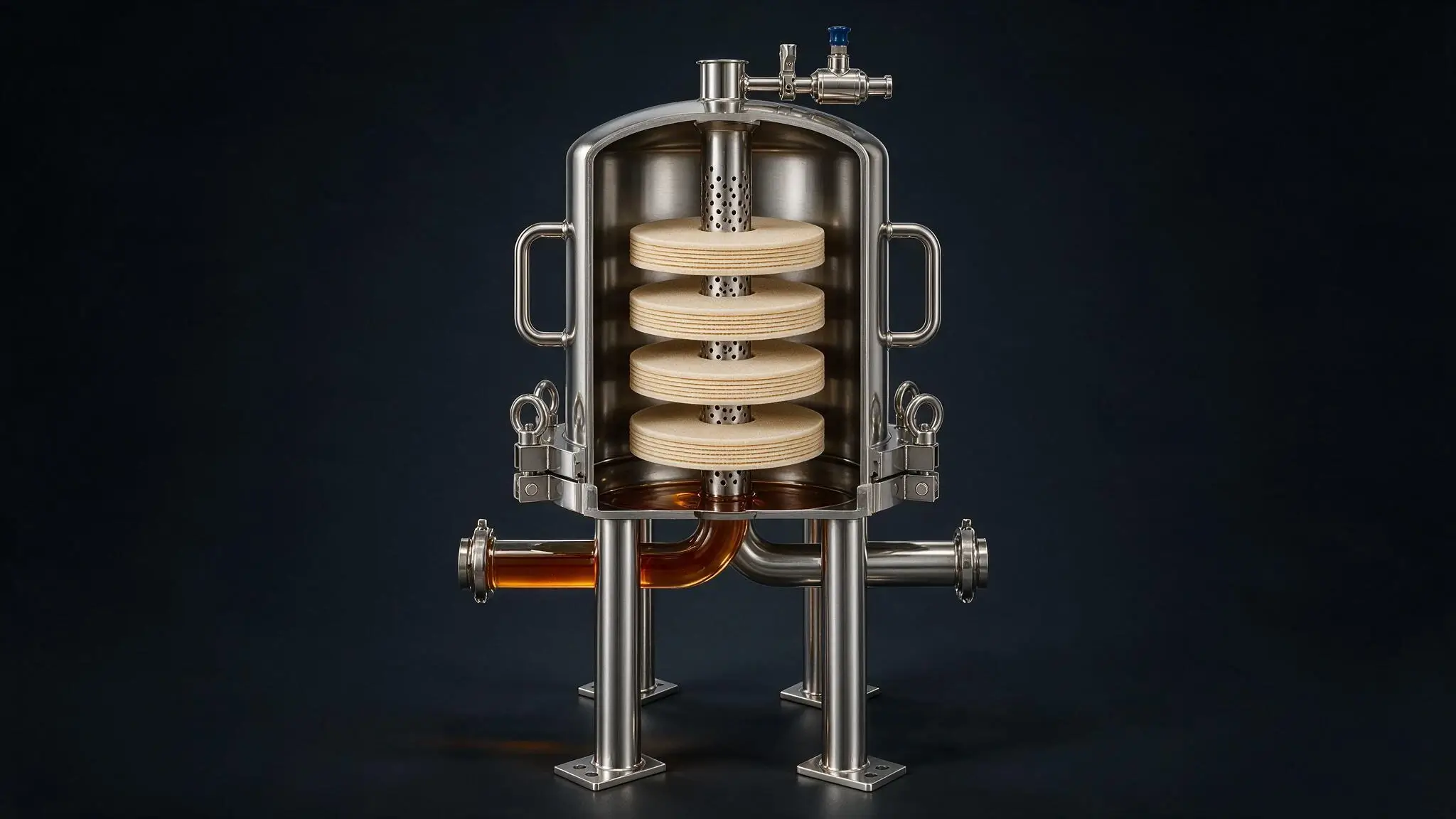
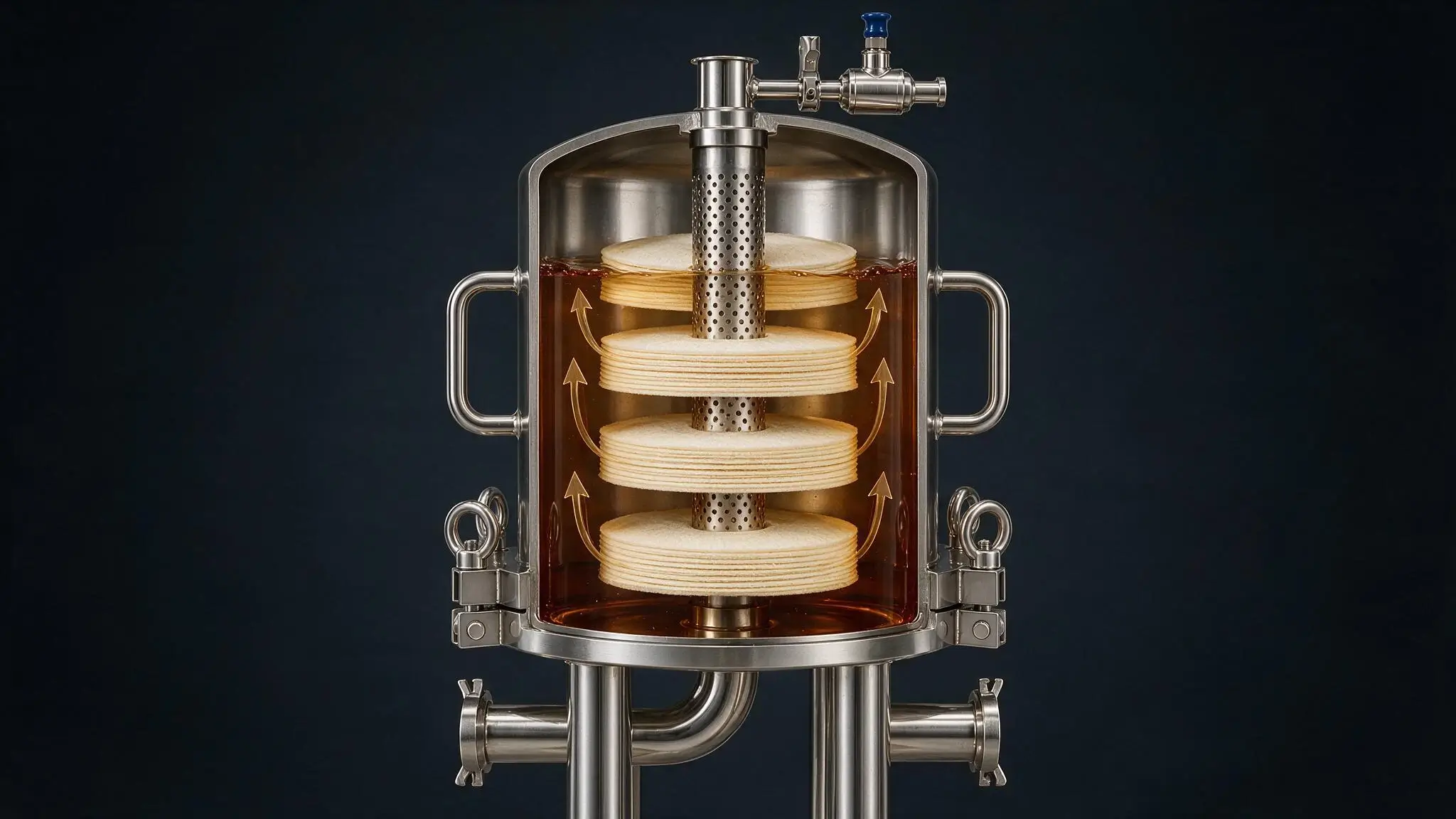
The key difference of stacked disc filter cartridges is their multi-layer depth filtration architecture, made of filter cells stacked on top of one another. The unfiltered liquid moves from the outer surface of each cell into the filter sheet; particles and colloids are separated by mechanical retention and adsorption throughout the full depth of the media.

Illustration showing the position of a stacked disc module cartridge filter inside a filter housing in cross-section
STEP 01

Double Separator Architecture

Each filter cell is supported by a double polypropylene separator in contact with the upper and lower surfaces of the filter sheet. The double separator wraps the sheet from both sides and locks it mechanically; this design gives higher structural strength than conventional modules.

Cross-section illustration showing the separators between discs and liquid flow in a stacked disc module cartridge filter
STEP 02

Depth Filtration Principle

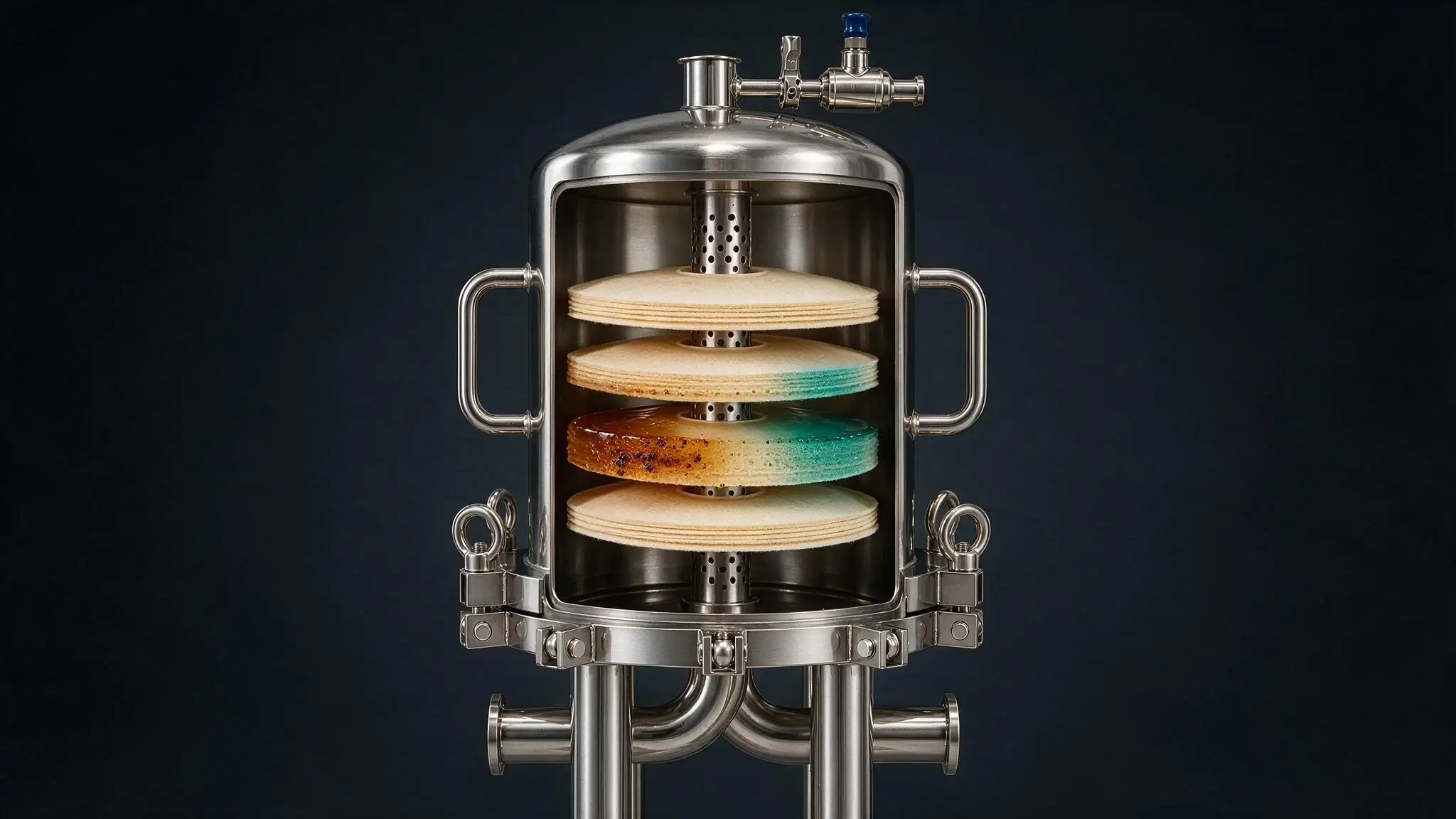
The unfiltered liquid moves from the outer surface of the cartridge into the filter sheet; particles are separated by mechanical retention and adsorption throughout the full thickness of the media. In depth filtration, the contaminant load is spread over the entire media volume, giving higher particle retention capacity than surface filtration.

Cross-section illustration showing graded depth filtration in the discs of a stacked disc module cartridge filter
STEP 03

Central Core and Cage Assembly

The module is built from an ordered arrangement of separators, filter sheets and cell separators. The central core and cage system locks the layers together and ensures integrity. Filter sheets fitted leak-tight distribute flow evenly over the filter area. SIP can be applied only to the backwashable version; standard modules cannot be steam-sterilised.

Physical Construction and Effective Surface Area

In a stacked disc module, effective filtration area is gained not by increasing the body diameter but by increasing the number of cells stacked within the same diameter. Because each cell filters on both of its faces, the module offers a much larger active area than its external dimensions suggest. The area of about 0.26 m² in 8″ laboratory and pilot modules therefore rises to 1.0 m² with 9 cells and 1.8 m² with 16 cells in a Ø291 mm 12″ module, and up to 3.7 m² in a 16″ module. In the field, the large area means the same batch can be filtered with fewer modules and a smaller housing. Because several modules can be stacked in one housing, capacity can be increased by adding modules without rebuilding the line. For low-volume products, modules with fewer cells are chosen so that expensive media are not thrown away unused. Sizing should be based not on the water flow in the catalogue but on the required filter area calculated from the product’s viscosity, solids load and target batch volume. The 8″, 12″ and 16″ options let the result of a pilot trial be carried directly to production scale with the same media.
Size Number of Cells Diameter Height Surface Area
12" 9 Cells 291 mm 175 mm 1.0 m²
12" 15 Cells 291 mm 275 mm 1.7 m²
12" 16 Cells 291 mm 273 mm 1.8 m²

Raw Material and Structural Engineering Design

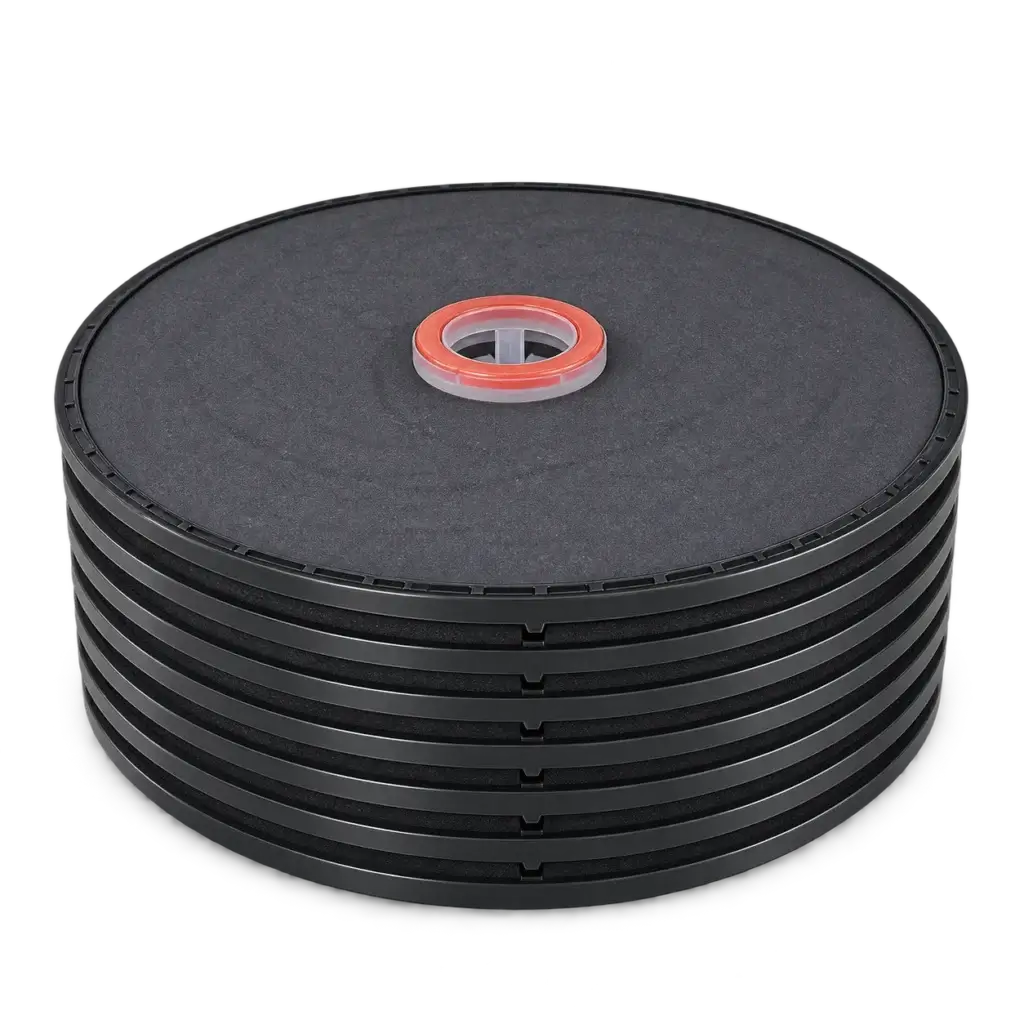
Our cellulose fibre series provides clarification and particle removal with resin, perlite and diatomaceous earth components, while our activated carbon series removes odours, colour compounds, organic pigments and metal ions with the same module construction. In both series, each filter sheet is individually supported between double polypropylene separators and gasketed. Particles are retained not only at the surface but throughout the full thickness of the sheet. This delays surface clogging, extends the cartridge change interval and lowers total operating costs.

Filter Media Cellulose Fibre and Activated Carbon
Filtration Type Depth filtration
Micron Ratings 0.2–0.4 · 0.4–0.6 · 0.6–1 · 1–3 · 2–5 · 3–7 · 10–15 · 25–30 · 40–50 · 50–60 µm · Activated carbon: 5 µm
Core / Support Structure Polypropylene (PP) core and separator
O-Ring Gasket Cellulose: Silicone, EPDM, NBR, Viton, E-FKM · Activated carbon: Silicone, EPDM, NBR
End Cap Type DOE (flat gasket) · SOE (double O-ring, 8″ only)
Outer Diameter (Standard) 8″ · 12″ (Ø291 mm) · 16″ (Ø402 mm)
Number of Cells 7 Cells (8" SOE) · 8 Cells (8" SOE) · 9 / 12 / 15 / 16 Cells (12", 16")
Module Configuration 8", 12", 16" Diameter · 7, 8, 9, 12, 15 and 16 Cell Options (DOE and SOE)

Filter Material Chemical Compatibility Guide

In stacked disc cartridges, chemical resistance is determined by the media type and gasket material. Cellulose fibre media perform well with water-based solutions, dilute acids, alcohols, vegetable oils and fermented beverages; activated carbon media also remove organic pigments, odours and metal ions with high adsorption capacity. The gasket material (silicone, EPDM, NBR, Viton) must be chosen according to the chemistry of the process liquid; correct compatibility is decisive for process safety and filter life. Detailed values are given in the tables below.

E: Excellent  ·  G: Good  ·  F: Fair  ·  P: Poor  ·  N/R: Not recommended

Gas and Vapour Environments

Chemical Group Example Chemical Cellulose Fibre Activated Carbon
Low-Pressure Steam Hot Sanitisation (≤100 °C) G G
Dry Air Industrial Process Air E E
Oxidising Gases Chlorine, Ozone Emissions P F
Acidic Gases SO₂, NOx Emissions F G
Hydrocarbon Vapours Petrol, Solvent Vapours G E

E: Excellent  ·  G: Good  ·  F: Fair  ·  P: Poor  ·  N/R: Not recommended

Liquid Chemicals

Chemical Group Example Chemical Cellulose Fibre Activated Carbon
Dilute Acids HCl, H₂SO₄ (<30%) G E
Concentrated Acids H₂SO₄ (>70%), Fuming HCl P P
Oxidising Acids Nitric Acid, Chromic Acid N/R P
Weak Acids Acetic, Phosphoric Acid G E
Organic Solvents Alcohols, Ketones, Esters G E
Strong Bases NaOH, KOH Solutions P G
Inorganic Salts NaCl, CaCl₂, Al₂(SO₄)₃ E E

Operating Conditions

The performance of stacked disc filter cartridges depends not only on filtration precision but also on their ability to suit operating conditions. With a maximum operating temperature of 80 °C, differential pressure capacity of 2.5 bar for cellulose media and 2.0 bar for activated carbon media at 25 °C, and a wide range of chemical compatibility, Prosestim stacked disc filter solutions are configured to maintain process continuity, support equipment safety and deliver long-term operating efficiency. ISO 9001:2015 certified production and EU 10/2011-compliant material selection deliver reliable depth filtration performance across different industrial applications.

Technical Parameter Cellulose Fibre Activated Carbon
Maximum Operating Temperature 80 °C (176 °F) 80 °C (176 °F)
Maximum Differential Pressure (25 °C) 2.5 bar (36 psi) 2.0 bar (29 psi)
Maximum Differential Pressure (80 °C) 1.0 bar (14.5 psi) 1.0 bar (14.5 psi)
Maximum Backwash Pressure 0.5 bar (7.25 psi) @ max. 60 °C (backwashable version) -
Sterilisation (SIP) Backwashable version only: 125 °C, 30 min, max. 3 cycles, steam pressure <2 bar -
Hot Water Sanitisation 85 °C, 25–30 min -

Sterilisation and Disinfection

Backwash Note

Stacked disc modules in the backwashable version can be washed in the reverse of the filtration direction with cold water or hot water at up to 60 °C (140 °F) for 5–10 minutes at a differential pressure of no more than 0.5 bar (7.25 psi). Standard modules can be washed only under limited conditions.

Cleaning efficiency can vary depending on many different parameters, such as the nature of the process liquid, the contaminant load and the backwash pressure applied.

Sanitisation and Backwash Methods

Method Temperature Duration / Cycles
Steam-in-Place Sterilisation (SIP) 125 °C (backwashable version only) 30 minutes, max. 3 cycles, steam pressure <2 bar
Hot Water Sanitisation Max. 85 °C (185 °F) 25–30 minutes
Backwashing (backwashable version only) Cold water or max. 60 °C (140 °F) 5–10 minutes, max. 0.5 bar ΔP
TECHNICAL ASSESSMENT BASED ON FIELD EXPERIENCE

Engineer's Note

Stacked disc filter cartridges are designed especially for processes with a high solids load that require clarification and particle removal. However, the mistake we see most often in the field is applying a flow disproportionate to the filter surface area. For ideal efficiency, we recommend that system flow does not exceed 75% of the module’s capacity and that the flux calculation is based on the filter surface area.

When should it be chosen?

Used in processes with a high solids load such as wine, beer, fruit juice, edible oil and syrup, and for clarification and bioburden reduction in pharmaceutical and cosmetics production.

When should it not be chosen?

On lines containing concentrated strong acids (pH < 2) or strong bases (pH > 11), and in aromatic hydrocarbon and chlorinated solvent environments, cellulose fibre media may not be suitable; please contact our technical team for these applications.

Application and Selection Criteria
Pre-Filtration and Capacity Protection
With a high particle and colloid load, pre-filtration extends the depth life of the stacked disc module.
Differential Pressure (ΔP) Monitoring
Check the calibration of the inlet/outlet differential pressure gauges regularly; plan module replacement when the differential pressure reaches 1.5 bar.
Sealing and Lubricant Selection
To keep the module adapter gaskets flexible, do not use mineral oil during installation; use only process-compatible silicone grease.

Industry Applications

Filter cartridges suited to different process needs are used across a wide range of industrial applications to protect product quality, safeguard equipment and support production continuity.

1–6 / 24
Vegetable Oil 01 Vegetable Oil Clarity, purity and shelf life in vegetable oil and refining. Explore solutions Pipe and Profile 02 Pipe and Profile Cooling water filtration in pipe and profile extrusion. Explore solutions Paint Industry 03 Paint Industry Surface quality and pigment filtration in the paint industry. Explore solutions Glass Industry 04 Glass Industry Furnace and process filtration in the glass industry. Explore solutions Dialysis Centers 05 Dialysis Centers Water preparation and process filtration in dialysis centers. Explore solutions Foundry Industry 06 Foundry Industry Equipment protection and dust filtration in foundries. Explore solutions Industrial Oil 07 Industrial Oil Filtration in industrial oil production and recovery. Explore solutions Energy and Biogas 08 Energy and Biogas Maximum efficiency and turbine protection in energy and biogas. Explore solutions Recycling 09 Recycling Filtration for efficiency and environmental compliance in recycling. Explore solutions Food and Beverage 10 Food and Beverage Hygienic filtration in food and beverage. Explore solutions Pharmaceuticals and Biotechnology 11 Pharmaceuticals and Biotechnology GMP-compliant sterile filtration in pharmaceuticals and biotechnology. Explore solutions Paper and Packaging 12 Paper and Packaging Process water filtration in paper and packaging. Explore solutions Chemical Industry 13 Chemical Industry Corrosion-resistant, safe filtration in the chemical industry. Explore solutions Cosmetics 14 Cosmetics Microbiological safety and precision filtration in cosmetics. Explore solutions Machinery 15 Machinery Precision and technical filtration in the machinery industry. Explore solutions Printing and Ink 16 Printing and Ink Flawless color and print quality in printing and ink. Explore solutions Metal and Surface Treatment 17 Metal and Surface Treatment Flawless surfaces and bath stability in metal and surface treatment. Explore solutions Forest Products 18 Forest Products Resin and glue filtration in forest products and furniture. Explore solutions Automotive 19 Automotive Precision process filtration for zero defects in automotive manufacturing. Explore solutions Oil and Petrochemicals 20 Oil and Petrochemicals Equipment protection and process safety in oil and petrochemicals. Explore solutions Plastic Packaging 21 Plastic Packaging Precision process filtration and raw material purity in plastic packaging. Explore solutions Plastic Injection Molding 22 Plastic Injection Molding Cooling and hydraulic filtration in plastic injection molding. Explore solutions Water and Environment 23 Water and Environment Recovery filtration in water and environmental technologies. Explore solutions Shipyards and Marine 24 Shipyards and Marine Operational safety and efficiency in shipyards and marine. Explore solutions











Products that work with this product

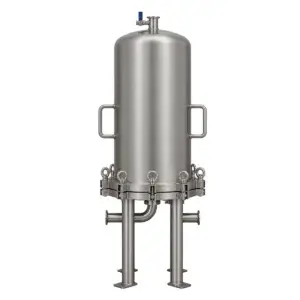
Housings the cartridge fits, alternatives with the same end-cap types and the parts needed for connection.
This product
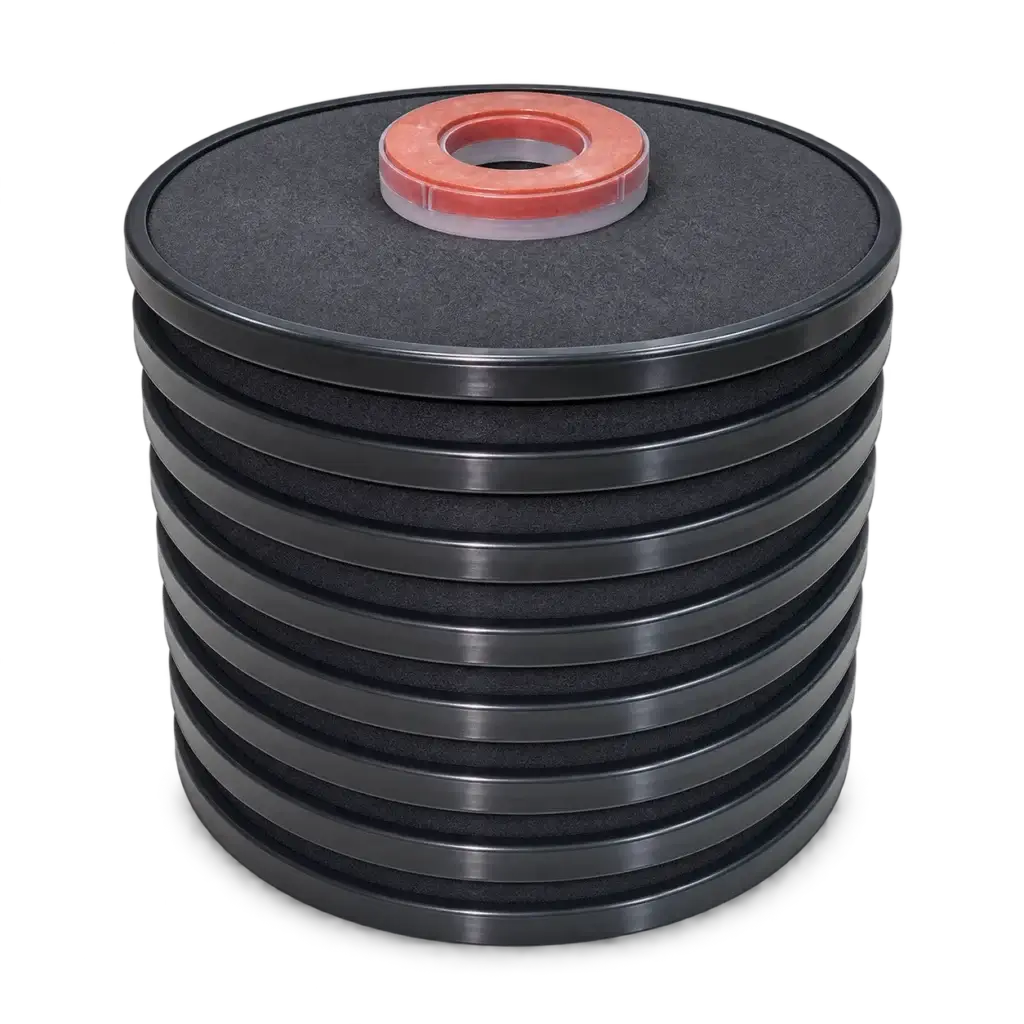
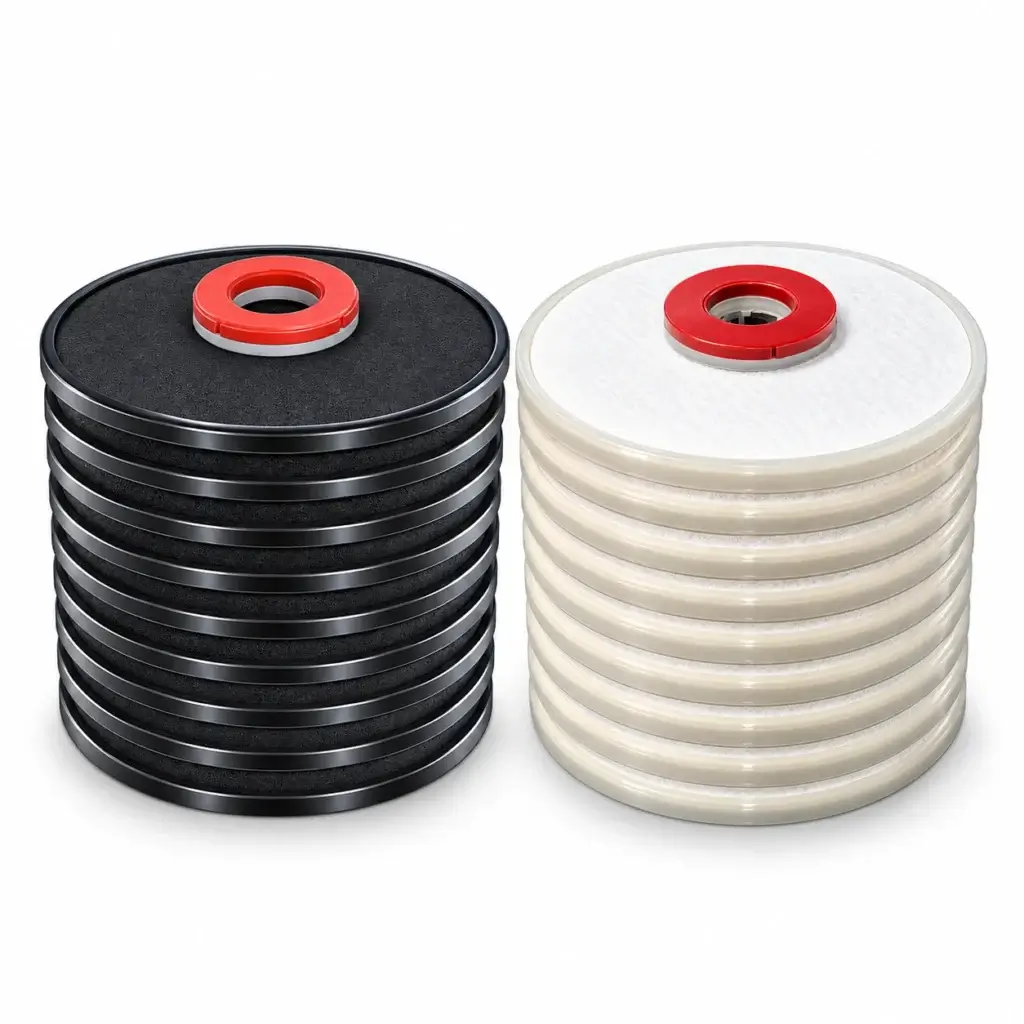
Black activated carbon and white cellulose stacked disc module cartridge filters

Stacked Disc Module Cartridge Filter

Cartridge Filters
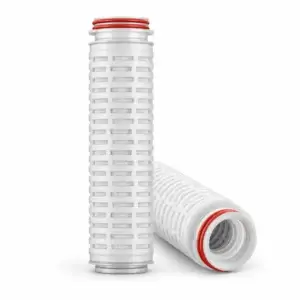
Pleated micro cartridge filter with 222 O-ring

Pleated Micro Cartridge Filter

Lower micron ratings; used as a final filter.

View →
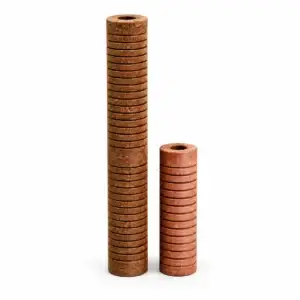
20-inch and 10-inch resin-bonded cartridge filters

Resin-Bonded Cartridge Filter

Cartridge for paint, resin and adhesive lines.

View →
Request everything in one quote: let’s size the product, housing and connection parts together.

Your Questions Answered

Frequently Asked Questions

At Prosestim, we are committed to answering your questions and providing technical support for our filtration solutions.

A stacked disc cartridge is a depth filter module made of independent filter cells stacked on top of one another. 7 or 8 cells in 8″ modules and 9, 12, 15 or 16 cells in 12″ and 16″ modules are combined into a single compact unit that works inside an enclosed stainless housing. It replaces conventional plate-and-frame presses.

Retention happens through two mechanisms. In mechanical retention, the tortuous pore structure captures particles in the depth of the material rather than at the surface. In adsorption, the positive charge that the diatomaceous earth and resin system gives the matrix retains negatively charged colloids and haze formers smaller than the pore diameter. This gives a much higher dirt-holding capacity than a membrane cartridge of the same micron rating.

The standard diameter of a 12-inch module is Ø291 mm and of a 16-inch module Ø402 mm. A 12-inch 16-cell module is about 273 mm high. Cell options are 7 or 8 for the 8-inch module and 9, 12, 15 or 16 for the 12- and 16-inch modules; the effective filter area of a 12-inch 16-cell module is 1.8 m². Note: the wet weight of large-diameter double-layer models can exceed 25 kg, so handling assistance is needed.

The range is from 0.2 to 60 microns. 10–60 microns are used for coarse filtration, 1–10 microns for clarification, 0.4–1.0 microns for fine filtration and 0.2–0.4 microns for microbial reduction. These values are nominal, not absolute. Thanks to adsorption, a depth filter also retains below its nominal rating, but it cannot be validated as a sterilising filter. If sterile filtration is required, the stacked disc module is not the final stage but the protective stage ahead of the membrane. Do not choose by the water permeability figures in the catalogue. These are laboratory values that characterise the sheet, not recommended flow rates. A low flux almost always gives a longer service life and better economics.

Conventional media are a mix of cellulose, diatomaceous earth and resin, with an ash content of 16–58%. Pure cellulose premium media contain no minerals, with an ash content below 1%.

The advantage of media with diatomaceous earth is strong adsorption; the disadvantages are that they release calcium and magnesium into the product and have a low wet burst strength (40–110 kPa). Pure cellulose has a burst strength above 150 kPa and high fidelity of taste and colour, but its retention is more mechanical.

Three special cases: for spirits and flavourings, series with reduced calcium and magnesium content are used, otherwise haze forms later in the bottle. Pharmaceuticals require series with documented endotoxin values (such as <0.025 EU/ml after 25 l/m² WFI). For high viscosity and particle loads, high-strength coarse series are preferred.

The maximum operating temperature is 80 °C, and the maximum differential pressure at 25 °C is 2.5 bar for cellulose media and 2.0 bar for activated carbon media. The recommended differential pressure for module replacement is 1.5 bar. Looking only at the drop in flow is misleading, because flow can be maintained by increasing pump pressure, and that is what really damages the filter. In microorganism removal applications, 1.5 bar must not be exceeded. At high differential pressure the matrix compresses and retained microorganisms can pass downstream. The filter stays intact, but microbiological safety is lost.

Flushing before first use is mandatory: 50 l/m², at 1.25–1.5 times the process flow and with water at no more than 85 °C. If skipped, loose particles and odour pass straight into the product. After flushing, the system must be tested for leak-tightness at the maximum operating pressure.

For hot water sanitisation, once 85 °C is reached at the housing outlet, circulate for 25–30 minutes, then rinse with purified water until the outlet water is odourless.

Steam-in-place sterilisation (SIP) can be done only with the backwashable version: 125 °C, 30 minutes, no more than 3 cycles and steam pressure below 2 bar. Standard modules cannot be steam-sterilised. Contact our technical team to determine the right model for your application.

Yes. Backwashable cartridges are regenerated by washing in the reverse of the filtration direction, first with cold and then with hot water. Typical parameters: maximum differential pressure of 0.5 bar, cold water or hot water at up to 60 °C, 5–10 minutes. According to manufacturer data, backwashing can typically extend module life by 30–50%.

Conventional cartridges cannot withstand this; because the sheets are exposed, reverse water pressure tears them. The solution comes from two designs: a honeycomb polyester woven layer placed between the cells (which gives every cell an equal inlet and protects the sheet), or a double separator structure that supports the media from both the inlet and outlet sides.

Application requirement: even if no separate kit is needed, stainless intermediate plates and lower and upper guide plates must be used.

Realistic expectation: in theory, cost falls as the number of cycles increases, but retention performance declines slightly with every cycle. On critical microbiological stages, limit the number of cycles and support the decision with turbidity and microbiology data.

Dimensions are standard (12″ Ø291 mm, 16″ Ø402 mm, height about 273–275 mm), so most cartridges physically fit. Real compatibility, however, depends on the adapter type, gasket material and the housing’s compression system. If any of these do not match, the fluid bypasses the filter.

12″ and 16″ modules work with a flat-gasket (DOE) adapter; the double O-ring (SOE) option is available only for 8″ modules. Versions with grounding assemblies are available for ATEX environments. For gaskets, silicone is standard, EPDM is used for hot water and steam, NBR for oils and hydrocarbons, Viton for aggressive chemicals and E-FKM for wide chemical compatibility. In the activated carbon series, only silicone, EPDM and NBR gaskets can be chosen.

Legislation must also be checked. In food and beverage, the EU 1935/2004 and EU 10/2011 food-contact compliance standards are required, plus LFGB for Germany. Note: not every cartridge that fits the same housing has the same scope. For some industrial series, the manufacturer explicitly states that they are not suitable for food contact. Matching only micron rating and size can put you outside the regulations; before changing, read the intended-use and restrictions sections of the technical bulletin.

Fast Quote & WhatsApp Consultation

Stacked Disc Module Cartridge Filter RFQ Configurator

Configure your variation dimensions and technical specifications to receive an instant quote directly on WhatsApp and via email.

1 Select Variation Type
2 Dimensional & Technical Specifications
Module Diameter:
8 Inch
12 Inch
16 Inch
8 Cells
8 Cells 16 Cells
3 Required Quantity
QUICK QUOTE FORM

Stacked Disc Module Cartridge Filter

Variation Type: Activated Carbon Stacked Disc Module Cartridge Filter
Module Diameter: 8 Inch
Number of Cells: 8 Cells
Request Quantity: 10 Units
ISO 9001:2015 Certified Production
Reply from Our Technical Team
Delivery Across Türkiye and Export

Accounting

Billing Details

Copy our registered company name, tax and e-invoice details with one click using the button on each row.

Invoice name (registered company name)

PROSES TİCARET, İMALAT, MÜHENDİSLİK ENDÜSTRİYEL MADDE VE MALZEME İMALATI İNŞAAT VE SANAYİ LİMİTED ŞİRKETİ

Billing address

Musa Gündüz Cad. No:14 Taşköprü – Çiftlikköy – YALOVA, TÜRKİYE

E-invoice / e-archive email address

Tax office

Yalova Tax Office (Yalova V.D.)

Tax ID number

7330379514

MERSIS number

0733037951400013

Please send BA/BS forms, current account reconciliations and any other emails for our Finance and Administrative Affairs Department to [email protected].

Invoice name (registered company name): PROSES TİCARET, İMALAT, MÜHENDİSLİK ENDÜSTRİYEL MADDE VE MALZEME İMALATI İNŞAAT VE SANAYİ LİMİTED ŞİRKETİ Billing address: Musa Gündüz Cad. No:14 Taşköprü – Çiftlikköy – YALOVA, TÜRKİYE E-invoice / e-archive email address: [email protected] Tax office: Yalova Tax Office (Yalova V.D.) Tax ID number: 7330379514 MERSIS number: 0733037951400013