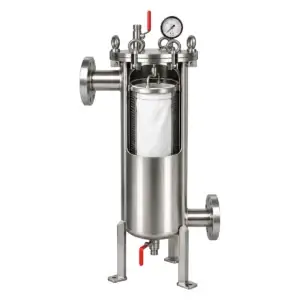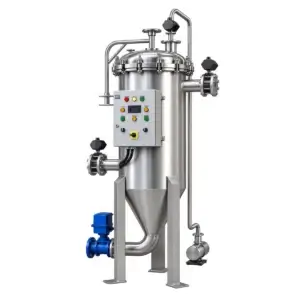
Stainless Steel Basket Filter Housing
AISI 304, 304L, 316, 316L, 316Ti and 904L Stainless Steel Body, Washable Metal Basket and 5–10,000 µm Filtration Precision
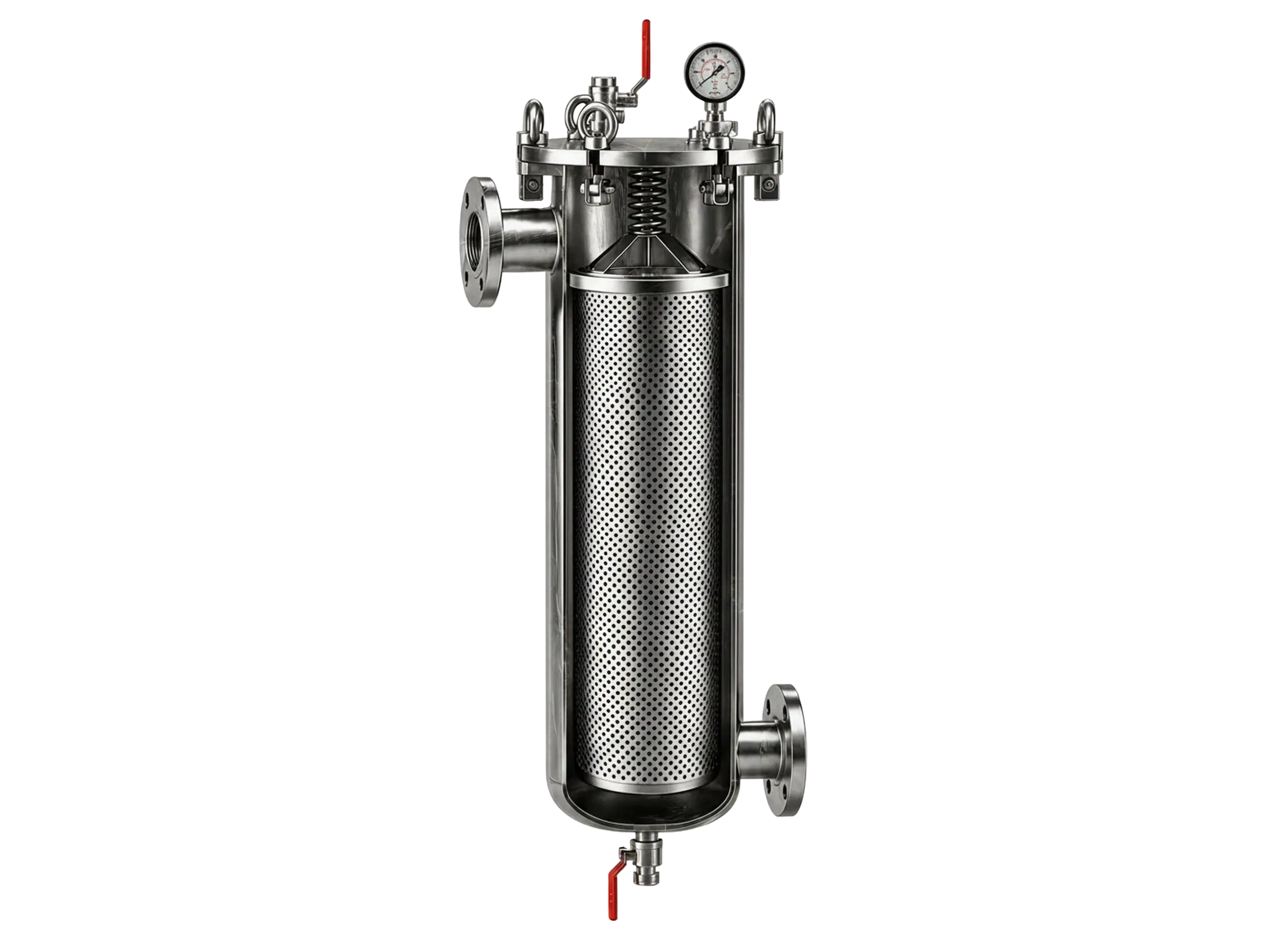
A basket filter housing filters in the 5–10,000 µm range with a washable stainless steel basket inside and requires no consumables. Single and multiple models for lines with high solids loads that need frequent cleaning.
AISI 304 · 304L · 316 · 316L · 316Ti · 904L
1/4"–18"
16 bar
Long Service Life
What is a basket filter housing?
The filtering is done by a permanent, washable basket whose micron rating can be selected. Thanks to this design, a basket filter housing requires no regular purchase of consumables. When the basket clogs, it is not replaced; it is taken out of the housing, washed and put back into service. On lines with a high solids content and in processes that need frequent cleaning, this is a decisive advantage.
Basket filter housings are made in standard sizes. Where necessary, the length, diameter and connection sizes of the housing can also be specified for the customer, based on the density of the material to be filtered, the amount of solids in the line, the line pressure and how often the baskets are washed.
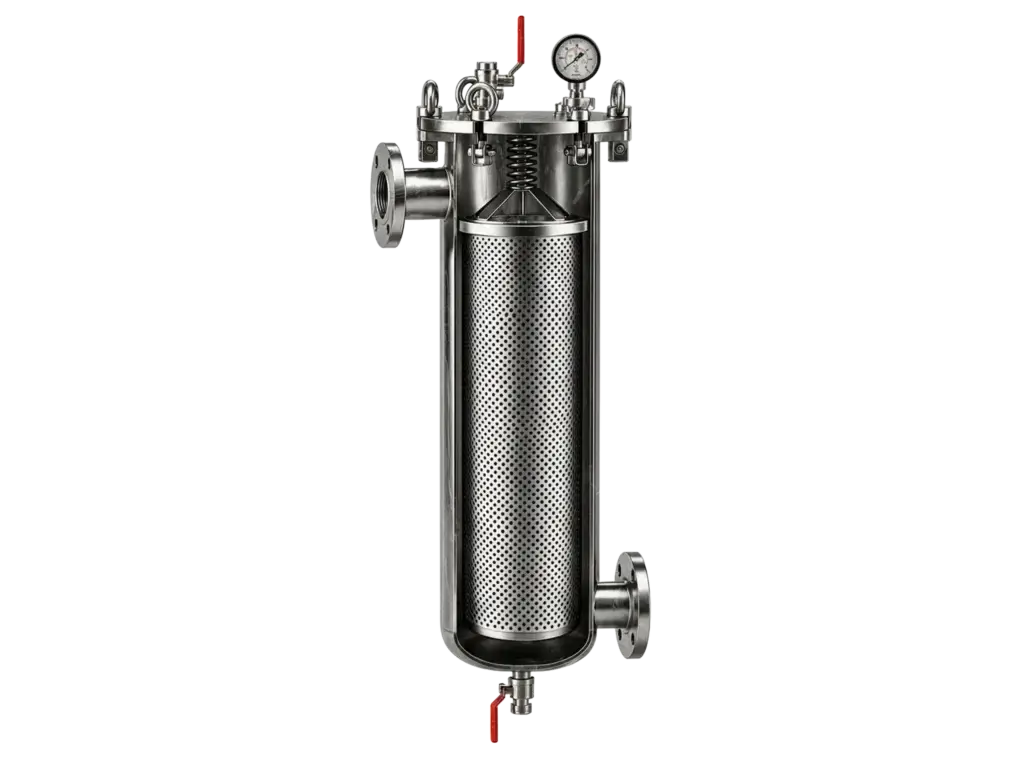
Main Components
- Body (Housing Structure)
- A robust, all-stainless-steel process vessel that stays leak-tight under pressure.
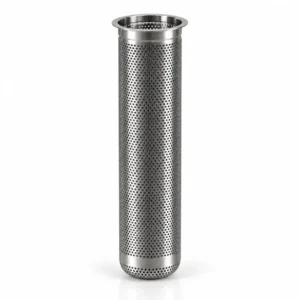
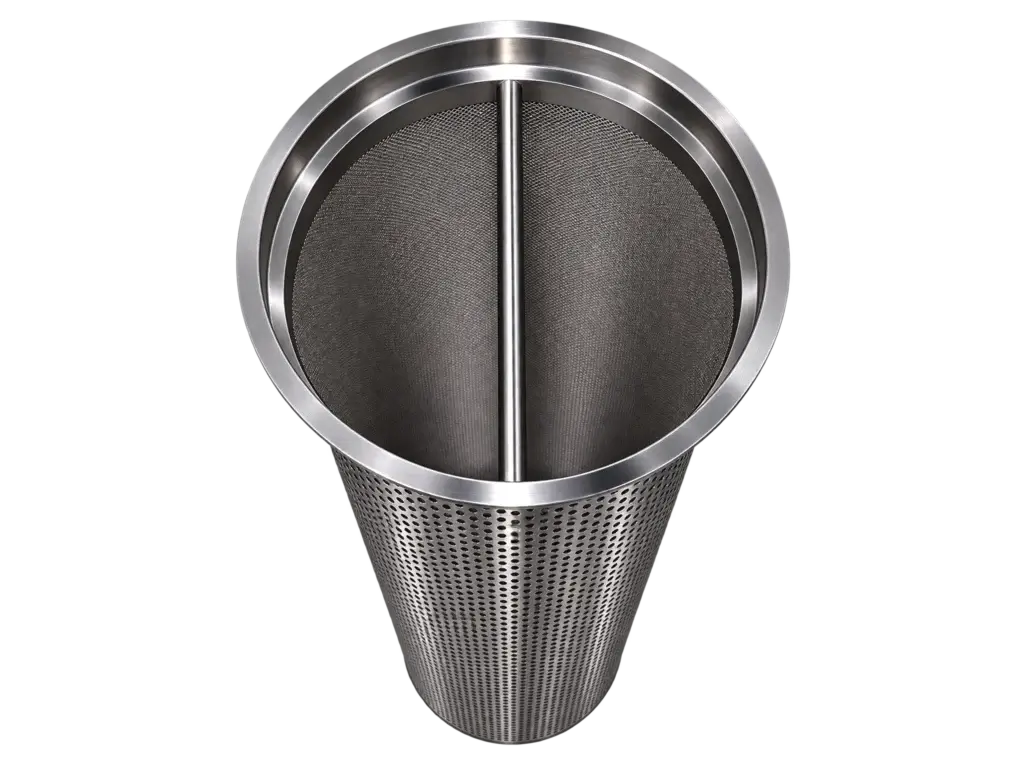
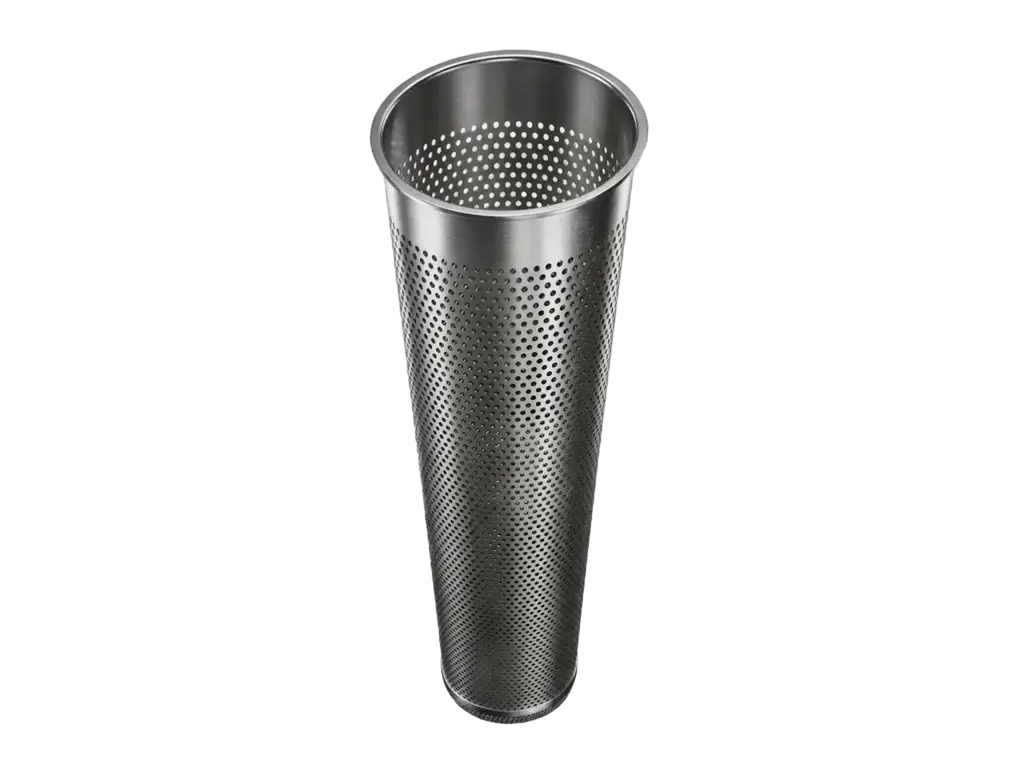
- Filter Basket Element
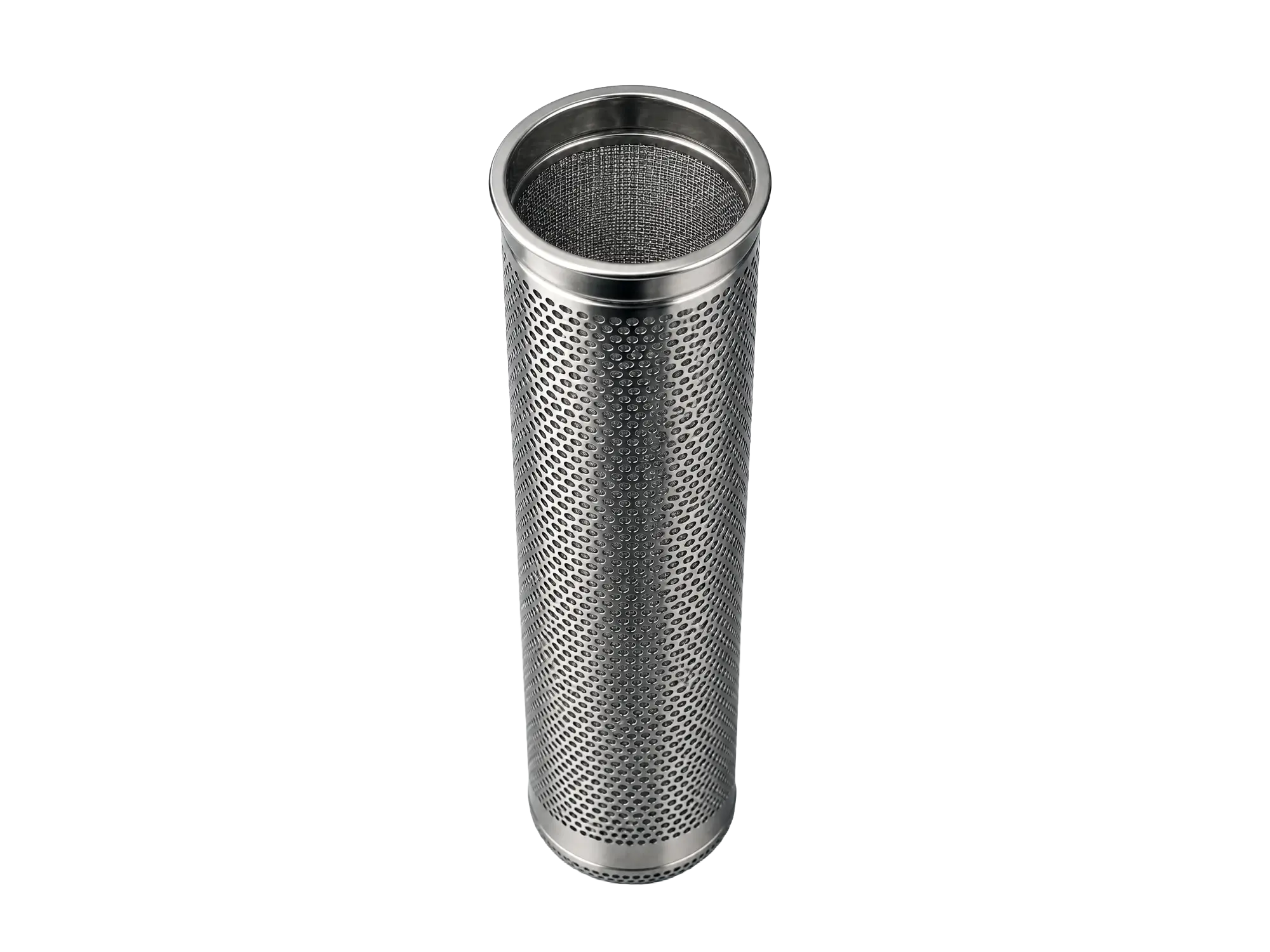
- A washable stainless steel element lined with wire mesh in the required micron range.
- Basket Hold-Down Element
- A hold-down element that stops the basket shifting under flow and compromising filtration.
- Top Lid System
- Bolted, swing-bolt or davit (boom) opening mechanism with gasket or O-ring sealing.
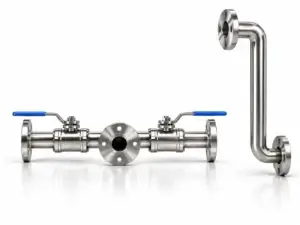
- Inlet / Outlet Connections
- DIN/ANSI flange, muff, nipple, union, clamp or camlock connections from 1/4" to 18" depending on line diameter.


Filtration Architecture and Working Principle
Inlet & Distribution into the Body
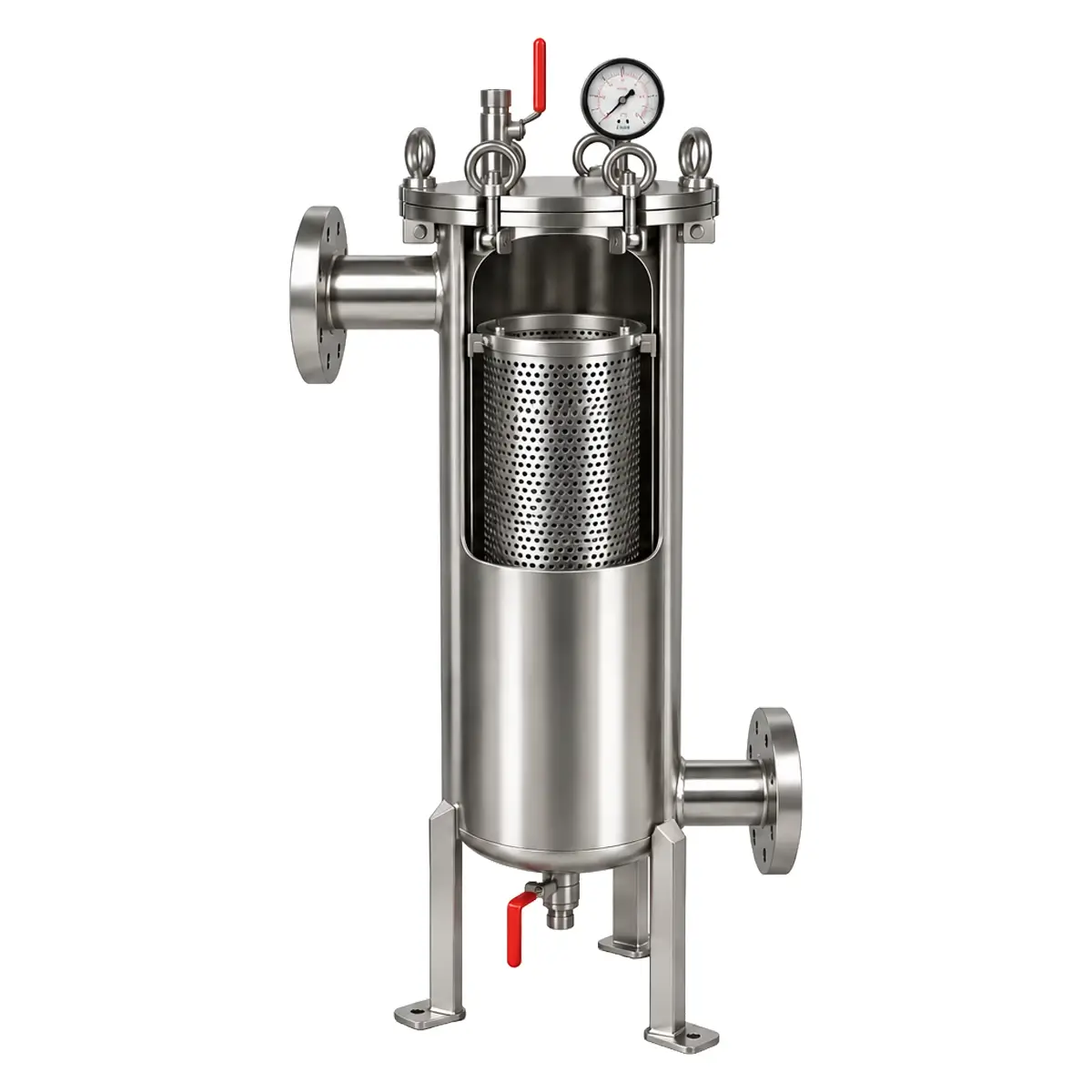
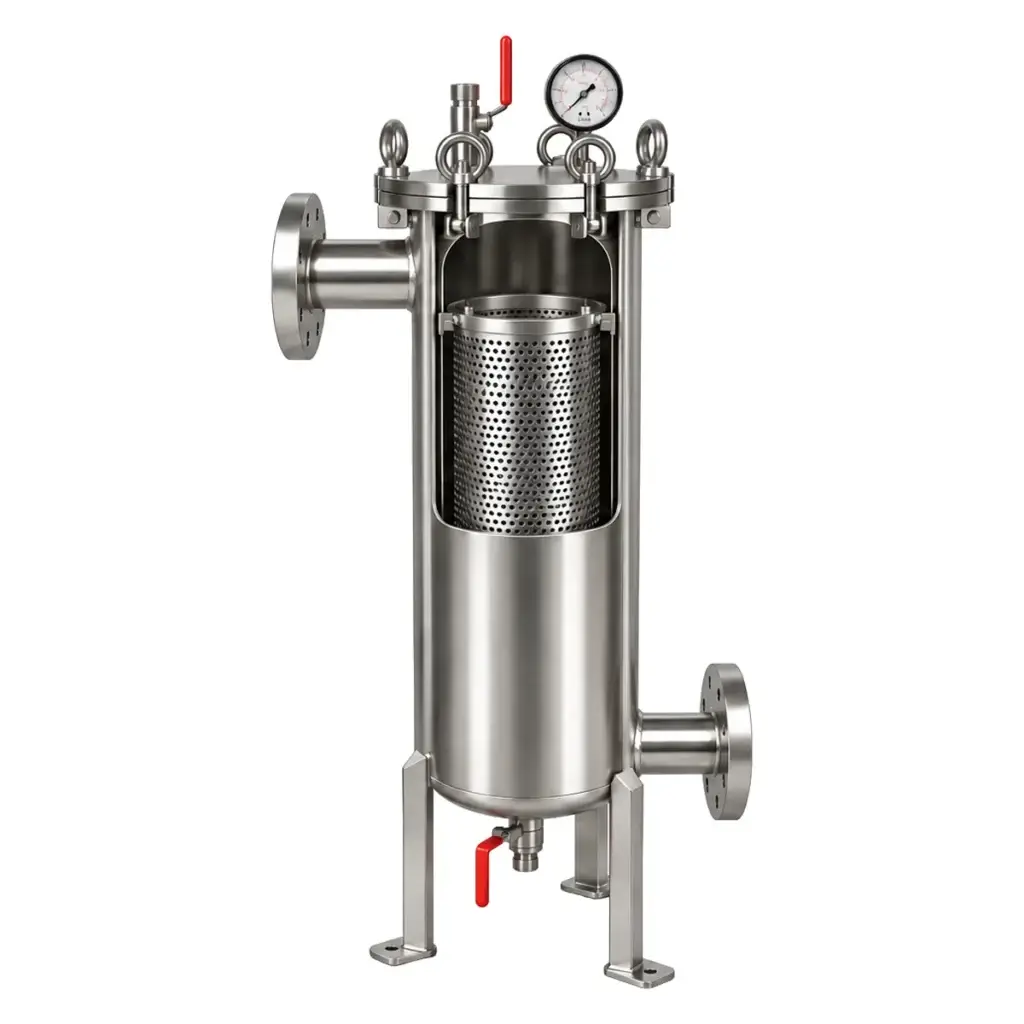
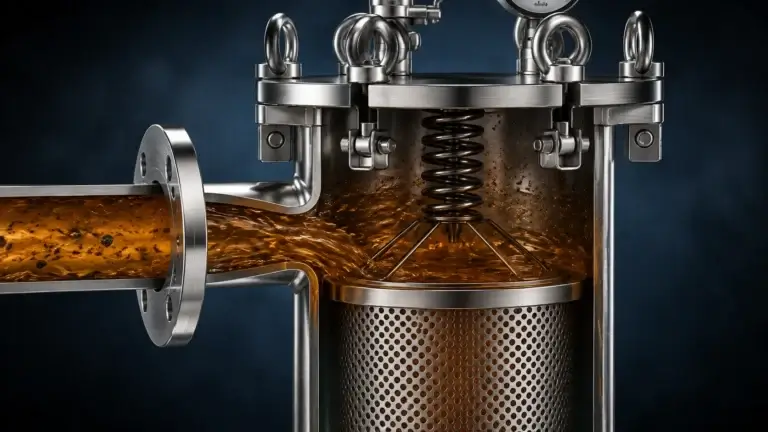
Dirty process liquid enters the body through the upper inlet connection and is directed into the basket, which is lined with stainless wire mesh and held in place by the hold-down element.
Inside-Out Basket Filtration
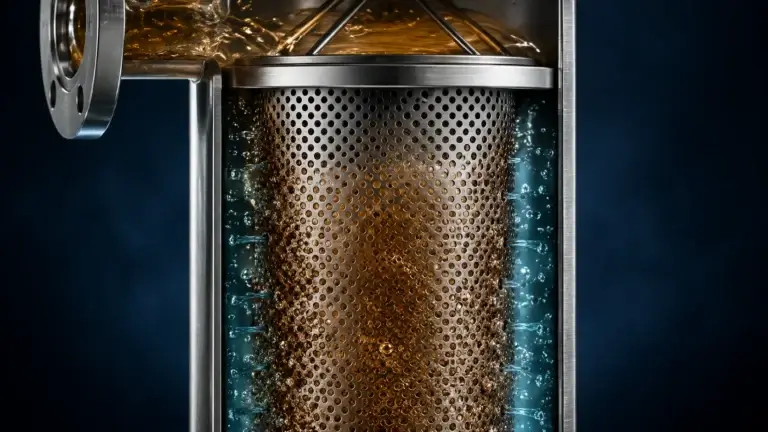
As the liquid passes inside-out through the openings of the stainless wire mesh, all solids above the specified micron rating are trapped inside the basket.
Clean Outlet & Line Protection
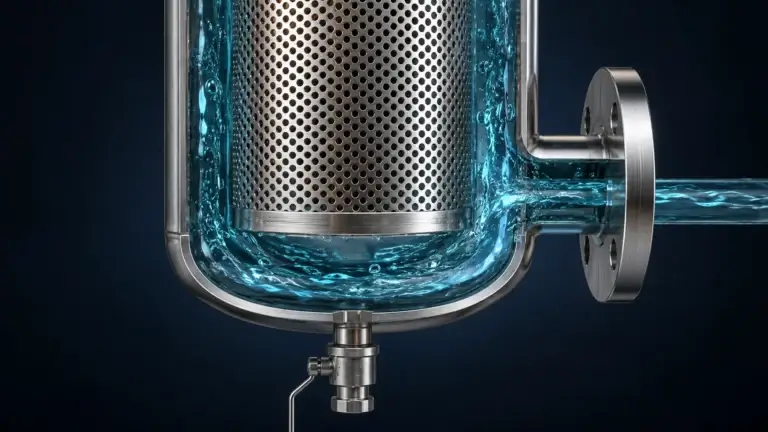
The filtered, particle-free liquid flows continuously through the space between the inner wall of the body and the basket to the bottom outlet connection.
Basket filter housing vs. bag filter housing
In principle, the two housings are the same; the only point where they differ is the filter element. A basket filter housing has no disposable bag; filtering is done by a permanent basket lined with wire mesh.
- Filter Element Architecture
- An industrial-grade stainless steel basket lined with wire mesh made specifically for filtration is used.
- Basket Filter Service Life
- The basket filter is not thrown away; it is cleaned by pressure washing or chemical washing and reused for many years.
- Consumables Requirement
- No recurring cost of buying fabric or bags; significantly lowers operating costs.
- Micron Selection Range
- A wide range of filtration options from 5 to 10,000 microns, depending on the stainless wire mesh.
- Body and Lid Construction
- The same robust process body: the body, sealing gasket and connection systems are shared with bag housings.
- Convertibility
- An existing bag filter housing can easily be turned into a basket filter housing by modifying its inner basket.
Product Identity and Technical Summary
- Filtration Range
- 5 µm – 10,000 µm (stainless wire mesh).
- Body Material
- AISI 304 / 304L Stainless Steel
- AISI 316 / 316L Stainless Steel
- AISI 316Ti Stainless Steel
- AISI 904L Super Austenitic
- Filter Element
- Washable, reusable stainless basket lined with wire mesh.
- Inlet / Outlet Size
- 1/4" – 18" (DN8–DN450 depending on housing size and line flow).
- Connection Type
- DIN / ANSI Flange
- Muff & Nipple
- Union
- Clamp (Tri-Clamp)
- Lid System
- Bolted Lid
- Swing-Bolt Quick-Opening Lid
- Davit (Boom) Mechanism with Handwheel
- Operating Pressure
- 16 bar
- Flow Direction
- Inside-out filtration; all sediment collects inside the basket.
- Sealing Type
- Sealing system with a gasket or O-ring groove on top of the body.
- Gasket Materials
- Nitrile (NBR)
- Silicone
- EPDM
- Viton (FKM) PTFE
- Basket Hold-Down Element
- Hold-down element that secures the basket to the body and prevents bypass and movement.
- Size and Diameter
- Standard universal sizes and process-specific custom dimensions.
Micron range and basket wire mesh
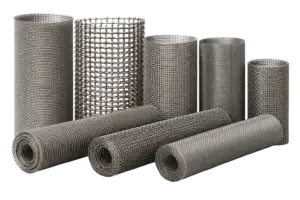
Basket filters are lined with wire mesh from 5 to 10,000 microns. The micron rating is determined by the opening size and weave type of the mesh applied to the basket.
Mesh weave options
The same body and the same basket give a completely different filtration precision when lined with different mesh wires. Coarse open weaves are preferred on lines aimed at retaining coarse solids, and tight weaves for fine filtration.
- Plain Weave: AISI 304 / AISI 316 Plain Weave, standard plain weave
- Twill Weave: AISI 304 / AISI 316 Twill Weave, double-interlaced weave
- Plain Dutch Weave: AISI 304 / AISI 316 Plain Dutch Weave, for fine filtration
- Twill Dutch Weave: AISI 304 / AISI 316 Twill Dutch Weave, the tightest weave
Body material and basket grade
- AISI 304 Stainless Steel
- A durable, economical solution for general-purpose water, neutral liquids and low-corrosion process lines.
- AISI 316 / 316L Stainless Steel
- Molybdenum-alloyed body; superior corrosion resistance in fluids containing chlorides, salt, acids and chemicals.
- AISI 316Ti Stainless Steel
- Titanium-stabilised alloy; extra protection against intergranular and weld-zone corrosion in high-temperature processes.
- AISI 904L Super Austenitic
- High Ni-Cr-Mo super austenitic body; maximum resistance to sulphuric acid, phosphoric acid and the most aggressive chemicals.
Inlet – outlet connection types

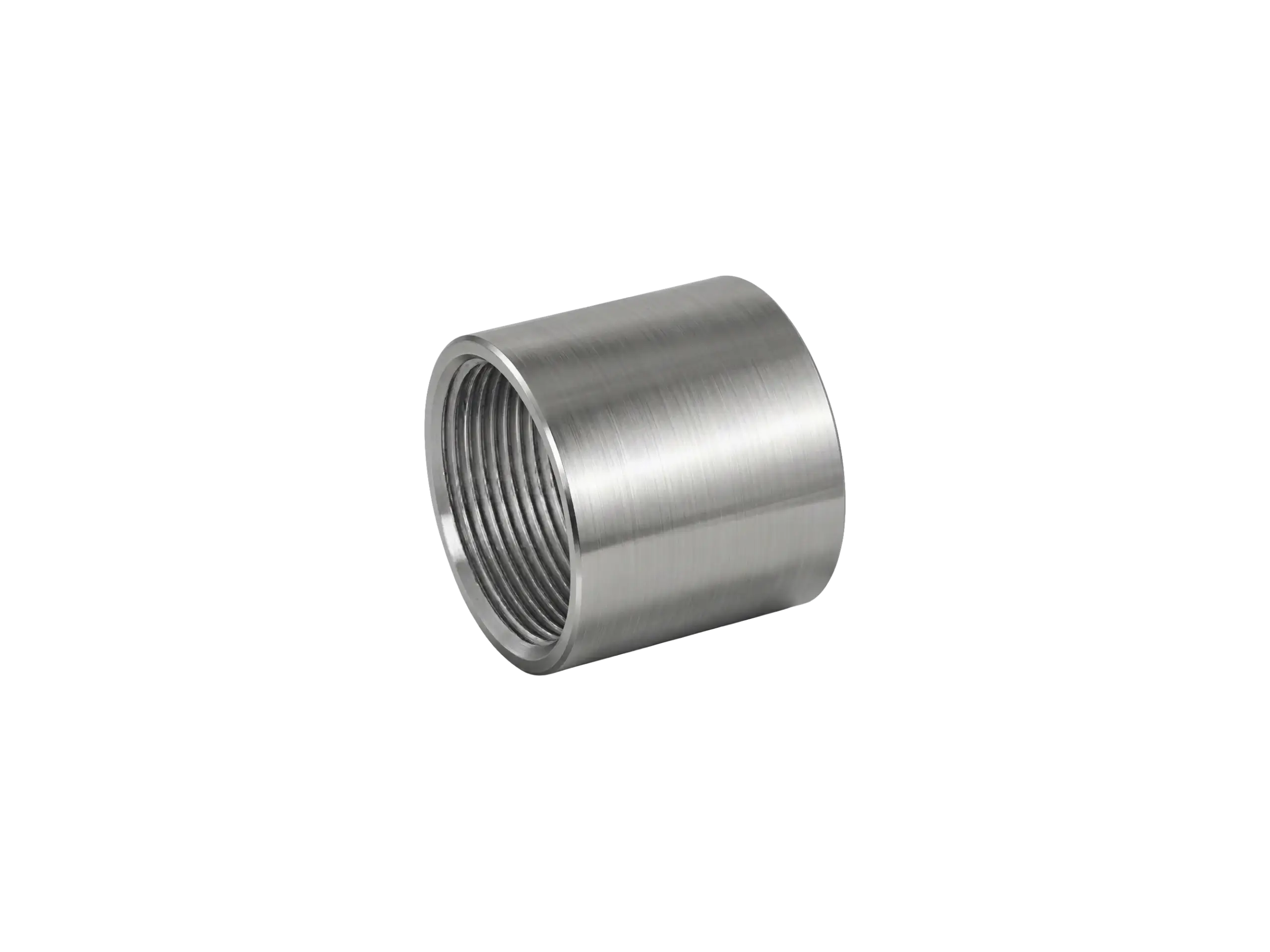
Muff (Female Thread)
For threaded line connections; small and medium diameters, and large diameters on request.
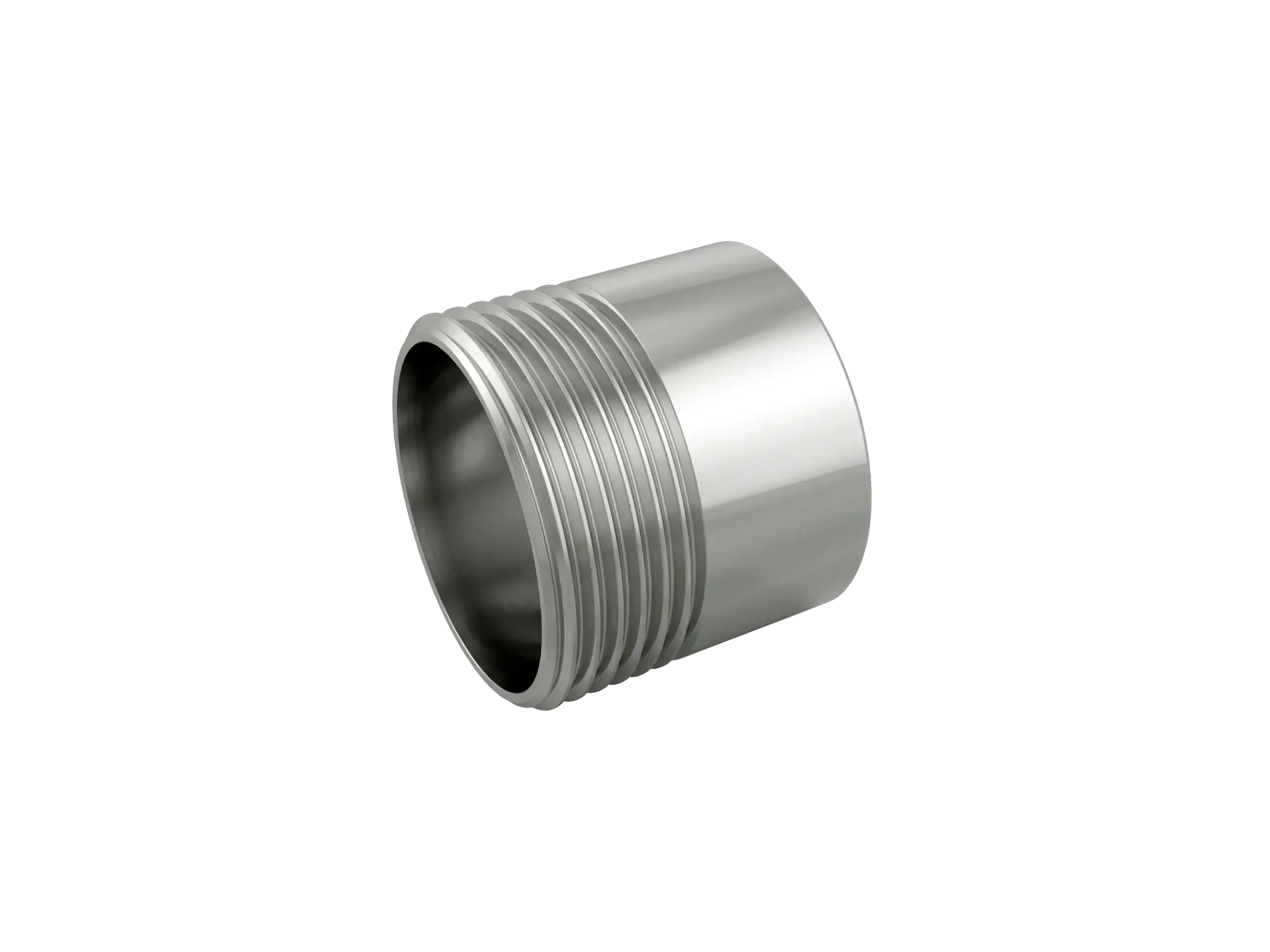
Nipple
For installations that need a male threaded connection.
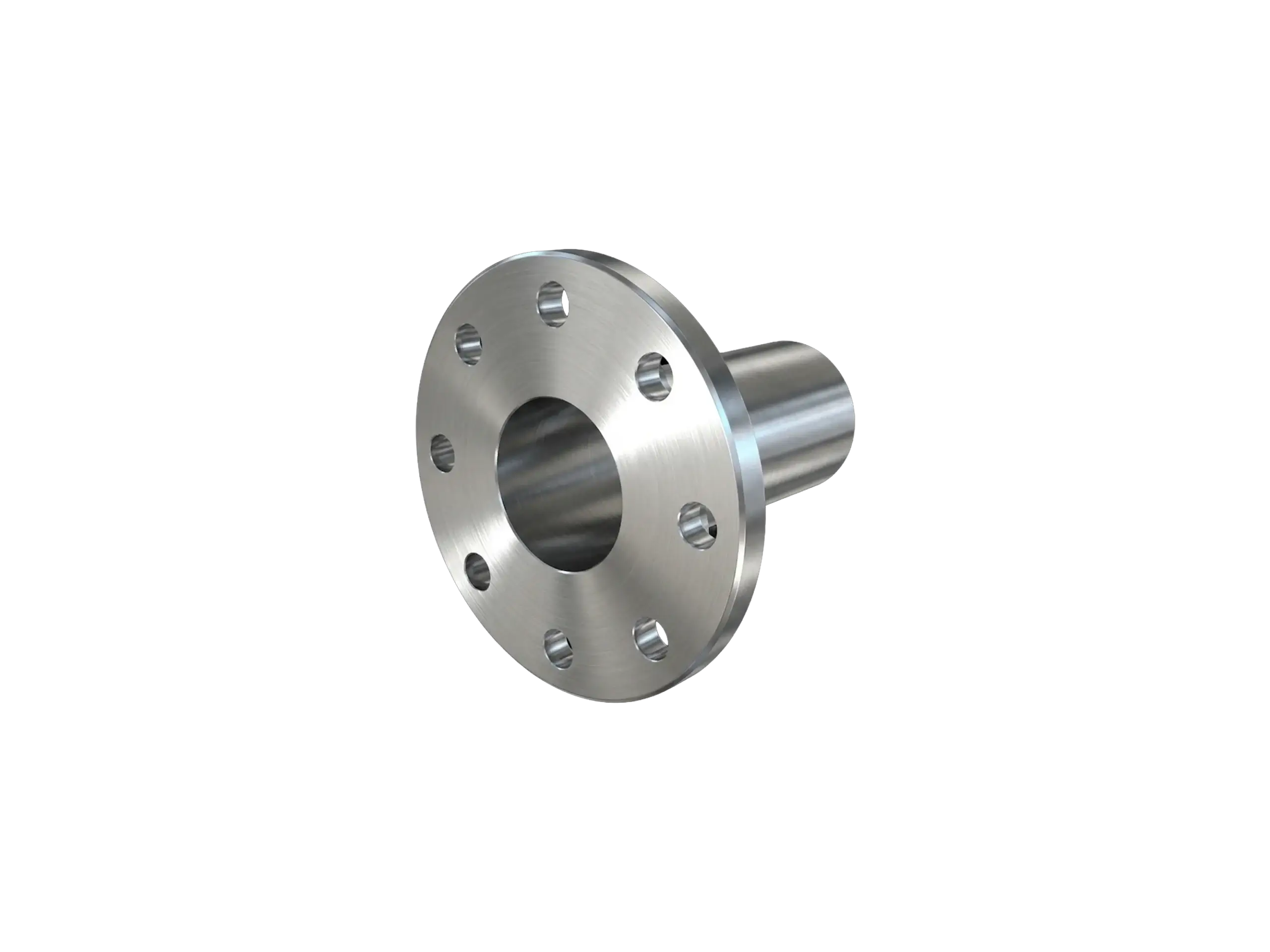
Flange
Small and large diameters; for high-pressure lines and lines that are frequently dismantled.
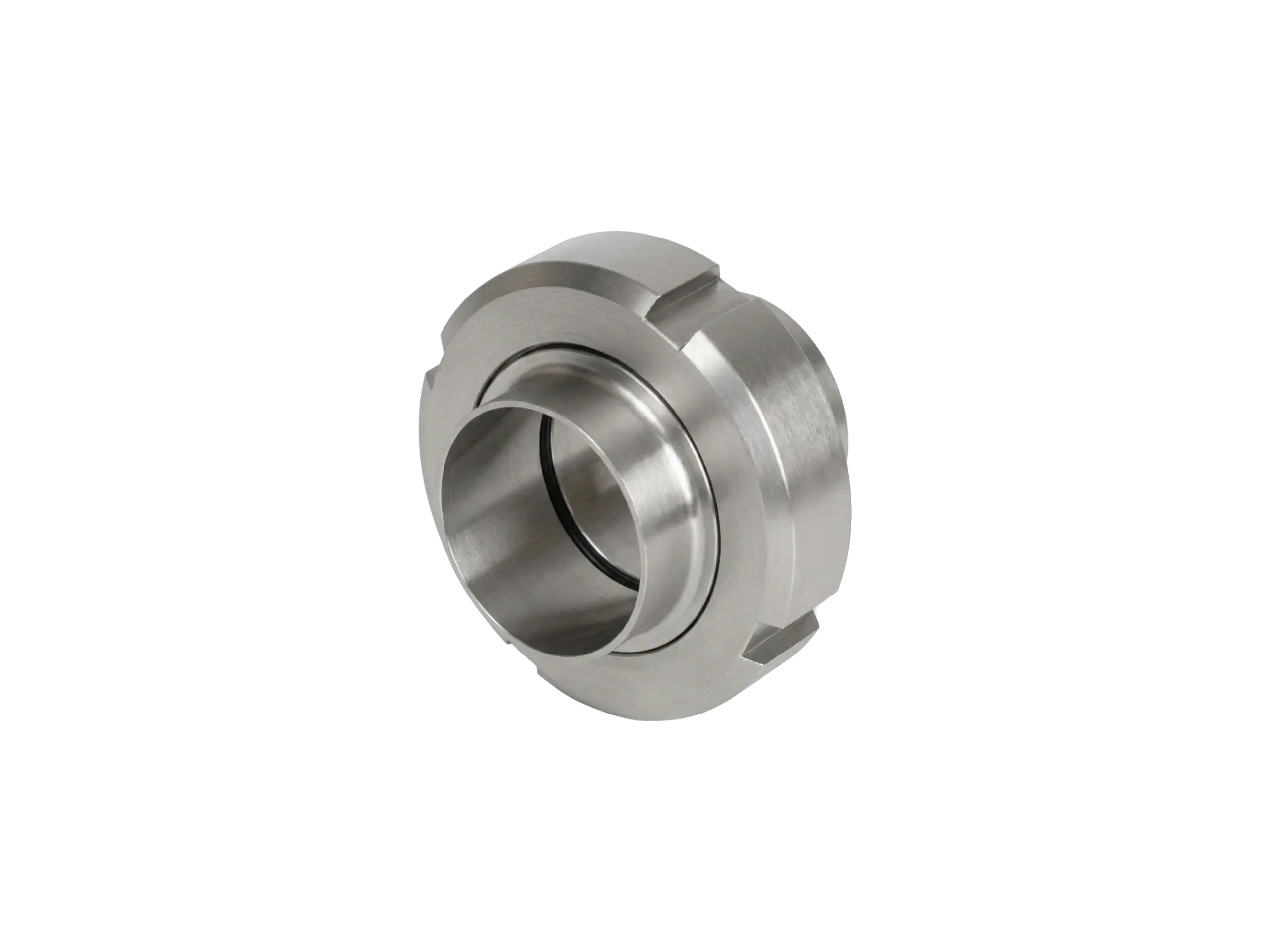
Union
For threaded connections that can be taken apart; allows installation without rotating the pipeline.
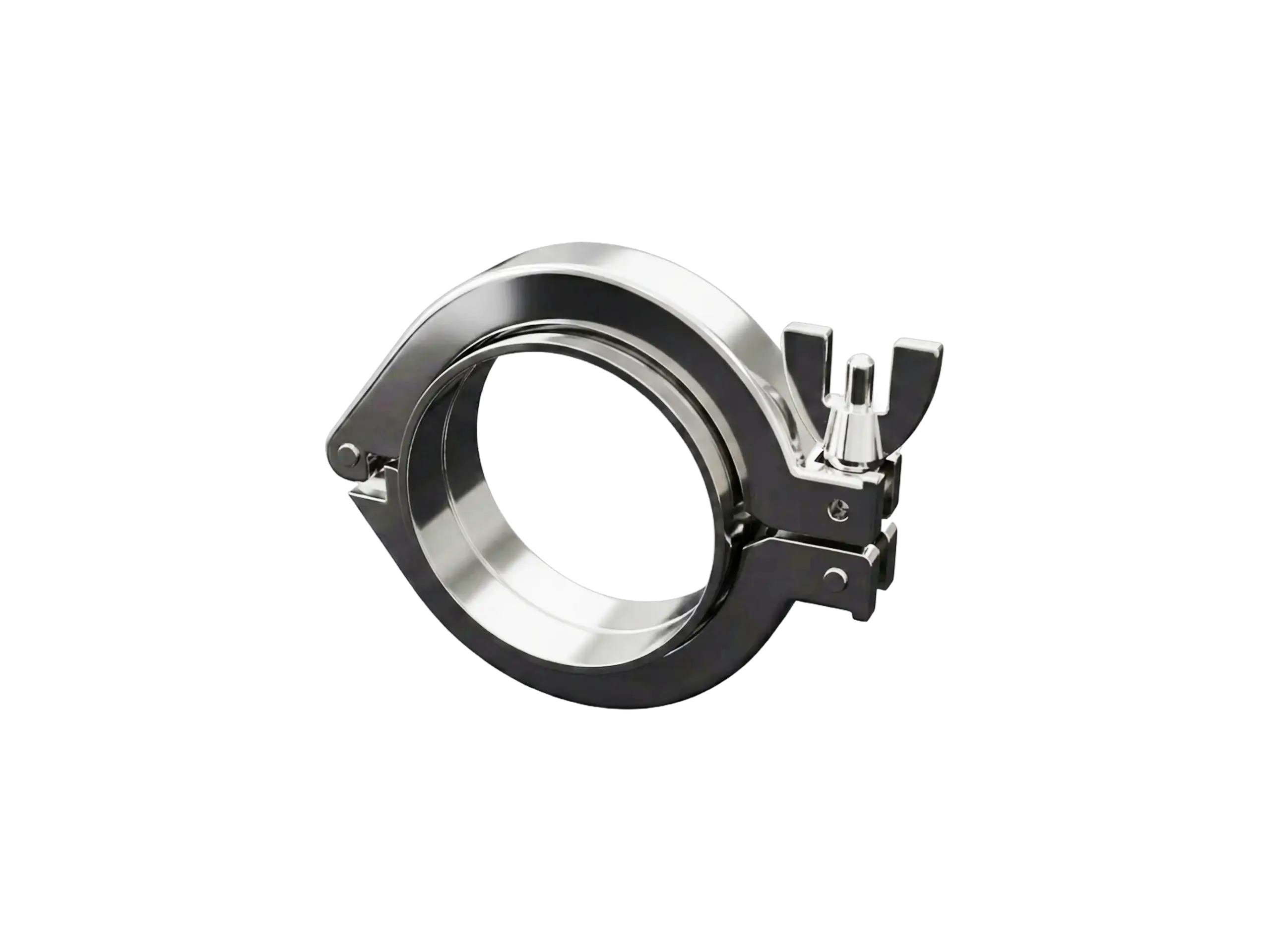
Clamp
For hygiene-critical lines; fast, tool-free dismantling and reassembly with a gasket and clamp.
Lid systems and sealing
Because the basket is accessed through the top lid, the lid system is a critical detail that directly affects washing time. The opening mechanism varies with housing size.
- Bolted Lid System
- The classic high-pressure solution, in which the lid is closed by tightening bolts evenly to the body flange.
- Swing-Bolt Lid System
- A swing-bolt mechanism that allows tool-free, much faster and more ergonomic opening and closing.
- Davit (Boom) System with Handwheel
- A lifting system used on large, heavy housings; lets one person open the heavy lid safely and effortlessly.
Gasket or O-ring?
Top lid sealing can be specified with a gasket or an O-ring. Gasket systems are more secure but require a wider lid system because of the surface the gasket sits on. O-ring systems allow a more compact lid design.
- NBR (Nitrile) Gasket & O-Ring
- Standard sealing resistant to wear and mechanical stress for industrial process lines carrying mineral oils, fuels and hydrocarbons.
- EPDM Gasket & O-Ring
- Highly elastic, long-lasting sealing for water, hot water processes, mild acids and steam lines.
- Viton (FKM) Gasket & O-Ring
- Maximum resistance to high temperatures, aggressive chemicals, solvents, acids and aromatic hydrocarbons.
- Silicone Gasket & O-Ring
- Tasteless, odourless, food-contact-compliant sealing for hygienic food, beverage and pharmaceutical processes.
- PTFE (Teflon) Gasket & O-Ring
- Chemically inert to most acids, bases and solvents; a seal that keeps its shape even at high temperatures.
As diameter increases, the pressure limit falls
The larger lid surface is exposed to a higher total force.
Industry Applications
01
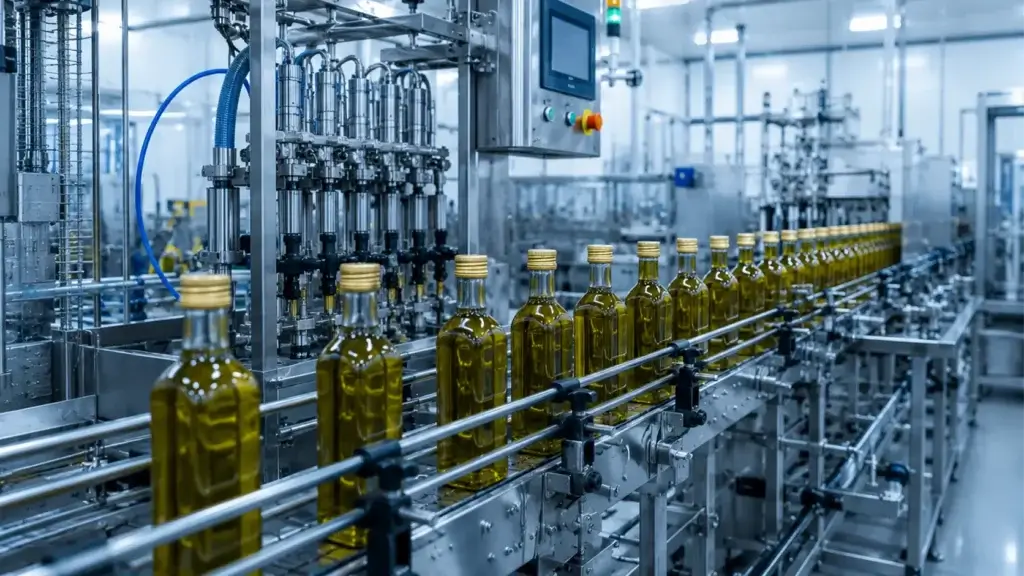
Vegetable Oil
Vegetable Oil
Clarity, purity and shelf life in vegetable oil and refining.
Explore solutions
02
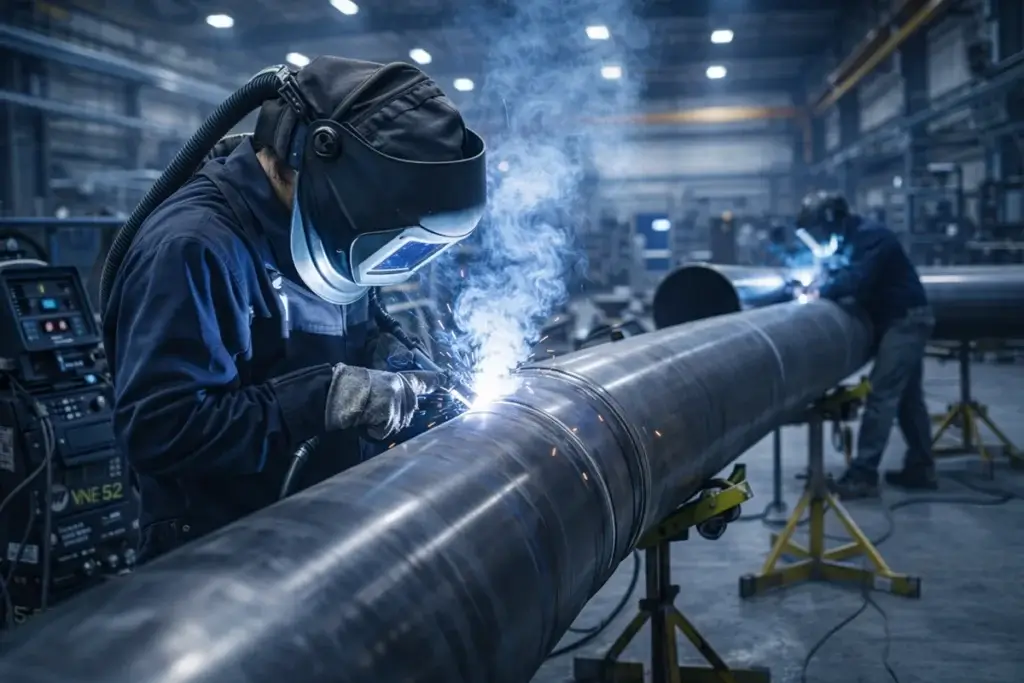
Pipe and Profile
Pipe and Profile
Cooling water filtration in pipe and profile extrusion.
Explore solutions
03
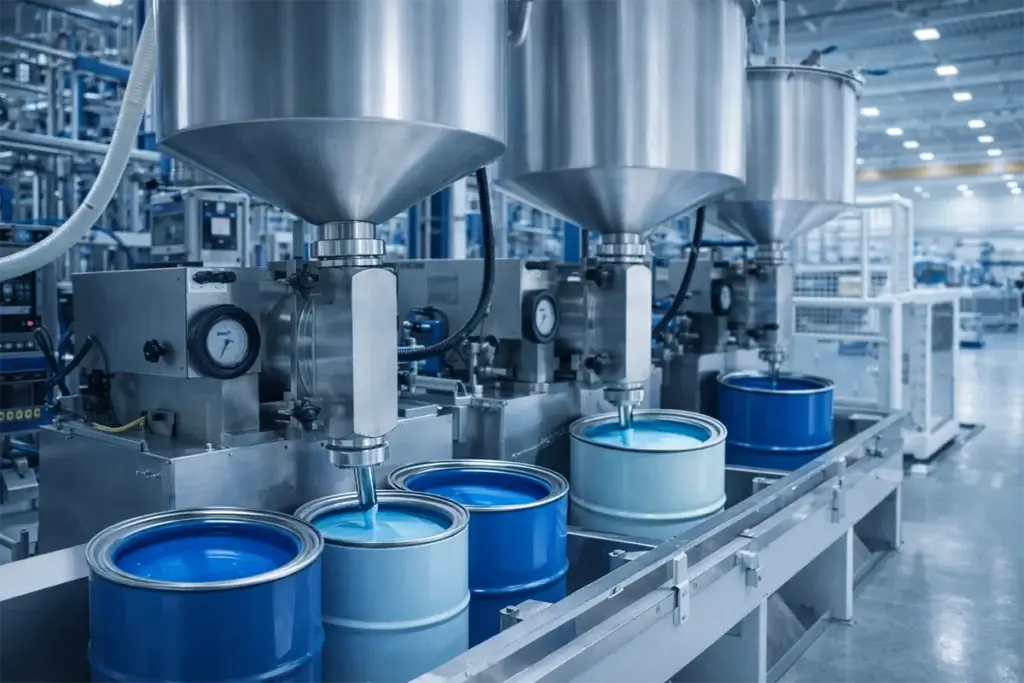
Paint Industry
Paint Industry
Surface quality and pigment filtration in the paint industry.
Explore solutions
04
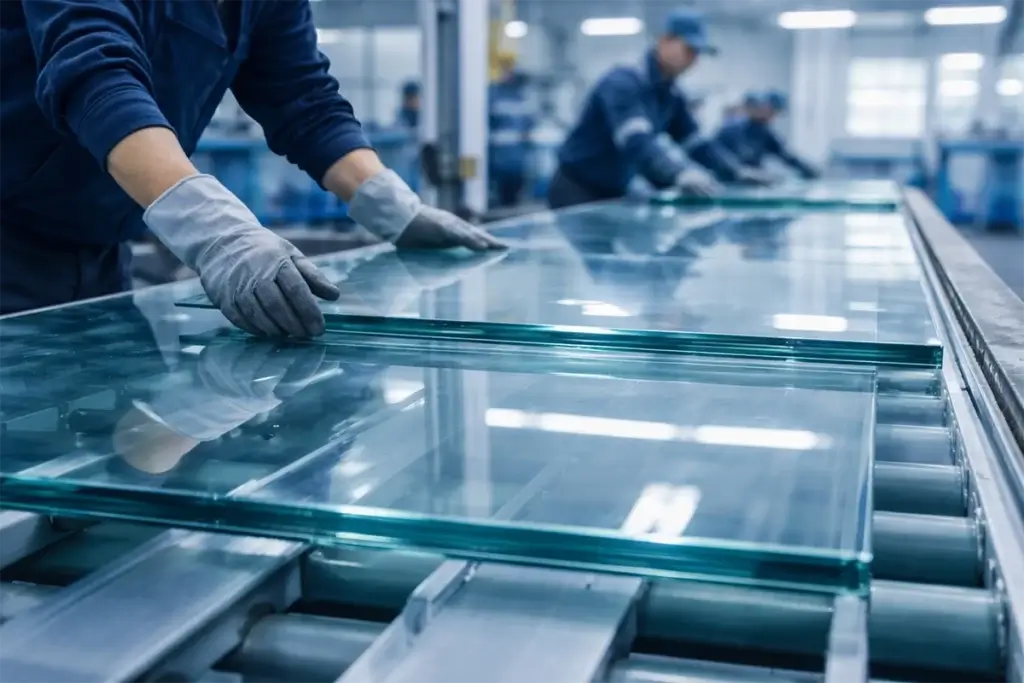
Glass Industry
Glass Industry
Furnace and process filtration in the glass industry.
Explore solutions

05
Dialysis Centers
Dialysis Centers
Water preparation and process filtration in dialysis centers.
Explore solutions
06
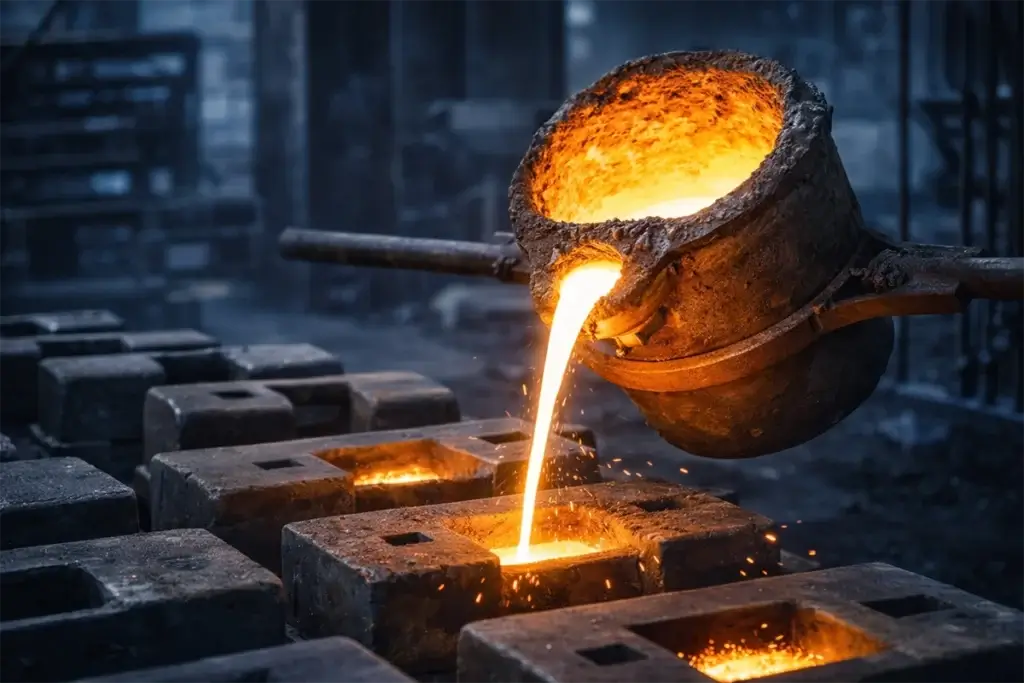
Foundry Industry
Foundry Industry
Equipment protection and dust filtration in foundries.
Explore solutions
07
Industrial Oil
Industrial Oil
Filtration in industrial oil production and recovery.
Explore solutions

08
Energy and Biogas
Energy and Biogas
Maximum efficiency and turbine protection in energy and biogas.
Explore solutions
09
Recycling
Recycling
Filtration for efficiency and environmental compliance in recycling.
Explore solutions

10
Food and Beverage
Food and Beverage
Hygienic filtration in food and beverage.
Explore solutions

11
Pharmaceuticals and Biotechnology
GMP-compliant sterile filtration in pharmaceuticals and biotechnology.
Explore solutions
12
Paper and Packaging
Paper and Packaging
Process water filtration in paper and packaging.
Explore solutions

13
Chemical Industry
Chemical Industry
Corrosion-resistant, safe filtration in the chemical industry.
Explore solutions
14
Cosmetics
Cosmetics
Microbiological safety and precision filtration in cosmetics.
Explore solutions
15
Machinery
Machinery
Precision and technical filtration in the machinery industry.
Explore solutions
16
Printing and Ink
Printing and Ink
Flawless color and print quality in printing and ink.
Explore solutions
17
Metal and Surface Treatment
Flawless surfaces and bath stability in metal and surface treatment.
Explore solutions
18
Forest Products
Forest Products
Resin and glue filtration in forest products and furniture.
Explore solutions

19
Automotive
Automotive
Precision process filtration for zero defects in automotive manufacturing.
Explore solutions
20
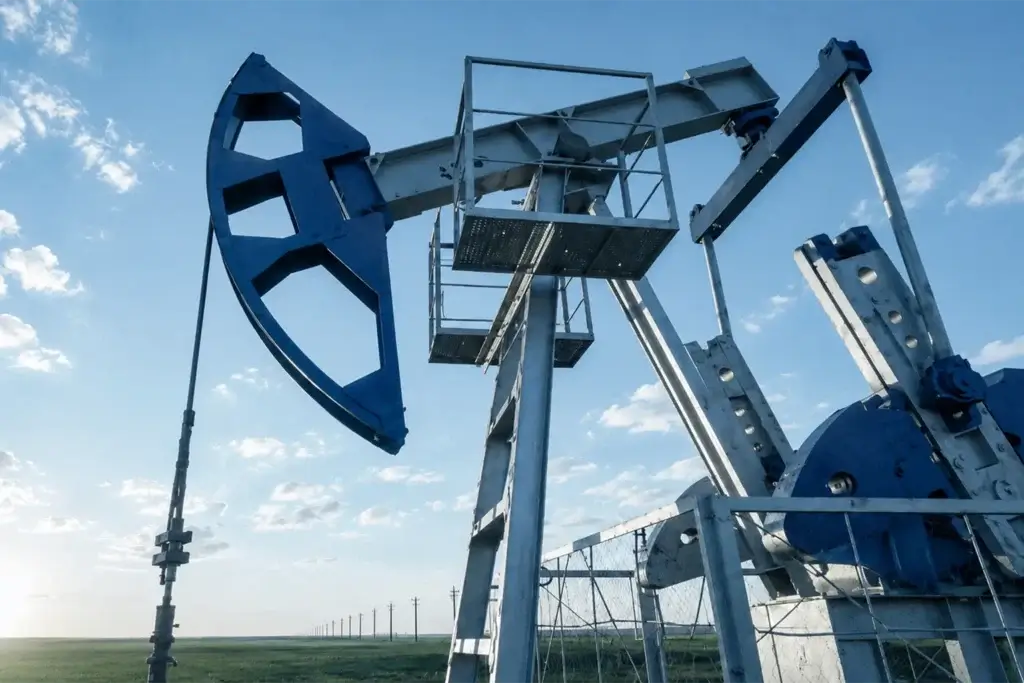
Oil and Petrochemicals
Equipment protection and process safety in oil and petrochemicals.
Explore solutions
21
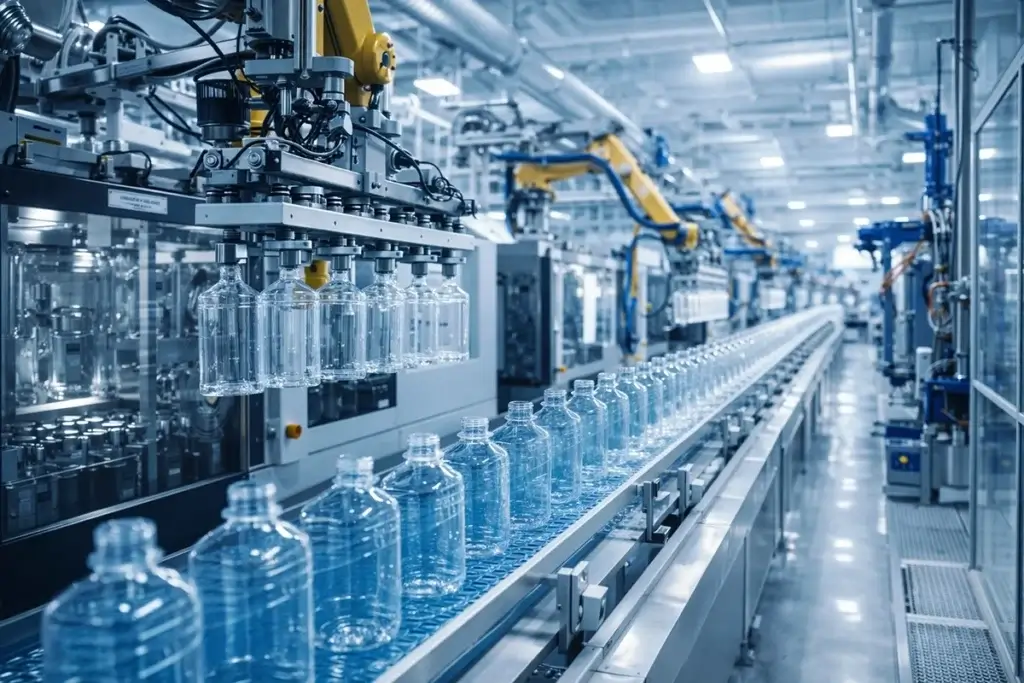
Plastic Packaging
Plastic Packaging
Precision process filtration and raw material purity in plastic packaging.
Explore solutions
22
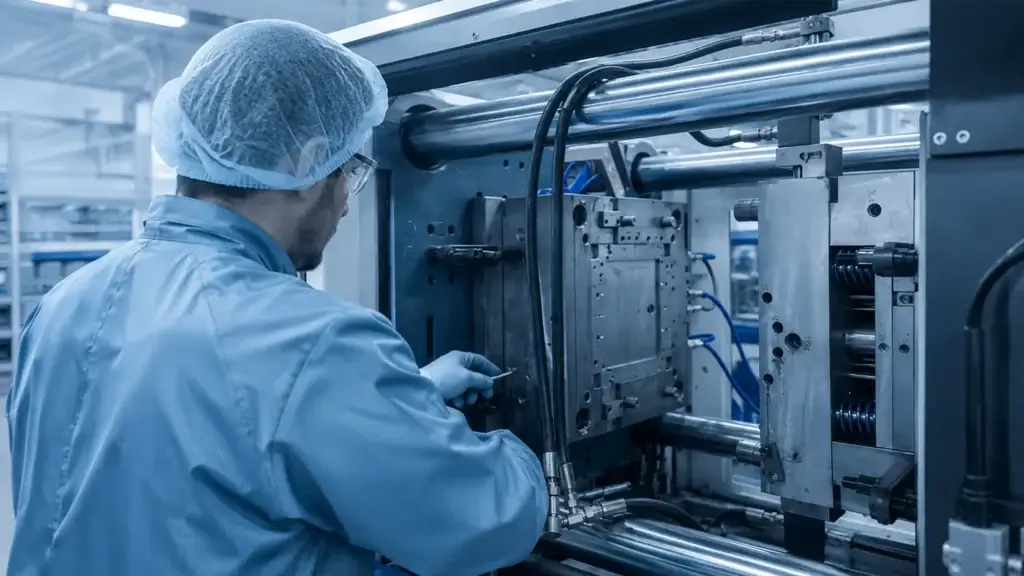
Plastic Injection Molding
Cooling and hydraulic filtration in plastic injection molding.
Explore solutions
23
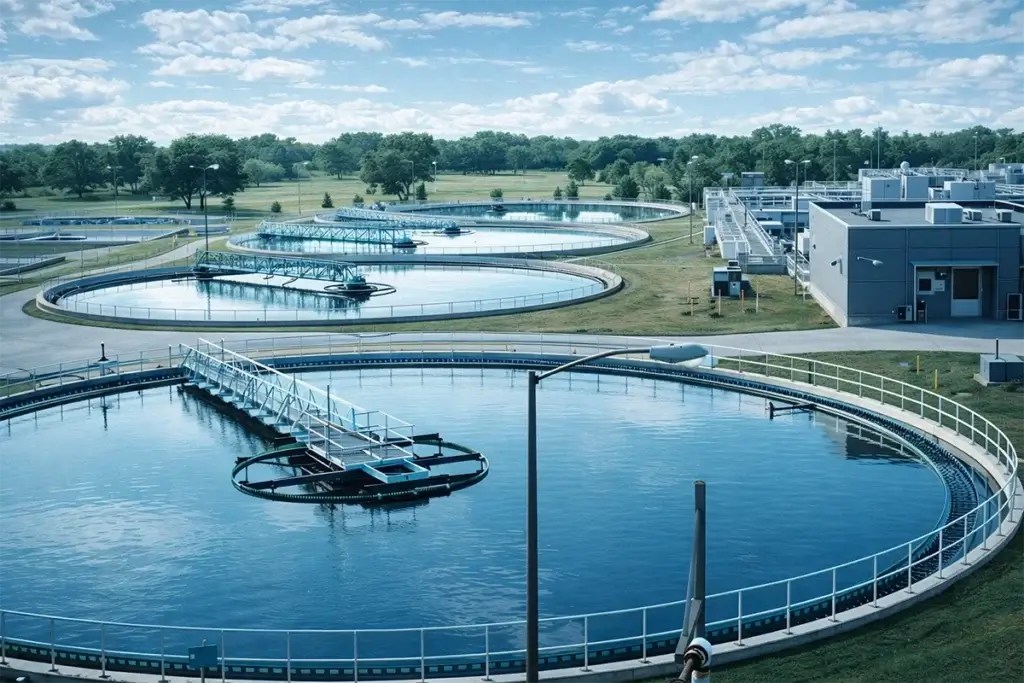
Water and Environment
Recovery filtration in water and environmental technologies.
Explore solutions

24
Shipyards and Marine
Operational safety and efficiency in shipyards and marine.
Explore solutions
Engineer's Note
- Senior Process Engineer
- 15+ Years of Field Experience
- Field-Test Approved
Material selection
When to choose it:
A basket filter housing is the right solution on lines carrying a heavy load of coarse particles where continuous flow must not be interrupted. As a protective pre-filter at the inlets of pumps, control valves, flow meters and heat exchangers, it runs for long periods without creating consumable costs, because the basket is cleaned and reused. When the basket’s open area is 3–4 times the pipe cross-section, pressure loss remains negligible.
When not to choose it
Basket Filter Housing Selection Technical Checklist
Basket filter housing selection starts from the line’s actual data. The following seven data points directly determine the housing’s length and diameter.
- Fluid Density
- The fluid's density affects the resistance to passing through the basket wall; dense liquids need a larger basket surface.
- Solids Quantity
- As the solids load in the line increases, the basket fills faster; with high particle loads, either the volume is increased or a parallel housing group is installed.
- Process Flow Rate
- The line's flow rate determines the basket surface area and the housing diameter; for high flows, a larger-diameter housing or a parallel housing group is installed.
- Line Pressure
- Operating pressure sets the housing diameter limit: our standard housing operates at up to 16 bar and in the pressure class requested. Basket thickness is also chosen according to operating pressure.
- Basket Washing Frequency
- With frequent washing, swing-bolt or davit lids shorten downtime.
- Micron Rating
- Stainless wire mesh in the 5 – 10,000 µm range is specified according to the smallest particle size to be retained.
- Basket Material Grade
- AISI 304, 304L, 316, 316L, 316Ti or 904L body and basket are chosen according to the chemical properties of the fluid.
Additional decision points
- Micron Rating Selection
- Stainless wire mesh in the 5 – 10,000 µm range is specified according to the smallest particle size the process needs to retain.
- Basket Material Grade
- AISI 304, 304L, 316, 316L, 316Ti or 904L alloy is chosen according to the fluid's chemical properties and operating temperature.
- Connection Type and Size
- 1/4" – 18" muff, nipple, DIN/ANSI flange, hygienic clamp or camlock is chosen to suit the line diameter and flow.
- Gasket & O-Ring Material
- An NBR, EPDM, Viton, PTFE or food-grade silicone gasket suited to the fluid chemistry, temperature and hygiene standard is confirmed.
Maintenance, washing and operation
- Line Isolation & Pressure Release
- The filter line is isolated with the inlet and outlet valves, and the internal pressure is brought to zero by opening the lid vent/drain nozzle.
- Opening the Lid System
- The body lid is opened safely according to the system type (bolted, swing-bolt or davit with handwheel).
- Removing the Basket
- The stainless basket, held in the body by the hold-down element, is lifted out of the body.
- Washing & Cleaning the Basket
- The basket is cleaned with pressurised water, compressed air, chemical washing or backwashing, depending on the type of particles retained.
- Gasket & O-Ring Check
- The lid sealing gasket and seat surface are checked; deformed or worn gaskets are replaced.
- Reassembly & Start-Up
- The basket is seated and secured with the hold-down element; the lid is closed and the line is brought back into service slowly, without sudden pressure surges.
Products that work with this product
Basket Filter Housing
Your Questions Answered
Frequently Asked Questions
At Prosestim, we are committed to answering your questions and providing technical support for our filtration solutions.
What is a basket filter housing?
A basket filter housing is an industrial filter housing that filters by means of a stainless steel basket placed inside it and lined with wire mesh in the required micron range. It works on the same principle as a bag filter housing; the difference is that it uses a washable, permanent basket instead of a disposable bag.
How does a basket filter housing work?
What is the difference between a basket filter and a bag filter?
Down to what micron rating can a basket filter filter?
What pressure can a basket filter housing withstand?
What are the inlet and outlet connection sizes?
Are basket filters washable?
Yes. This is the main advantage of the basket filter housing. When the basket is full it is not replaced; the lid is opened, the basket is removed and washed, secured again with the hold-down element and put back into service. This removes the need for disposable consumables.
Can I convert my existing bag filter housing into a basket filter housing?
In most cases, yes. Many companies have the baskets of their bag filter housings modified and use the same housing as a washable basket filter. Suitability is assessed according to the existing basket size, lid type and line pressure. Share your housing’s details and we can review it.
Which gasket or O-ring is used?
How is the lid of a large-diameter housing opened?
Are basket filter housing sizes standard?
Do I need to stop the line when the basket is full?
Basket Filter Housing RFQ Configurator
Configure your variation dimensions and technical specifications to receive an instant quote directly on WhatsApp and via email.