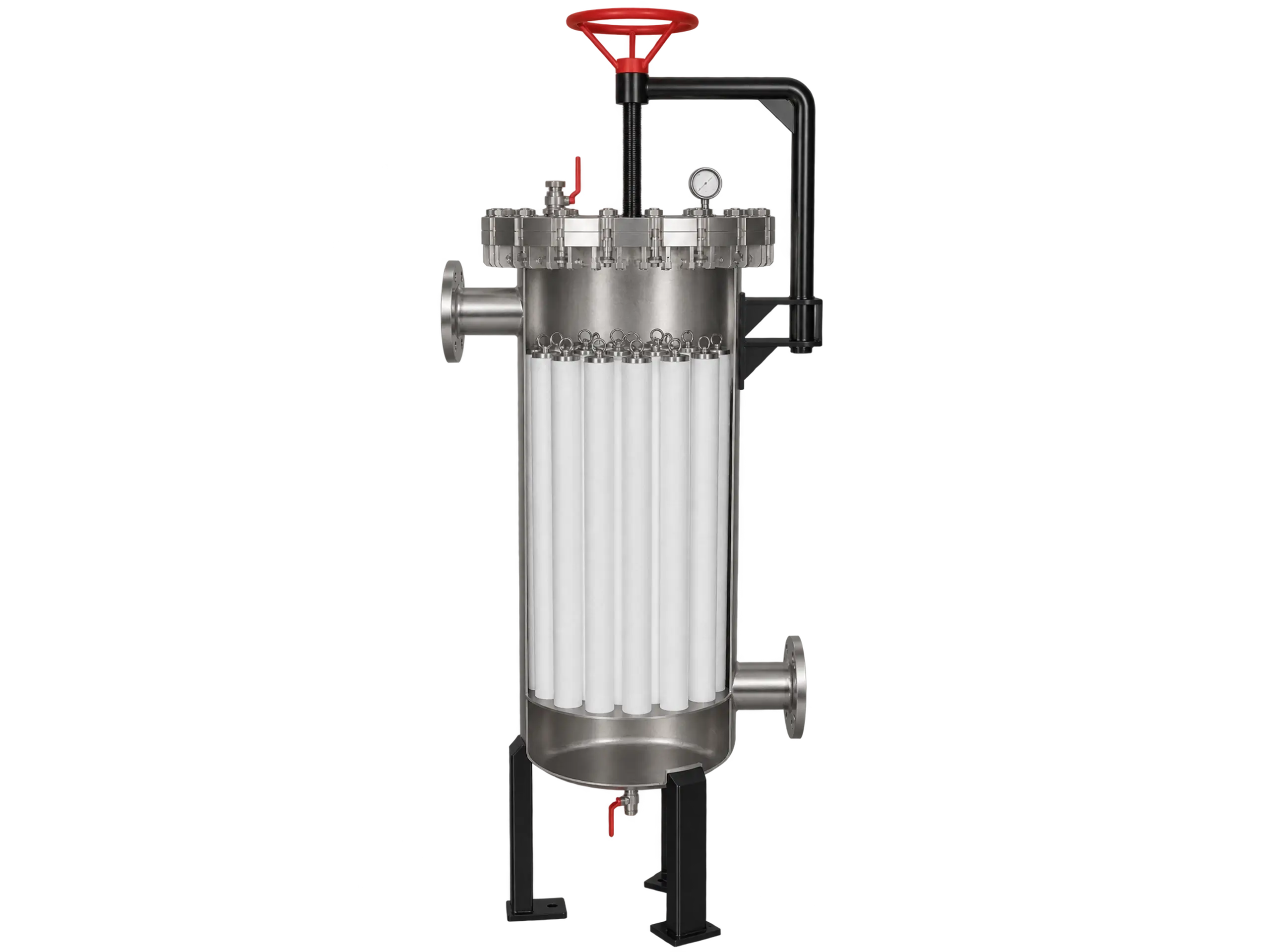
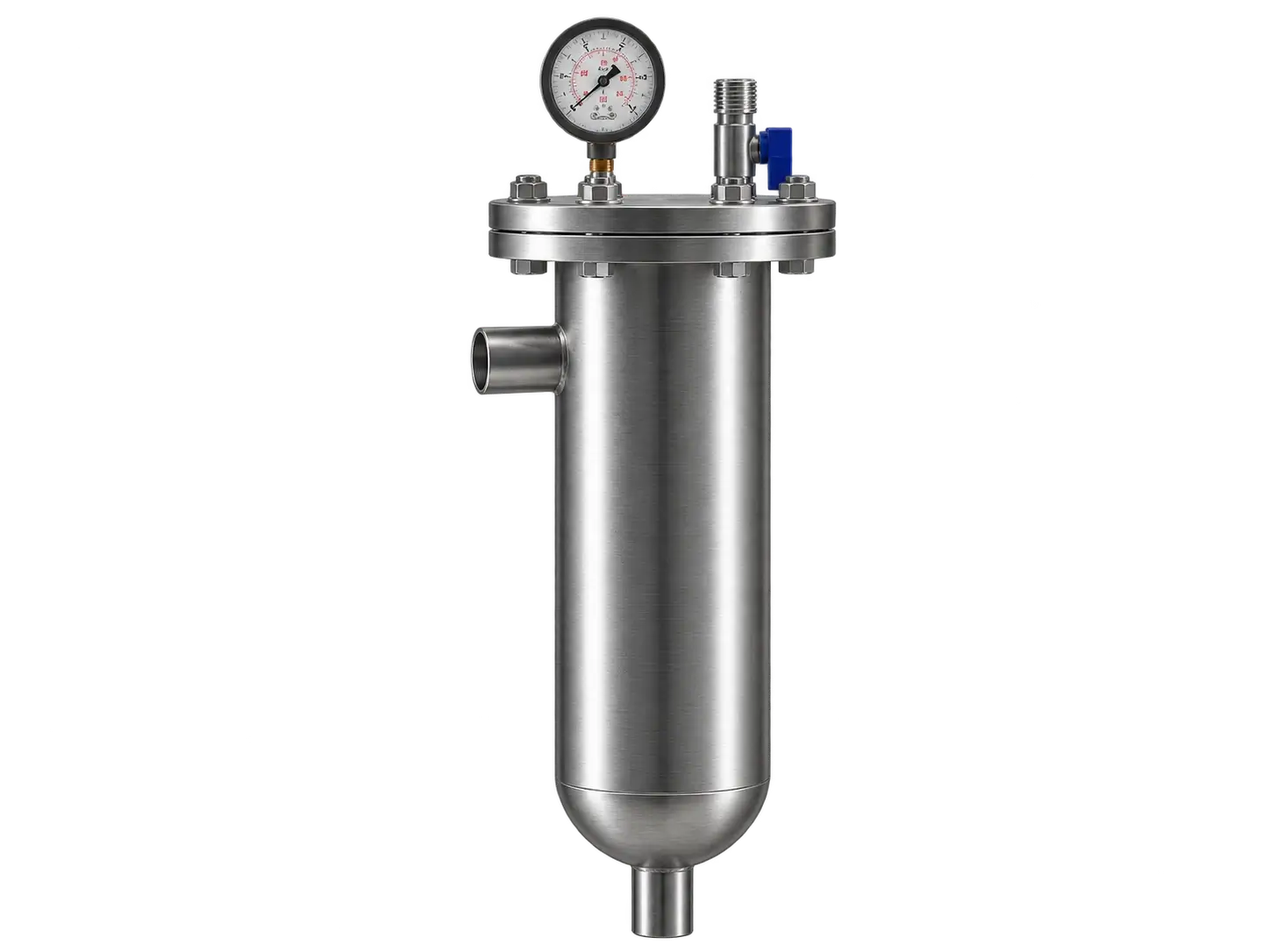
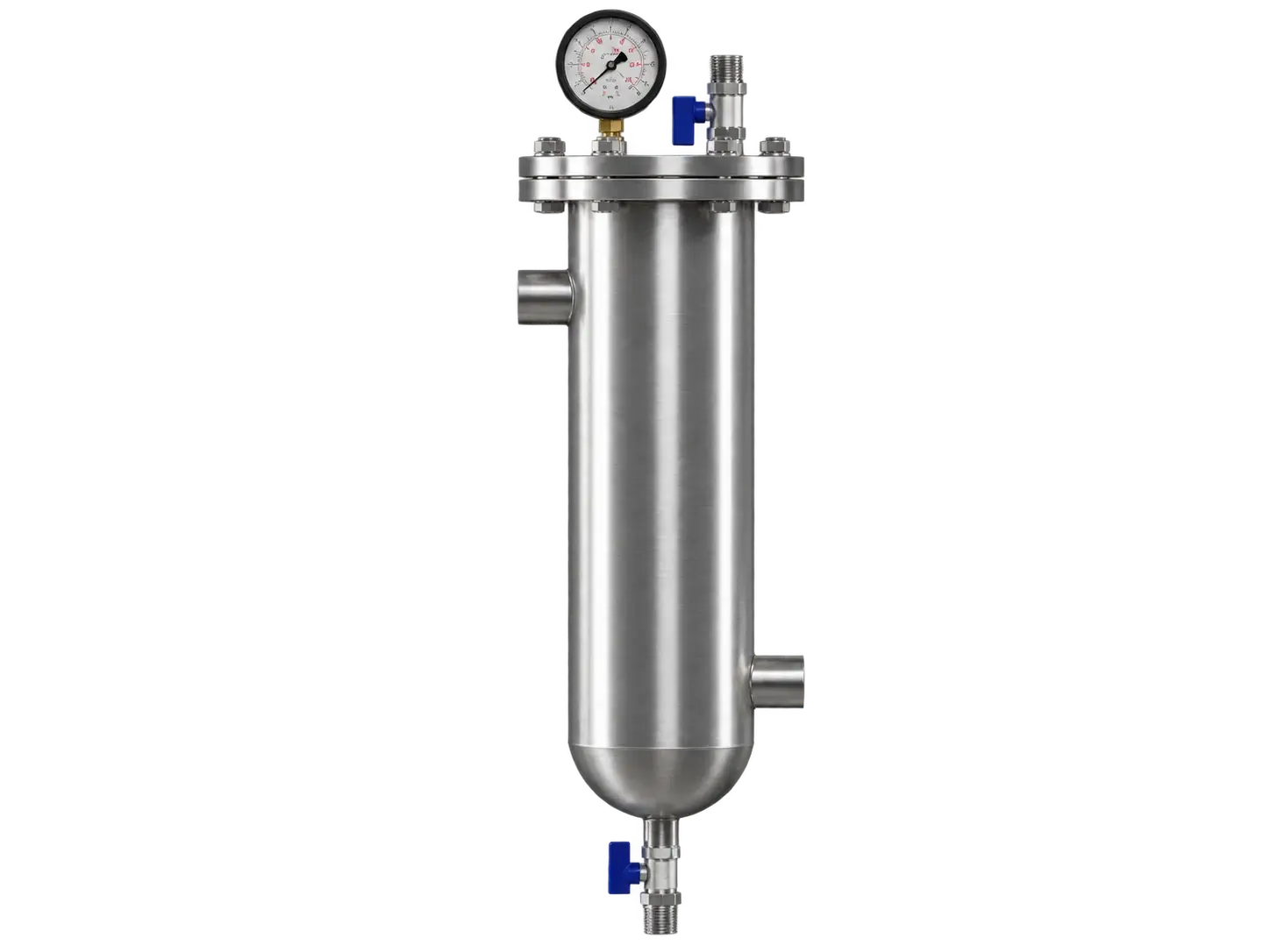
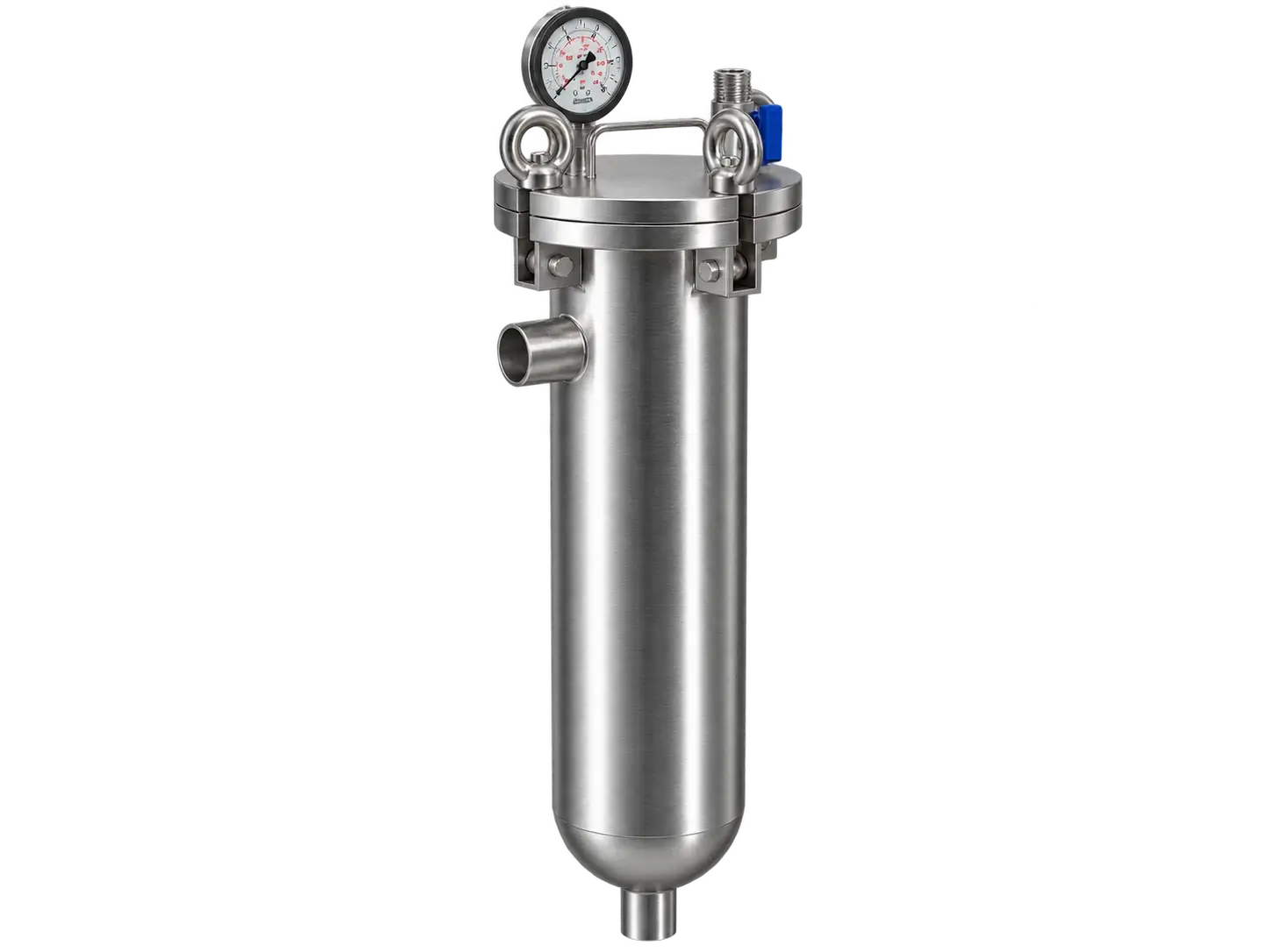
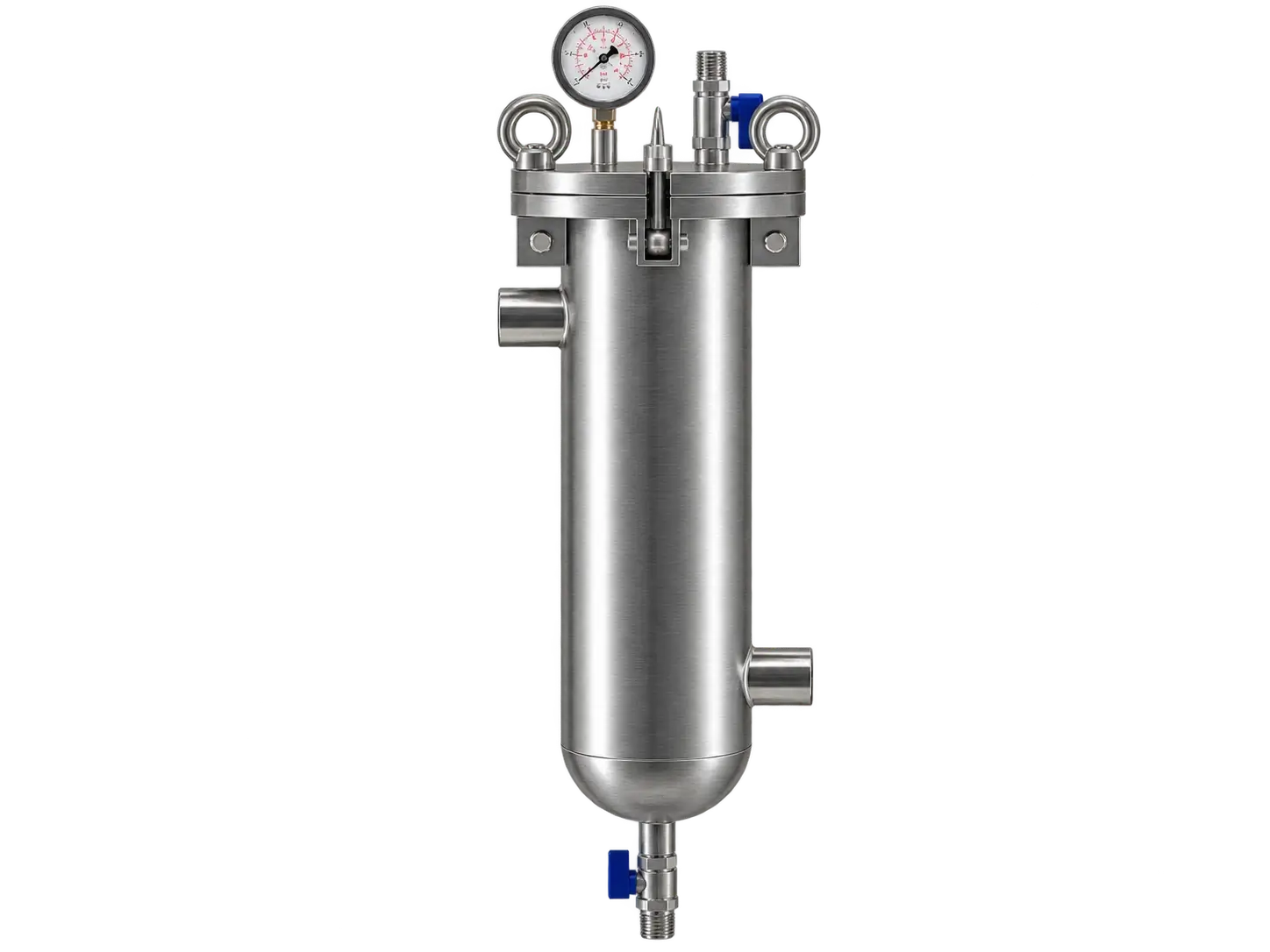
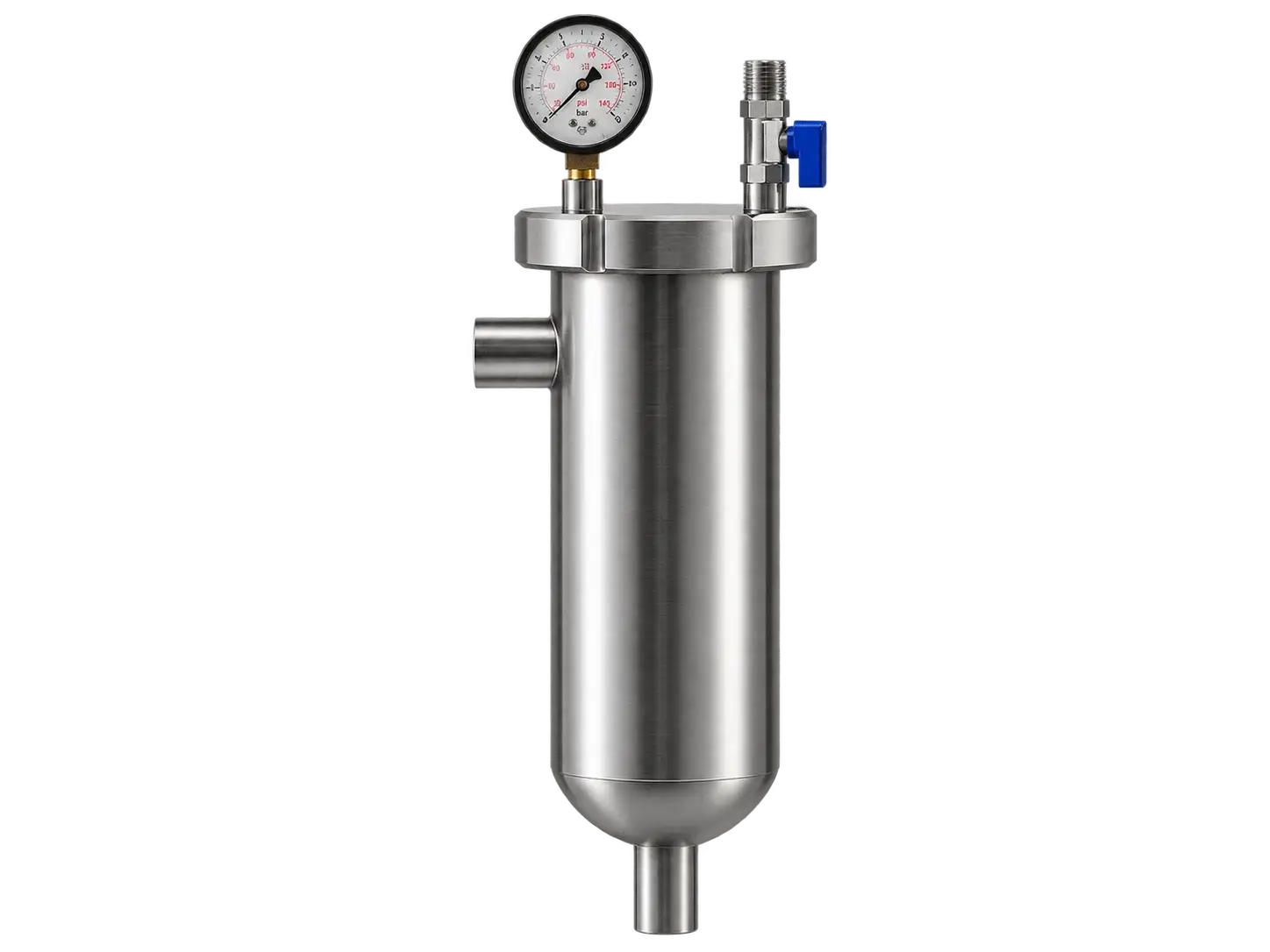
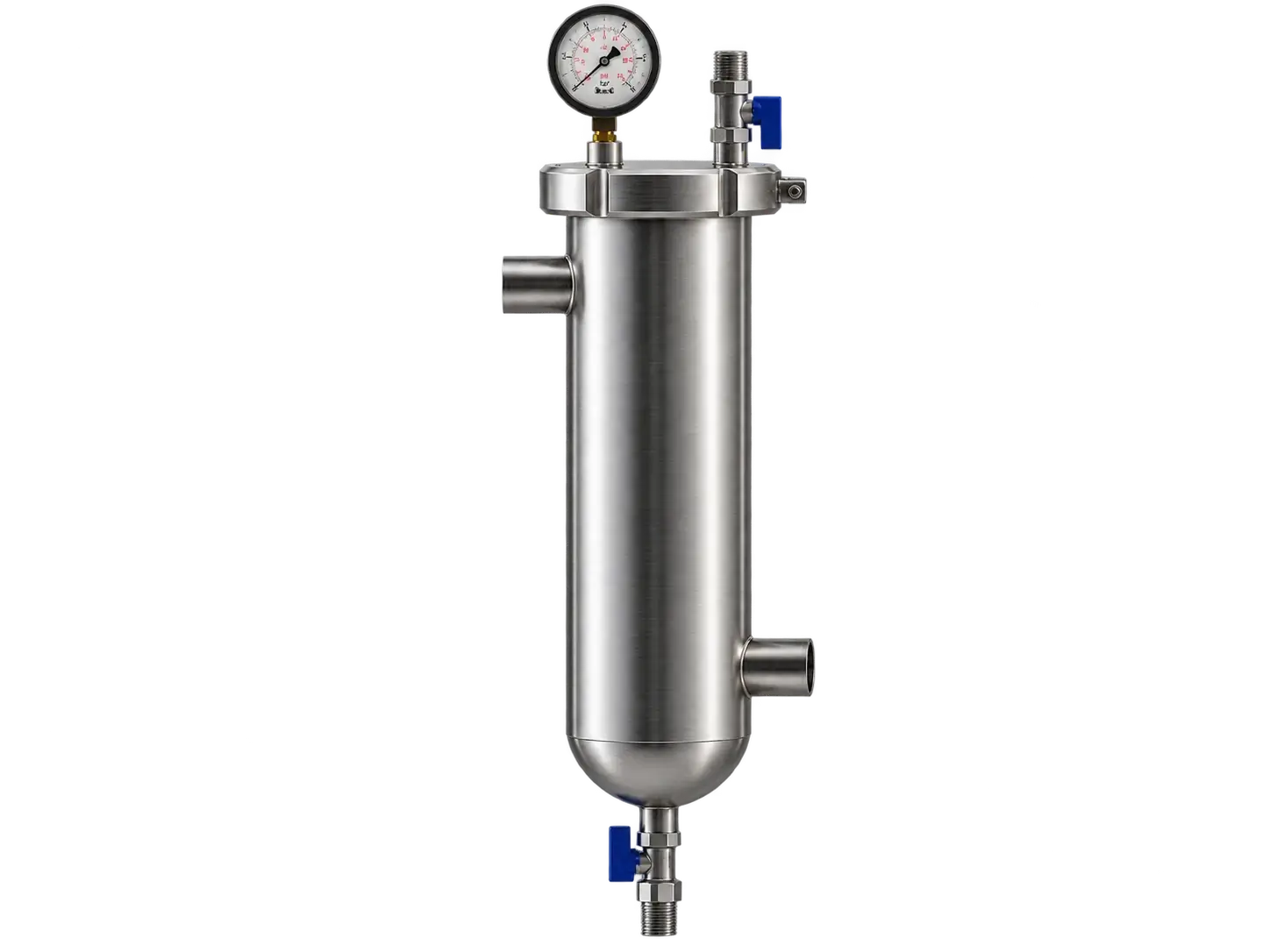
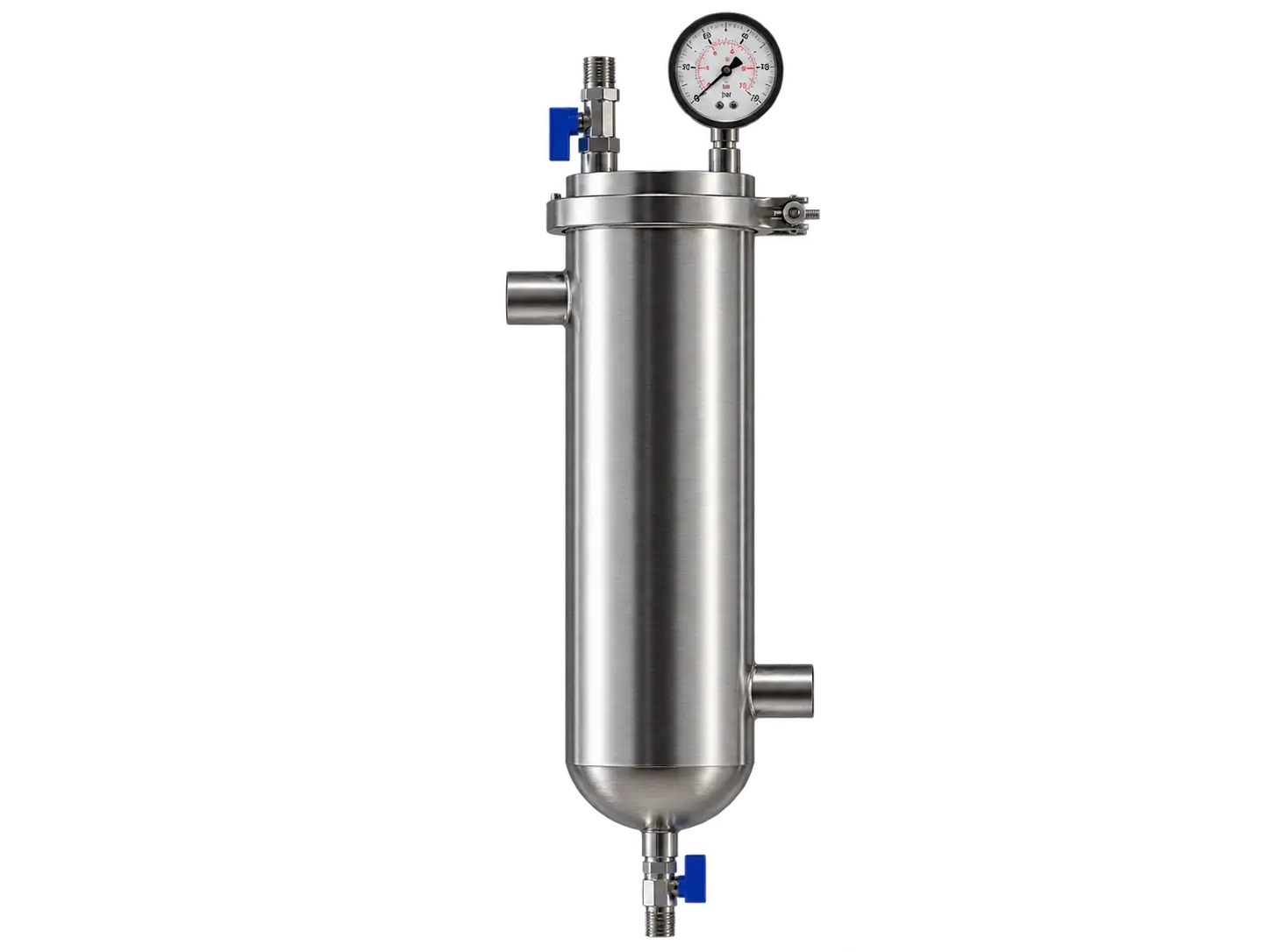
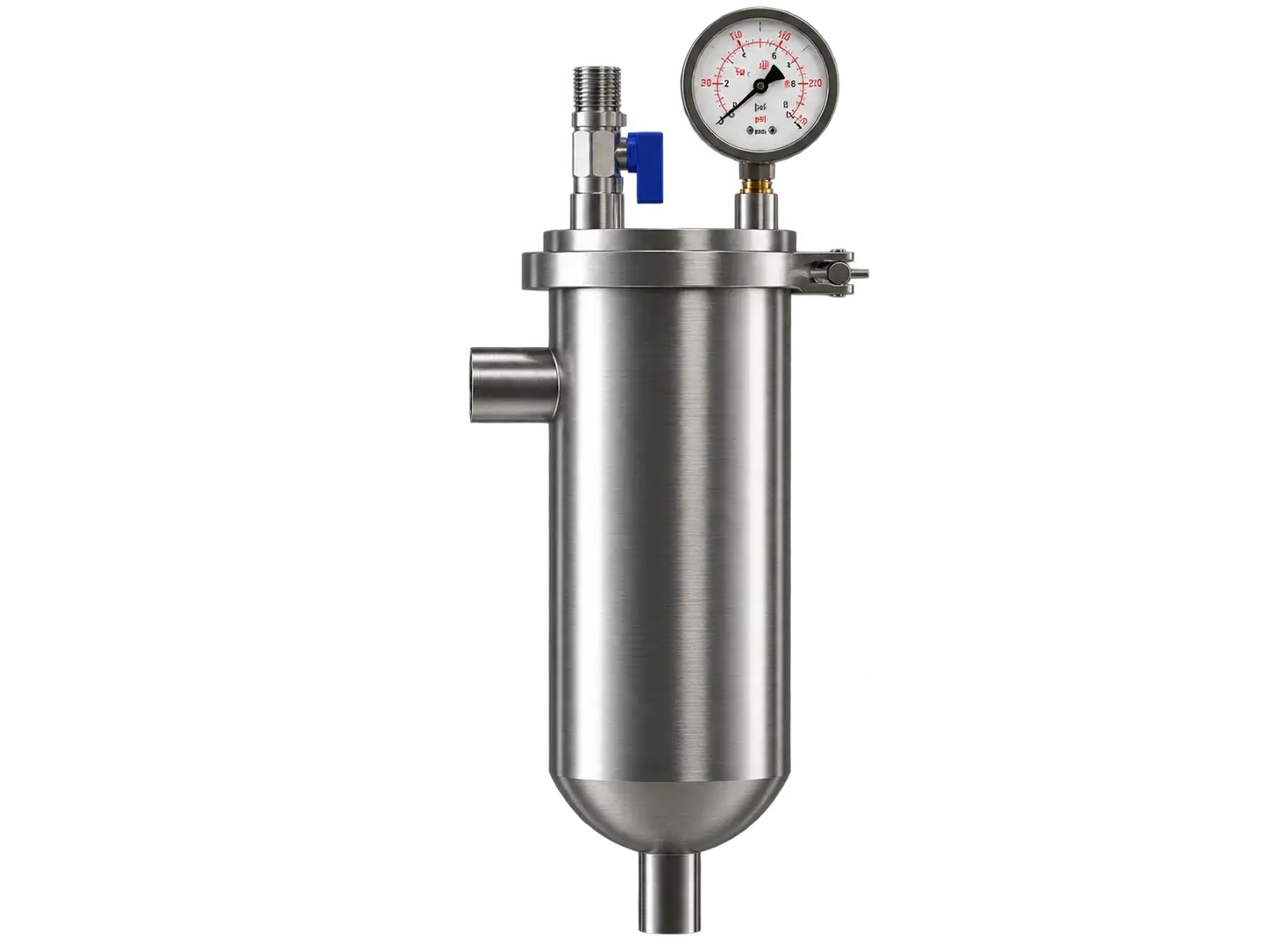
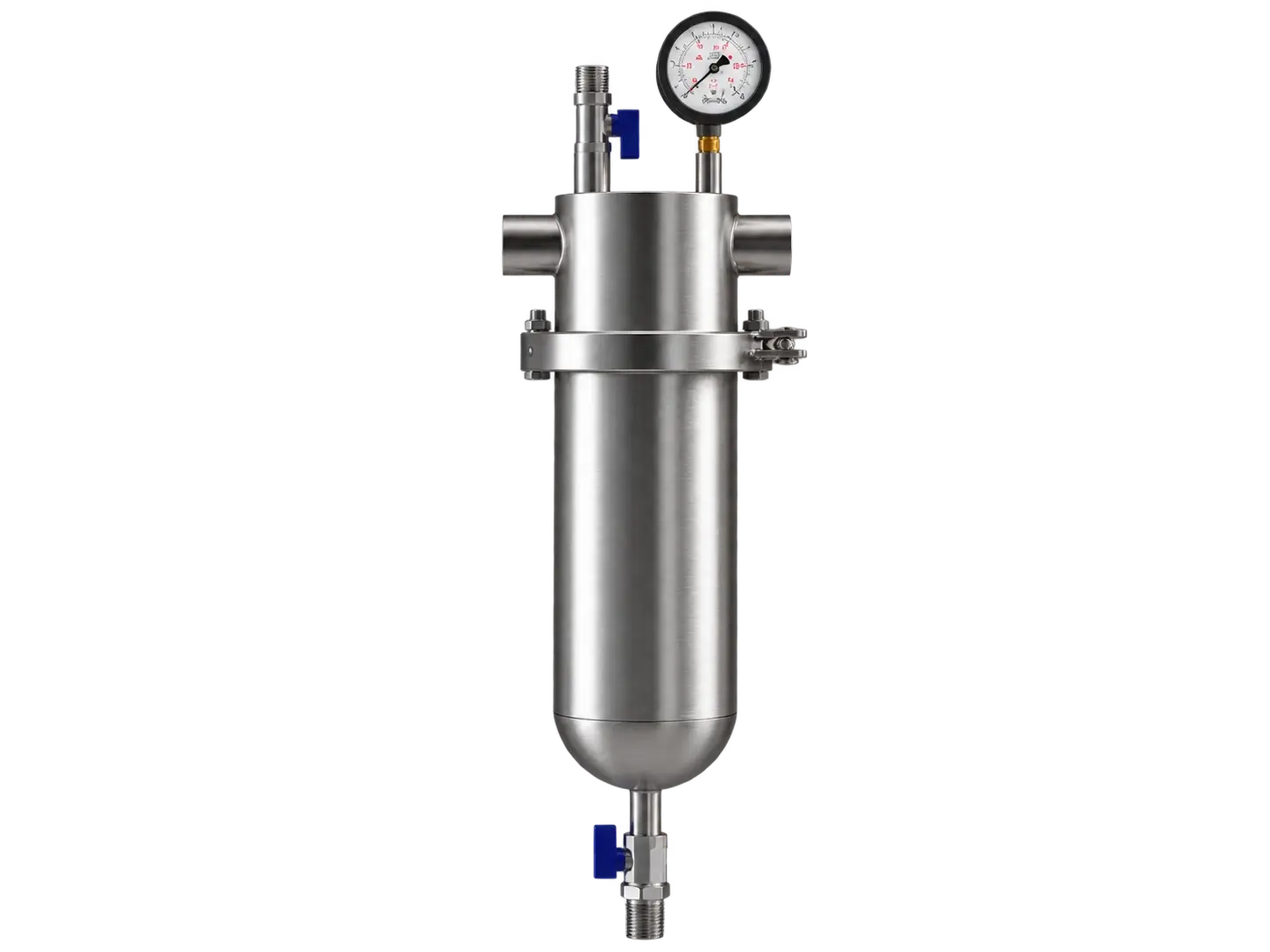
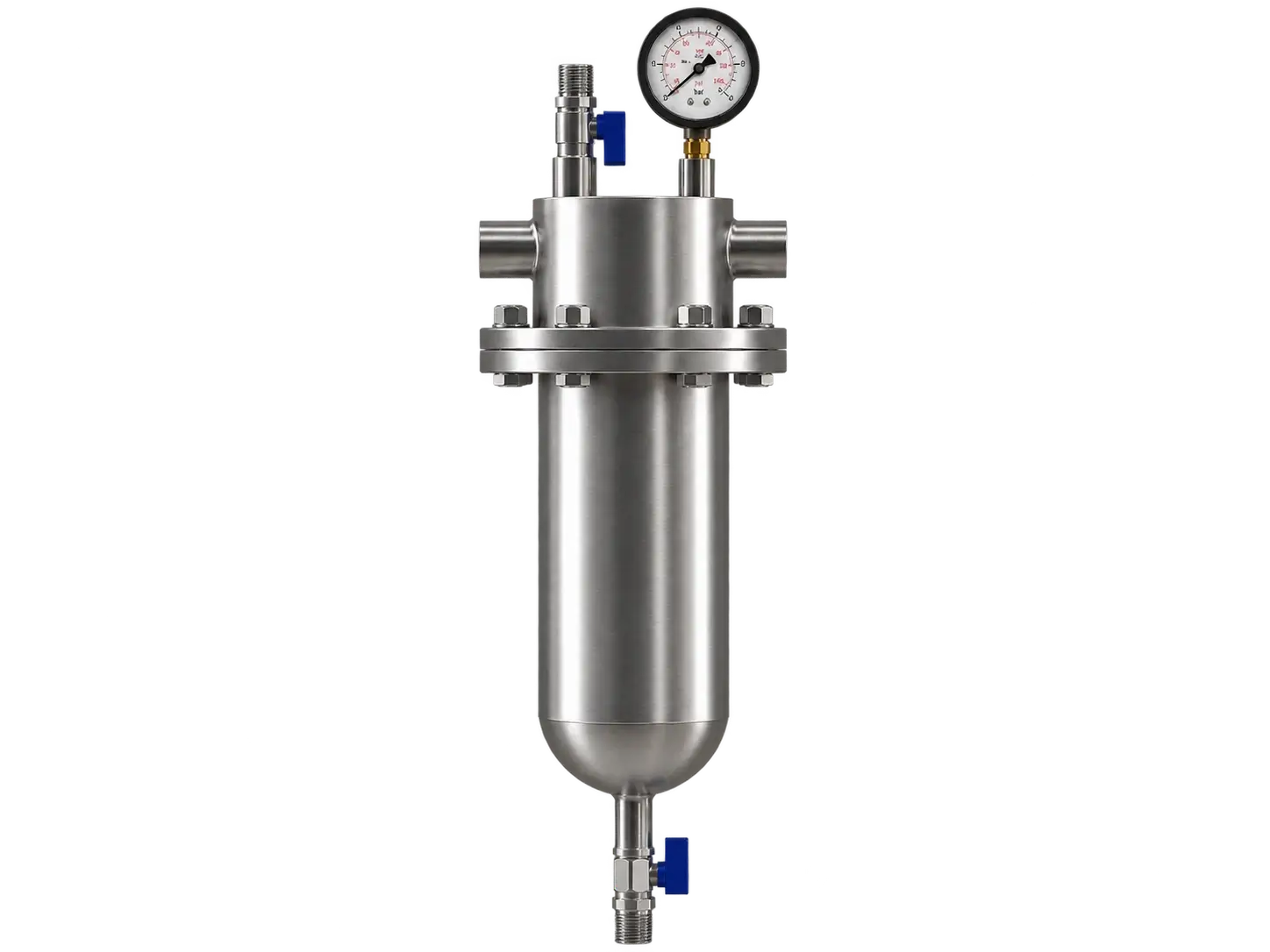
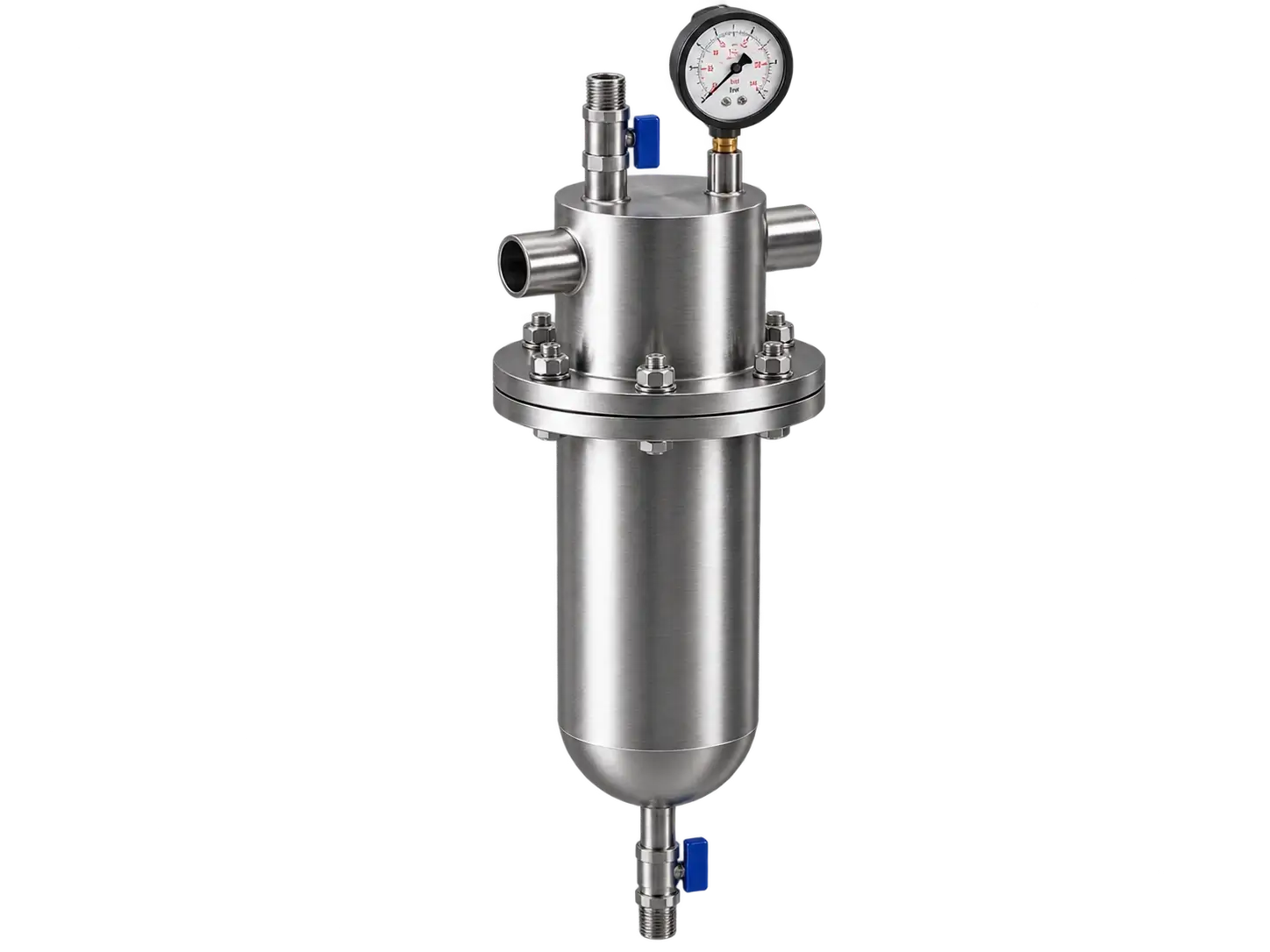
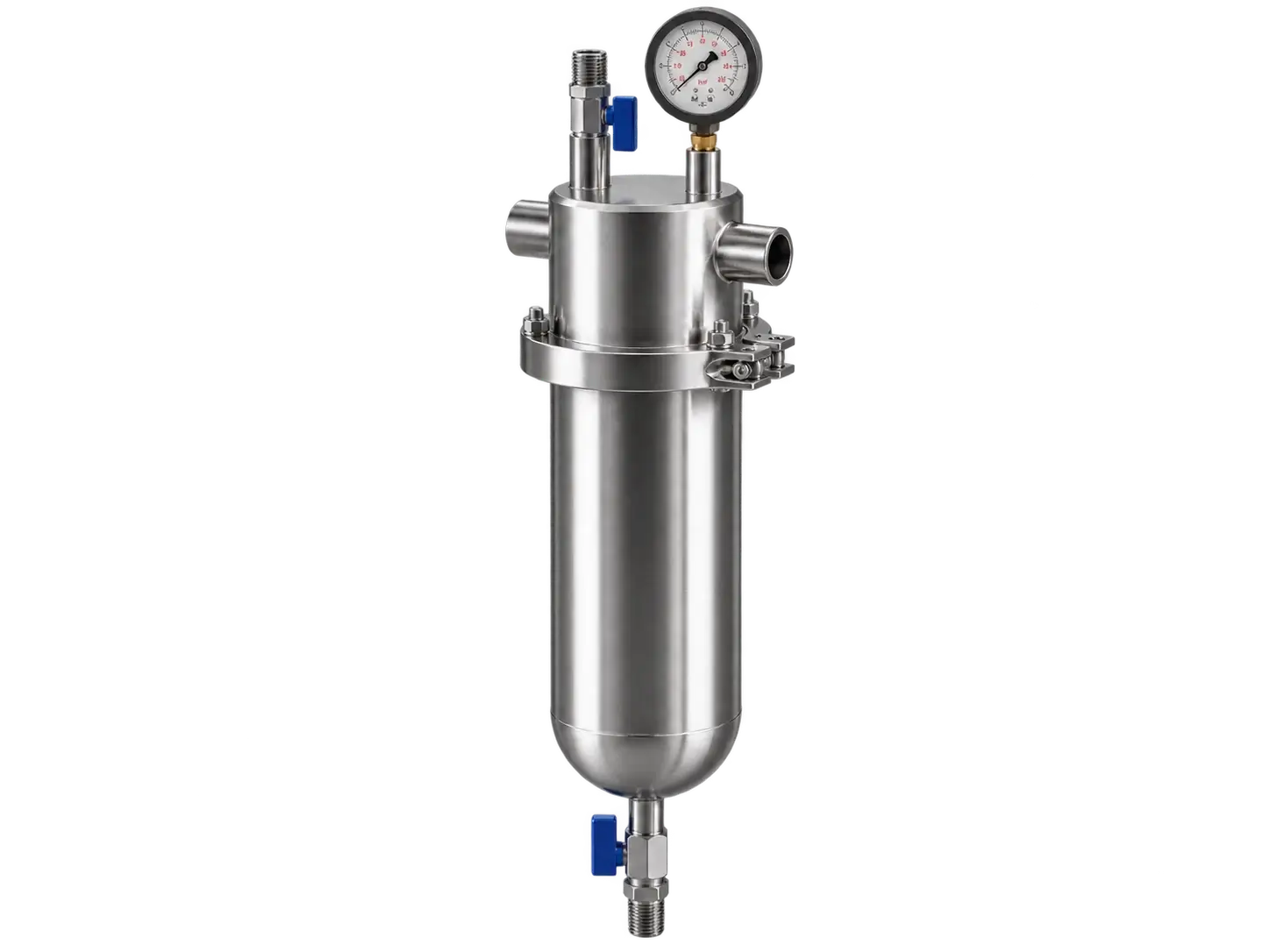
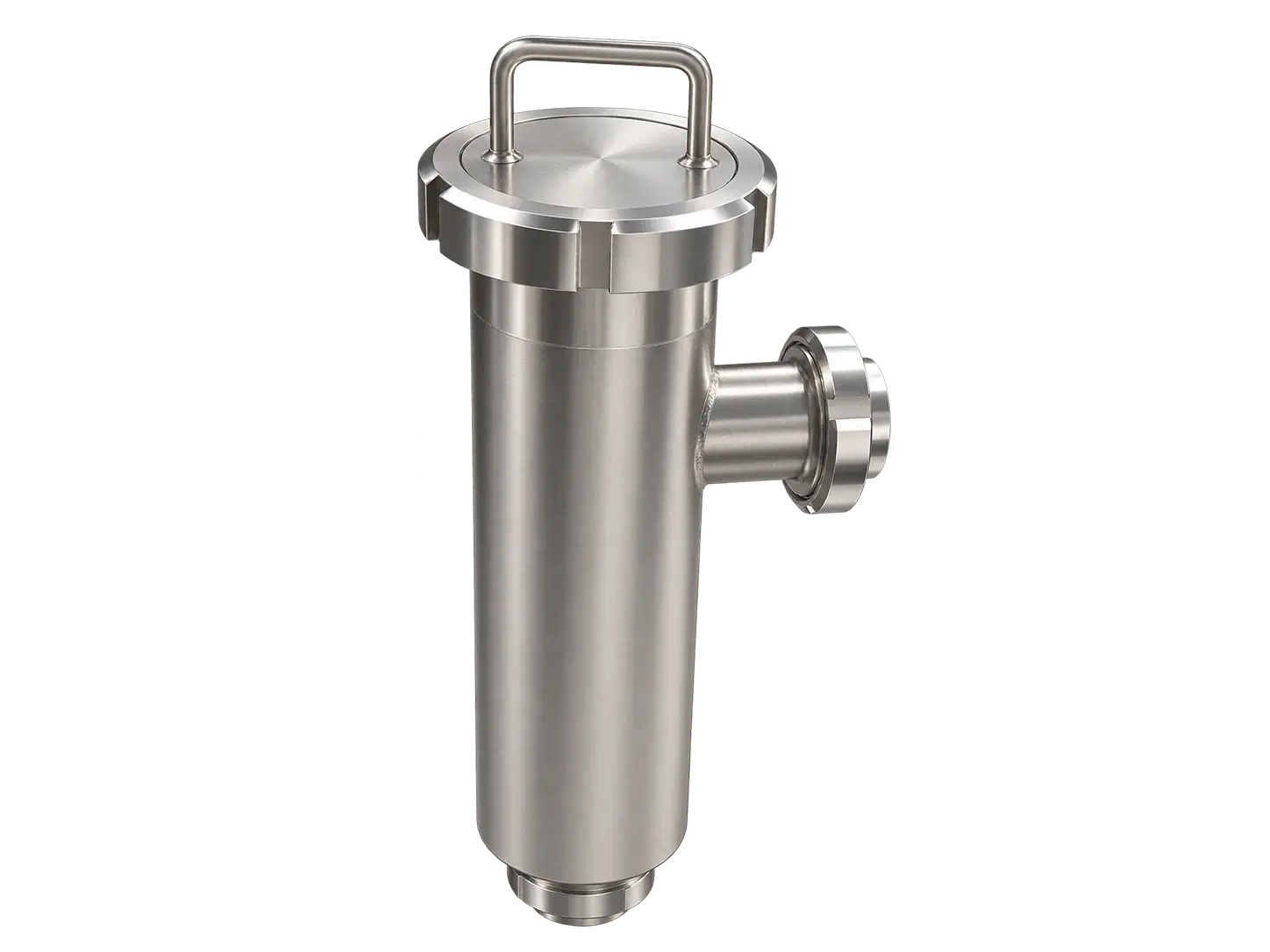
Stainless Steel Cartridge Filter Housing

AISI 304, 304L, 316, 316L and 316Ti Stainless Steel Body and 1–60 Cartridge Capacity

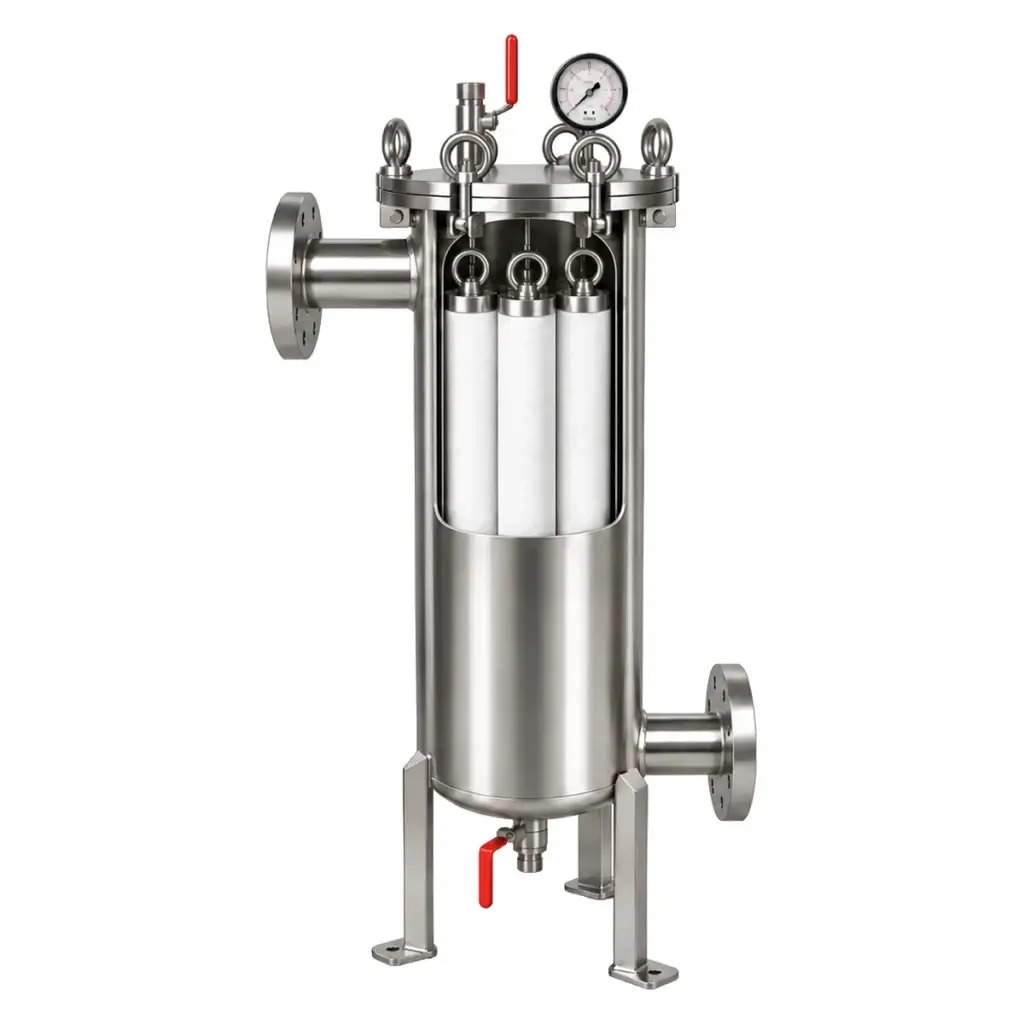
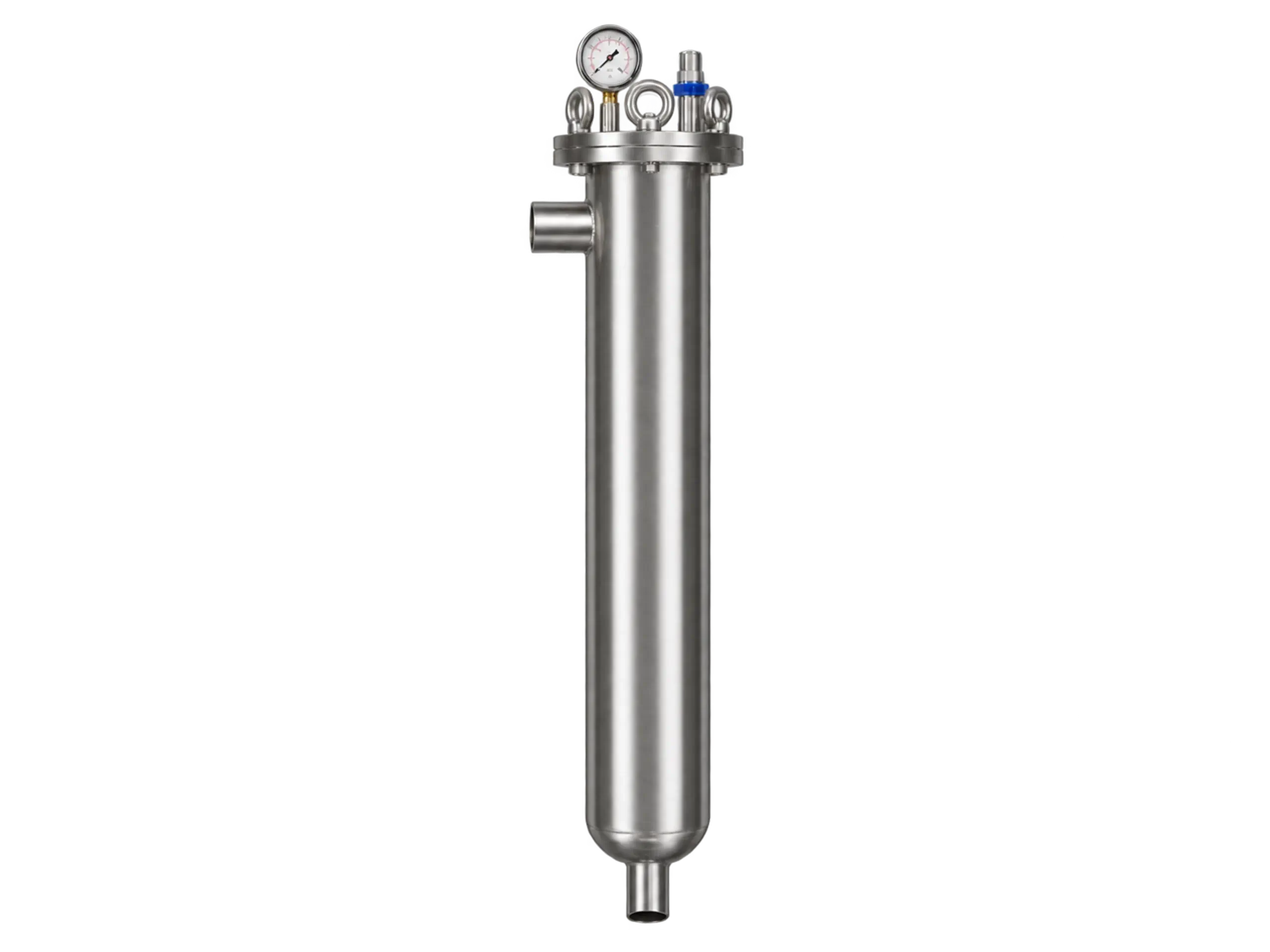
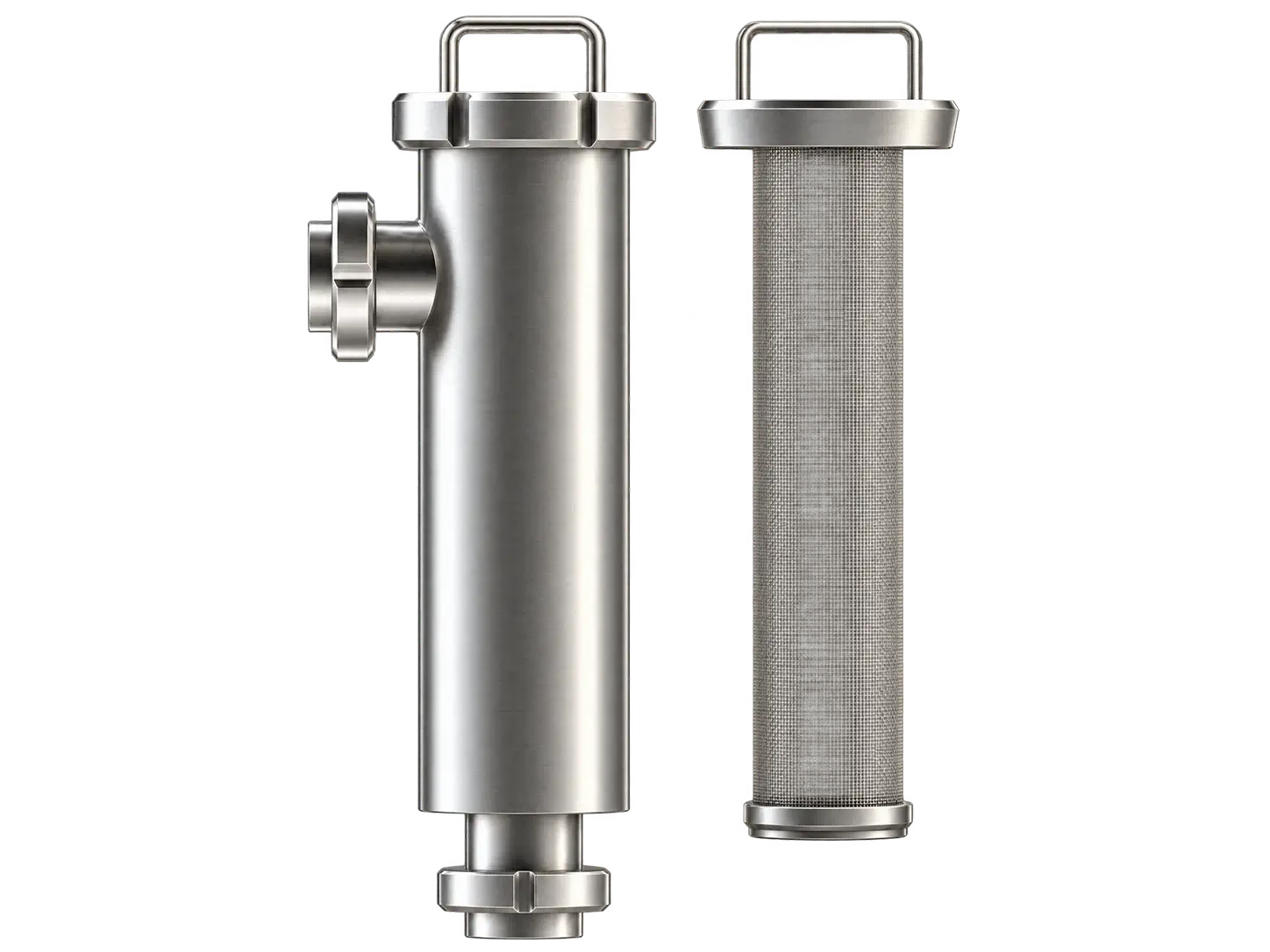
A cartridge filter housing is a pressurised AISI 304, 304L, 316, 316L or 316Ti filter body that holds one or more replaceable cartridges. With a capacity of 1–60 cartridges, it is for lines that need finer filtration than bag filters provide.

Filtration range

0.11–10,000 µm

Quality Certificate

ISO 9001

Fine Filtration

Down to 0.11 Micron

Body grade

304L · 316L · 316Ti · 904L

Cartridge Filter Housing

What Is a Stainless Steel Cartridge Filter Housing?

Because the body is made entirely of stainless steel, it is hygienic, chemically resistant and lasts for years; only the cartridge is replaced as a consumable. Because it can reach much lower micron ratings than bag filters, it is a reliable solution on precision lines that require high clarity and a low particle load. Depending on size, it can be made from 1-cartridge to 60-cartridge systems.

Product Identity and Technical Summary

Prosestim stainless steel cartridge filter housings, with capacities from 1 to 60 cartridges, lengths from 5″ to 40″ and a nominal operating pressure of 10 bar, fully meet the toughest mechanical and hygienic standards that industrial processes demand.

Body Material
  • AISI 304 / 304L Stainless Steel
  • AISI 316 / 316L Stainless Steel
  • AISI 316Ti Stainless Steel
  • AISI 904L Stainless Steel
Number of Cartridges
  • Single Body (1 Cartridge)
  • Multi-Cartridge Body (3, 5, 7, 12, 24 … 60 Cartridges)
Cartridge Length
  • 5" · 10" · 20" · 30" · 40" Standard
  • 60" · 70" · 80" Custom-Made
Cartridge Interface
  • DOE (Flat End with Gasket)
  • SOE 215 / 222 / 226 O-Ring Socket
Inlet / Outlet Connection
  • 1" – 10" Line Diameter
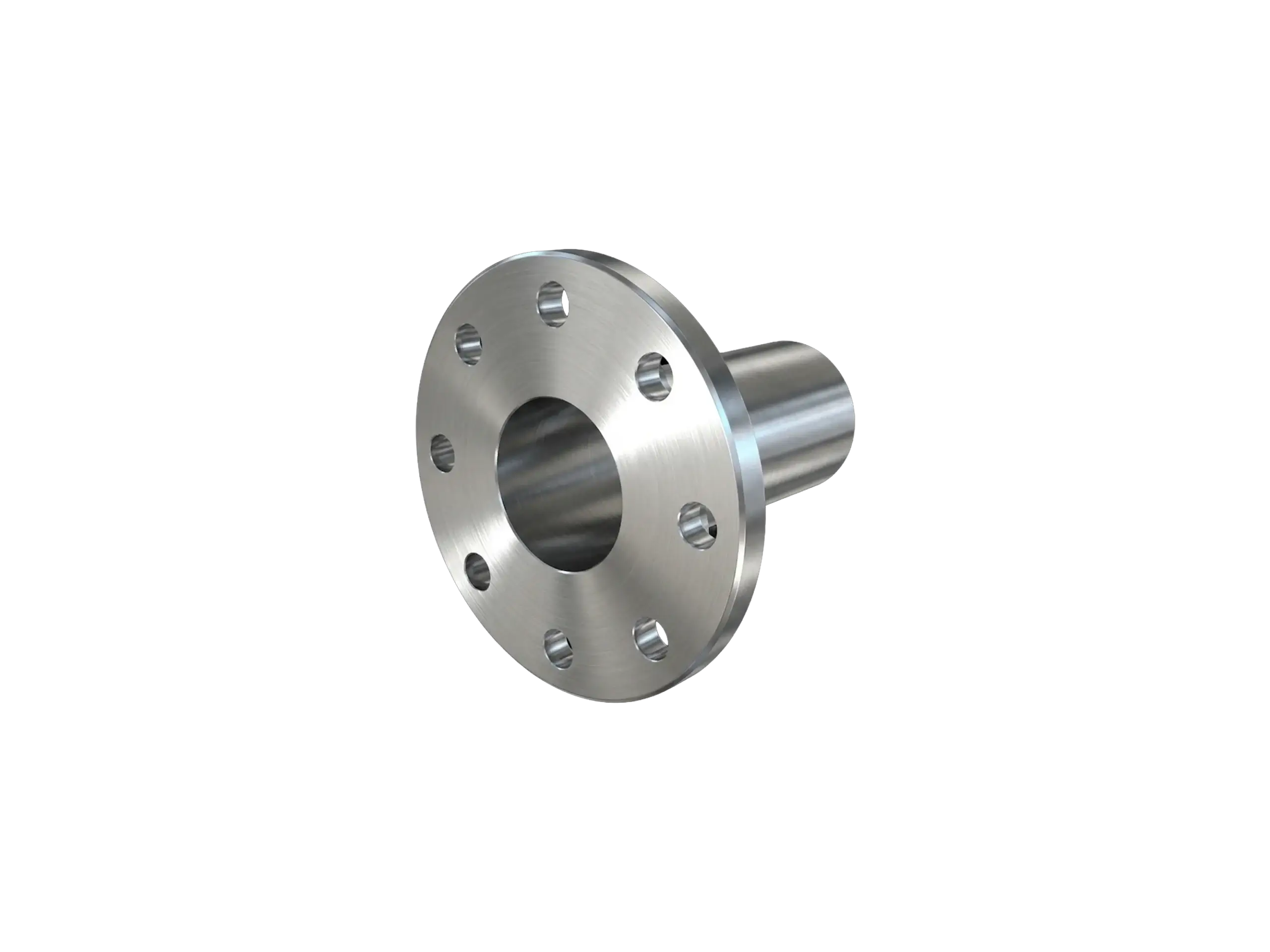
  • DIN / ANSI Flanged
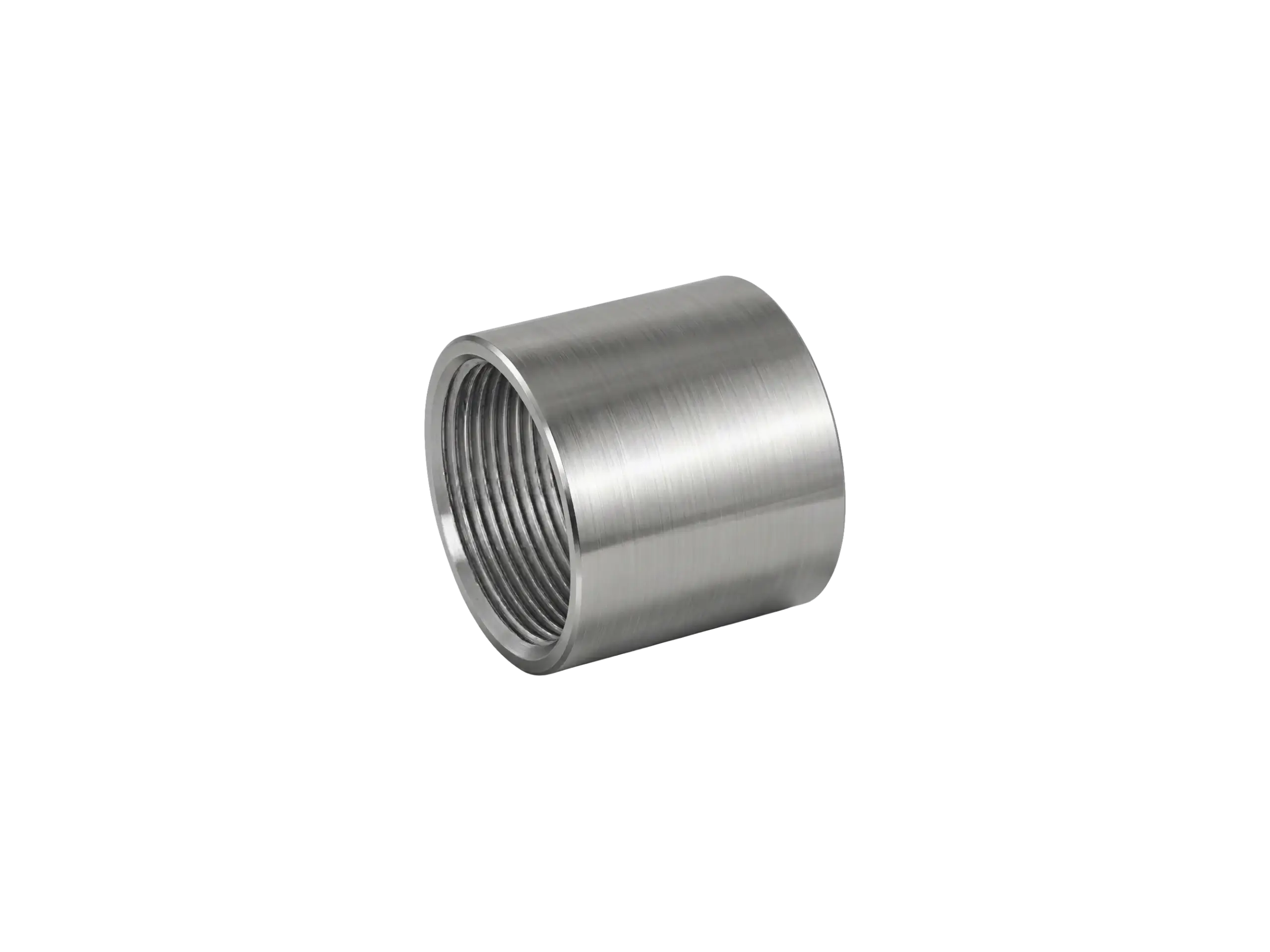
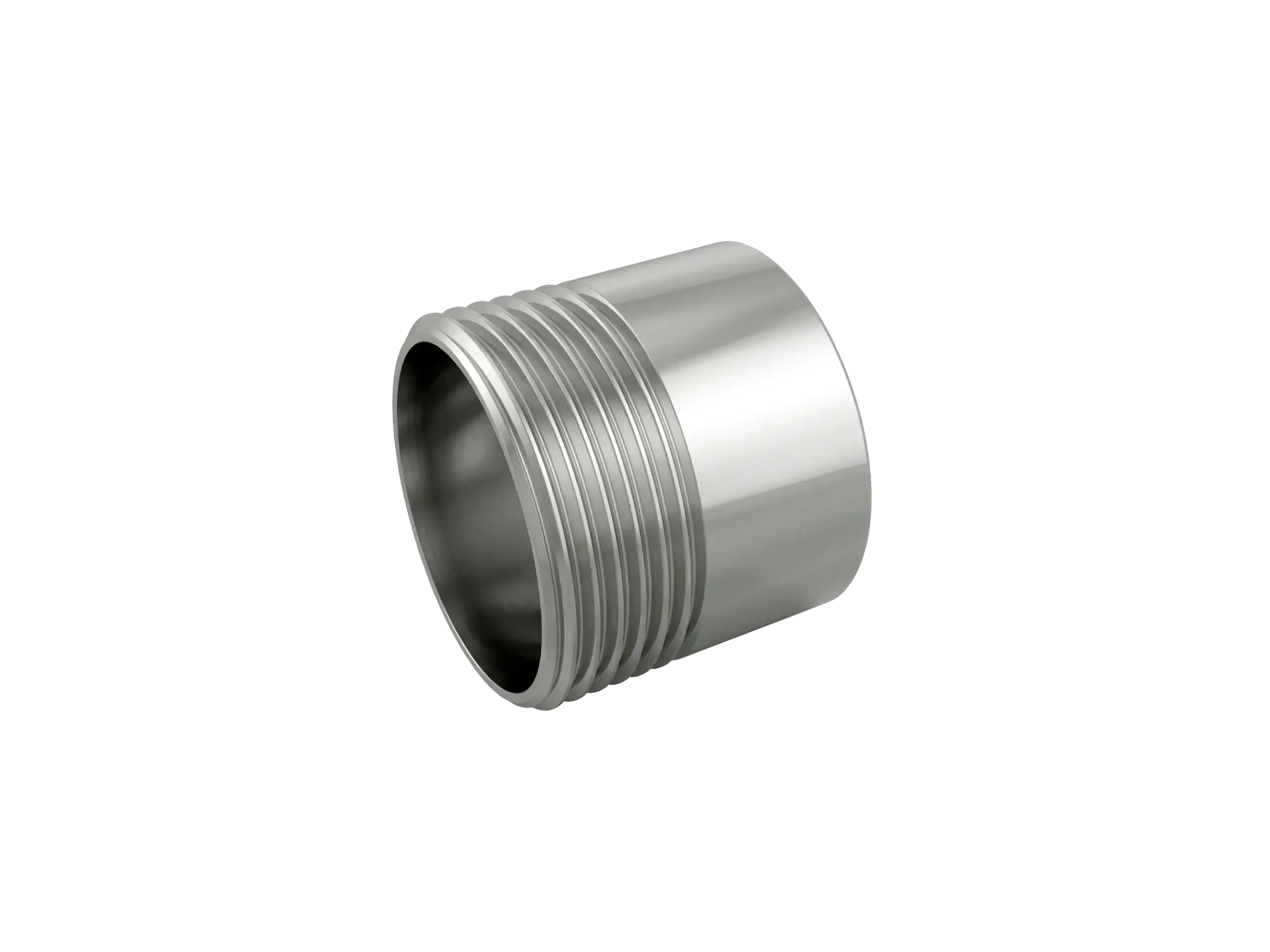
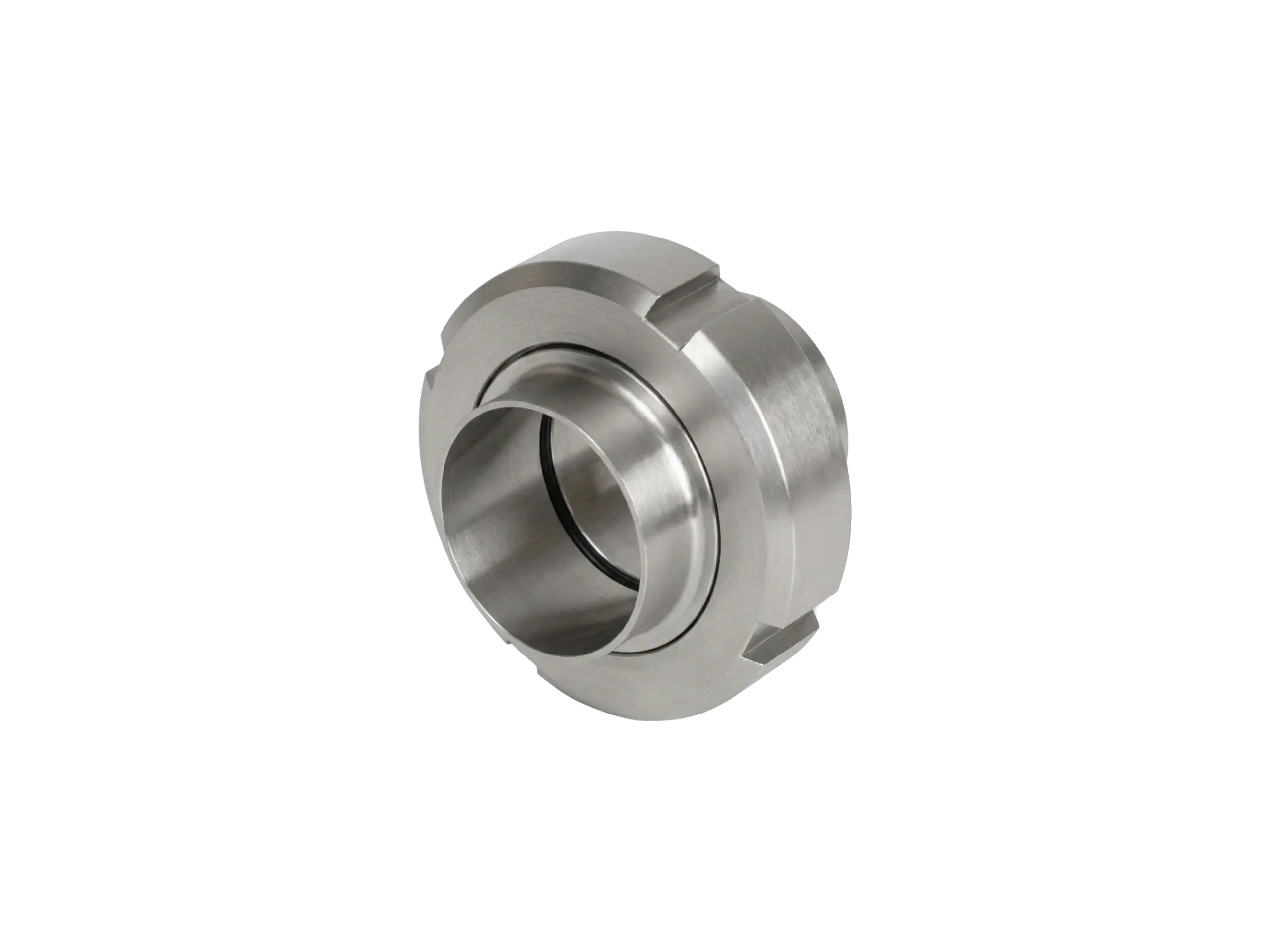
  • Muff, Nipple, Union
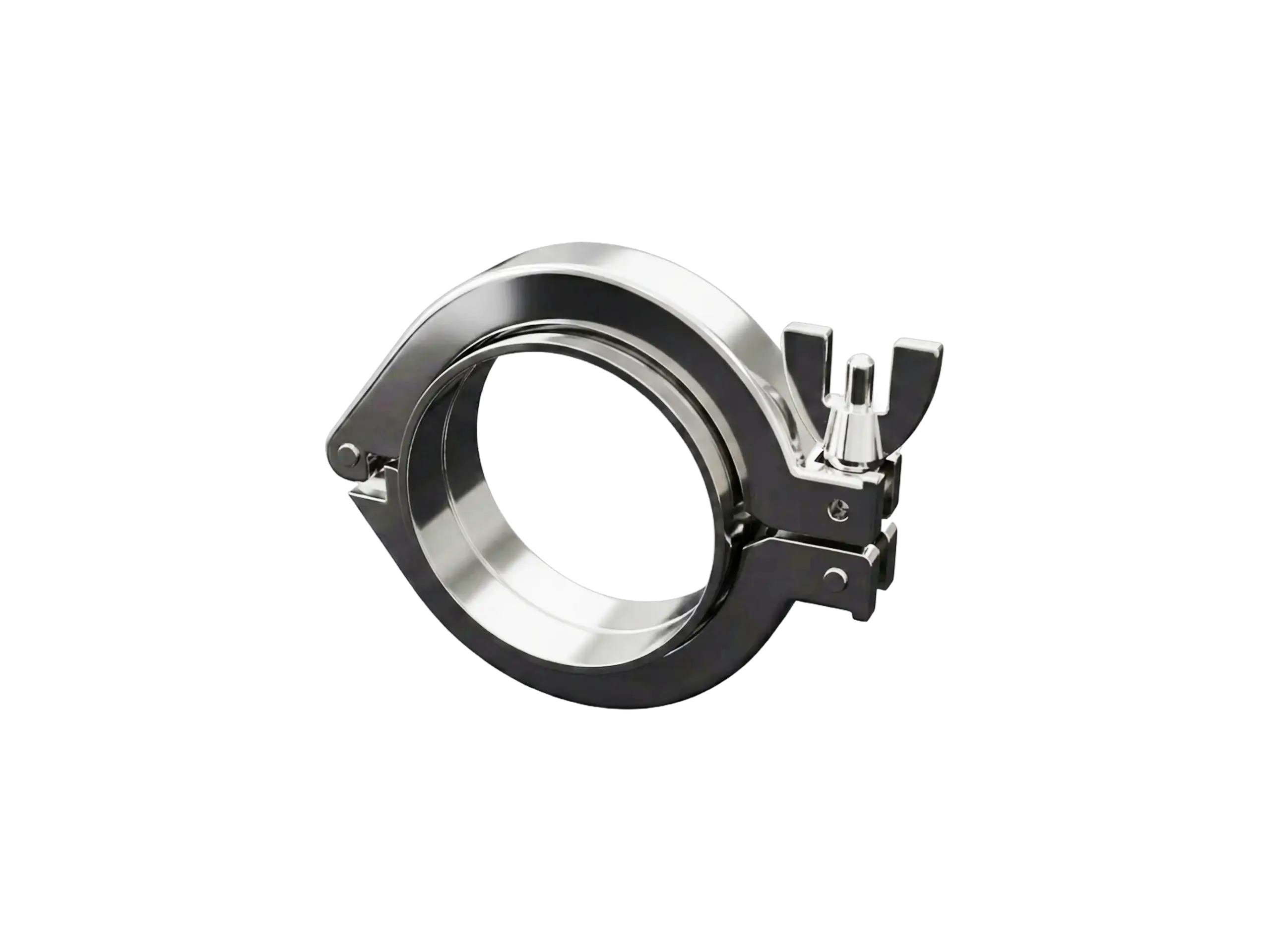
  • Hygienic Clamp (Tri-Clamp)
Operating Pressure
Standard 10 bar operating pressure; 25 bar hydrostatic test pressure (up to 40 bar for custom builds).
Filtration Precision
0.11 – 10,000 microns (wide particle retention depending on the cartridge type used).
O-Ring / Gasket Material
  • Nitrile (NBR)
  • Silicone (Food-Contact Compliant)
  • EPDM
  • Viton (FKM)
Filtration Direction
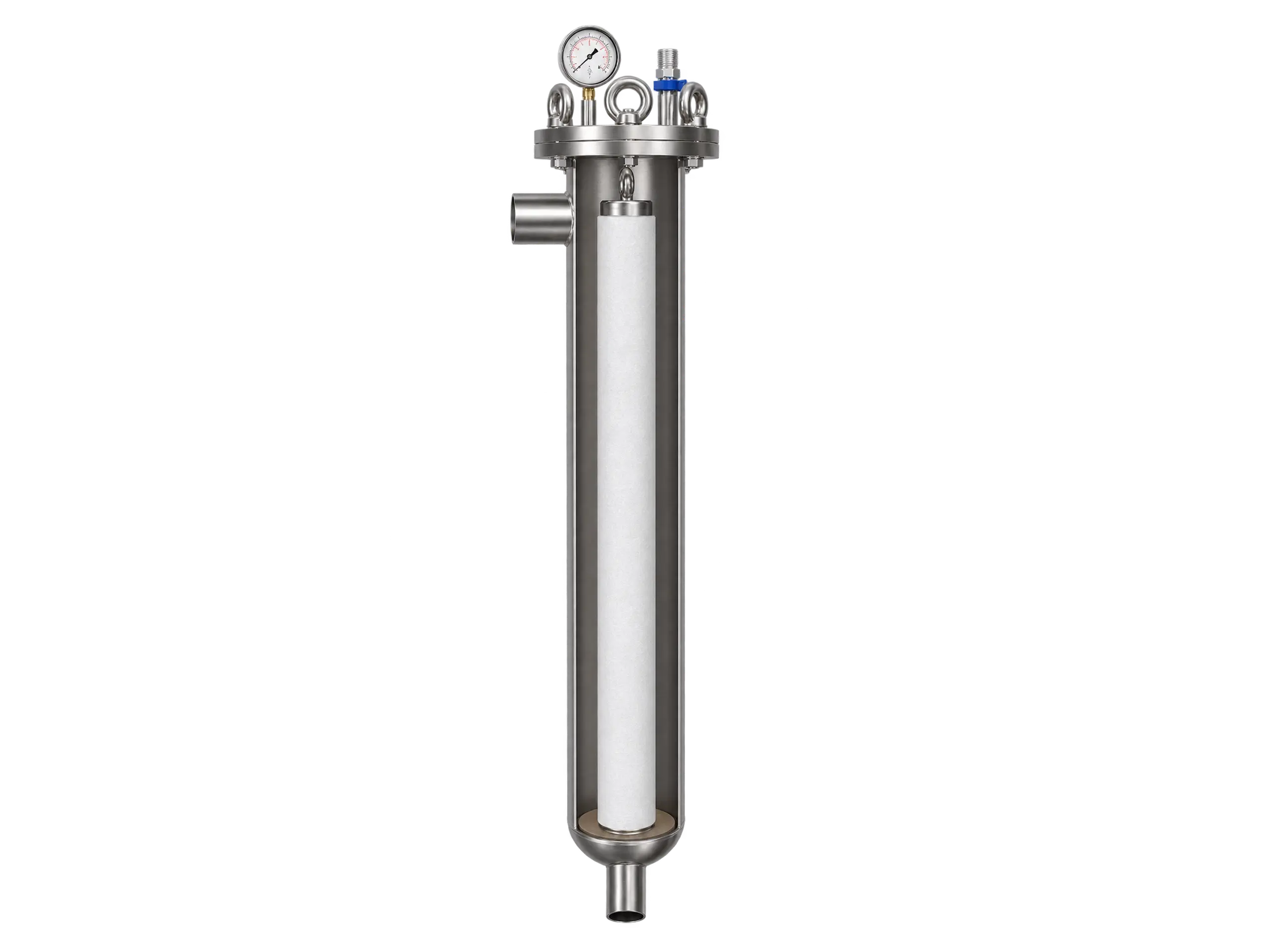
Outside-in: flow from the outer wall of the cartridge to the central core.
Lid System
  • Bolted Safety Lid
  • Swing-Bolt Quick-Opening Lid (on request)
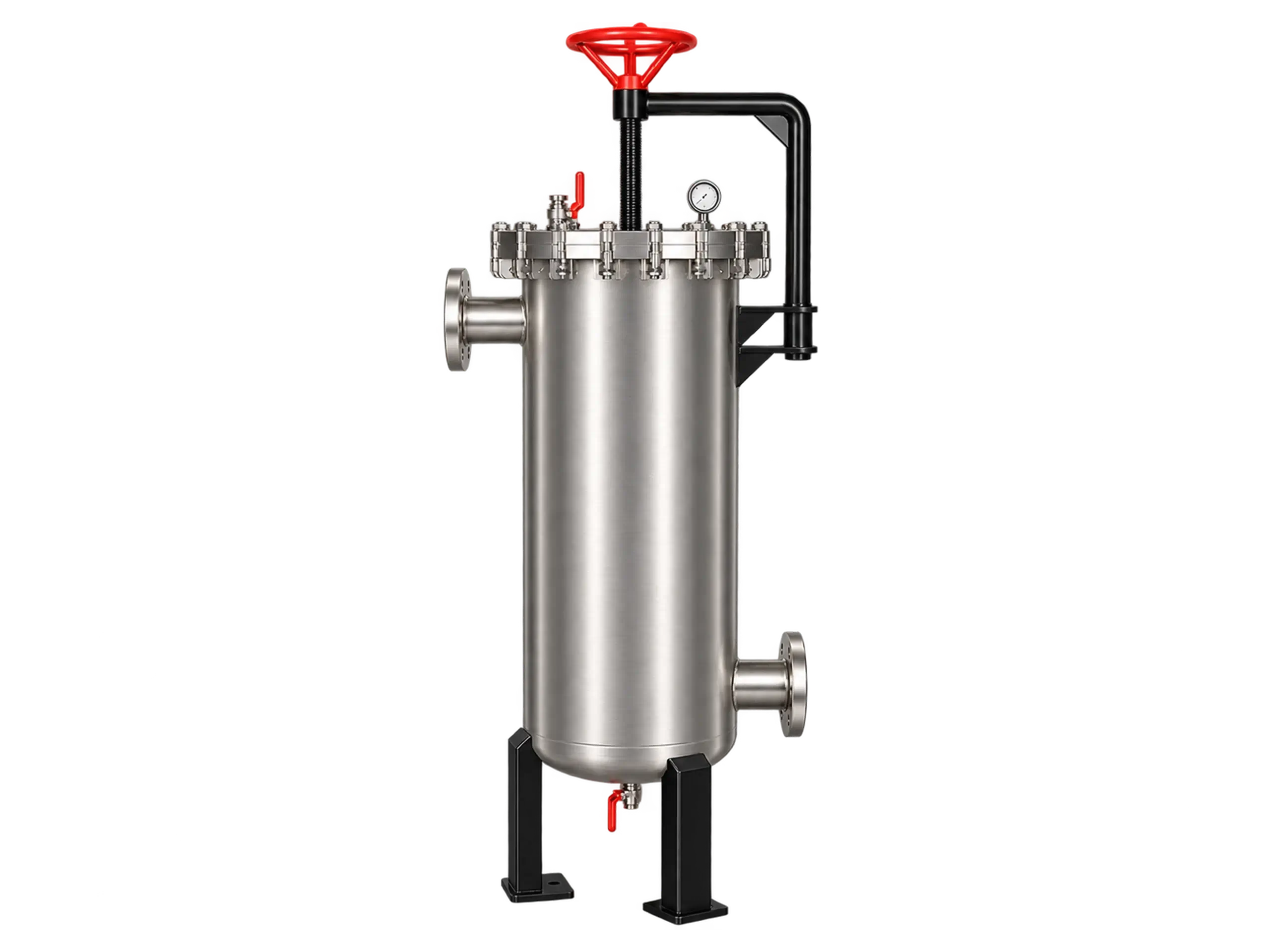
  • Davit (Boom) Lifting with Handwheel (Large Bodies)

Filtration Architecture and Working Principle

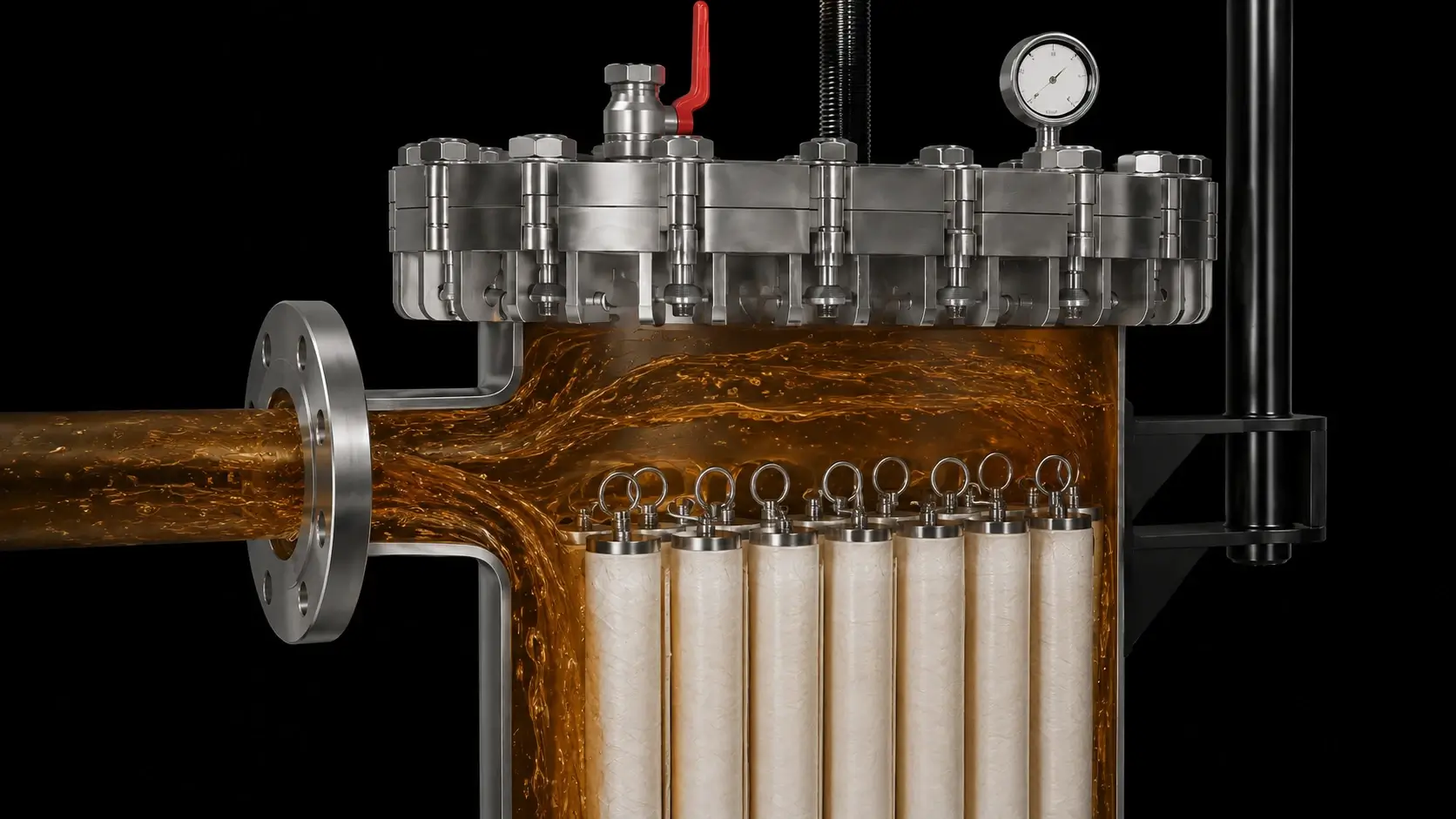
Illustration showing flow from the flanged inlet into the body in a multi-cartridge filter housing cross-section
STEP 01

Inlet & Distribution into the Body

Dirty process liquid fills the cartridge body through the inlet and spreads evenly over the outer surface of the cartridges. Flow moves along the cartridges in a balanced, controlled way.

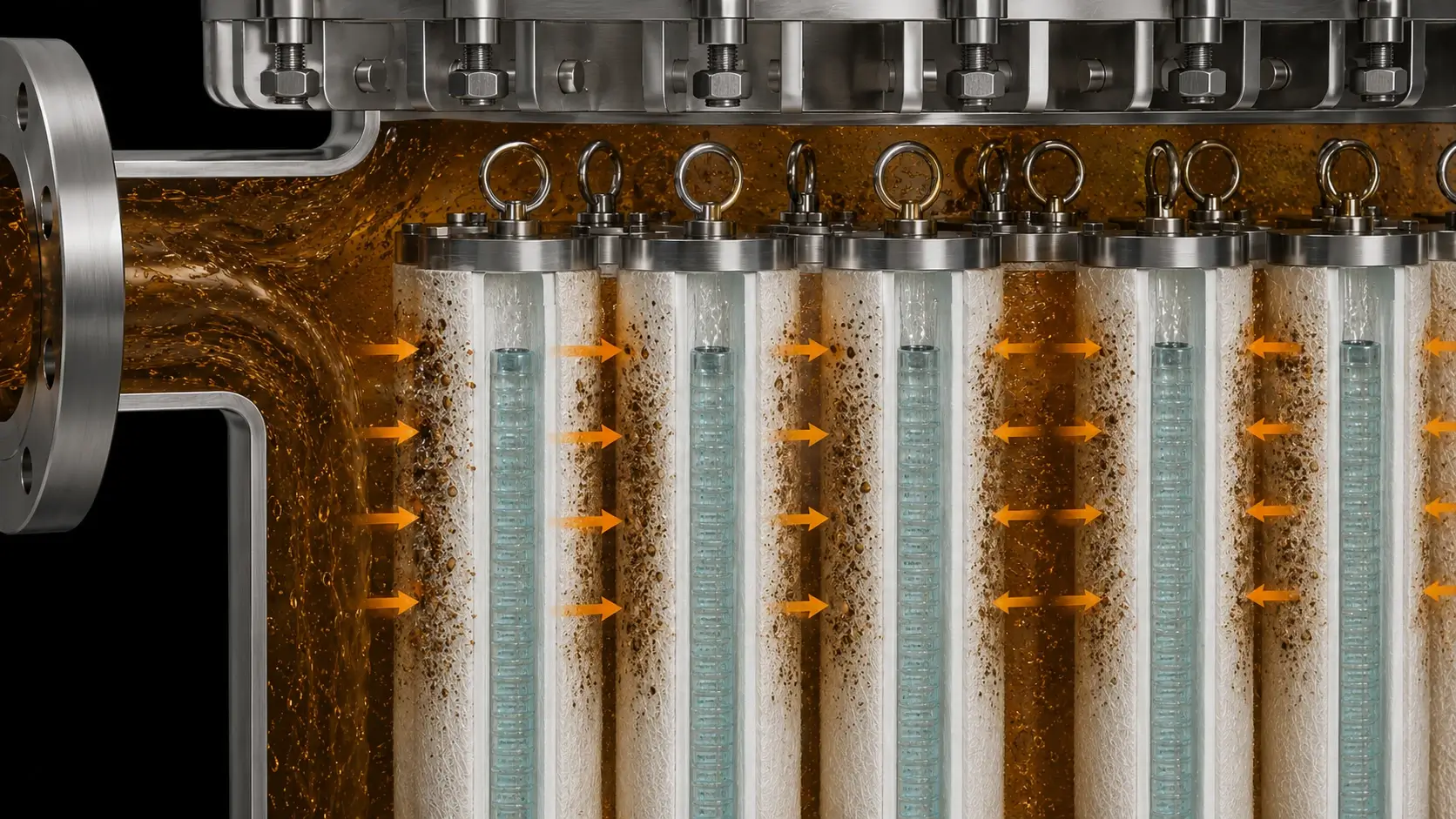
Cross-section illustration showing liquid distributed between cartridges inside a multi-cartridge filter housing
STEP 02

Outside-In Cartridge Filtration

The liquid passes outside-in through the cartridge pores; particles above the specified micron rating are retained at the outer surface or in depth.

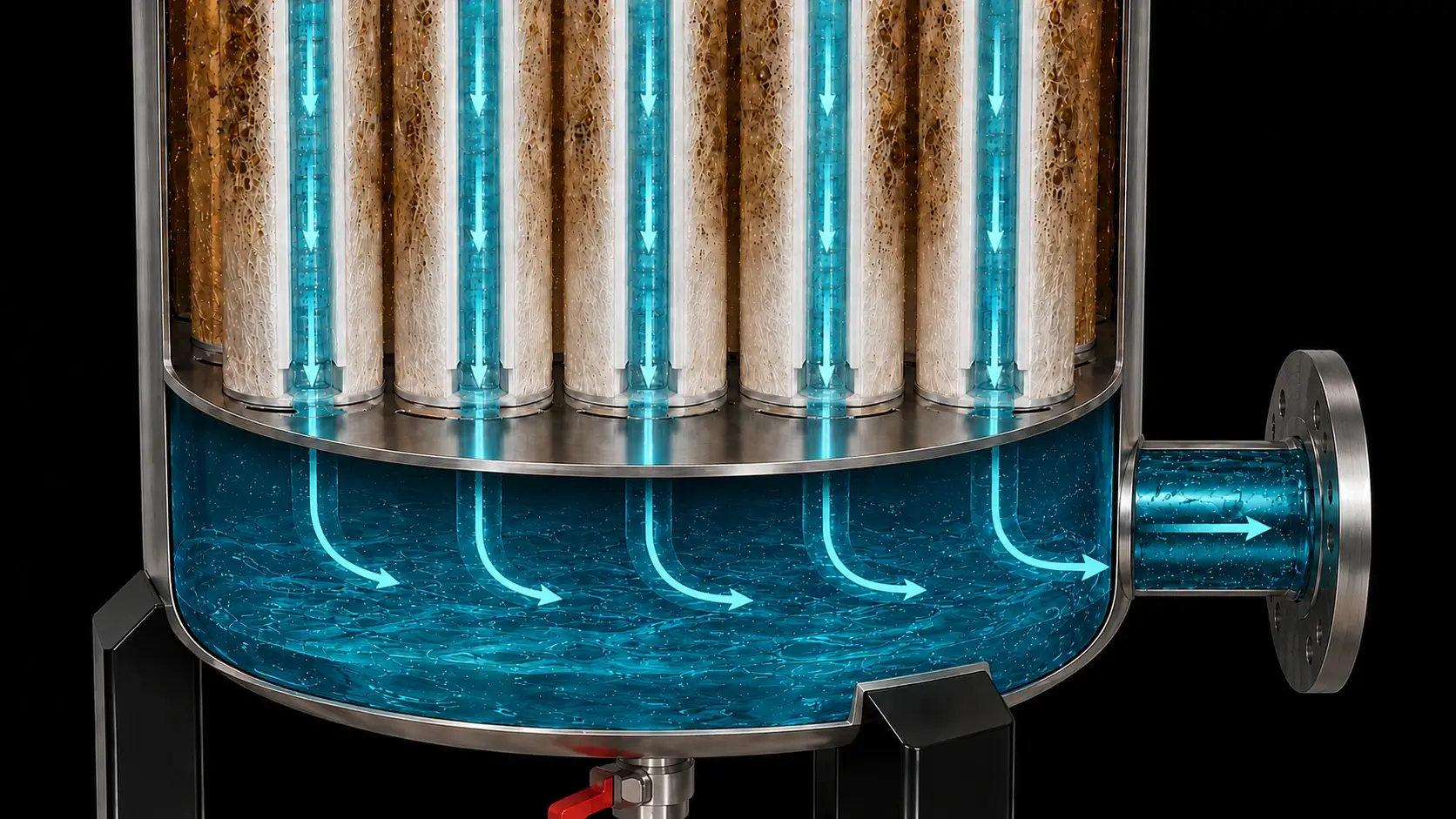
Cross-section illustration showing outside-in filtration and clean liquid outlet in a cartridge filter housing
STEP 03

Central Clean Outlet

The liquid filtered through the cartridge’s central core passes without interruption from the collector nozzle at the base to the outlet line. Flow is delivered steadily and in a controlled way to the process line.

Advantages of the Stainless Steel Cartridge Filter Housing

Combining a stainless steel body with cartridge filter technology contributes directly to your plant:
High Filtration Precision
Particle retention precision down to 0.11 micron; ultra-clear filtration with membrane and pleated cartridges.
Corrosion-Resistant Stainless Body
AISI 304L / 316L / 316Ti body construction; long service life on chemical, saline and high-temperature lines.
Safe Pressure Rating
Standard 10 bar operating and 25 bar hydrostatic test pressure; higher PN classes up to 40 bar for special processes.
Modular, Expandable Capacity
From 1 to 60 cartridges; the number of cartridges and their length in inches can be increased to suit flow and contamination load.
Zero-Bypass Sealing
215/222/226 O-ring sockets or a DOE compression rod reliably prevent bypass leakage.
Hygienic, Food-Compatible Surface
The buffed, smoothed inner surface reduces residue build-up and makes cleaning easier on hygienic lines such as food, beverages and pharmaceuticals.
Quick Lid & Ergonomic Maintenance
Bolted and swing-bolt lids; on large bodies, a davit lifting system with a handwheel allows easy change-outs by one person.
Long Life & Low Operating Costs
The heavy-duty stainless body lasts a lifetime; only the consumable cartridge is changed, or washable cartridges can be used.

Models and Flow Capacity

A wide range of models is offered, from single point-of-use housings to high-flow 60-cartridge multi-cartridge bodies, according to the flow rate and filtration area your process needs.

Single Cartridge Filter Housing

For single-cartridge, low-flow lines and point-of-use applications. Standard 10 bar operating and 25 bar test pressure; up to 40 bar for custom builds.

Multi-Cartridge Filter Housing

For high-flow plants with 3–60 cartridges. High capacity in a single body; standard 10 bar operating pressure.

304L / 316L / 316Ti Options

304L for standard applications; 316L for corrosive/chlorinated environments; 316Ti body for high temperatures.

Single Cartridge Filter Housing
1 cartridge, 10" equivalent; ~1 m³/h flow with standard cartridges, ~0.35 m³/h with pleated micro cartridges; 1" pipe connection.
3-Cartridge Filter Housing
Capacity for 3 cartridges; 1½" pipe connection.
5-Cartridge Filter Housing
Capacity for 5 cartridges; 2" pipe connection.
7-Cartridge Filter Housing
Capacity for 7 cartridges; 2" pipe connection.
12-Cartridge Filter Housing
Capacity for 12 cartridges; 2½" – 3" pipe connection.
24-Cartridge Filter Housing
Capacity for 24 cartridges; 3" – 4" flange connection for high-flow industrial processes. Custom-built from 24 up to 60.

*Values are calculated on the basis of a 10″ cartridge equivalent and clean water (water-like viscosity): standard cartridge ~1 m³/h, pleated micro cartridge ~0.35 m³/h per 10″. 20″, 30″ and 40″ cartridges increase flow proportionally (2×, 3×, 4×). The final choice depends on micron rating, cartridge type and liquid viscosity; request a quote with your application details.

Cartridge Length (Inches) and Capacity Options

The stainless steel cartridge filter housing is made to be compatible with standard 5–40 inch cartridges. Filtration surface and flow capacity increase with cartridge length. Housing compatibility must be confirmed before ordering.

5" Cartridge Length (127 mm)
Compact tight spaces, sampling lines and laboratory / pilot filtration systems.
10" Cartridge Length (254 mm)
The standard industrial reference length; the most common choice for single housings.
20" Cartridge Length (508 mm)
Medium-flow lines; twice the filtration area of 10 inches and extended service life.
30" Cartridge Length (762 mm)
High-flow industrial processes; the most balanced standard for multi-cartridge bodies.
40" Cartridge Length (1016 mm)
Maximum flow and high sludge capacity; high flow with fewer cartridges.
50" – 80" Cartridge Length (1270–2032 mm)
Custom-built for power plants, condensate and ultra-high-flow industrial lines.

Micron Options and Compatible Cartridge Filters

A very wide range from 0.11 micron to 10,000 microns is offered, according to the clarity your application requires. The lower the micron rating, the higher the filtration precision and the lower the flow rate.
Melt-Blown (Spun) Cartridge Filter
Melt-blown polypropylene; economical one-piece depth filtration with graded porosity.
Pleated Micro Cartridge Filter
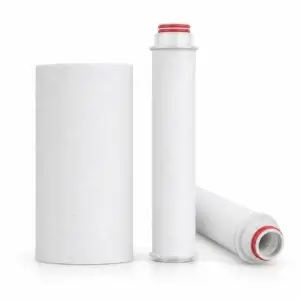
Large pleated surface area; high-flow clarification with absolute micron precision.
High Flow Cartridge Filter
Compact large-diameter cartridge; a single 40" or 60" element can handle flows of up to 110 m³/h.
Activated Carbon Cartridge Filter
Block or granular carbon for adsorbing chlorine, odour, taste and dissolved organic compounds.
Mesh Washable Cartridge Filter
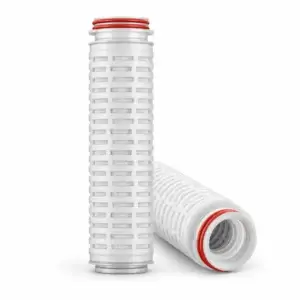
Polypropylene body; a durable element that can be cleaned by backwashing and reused many times.
Stainless Steel Cartridge Filter
With 304, 316, 304L or 316L stainless wire mesh or perforated sheet; resistant to high temperatures, solvents and corrosion.
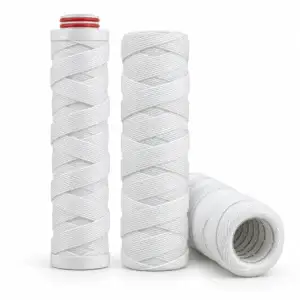
String-Wound Cartridge Filter
High solids and sludge retention thanks to its graded-depth wound fibre structure.
Membrane Cartridge Filter
Sterilising filtration and filtration in the 0.1–20 µm range with PES, PTFE, PVDF, nylon or GF membranes.

Cartridge Filters You Can Use with Your Housing

The housings are compatible with both 215, 222 and 226 O-ring cartridges and gasket (DOE) cartridges. The following cartridge types can be used with this housing:

Activated Carbon Cartridge Filter

Activated carbon cartridge filter for removing chlorine, odour, taste and organics.

High Flow Cartridge Filter

Large-diameter, high-flow cartridge; large flow capacity with few cartridges.

Melt-Blown (Spun) Cartridge Filter

Melt-blown, economical one-piece depth filter with graded porosity.

Mesh Washable Cartridge Filter

Durable polypropylene cartridge that can be cleaned and reused.

Stainless Steel Cartridge Filter

Washable metal cartridge; resistant to high temperatures and chemicals.

Pleated Micro Cartridge Filter

Pleated, large-surface cartridge with absolute micron precision.

Resin-Bonded Cartridge Filter

High dirt-holding capacity thanks to its resin-bonded depth structure.

Stacked Disc Module Cartridge Filter

High surface area and fine filtration with stacked disc modules.

String-Wound Cartridge Filter

Graded-porosity string-wound depth filter with high dirt-holding capacity.

Connection and Lid Types

How easily the housing integrates into your system and how easy it is to maintain depend on choosing the right connection and lid.
Piping Connection Options
Muff, nipple or flanged connections from 1" to 10"; union, tri-clamp and camlock alternatives are also available.
Ergonomic Lid Systems
Bolted and swing-bolt quick lids; on large bodies, a davit mechanism with a handwheel lets one person open the heavy lid.

Single Cartridge Filter Housing Lid and Inlet/Outlet Types

The single cartridge filter housing is made in different types according to the lid connection and outlet direction. The following types can be chosen to suit your application and installation space:

Type 1

Flanged Lid

Bolted flange lid; high durability for frequent, heavy use. Bottom or side outlet.

Type 2

Flanged Lid with Swing Bolts

Flange lid with swing bolts (wing nuts); opens quickly without tools. Made on request. Bottom or side outlet.

Type 3

Union Lid

Union-connected lid; practical dismantling and reassembly. Bottom or side outlet.

Type 4

Clamp Lid

Clamp lid; the fastest cartridge changes, ideal for hygienic lines. Bottom or side outlet.

Type 5

Inline Cartridge Filter Housing

Because the inlet and outlet are on the same line axis, it is ideal for tight installation spaces and direct connection to existing pipelines. Can be made with a flange, union or clamp lid.

Type 6

Line Type Cartridge Filter Housing

Connects directly to the line quickly and easily; with the cartridge filter fitted inside, it brings the line into filtration without any extra installation arrangement.

Sealing: O-Ring vs. Gasket Cartridge

O-Ring Cartridge Interface (215 / 222 / 226)
The cartridge seats in the O-ring socket in the body; the O-ring provides excellent sealing through radial compression.
Gasket Cartridge Interface (DOE - Double Open End)
A specially developed compression rod compresses the gasket axially, giving full bypass protection at both open ends.

Industry Applications

With its chemical resistance, a precision range that covers even low micron ratings such as 5 microns, and its hygienic construction, the stainless steel cartridge filter housing works without interruption across a very wide range of industries:

1–6 / 24
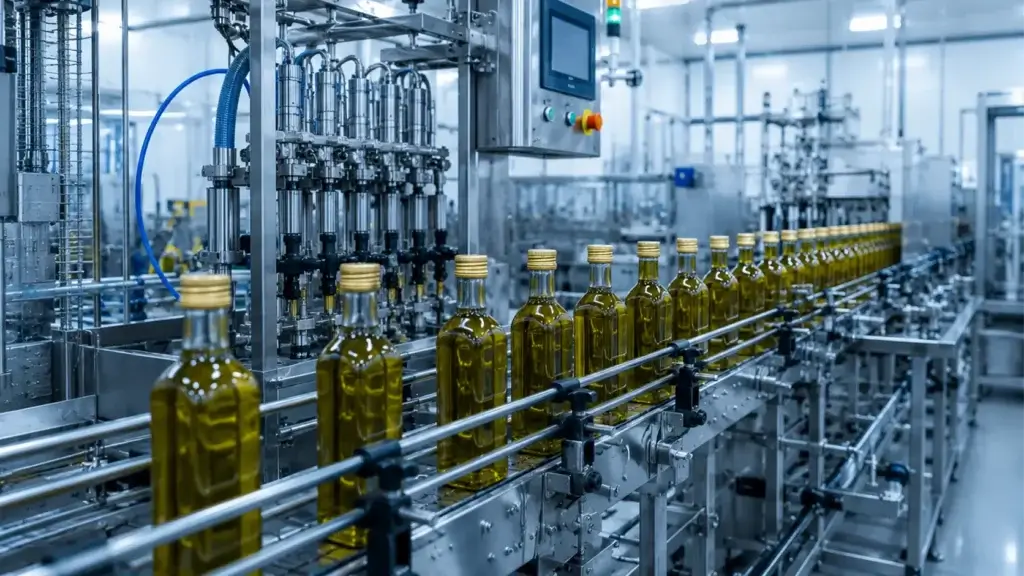
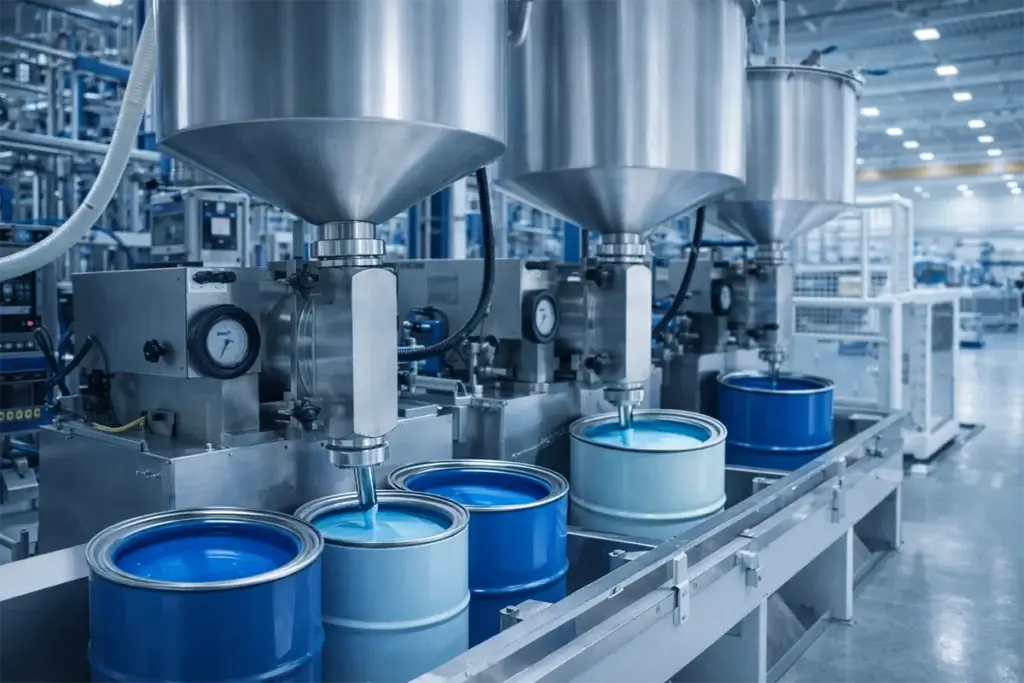
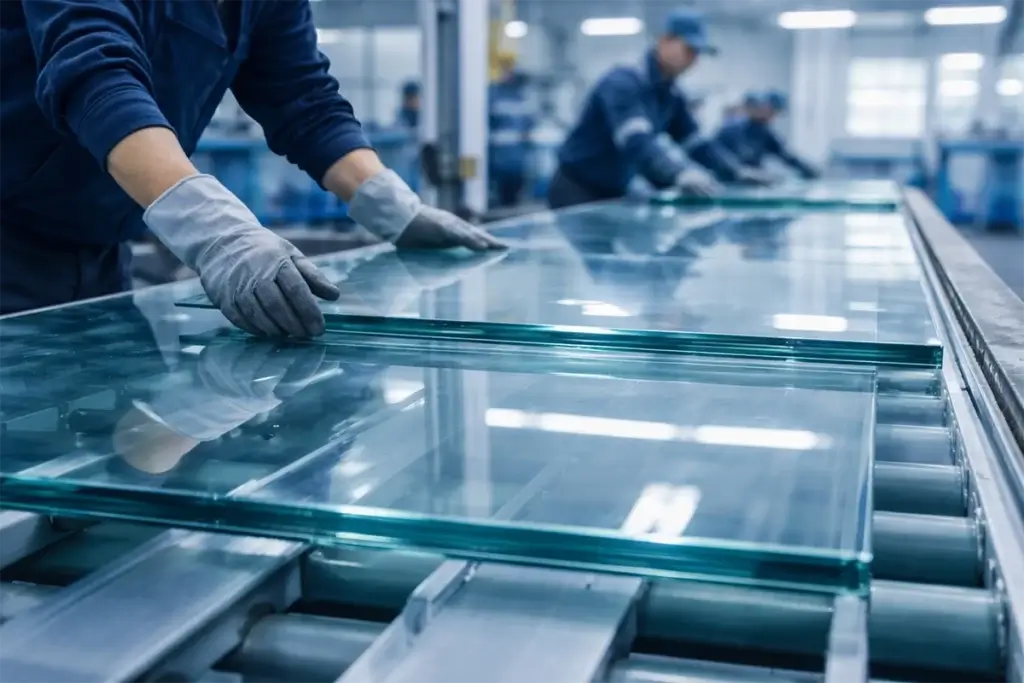
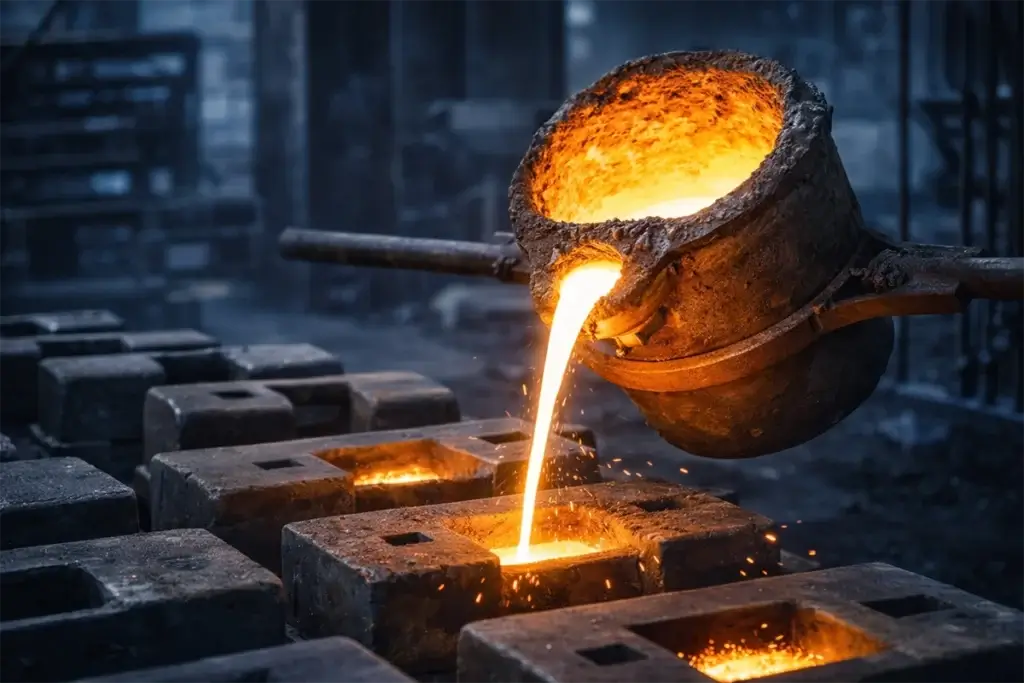
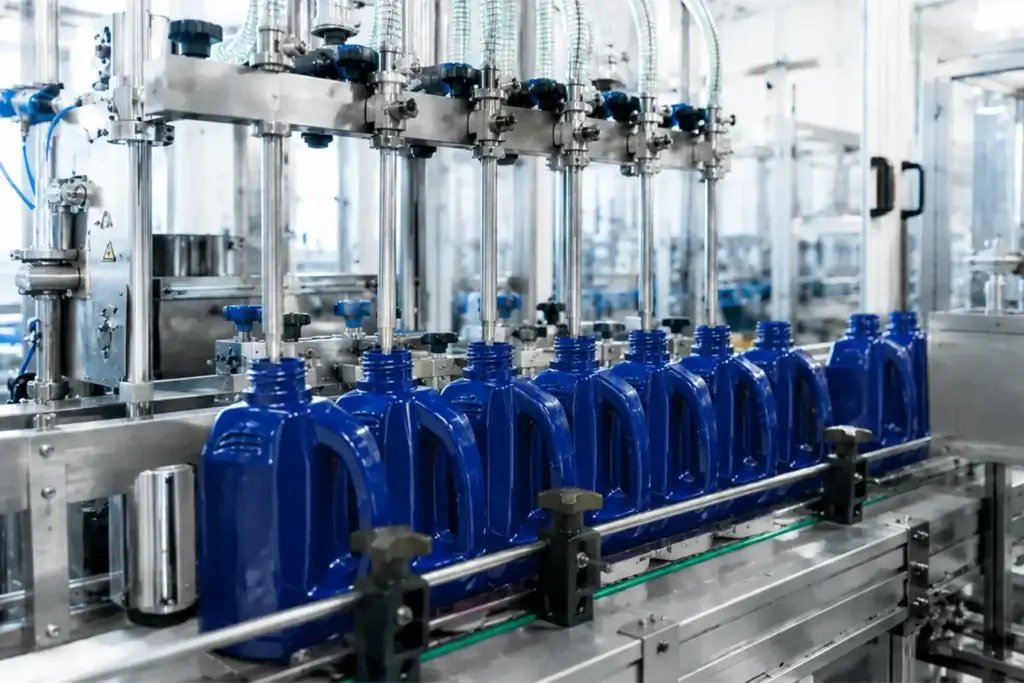
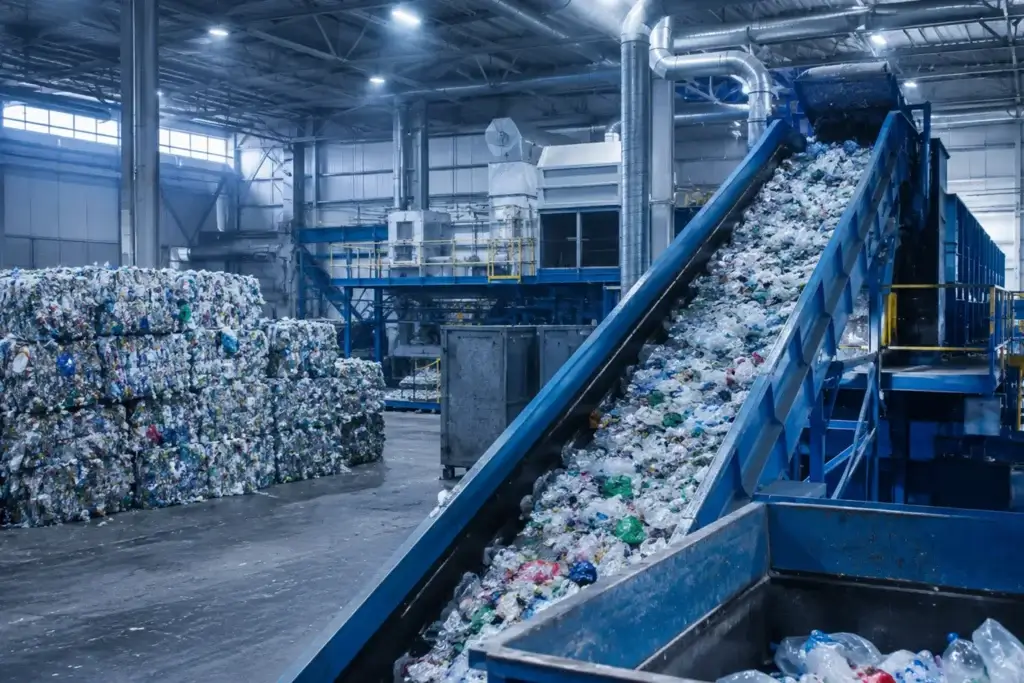
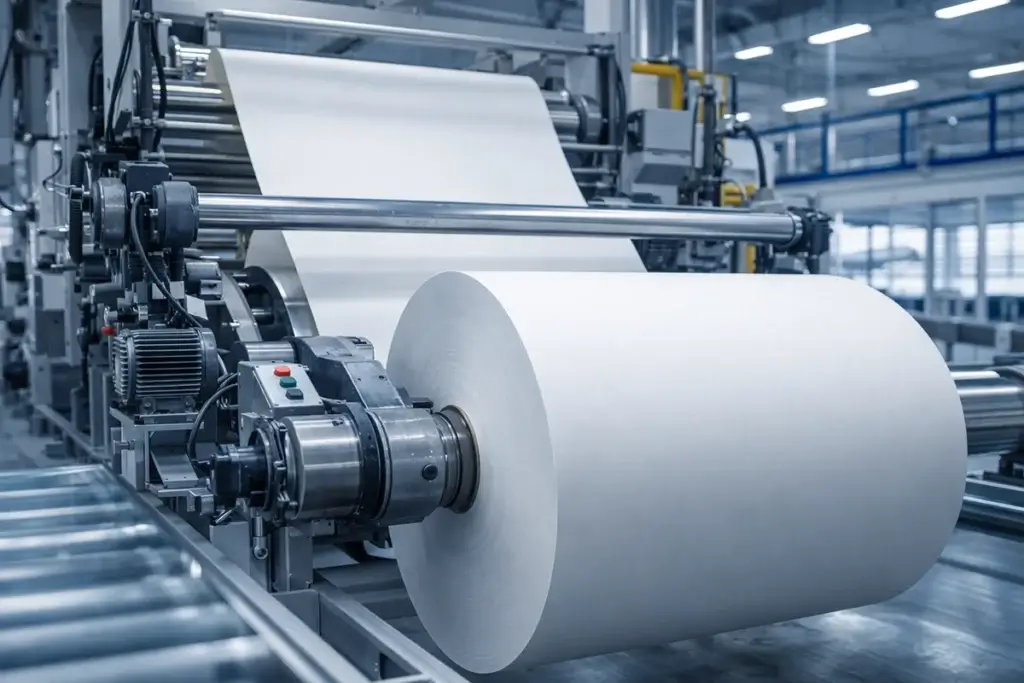
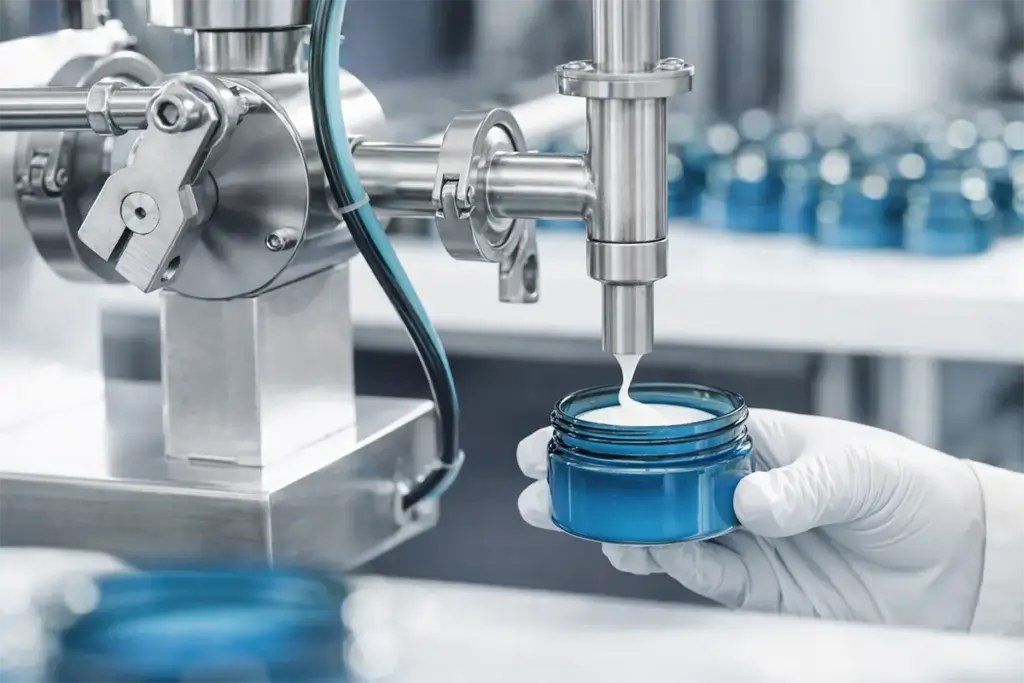
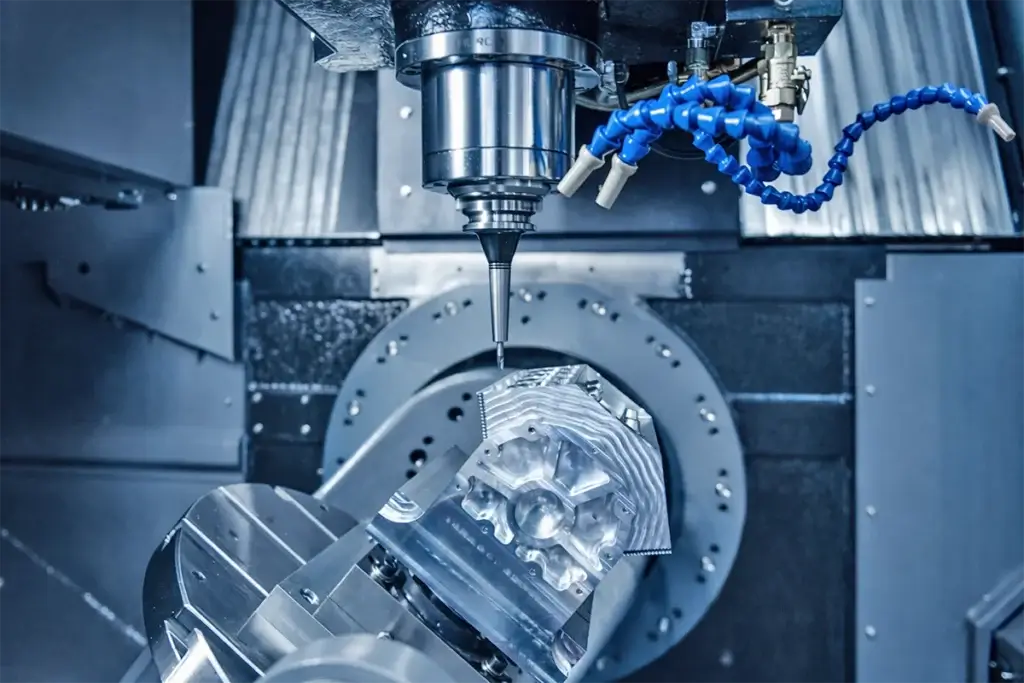
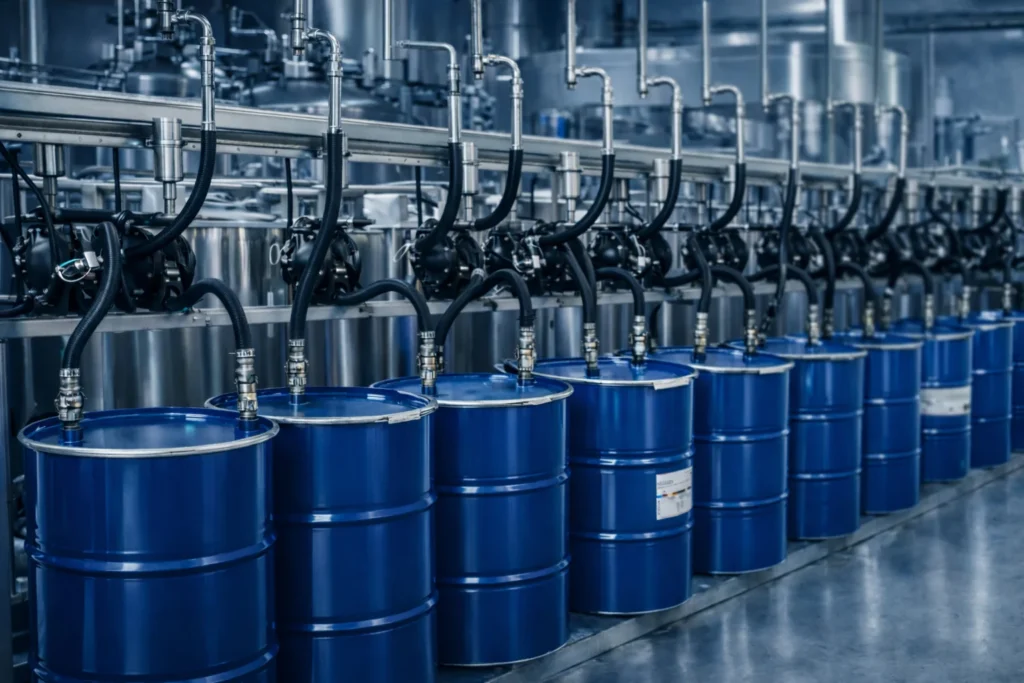
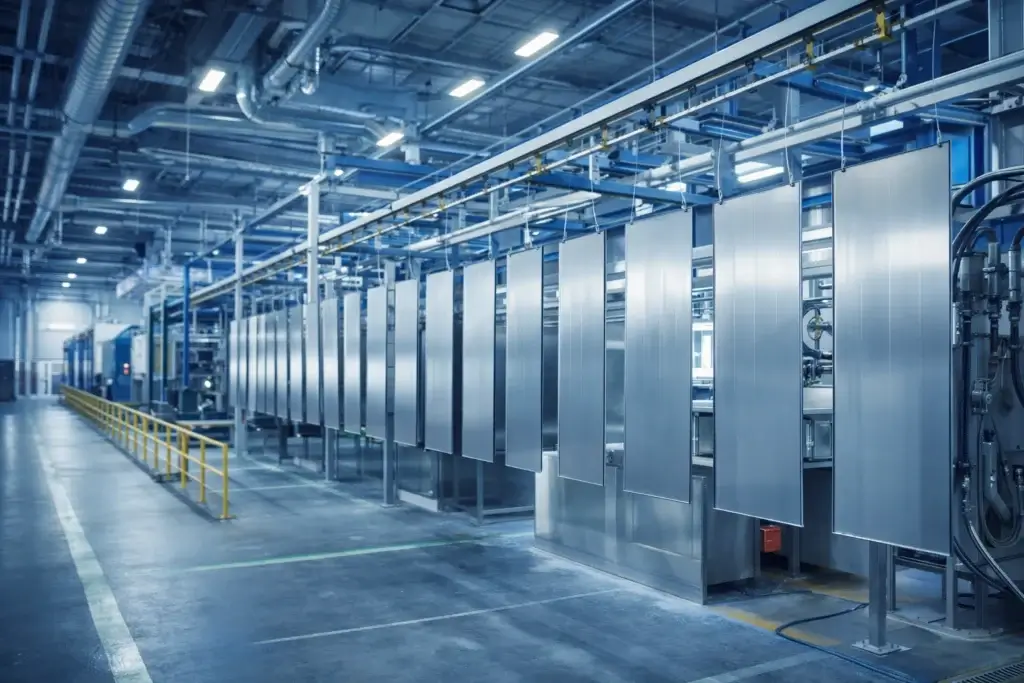
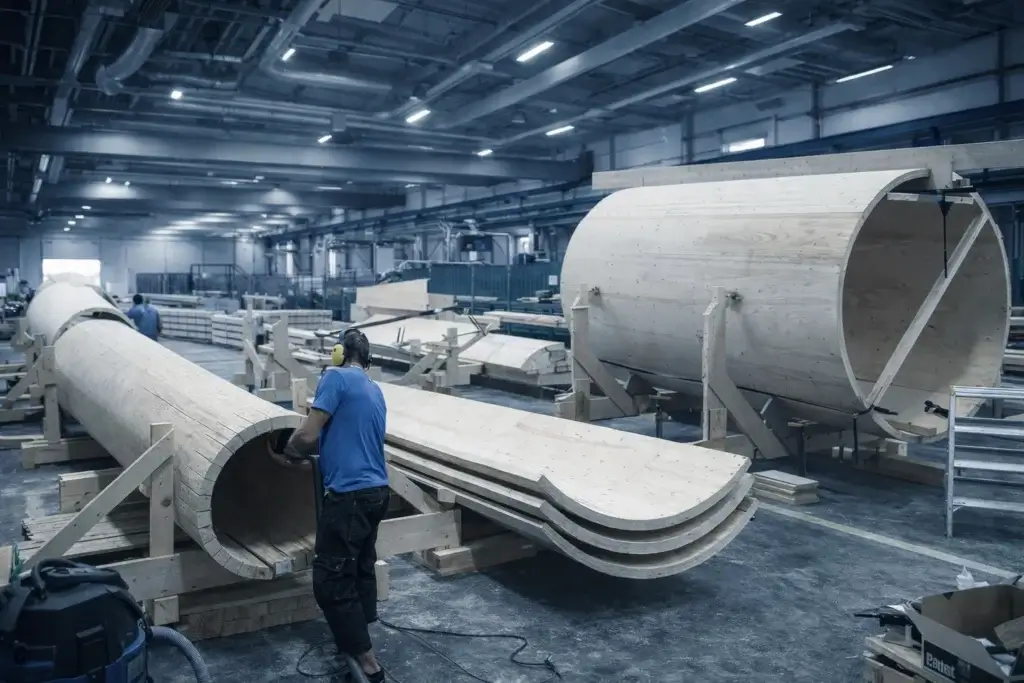
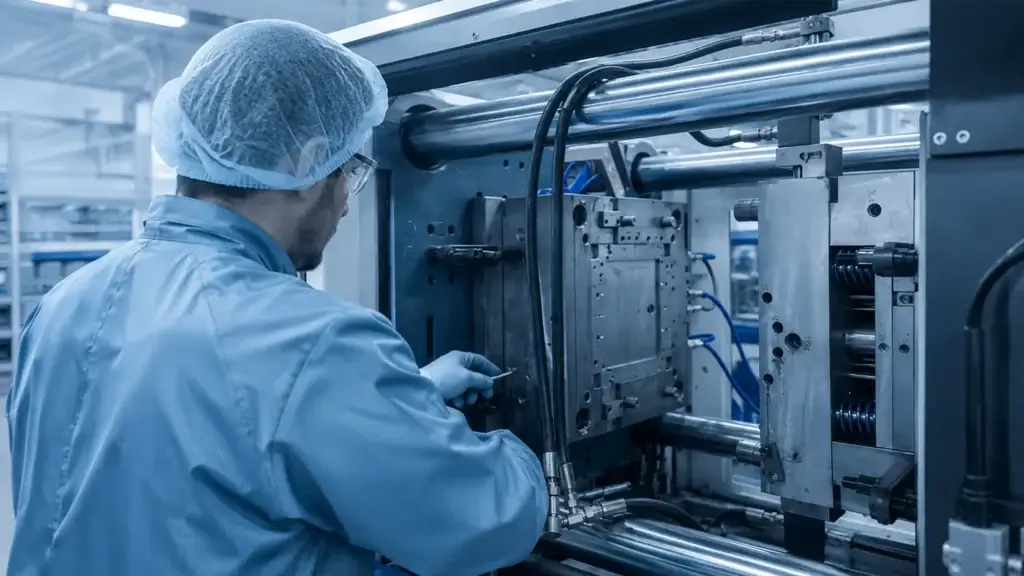
Vegetable Oil 01 Vegetable Oil Clarity, purity and shelf life in vegetable oil and refining. Explore solutions Pipe and Profile 02 Pipe and Profile Cooling water filtration in pipe and profile extrusion. Explore solutions Paint Industry 03 Paint Industry Surface quality and pigment filtration in the paint industry. Explore solutions Glass Industry 04 Glass Industry Furnace and process filtration in the glass industry. Explore solutions Dialysis Centers 05 Dialysis Centers Water preparation and process filtration in dialysis centers. Explore solutions Foundry Industry 06 Foundry Industry Equipment protection and dust filtration in foundries. Explore solutions Industrial Oil 07 Industrial Oil Filtration in industrial oil production and recovery. Explore solutions Energy and Biogas 08 Energy and Biogas Maximum efficiency and turbine protection in energy and biogas. Explore solutions Recycling 09 Recycling Filtration for efficiency and environmental compliance in recycling. Explore solutions Food and Beverage 10 Food and Beverage Hygienic filtration in food and beverage. Explore solutions Pharmaceuticals and Biotechnology 11 Pharmaceuticals and Biotechnology GMP-compliant sterile filtration in pharmaceuticals and biotechnology. Explore solutions Paper and Packaging 12 Paper and Packaging Process water filtration in paper and packaging. Explore solutions Chemical Industry 13 Chemical Industry Corrosion-resistant, safe filtration in the chemical industry. Explore solutions Cosmetics 14 Cosmetics Microbiological safety and precision filtration in cosmetics. Explore solutions Machinery 15 Machinery Precision and technical filtration in the machinery industry. Explore solutions Printing and Ink 16 Printing and Ink Flawless color and print quality in printing and ink. Explore solutions Metal and Surface Treatment 17 Metal and Surface Treatment Flawless surfaces and bath stability in metal and surface treatment. Explore solutions Forest Products 18 Forest Products Resin and glue filtration in forest products and furniture. Explore solutions Automotive 19 Automotive Precision process filtration for zero defects in automotive manufacturing. Explore solutions Oil and Petrochemicals 20 Oil and Petrochemicals Equipment protection and process safety in oil and petrochemicals. Explore solutions Plastic Packaging 21 Plastic Packaging Precision process filtration and raw material purity in plastic packaging. Explore solutions Plastic Injection Molding 22 Plastic Injection Molding Cooling and hydraulic filtration in plastic injection molding. Explore solutions Water and Environment 23 Water and Environment Recovery filtration in water and environmental technologies. Explore solutions Shipyards and Marine 24 Shipyards and Marine Operational safety and efficiency in shipyards and marine. Explore solutions









Engineer's Note

TECHNICAL ASSESSMENT BASED ON FIELD EXPERIENCE

Material selection

The most common mistake in the field is choosing a 316L body while leaving the inner plate and compression rod in 304. These internal fixing parts are in direct contact with the fluid and accumulated contamination; when two different stainless grades work together, the internal components corrode first and galvanic action accelerates. The body and all internal stainless parts must be the same grade; choose 316L for chlorinated or acidic environments and 316Ti for high-temperature and weld-intensive applications.

When to choose it

On lines with a low to medium contamination load that require high clarity and low micron ratings (especially <5 µm), a cartridge filter housing gives much more precise and stable outlet quality than a bag.

When not to choose it

With a very heavy sediment load and high flow, cartridges clog quickly; in that case a bag filter housing or a pre-filter ahead of the cartridges is more economical.

Application and Selection Criteria

Choosing the Right Lid and Mechanism
Small and medium housings use a bolted lid as standard; on lines that need frequent opening, a swing-bolt or clamp lid can be fitted on request. On large, heavy multi-cartridge housings, a davit mechanism with a handwheel should be used for safety and operational ergonomics.
Sealing Interface and Bypass Prevention
For high-purity processes that require a critical micron rating, a 222 or 226 O-ring socket (226 locking) should be chosen; for general depth cartridges, a DOE interface with a compression rod is preferred.
Differential Pressure (ΔP) Monitoring
Always fit a pressure gauge or a differential pressure transmitter to the body inlet and outlet; change the cartridges when the differential pressure (ΔP) reaches 2.0 bar.

Cartridge Filter Housing Selection Technical Checklist

The wrong choice means early clogging, corrosion and unnecessary cost. To choose the right stainless steel cartridge filter housing, the following nine parameters should be considered together.
Chemical Nature of the Fluid
316L if chlorine, acid or salt is present; 316Ti for high-temperature/weld-intensive lines; 304/304L for neutral water; usually 316 for food.
Operating Temperature
Determines the gasket choice: EPDM/silicone for hot water, Viton for aggressive chemical and oil lines.
Required Cleanliness Level
Choose the right cartridge micron rating (melt-blown, pleated, etc.) between 0.11 and 10,000 µm according to the clarity required.
Process Flow Rate (m³/h)
Flow determines the number of cartridges, cartridge length and pipe connection diameter.
Contamination and Sediment Load
With a high particle load, longer cartridges (30/40) and a multi-cartridge body multiply service life.
Cartridge End Interface
Choose an O-ring 215/222/226 interface (226 locking socket) or a DOE double-open-end interface with a compression rod, according to your current consumables.
Connection & Lid Type
Flange/muff/nipple depending on the line; a bolted lid is standard, a swing-bolt lid is fitted on request, and a davit with a handwheel is preferred for large, heavy housings.
Maximum Line Pressure
System operating pressure must be kept below the body's nominal class (standard 10 bar, test 25 bar, custom 40 bar).
Food & Hygiene Standards
For food and pharmaceutical contact, check for a buffed inner surface and a food-contact-compliant gasket material.

Points to Watch During Use

Maximum efficiency and service life depend on correct installation and operating practices. To avoid mistakes frequently seen in the field:
Correct Placement & Seating
The cartridge must be fully seated in the O-ring/gasket socket at the bottom of the body, leaving no bypass or air pocket.
Differential Pressure (ΔP) Monitoring
Change the cartridge when the differential pressure (ΔP) reaches 2.0 bar.
Soft Start-Up
Avoid sudden pressure surges (water hammer) at first start-up and open the air vent nozzle.
O-Ring & Gasket Check
Check O-rings and gaskets periodically; replace worn, hardened or cracked gaskets immediately.
Housing Cleaning & Hygiene
Clean the stainless steel body regularly to remove chemical deposits and maintain hygiene and corrosion resistance.
Choosing the Right Consumables
Use a cartridge type (spun/pleated/stainless), micron rating and gasket material suited to the process fluid and temperature.

Product Gallery

Technical details of the single and multi-cartridge body architectures, lid mechanisms and high-precision piping connections of Prosestim stainless steel cartridge filter housings.

Products that work with this product

Filters that fit this housing, alternative housing options and the parts needed for connection.
This product
Stainless steel multi-cartridge filter housing

Cartridge Filter Housing

Filter Housings
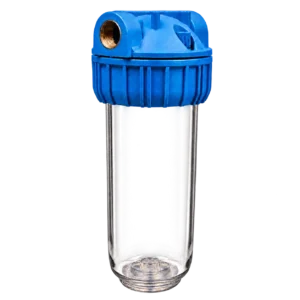
Standard clear plastic cartridge filter housing with blue head and brass threaded inlet

Plastic Cartridge Filter Housing

Transparent bowl for low pressure.

View →
Request everything in one quote: let’s size the product, housing and connection parts together.

Your Questions Answered

Frequently Asked Questions

At Prosestim, we are committed to answering your questions and providing technical support for our filtration solutions.

It is a pressurised AISI 304/304L/316/316L/316Ti stainless steel body in which one or more filter cartridges are placed. As the liquid passes from the outside of the cartridge to its inner core (outside-in), particles and sediment are retained on the cartridge; a loaded cartridge is replaced. It offers high precision, a compact design and corrosion resistance.
AISI 304 and 304L are suitable for water and low-corrosion applications. Thanks to their molybdenum content, AISI 316 and 316L provide higher corrosion resistance in chemical, saline, acidic and chlorinated environments; 316 is usually preferred for food applications. With titanium stabilisation, 316Ti offers extra resistance to intergranular corrosion at high temperatures and after welding.
Housings are made for a standard operating pressure of 10 bar and tested at 25 bar to verify sealing. Housings rated up to 40 bar can also be custom-made; production to the required PN class is possible.
Cartridges in 5, 10, 20, 30 and 40 inch lengths are used as standard. On special request, housings for cartridges up to 80 inches are made. The number of cartridges in a housing can range from 1 to 60.

It is a filter housing type that connects directly to the pipeline quickly and easily to provide filtration, with a cartridge filter fitted inside. In the quote configurator it can be selected in 5, 10, 20, 30 and 40 inch lengths, in 304 or 316 stainless steel.

215, 222 and 226 are end-interface standards for how the cartridge seats in the housing. O-ring cartridges seal by seating in the O-ring socket in the body, while gasket (DOE) cartridges seal by being compressed with a compression rod. This prevents unfiltered flow (bypass).
Cartridge filters are used over a very wide precision range down to 0.11 micron (from 0.11 to 10,000 microns). The lower the micron rating, the higher the filtration precision, the lower the flow rate and the more cartridge surface is needed.
Small and medium housings use bolted lid systems; a swing-bolt (wing nut) lid can also be fitted on request. On large-diameter multi-cartridge filter housings, a lid-lifting system with a handwheel (yoke) known as a davit (boom) lets one person open and close the lid safely.
Nitrile/NBR is preferred for general use, silicone for food and general purposes, EPDM for water and hot applications, and Viton for chemical and oily environments.
Cartridge filter housings have the advantage in applications with a low to medium contamination load that require much lower micron ratings (down to 0.11 µm) and high clarity. On lines with a heavy sediment load and high flow, a bag filter housing may be more economical.
Yes. The number of cartridges (1–60), body length (5–40 inches and custom), connection type (muff/nipple/flange, 1″–10″), pressure class and surface finish can be made to suit the application.
Fast Quote & WhatsApp Consultation

Cartridge Filter Housing RFQ Configurator

Configure your variation dimensions and technical specifications to receive an instant quote directly on WhatsApp and via email.

1 Select Variation Type
2 Dimensional & Technical Specifications
Cartridge Length:
10 Inch
20 Inch
30 Inch
40 Inch
1 Cartridge
1 Cartridge 30+ Cartridges
DN 15
DN 15 DN 100
3 Required Quantity
QUICK QUOTE FORM

Cartridge Filter Housing

Variation Type: PP Plastic Cartridge Filter Housing
Cartridge Length: 10 Inch
Cartridge Quantity: 1 Cartridge
Cartridge Type: DOE
Housing Connection Type: Muff
Connection Size: DN 15
Request Quantity: 10 Units
ISO 9001:2015 Certified Production
Reply from Our Technical Team
Delivery Across Türkiye and Export

Accounting

Billing Details

Copy our registered company name, tax and e-invoice details with one click using the button on each row.

Invoice name (registered company name)

PROSES TİCARET, İMALAT, MÜHENDİSLİK ENDÜSTRİYEL MADDE VE MALZEME İMALATI İNŞAAT VE SANAYİ LİMİTED ŞİRKETİ

Billing address

Musa Gündüz Cad. No:14 Taşköprü – Çiftlikköy – YALOVA, TÜRKİYE

E-invoice / e-archive email address

Tax office

Yalova Tax Office (Yalova V.D.)

Tax ID number

7330379514

MERSIS number

0733037951400013

Please send BA/BS forms, current account reconciliations and any other emails for our Finance and Administrative Affairs Department to [email protected].

Invoice name (registered company name): PROSES TİCARET, İMALAT, MÜHENDİSLİK ENDÜSTRİYEL MADDE VE MALZEME İMALATI İNŞAAT VE SANAYİ LİMİTED ŞİRKETİ Billing address: Musa Gündüz Cad. No:14 Taşköprü – Çiftlikköy – YALOVA, TÜRKİYE E-invoice / e-archive email address: [email protected] Tax office: Yalova Tax Office (Yalova V.D.) Tax ID number: 7330379514 MERSIS number: 0733037951400013