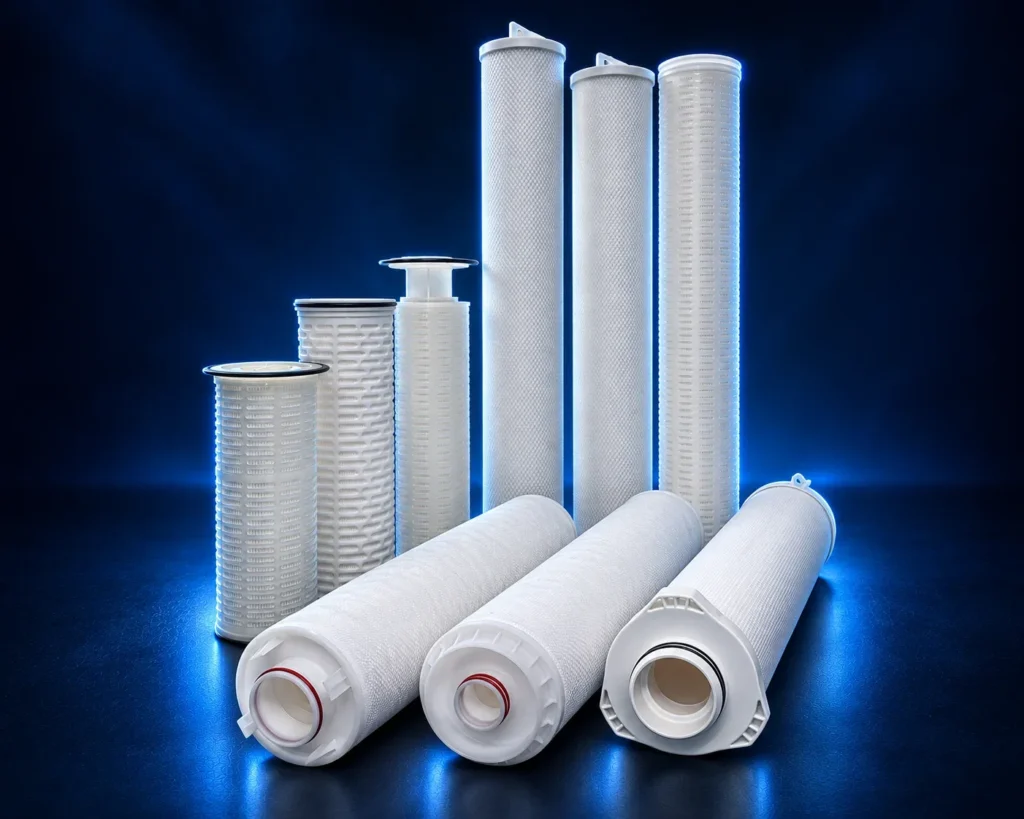
What is a high flow cartridge filter, and how is it different from a standard cartridge?
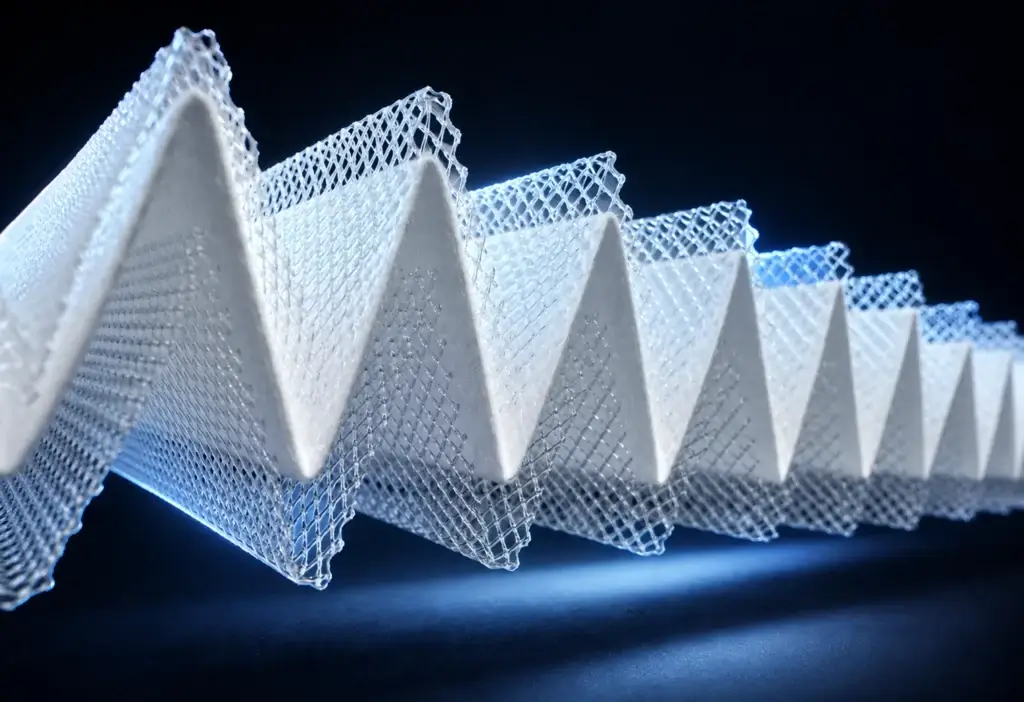
A standard cartridge filter usually has an outer diameter of around 2.5 inches. As the flow rate grows, dozens of cartridges have to be fitted into the same housing, and every change-out means removing each one by hand. A high flow cartridge has a 6-inch (152 mm) outer diameter and a 3.5-inch (89 mm) inner diameter. The pleated media wraps around this large cylinder, giving a single 40-inch cartridge about 5.30 m² of effective filtration area.
With more surface area, the liquid passes through the media more slowly at the same flow rate. In practice this means two things: the initial pressure drop (ΔP) stays low, and the cartridge holds more dirt over the same period. In our high flow cartridge filter range the body is a single, thermally bonded piece with no adhesive, resin or silicone. This lowers the risk of binder-related substances passing into the process liquid.
Outside-in or inside-out?
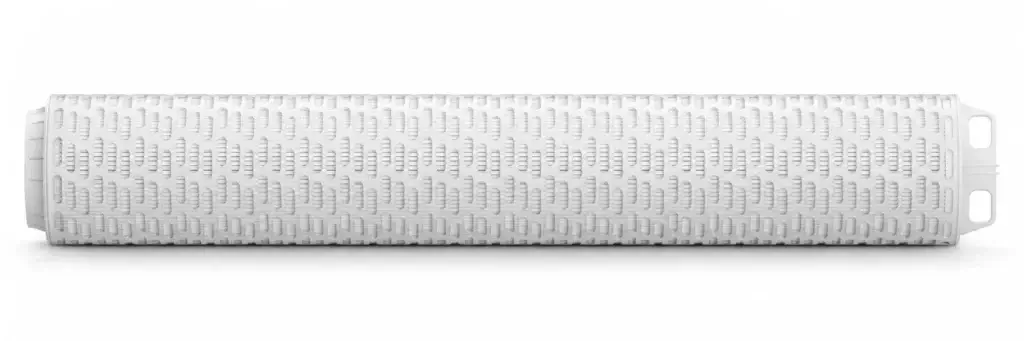
High flow cartridges come in two series, and the difference between them is the direction of flow. In most cases the housing already installed on site decides which one you need.
- The standard High Flow series works outside-in. Dirty liquid enters through the outer surface of the cartridge and clean liquid leaves through the central core. It is designed for high flow cartridge housings and seats with single or double O-rings. It suits new lines and projects that need a compact housing.
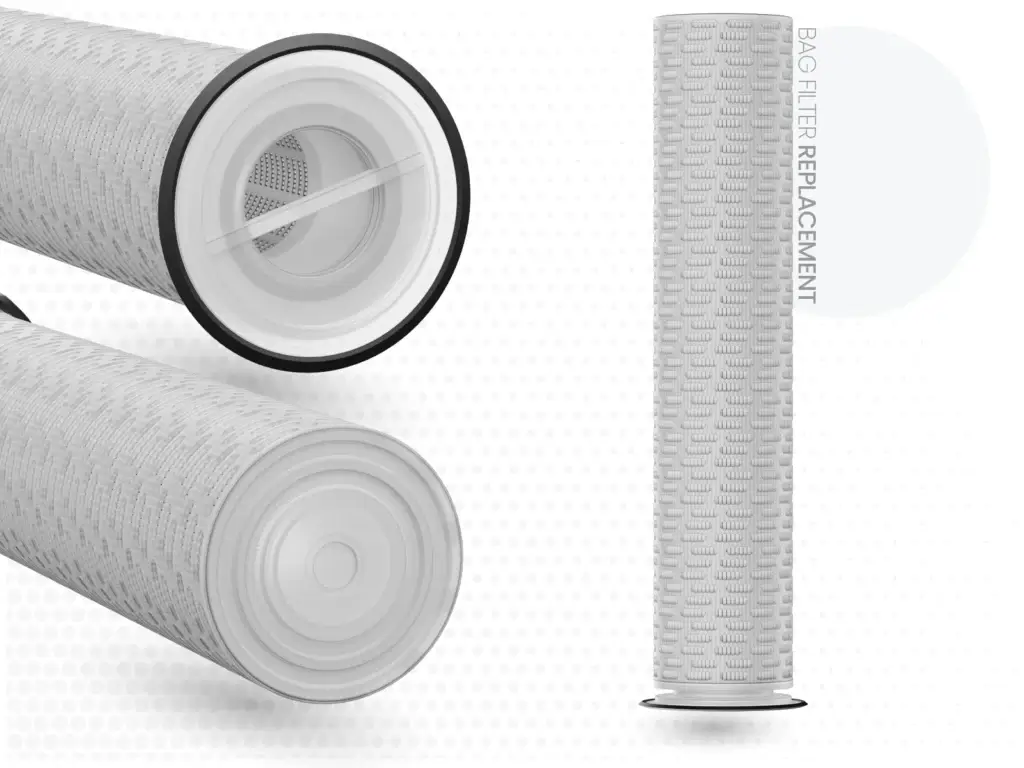
- The Bag Filter Replacement (BFR) series works inside-out. As in a bag filter, the liquid enters the cartridge and filters outward. Retained dirt stays inside the cartridge and does not spill to the clean side during change-outs. It fits existing bag filter housings and support baskets without any piping changes.
Both series use an SOE (single open end) design with a handle. End caps are made of glass-filled PP or glass-filled acetal, and O-rings are available in silicone, nitrile (NBR), EPDM or Viton. For more on end cap designs, see our article on cartridge filter end caps.
Can a high flow cartridge replace a bag filter?
Yes, that is what the BFR series is made for. In a plant running bag filters, the housing, piping and basket stay in place; only the bag is replaced with a pleated cartridge that filters inside-out. A suitable cartridge may not exist for every bag housing size, so we recommend confirming your housing size and basket dimensions with our team before converting.
There are still cases where a bag filter is the right choice. When a high flow rate comes with a high dirt load, a bag filter is more economical because all the dirt leaves with the bag. A high flow cartridge stands out on lines with a high flow rate, a moderate dirt load and a need for finer filtration. To choose between bag types, see our bag filter selection guide.
Bag filter, BFR and standard high flow compared
| Feature | Bag filter | High Flow BFR | Standard High Flow |
|---|---|---|---|
| Flow direction | Inside-out | Inside-out | Outside-in |
| Media structure | Felt or monofilament fabric | Pleated depth media | Pleated depth media |
| Filtration area | Limited to the inner surface of the bag | Much larger thanks to pleating | Much larger thanks to pleating |
| Housing | Bag filter housing | Existing bag filter housing and basket | High flow compatible cartridge filter housing |
| Dirt at change-out | Stays inside the bag | Stays inside the cartridge | Stays on the outer surface of the cartridge |
| Best suited for | High dirt load, coarse particles, frequent changes | Finer, longer-lasting filtration while keeping the bag housing | New lines, compact housing, high flow rate |
Which micron ratings, lengths and media are available?
Filtration ratings range from 0.5 to 100 µm; the standard grades are 0.5, 1, 5, 10, 20, 50 and 100 µm. Lengths are 10, 20, 30, 40 and 60 inches. Effective filtration area grows with length: 1.33 m² at 10 inches, 2.65 m² at 20 inches, 3.98 m² at 30 inches, 5.30 m² at 40 inches and 8.00 m² at 60 inches.
Temperature, chemical compatibility and pH decide the media choice. PP and glass fibre are the standard series; PES, PTFE and nylon are produced on request for specific projects.
| Media | Max. temperature | Max. ΔP | pH range | Note |
|---|---|---|---|---|
| Polypropylene (PP) | 82 °C | 3.4 bar @ 25 °C (1.0 bar at 82 °C) | 1–14 | Standard series, broad chemical compatibility |
| Glass fibre (GF) | 121 °C | 3.44 bar @ 121 °C | 4–10 | Standard series, limited in strong alkalis |
| PES | 80 °C (estimated) | 4.00 bar @ 25 °C (estimated) | 3–12 | Project-based |
| PTFE | 100 °C (limited by assembly) | 4.00 bar @ 23 °C (estimated) | 1–14 | Project-based, aggressive chemicals |
| Nylon (PA) | 90 °C (estimated) | 3.50 bar @ 23 °C (estimated) | 3–11 | Project-based, limited in strong acids |
The allowable ΔP of a PP cartridge falls as temperature rises: the 3.4 bar limit at 25 °C drops to 1.0 bar at 82 °C. If you choose PP for a hot process, calculate the ΔP limit at the operating temperature. Whether a micron rating is nominal or absolute also changes the result; see nominal vs absolute micron rating for details.
How do you read the flow rate and pressure drop (ΔP) table?
The values below are for a 40-inch pleated PP cartridge with clean water (about 1 cP). The finer the micron rating, the tighter the media and the higher the ΔP at the same flow rate.
| Flow rate (L/min) | 1 µm ΔP (bar) | 10 µm ΔP (bar) | 20 µm ΔP (bar) |
|---|---|---|---|
| 379 | 0.012 | 0.006 | 0.004 |
| 757 | 0.023 | 0.012 | 0.008 |
| 1325 | 0.041 | 0.021 | 0.014 |
These are initial pressure drops for a clean cartridge. For liquids more viscous than water (paint, oil, resin solutions), ΔP rises roughly in proportion to viscosity, so always size the system with the viscosity of the actual fluid. A single cartridge can handle up to 110 m³/h; this upper value applies to a 60-inch cartridge with water-like fluids.
Choose the right high flow cartridge step by step
- Define the flow rate and the fluid. Without the hourly flow rate (m³/h), viscosity, temperature and pH, the system cannot be sized correctly.
- Identify the particles to retain. Clarify which particle size must be stopped and the solids load (mg/L); the micron rating is chosen from this.
- Choose the media by temperature and chemistry. Compare options in the table above, such as glass fibre above 82 °C or PTFE for aggressive chemicals.
- Choose the flow direction based on your existing housing. If you have a bag filter housing, use BFR; for a new line, use the outside-in standard series with a compatible housing.
- Calculate the length and number of cartridges. Pick the length that keeps the initial ΔP low; if the flow exceeds one cartridge, move to a multi-cartridge housing.
- Set up pre-filtration and a change-out plan. If the solids load is high, add a bag or basket filter upstream, and set the change-out point at 2.1–2.4 bar ΔP.
Which industries use high flow cartridges?
The advantage of a high flow cartridge shows most where flow rates are high and downtime is expensive.
- Energy and power plants: particle control in condensate filtration and boiler feed water lines.
- Oil and petrochemicals: process lines, cooling and process water, and product transfer lines.
- Paints and coatings: capturing pigment agglomerates and foreign particles at the end of the line.
- Chemical production: intermediate and final product filtration with PP and PTFE options that work across a wide pH range.
- Industrial and process water: high flow water lines and protection ahead of finer filtration stages.
On lines that need finer final filtration, the high flow cartridge works as a pre-filter followed by a pleated micro cartridge filter. This extends the life of the more expensive final filter.

When should a high flow cartridge be replaced?
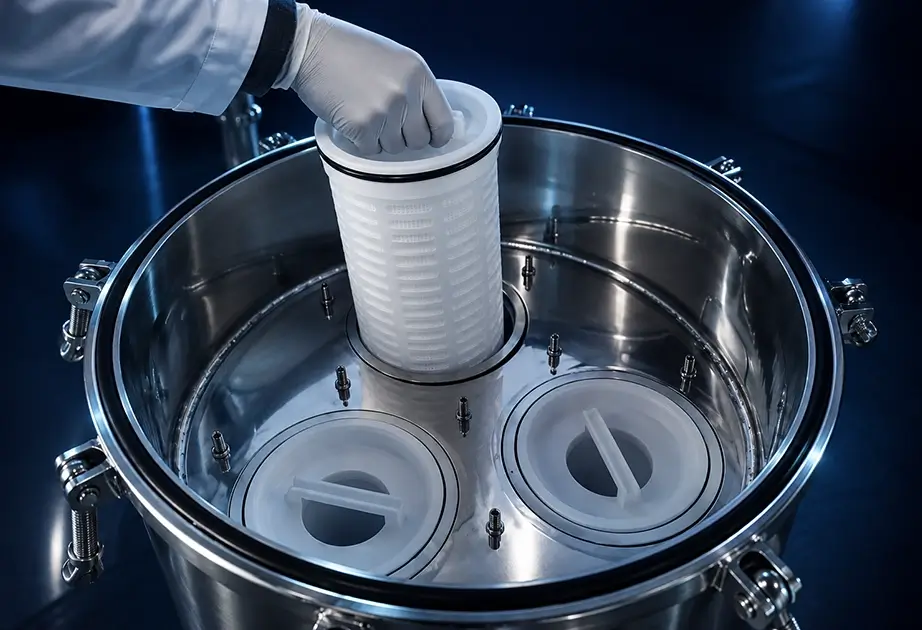
Differential pressure decides when to change the cartridge. Read the inlet and outlet pressure gauges weekly and plan a change-out when ΔP reaches 2.1–2.4 bar (for PP, glass fibre, PES and PTFE). Exceeding this limit can cause the cartridge to collapse or bypass. During installation, make sure the cartridge is fully seated, and lubricate O-rings with silicone grease only. We explain the general logic in detail in when to replace a cartridge filter.
Frequently asked questions
Why does a BFR cartridge last longer than a bag filter?
Can I fit a high flow cartridge into my existing bag filter housing?
What micron ratings are high flow cartridges available in?
How much flow can a single high flow cartridge handle?
At what temperatures can high flow cartridges be used?
Can a high flow cartridge be washed and reused?
Contact our team
Share your flow rate, fluid, temperature and existing housing, and we will work out the cartridge length, media and housing together. You can review our high flow cartridge filter or contact us for a quote.