



SMS Bag Filter

Stitched or Welded Construction, Multi-Layer Depth Filtration and High Dirt-Holding Capacity

The SMS bag filter is a stitched or welded depth filter whose three-layer spunbond-meltblown-spunbond structure retains gel-like and deformable particles with high efficiency in the 0.5–10 µm range.

Diameter

100–180 mm

Boy

230–810 mm

Precision

0.5, 0.8, 1, 5, 10 µm

Max. Operating Temperature

90°C (194°F)

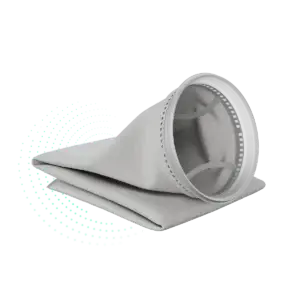
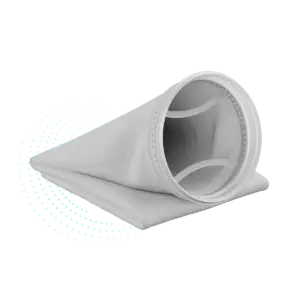
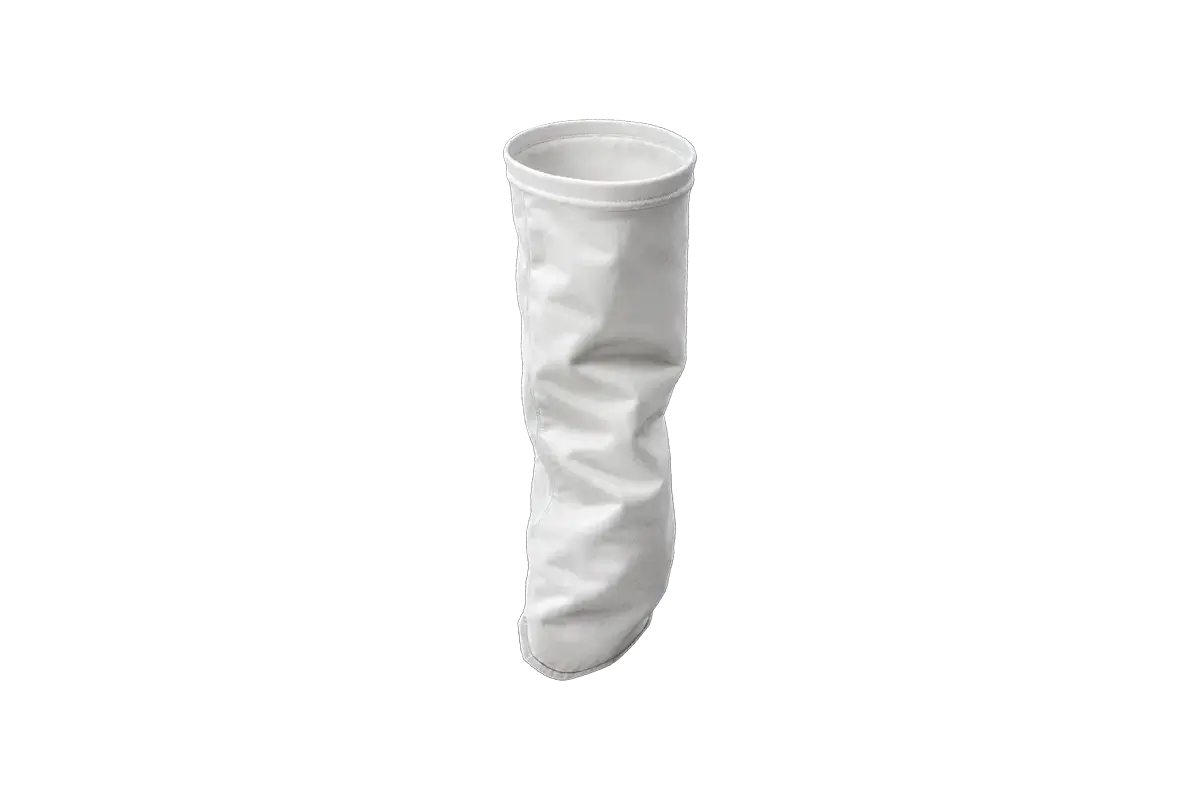
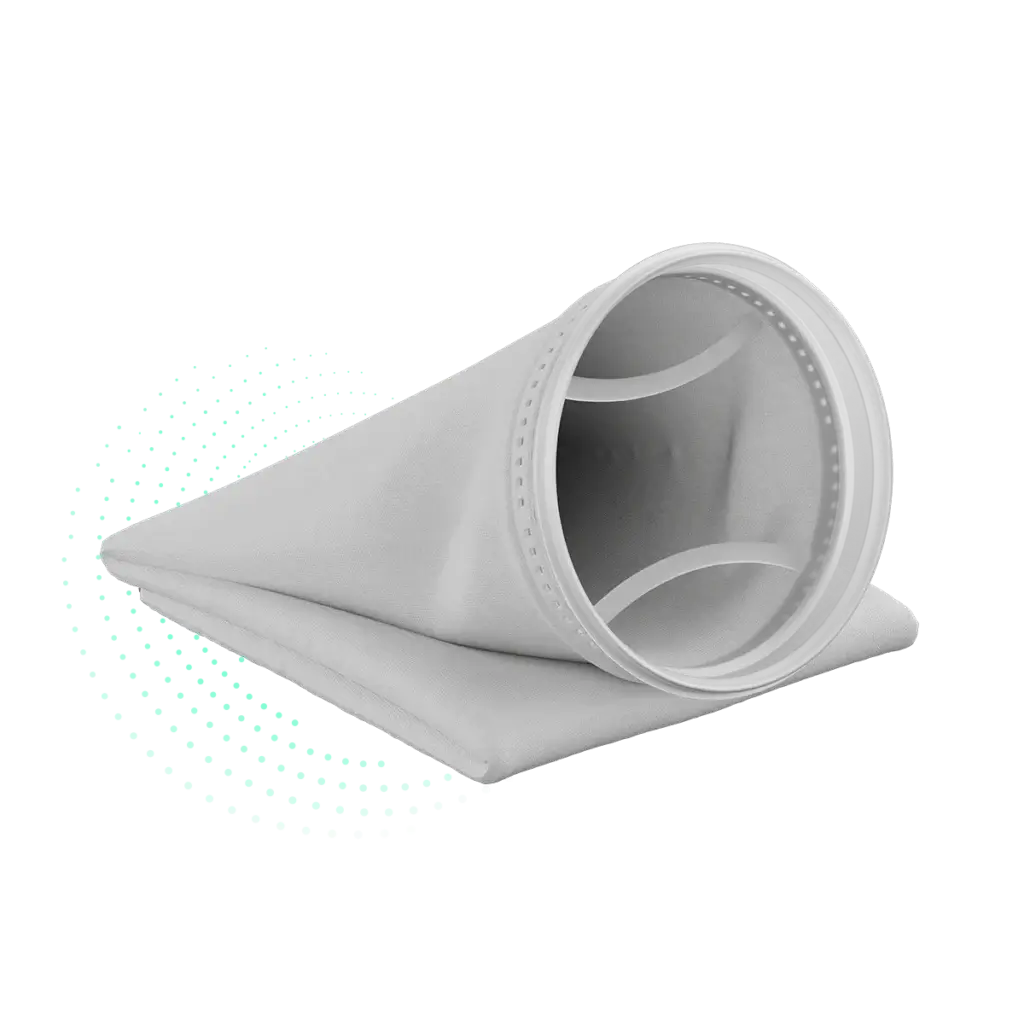
SMS bag filter with spunbond-meltblown-spunbond layers
SMS Bag Filter

What Is an SMS Bag Filter?

SMS bag filters have a multi-layer structure in which three different functional layers are combined by lamination. There is a spunbond polypropylene layer on the inner and outer surfaces and a meltblown polypropylene main filtration medium between them. This three-layer arrangement provides both high dirt-holding capacity and a low risk of fibre migration at the same time.

Unlike standard single-layer felt or woven bag filters, the very fine fibre structure of the meltblown layer in SMS bags also retains gel-like, semi-solid and deformable particles effectively. The spunbond layers stop these fine meltblown fibres from breaking off and getting into the cleaned liquid. SMS bag filters come into play in demanding processes where conventional felt or woven surfaces fall short.

Product Identity and Technical Summary

SMS bag filters are made by joining a meltblown polypropylene main filtration layer to
spunbond polypropylene inner and outer layers by stitching or welding. With high-efficiency ratings from 0.5 µm to 10 µm and a multi-layer structure, they achieve high dirt-holding capacity. The stitched or welded sealing ring gives maximum sealing assurance at operating temperatures up to 90 °C. The raw material, free of silicone and abrasives, adds an extra layer of assurance in processes that require a fine surface finish.

Key Technical and Structural Features

Material (Main Layer)
Meltblown Polypropylene
Inner and Outer Layers
Spunbond Polypropylene
Micron Rating
  • 0.5 µm · 0.8 µm
  • 1 µm · 5 µm · 10 µm (high efficiency)
Diameter / Length
Ø 100–180 mm diameter · 230–810 mm length
Filtration Surface Area
0.50 m²
Max. Operating Temperature
90°C (194°F)
Max. Differential Pressure
2.5 bar
Recommended Change-Out Pressure
1.5 – 2 bar
Max. Flow Rate
12 m³/h (for a #02 housing)
Dirt-Holding Capacity
High (multi-layer depth structure)
Surface Finish
Stitched or welded construction
Binder Content
Free of silicone and abrasives

Filtration Architecture and Working Principle

SMS bag filters pass dirty liquid through a graded layer structure in a three-stage treatment process. Each step complements the previous one; in the end, both large and sub-micron particles are removed from the system.

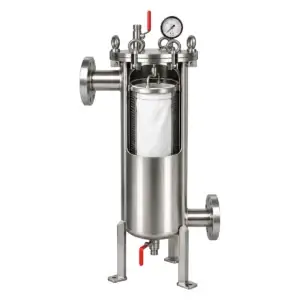
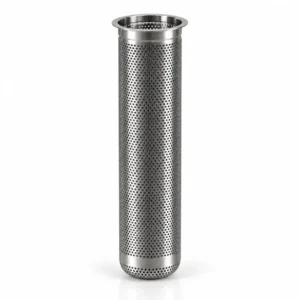
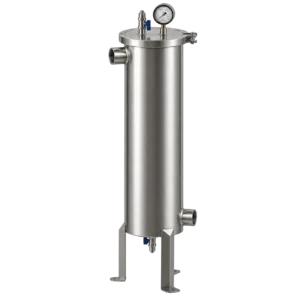
Filtration takes place inside-out: dirty process liquid enters the bag and particles are retained in the bag’s layers. The filtered clean liquid collects in the space between the bag and the body and leaves through the outlet. The stainless support basket on the outside keeps the bag in shape at high differential pressures.

Macro illustration showing pre-filtration in the outer spunbond layer of an SMS bag filter
STEP 01

Pre-Filtration

Dirty liquid enters the bag and first meets the inner spunbond layer. This layer retains large particles as a pre-stage, preventing early clogging of the main meltblown layer.

Macro illustration showing depth filtration in the meltblown middle layer of an SMS bag filter
STEP 02

Meltblown Depth Filtration

The liquid that passes through the inner layer reaches the main meltblown polypropylene layer. The dense, fine fibre structure of this layer traps gel-like particles in depth.

Macro illustration showing clean liquid leaving through the outer spunbond layer of an SMS bag filter
STEP 03

Outer Layer and Sealing

The outer spunbond layer stops micro-fibres that may come loose from the meltblown layer from getting into the cleaned liquid. The sealing ring seats fully on the housing surface and prevents bypass.

Advantages of the SMS Bag Filter

Thanks to their three-layer structure, SMS bag filters combine high dirt-holding capacity and a low risk of fibre migration in the same product. In demanding processes that must retain gel-like and deformable
particles, they offer a clear performance advantage over standard felt and woven bags.

High Dirt-Holding Capacity
High dirt-holding capacity thanks to the multi-layer depth structure; longer run time with a single bag.
Multi-Layer Depth Filtration
The three-layer structure retains a wider range of particles than single-layer felt or woven bags.
Uninterrupted Sealing and Leak Assurance
The sealing ring seats on the housing surface and reduces the risk of leaks.
Minimal Fibre Migration
Spunbond layers on both sides significantly reduce micro-fibre escape.
Silicone-Free Production
Raw material free of silicone and abrasives; used safely in fine-surface processes.
High Efficiency
Ratings from 0.5 µm to 10 µm with higher efficiency than standard bag filters.

Bag Diameter and Length Options

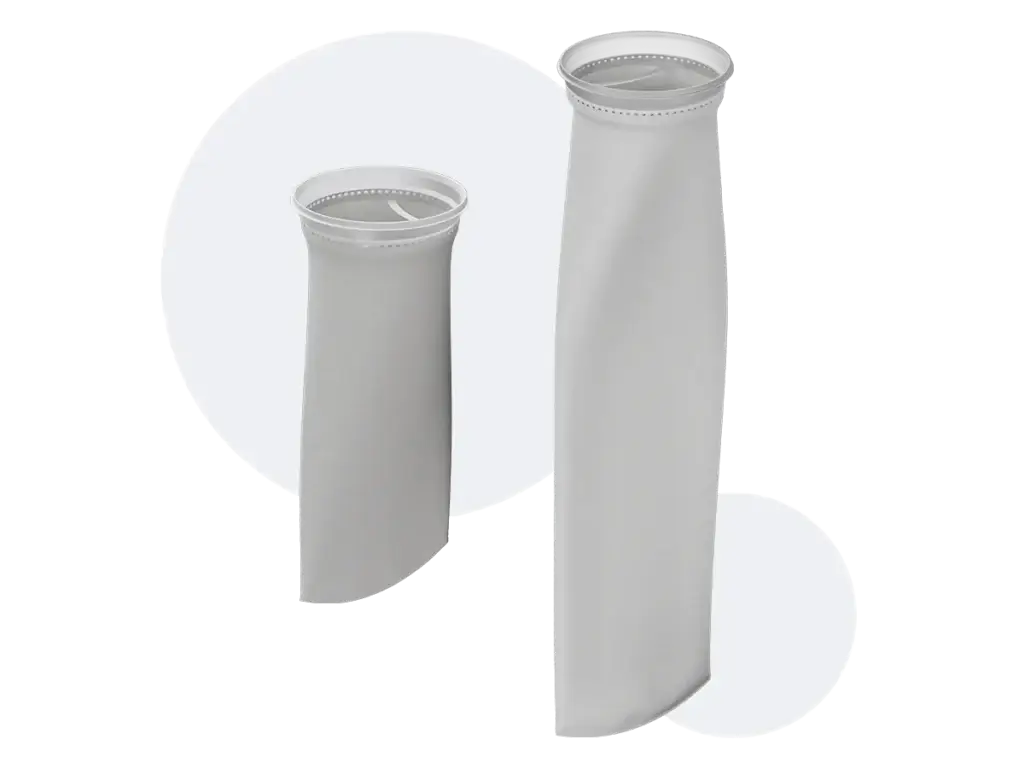
SMS bag filters are made in diameters of 100–180 mm and lengths of 230–810 mm, in standard sizes of 180 × 430, 180 × 810, 100 × 230 and 100 × 380 mm. Because of the material thickness required by the multi-layer laminated structure, diameter and length tolerances are offered within a narrower range than standard single-layer felt and woven bags; housing compatibility must always be confirmed.

Short and long white felt bag filters showing bag filter diameter and length options

100mm Diameter

Suitable for small-scale systems and laboratory-type filter housings.

180mm Diameter

The industry-standard size and the most widely used size for high-flow systems.

Custom Manufacturing

Bags can be made to sample for older or imported special equipment.

180 × 430 mm
Standard Large Diameter • Short Length (~0.25 m² Filter Area)
180 × 810 mm
Standard Large Diameter • Long Length (~0.50 m² Filter Area • Most Common)
100 × 230 mm
Compact Small Diameter • Short Length (~0.08 m² Filter Area)
100 × 380 mm
Compact Small Diameter • Long Length (~0.14 m² Filter Area)

Micron Options and Precision

We offer high-efficiency options from 0.5 microns to 10 microns according to the clarity your application requires. The multi-layer meltblown core retains particles with higher efficiency than standard bag filters.
Macro illustration showing particles retained by micron rating in the fibres of a felt bag filter
Micron Application
0.5 µm Ultra-fine filtration; pharmaceutical, electronics and high-purity chemical lines
0.8 µm Very fine filtration; fine chemical processes and microelectronics coolants
1 µm Precision oil and chemical process lines
5 µm General-purpose fine filtration; final-stage filtration of paints and coatings
10 µm Medium precision; oil and slurry filtration, hydraulic systems

Collar Types and Adapters

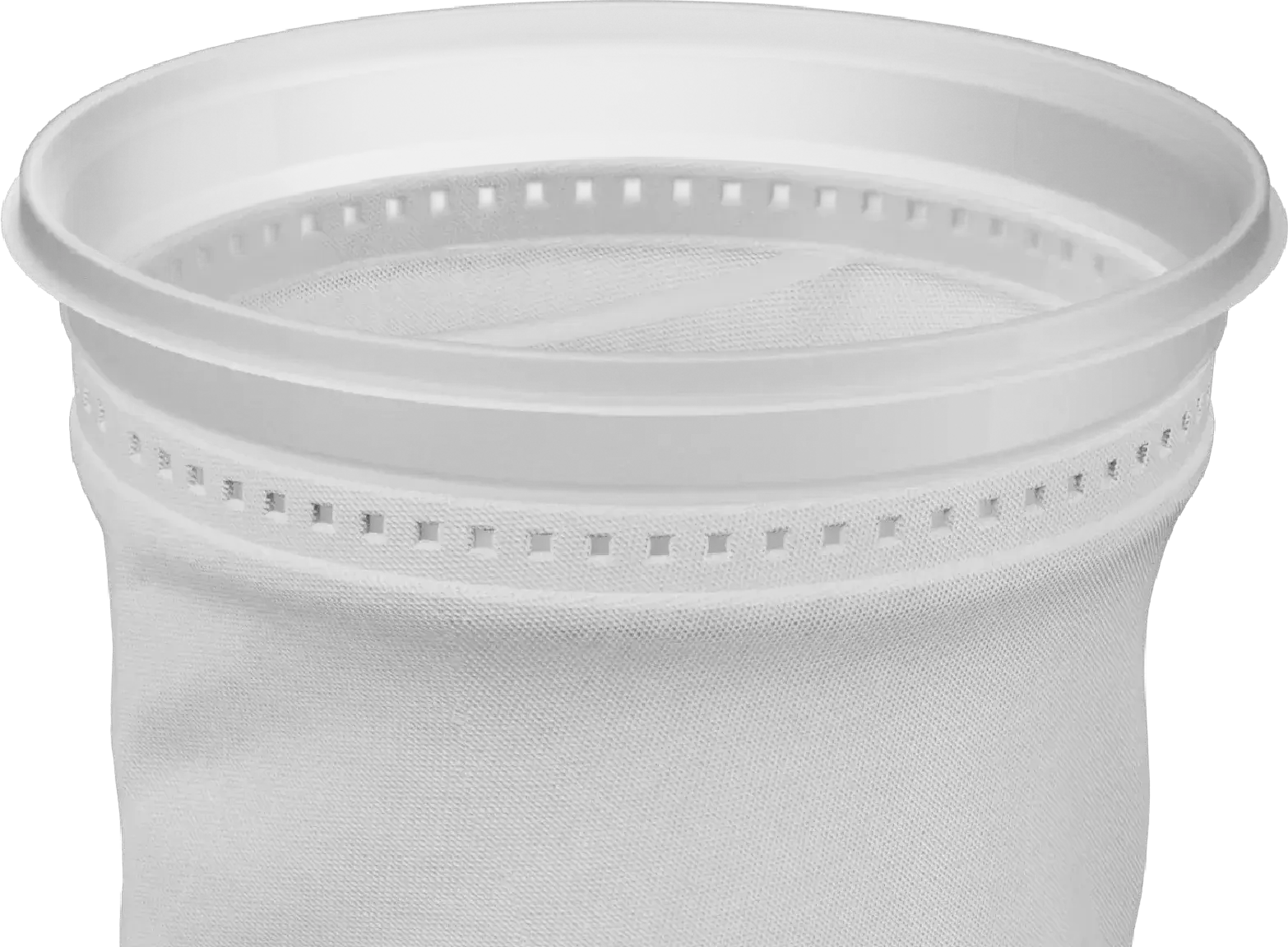
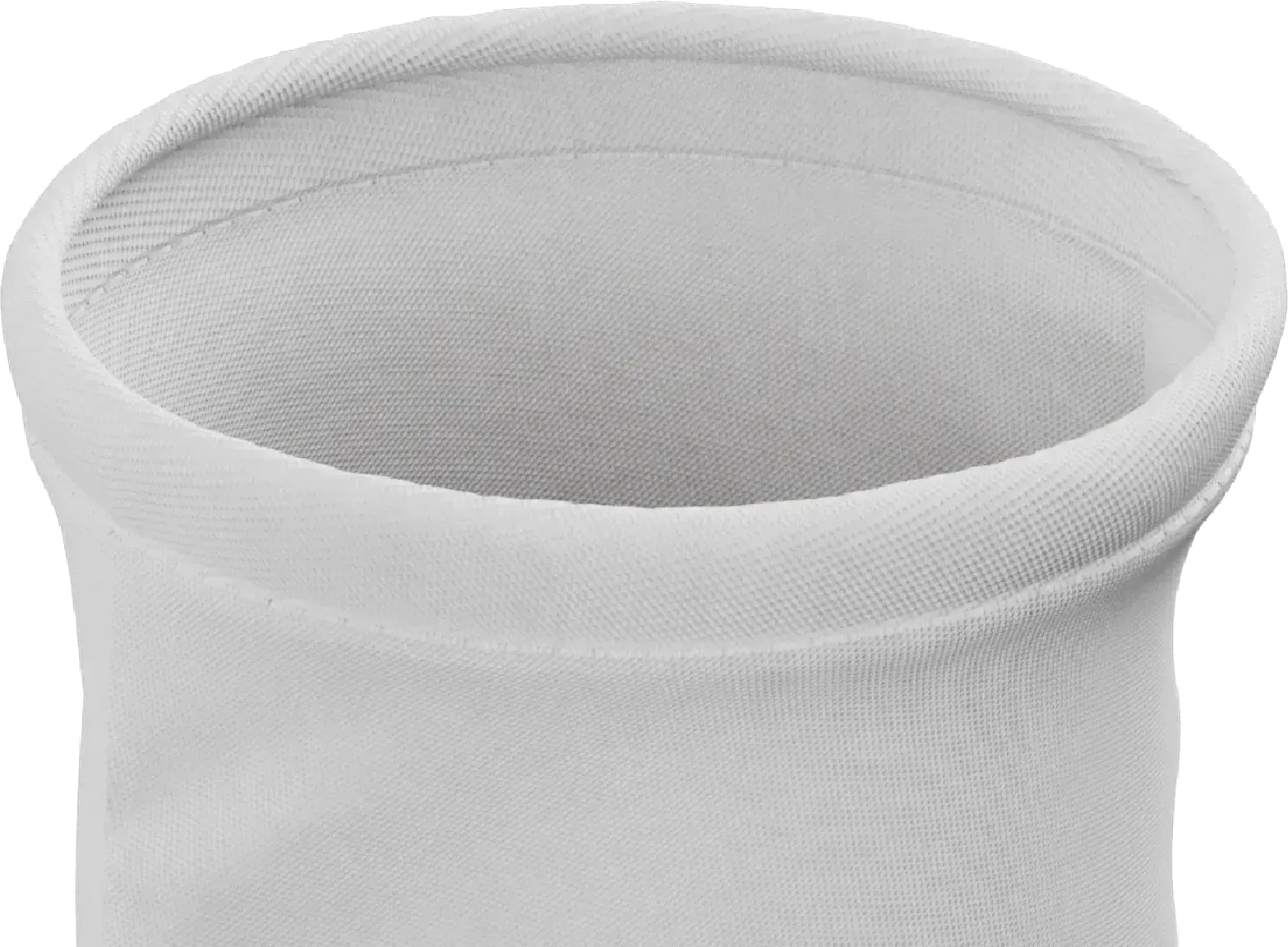
In SMS bag filters, sealing is provided by a stitched or welded polypropylene (PP) flange or a stainless steel snap-ring collar, depending on the filter housing design and process conditions.

SMS torba filtre

PP Ring (Plastic Ring)

Polypropylene ring, stitched or welded. Used where full chemical resistance is required.
SMS torba filtre, snap ring

Snap Ring (Steel Ring)

Stainless steel ring. The most widely used, economical standard collar.

TECHNICAL ASSESSMENT BASED ON FIELD EXPERIENCE

Engineer's Note

The most common problem we see in the field with SMS (three-layer composite) bag filters is connecting them directly to raw lines without coarse pre-filtration, overlooking the fact that this is a higher-efficiency bag filter than standard bags. When the dense inner meltblown microfibre layer saturates early with coarse particles, differential pressure rises quickly and the filter’s economic service life is shortened.

When should it be chosen?

They should be chosen for lines where standard felt bags fall short and high-efficiency bag filtration and clarity are the goal (fine syrups, soft drinks, chemical solvents and microelectronics process water). Because the outer spunbond layer completely prevents fibre shedding, it gives excellent protection ahead of fine final filtration.

When should it not be chosen?

They should not be used on their own in processes without pre-treatment that carry a high load of coarse sediment (>100 µm), with hot fluids above 90 °C, or in environments containing strong oxidising chemicals; a coarse pre-filtration stage must always be installed upstream.

Application and Selection Criteria

Housing and Basket Fit
Because of the multi-layer structure, the tolerance range is narrow; confirm the bag diameter and length against the housing and support basket dimensions before ordering.
Pre-Filtration
On lines with a high load of coarse sediment, place a felt or woven pre-filter ahead of the SMS bag; reserve the meltblown layer for fine particles only.
Temperature and Chemical Limits
The polypropylene construction operates up to 90 °C; it should not be used above this temperature or on lines containing strong oxidising chemicals.

Industry Applications

Bag filters suited to different process needs are used across a wide range of industrial applications to protect product quality, safeguard equipment and support production continuity.

1–6 / 24
Vegetable Oil 01 Vegetable Oil Clarity, purity and shelf life in vegetable oil and refining. Explore solutions Pipe and Profile 02 Pipe and Profile Cooling water filtration in pipe and profile extrusion. Explore solutions Paint Industry 03 Paint Industry Surface quality and pigment filtration in the paint industry. Explore solutions Glass Industry 04 Glass Industry Furnace and process filtration in the glass industry. Explore solutions Dialysis Centers 05 Dialysis Centers Water preparation and process filtration in dialysis centers. Explore solutions Foundry Industry 06 Foundry Industry Equipment protection and dust filtration in foundries. Explore solutions Industrial Oil 07 Industrial Oil Filtration in industrial oil production and recovery. Explore solutions Energy and Biogas 08 Energy and Biogas Maximum efficiency and turbine protection in energy and biogas. Explore solutions Recycling 09 Recycling Filtration for efficiency and environmental compliance in recycling. Explore solutions Food and Beverage 10 Food and Beverage Hygienic filtration in food and beverage. Explore solutions Pharmaceuticals and Biotechnology 11 Pharmaceuticals and Biotechnology GMP-compliant sterile filtration in pharmaceuticals and biotechnology. Explore solutions Paper and Packaging 12 Paper and Packaging Process water filtration in paper and packaging. Explore solutions Chemical Industry 13 Chemical Industry Corrosion-resistant, safe filtration in the chemical industry. Explore solutions Cosmetics 14 Cosmetics Microbiological safety and precision filtration in cosmetics. Explore solutions Machinery 15 Machinery Precision and technical filtration in the machinery industry. Explore solutions Printing and Ink 16 Printing and Ink Flawless color and print quality in printing and ink. Explore solutions Metal and Surface Treatment 17 Metal and Surface Treatment Flawless surfaces and bath stability in metal and surface treatment. Explore solutions Forest Products 18 Forest Products Resin and glue filtration in forest products and furniture. Explore solutions Automotive 19 Automotive Precision process filtration for zero defects in automotive manufacturing. Explore solutions Oil and Petrochemicals 20 Oil and Petrochemicals Equipment protection and process safety in oil and petrochemicals. Explore solutions Plastic Packaging 21 Plastic Packaging Precision process filtration and raw material purity in plastic packaging. Explore solutions Plastic Injection Molding 22 Plastic Injection Molding Cooling and hydraulic filtration in plastic injection molding. Explore solutions Water and Environment 23 Water and Environment Recovery filtration in water and environmental technologies. Explore solutions Shipyards and Marine 24 Shipyards and Marine Operational safety and efficiency in shipyards and marine. Explore solutions

















Performance Parameters

The field performance of SMS multi-layer bag filters is assessed on the balanced flow permeability of the spunbond and meltblown layers, the balance between high-efficiency particle retention and service life, and keeping the risk of leakage under control at the body joint.

High Flow
Maximum liquid throughput at low differential pressure thanks to the large surface area and optimised pore structure.
Micron / Service Life Balance
Service life depends not only on the micron rating but also on the bag's filtration surface area; when the right micron rating and the right bag length are chosen together, you get the required clarity and a longer time to clogging.
Sealing
Thanks to the sealing ring that seats on the housing surface, the risk of bypass (leakage) is minimised.

Filter Selection Technical Checklist

The wrong filter choice means early clogging, system failure and unnecessary cost. Choosing the right SMS bag filter requires nine critical parameters to be considered together, from the chemical nature of the fluid to the operating temperature and from the flow rate to the solids load. The checklist below is designed to help you make a fast, reliable choice on site and in technical discussions.
Chemical Nature of the Fluid
The polypropylene-based construction provides general chemical compatibility across a wide pH range.
Operating Temperature
Stable operation up to 90 °C; above that, an alternative material should be considered.
Required Cleanliness Level
If there are gel-like or deformable particles, the SMS construction should be preferred over standard felt and woven filters.
Flow Rate
The multi-layer construction gives a balanced pressure drop in high-flow systems.
Contamination Load
In processes with a high dirt load, the multi-layer depth structure gives a long service life.
Placement / Installation
Place the bag carefully in the filter basket to avoid air pockets.
Food Approvals
If there is food contact, confirm the certified status of the raw material.
Maximum Pressure
Withstands up to 2.5 bar; system pressure must be kept below this limit.
Cost Sensitivity
For an economical solution with a low contamination load, a standard felt bag filter should be considered.

Points to Watch During Use

For SMS multi-layer bag filters to deliver maximum filtration efficiency and a long service life, correct installation, controlled pressure management and timely replacement are critical. The operational checkpoints below have been compiled to maintain filter integrity in field applications and to prevent possible bypass risks.

Preventing Air Pockets
Place the bag carefully in the filter basket so that no air pockets form.
Initial Start-Up
Sudden pressure surges should be avoided when the filter is first put into service.
Timely Replacement
Replace the bag within the recommended change-out range of 1.5–2 bar, before excessive pressure loss occurs.
Basket and Seat Check
If the old bag shows deformation, tears or damage to the sealing ring, also check the filter basket and the housing surface.
Even Lid Tightening
Do not overtighten the housing lid; deformation of the sealing ring creates bypass.

Products that work with this product

Housings the bag fits, the support basket and other media options that can be used in the same housing.
This product
SMS bag filter with white spunbond-meltblown-spunbond body

SMS Bag Filter

Bag Filters
Polypropylene felt bag filter with white felt body and steel ring collar

Polypropylene Felt Bag Filter

1–200 µm PP felt bag, resistant to pH 1–14.

View →
SPS bag filter

SPS Bag Filter

PP core, spunbond outer layers; for viscous and aggressive liquids.

View →
Request everything in one quote: let’s size the product, housing and connection parts together.

Your Questions Answered

Frequently Asked Questions

At Prosestim, we are committed to answering your questions and providing technical support for our filtration solutions.

What is an SMS bag filter, and how is it different from others?

SMS is a multi-layer bag filter made of spunbond + meltblown + spunbond layers. Unlike conventional single-layer felt or woven bags, it offers both high dirt-holding capacity and the ability to retain gel-like/deformable particles.

Replacement is recommended when the differential pressure reaches 1.5–2 bar; it must be completed before exceeding the maximum of 2.5 bar.

No, the multi-layer laminated construction is single-use; washing can permanently damage the layers.

SMS bag filters withstand up to 90 °C.

Because the multi-layer structure works on the depth filtration principle, it retains particles in a larger volume than a single fine woven surface layer. This allows
an acceptable pressure drop and flow performance to be maintained even at sub-micron ratings.

The sealing ring seats fully on the housing surface; with the welded ring option there are no stitch holes, so the risk of leakage is lower still.

Standard sizes are 100–180 mm in diameter and 230–810 mm in length (180 × 430, 180 × 810, 100 × 230 and 100 × 380 mm). For special requirements outside these sizes, please consult our team.

Fast Quote & WhatsApp Consultation

SMS Bag Filter RFQ Configurator

Configure your variation dimensions and technical specifications to receive an instant quote directly on WhatsApp and via email.

1 Select Variation Type
2 Dimensional & Technical Specifications
230 MM
230 MM Custom Made
Micron Rating:
0.5 Micron
0.8 Micron
1 Micron
Custom Made
3 Required Quantity
QUICK QUOTE FORM

SMS Bag Filter

Variation Type: PP Ring SMS Bag Filter
Bag Filter Diameter: 100 MM
Filter Length: 230 MM
Micron Rating: 0.5 Micron
Request Quantity: 10 Units
ISO 9001:2015 Certified Production
Reply from Our Technical Team
Delivery Across Türkiye and Export

Accounting

Billing Details

Copy our registered company name, tax and e-invoice details with one click using the button on each row.

Invoice name (registered company name)

PROSES TİCARET, İMALAT, MÜHENDİSLİK ENDÜSTRİYEL MADDE VE MALZEME İMALATI İNŞAAT VE SANAYİ LİMİTED ŞİRKETİ

Billing address

Musa Gündüz Cad. No:14 Taşköprü – Çiftlikköy – YALOVA, TÜRKİYE

E-invoice / e-archive email address

Tax office

Yalova Tax Office (Yalova V.D.)

Tax ID number

7330379514

MERSIS number

0733037951400013

Please send BA/BS forms, current account reconciliations and any other emails for our Finance and Administrative Affairs Department to [email protected].

Invoice name (registered company name): PROSES TİCARET, İMALAT, MÜHENDİSLİK ENDÜSTRİYEL MADDE VE MALZEME İMALATI İNŞAAT VE SANAYİ LİMİTED ŞİRKETİ Billing address: Musa Gündüz Cad. No:14 Taşköprü – Çiftlikköy – YALOVA, TÜRKİYE E-invoice / e-archive email address: [email protected] Tax office: Yalova Tax Office (Yalova V.D.) Tax ID number: 7330379514 MERSIS number: 0733037951400013