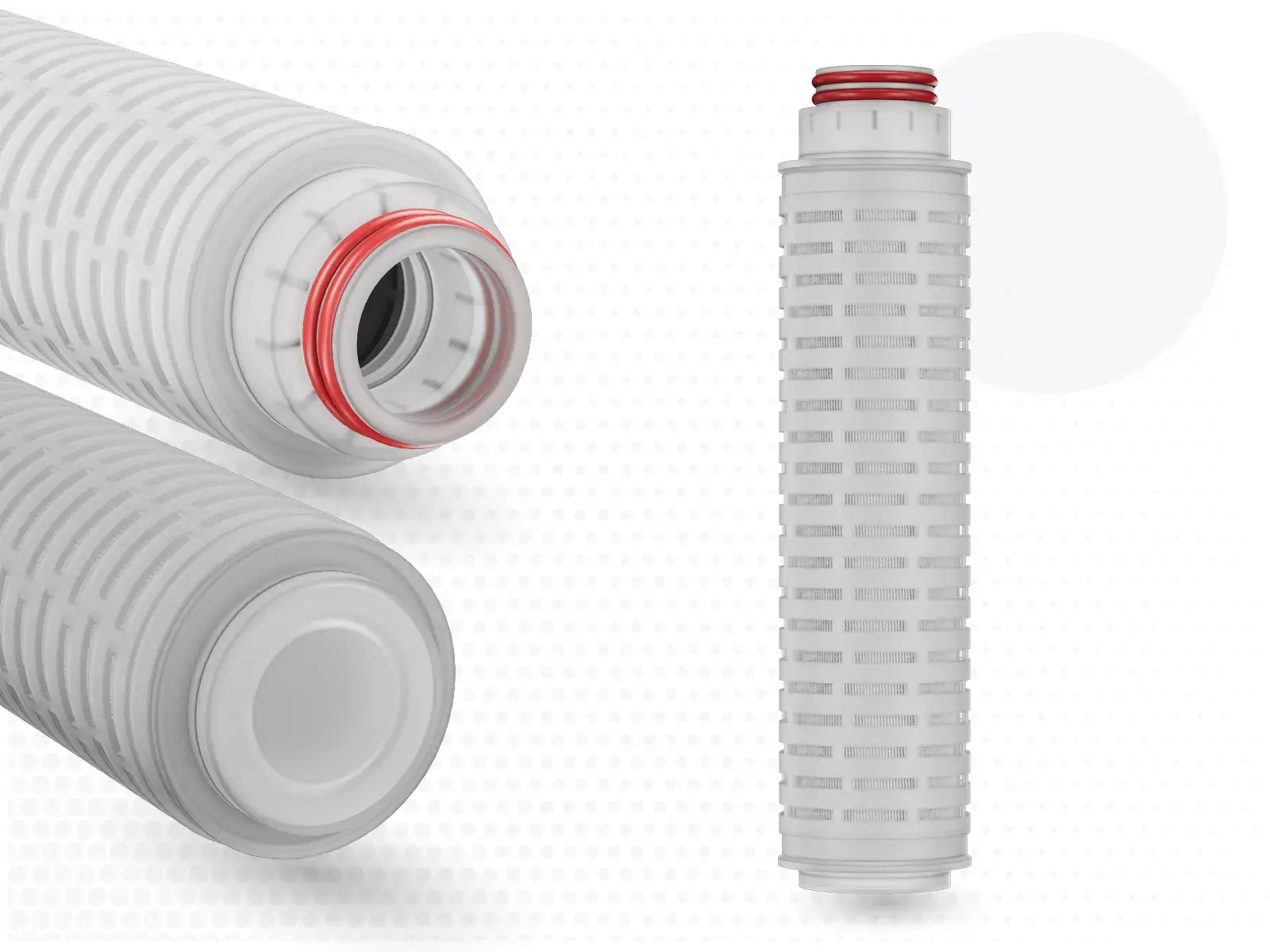
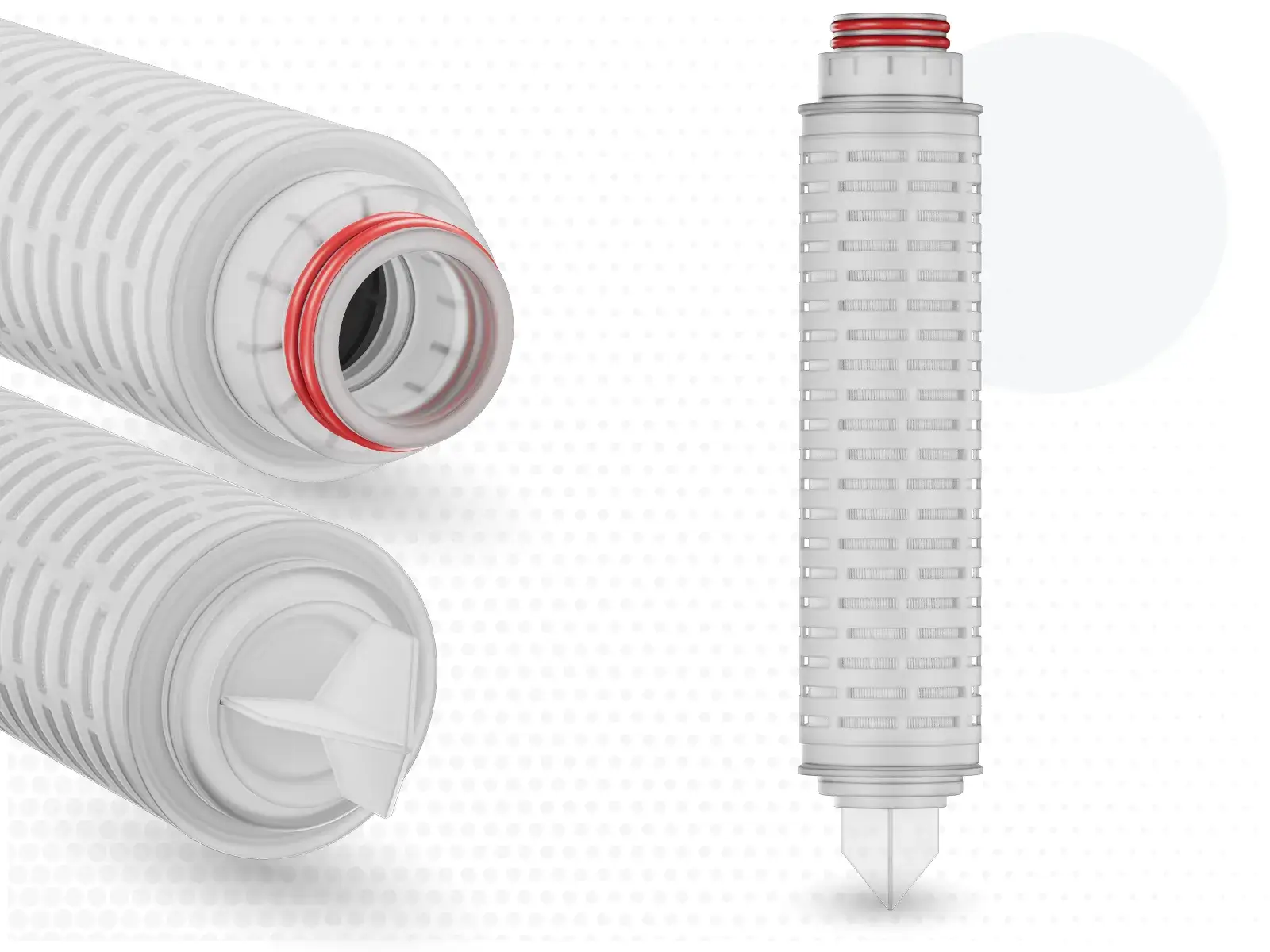
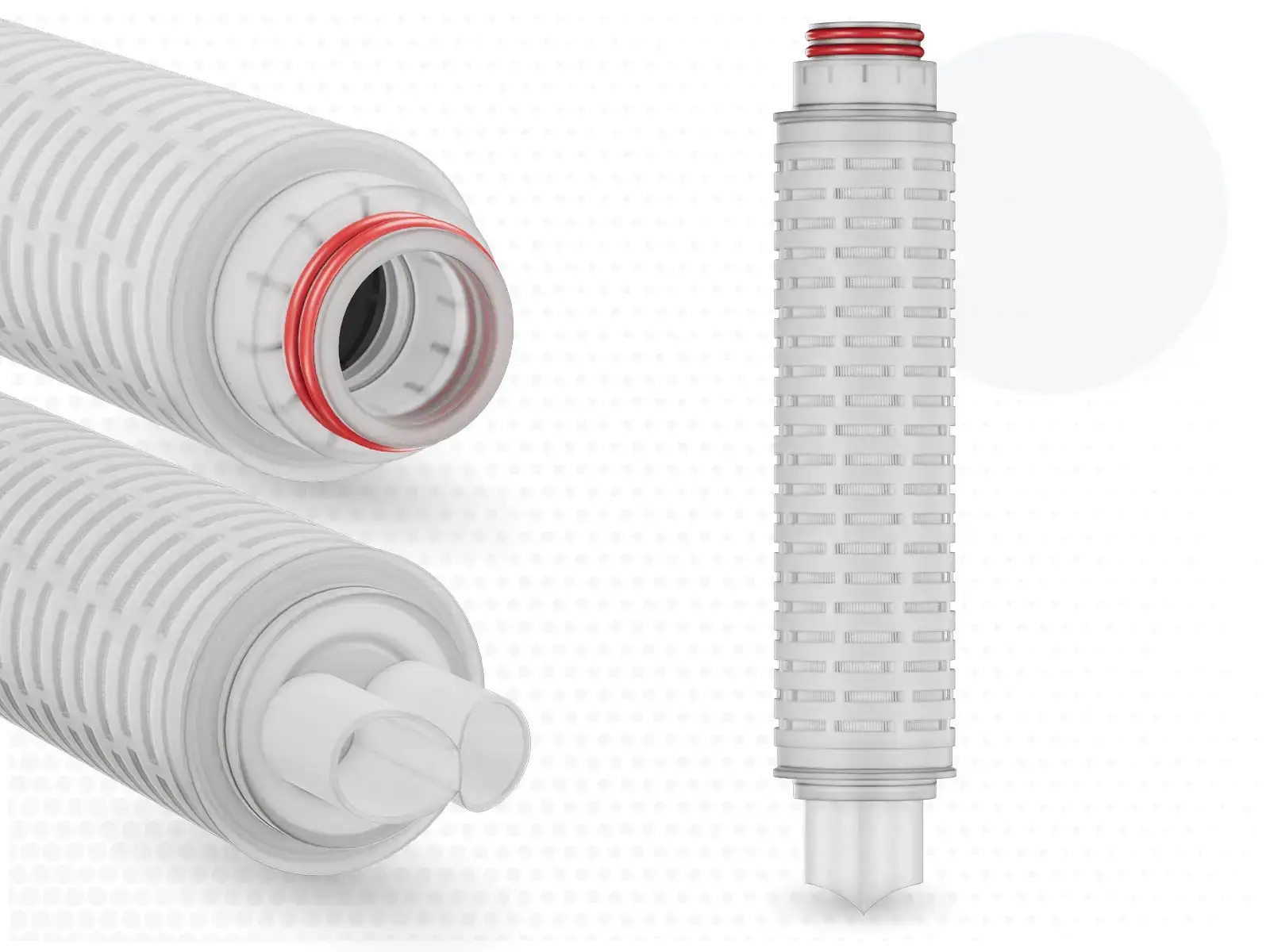
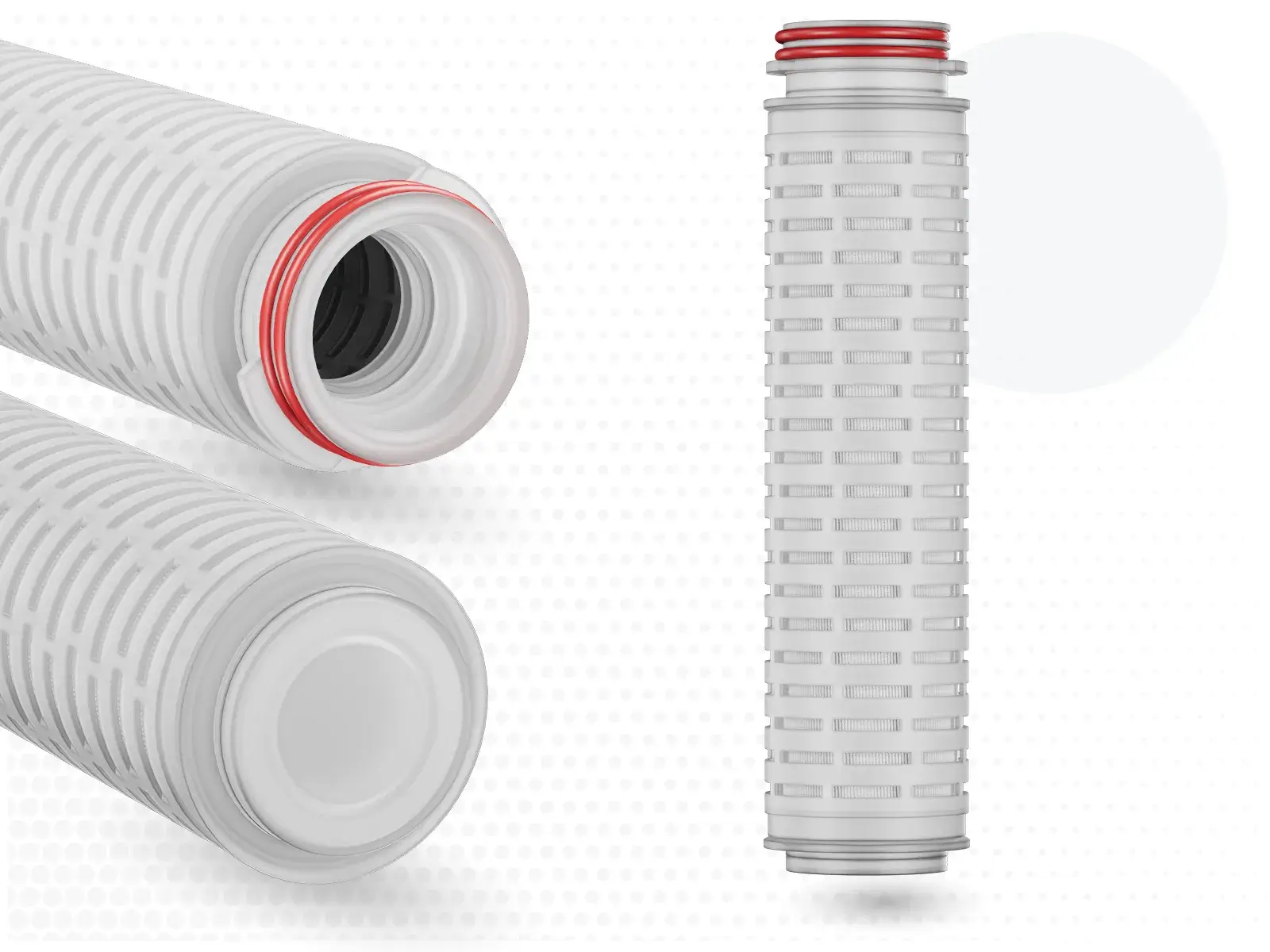












Pleated Micro Cartridge Filter – Fine Filtration with 0.11–50 Micron Membranes

Absolute Filtration Below 1 µm, 6 Membrane Options and Sterile Filtration

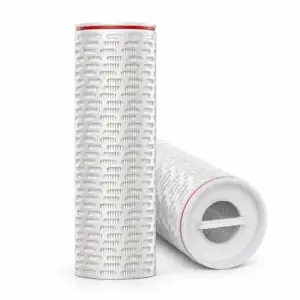
The pleated micro cartridge filter provides absolute, high-efficiency filtration in the 0.11–50 µm range, including particles below 1 µm, with PP, PES, PTFE, glass fibre, nylon and PVDF membrane options. Prosestim is a pioneer in manufacturing pleated micro cartridge filters in Turkey, producing for sterile and final filtration on food, pharmaceutical and chemical lines.

Number of Configurations

2,600

Wide Micron Range

0.11–50 µm

High Operating Temperature

140 °C

Wide pH compatibility

1–14

Pleated Micro Cartridge Filter

Product Identity and Technical Summary Panel

Pleated micro cartridges work in the absolute class; they retain particles larger than the stated micron rating and are also used at filtration stages below 1 micron.

The pleated micro cartridge filter product family is designed to manufacturer standards and for system compatibility to meet micron-level filtration requirements in industrial processes. Every variant is checked for an exact match to the technical specification, process integration and long service life.

Absolute precision grades in the 0.11–50 micron range provide high-efficiency filtration even for particles below 1 micron and, combined with different membrane options, suit a wide range of applications, particularly food, pharmaceutical, energy and chemical processes. This breadth comes from the ability to adapt a single cartridge design to different process conditions; the same cartridge architecture can meet very different filtration needs with different membrane and micron combinations.

Each variant is shaped by its own process conditions: the micron rating defines the filtration goal, the membrane type the chemical resistance, and the connection geometry the system integration. The right combination of these three elements directly affects both filtration efficiency and cartridge service life. Choosing the right variant requires assessing the process conditions as a whole, not just the micron rating.

Key Technical and Structural Features

Filter Media
  • Polypropylene (PP)
  • Polyethersulfone (PES)
  • PTFE (Hydrophilic / Hydrophobic)
  • Glass Fibre (GF)
  • Polyamide (Nylon)
  • PVDF
Filter Lengths
  • 5" (127 mm)
  • 10" (254 mm)
  • 20" (508 mm)
  • 30" (762 mm)
  • 40" (1016 mm)
  • 60" (1524 mm)
  • Custom Process Lengths
Filtration Range
0.11 µm – 50 µm range; absolute precision grades below 1 µm.
Operating Compatibility
  • Food and Beverage Industry
  • Pharmaceuticals and Sterile Filtration
  • Energy and Chemical Processes
  • Water and Industrial Liquid Lines
Construction Type
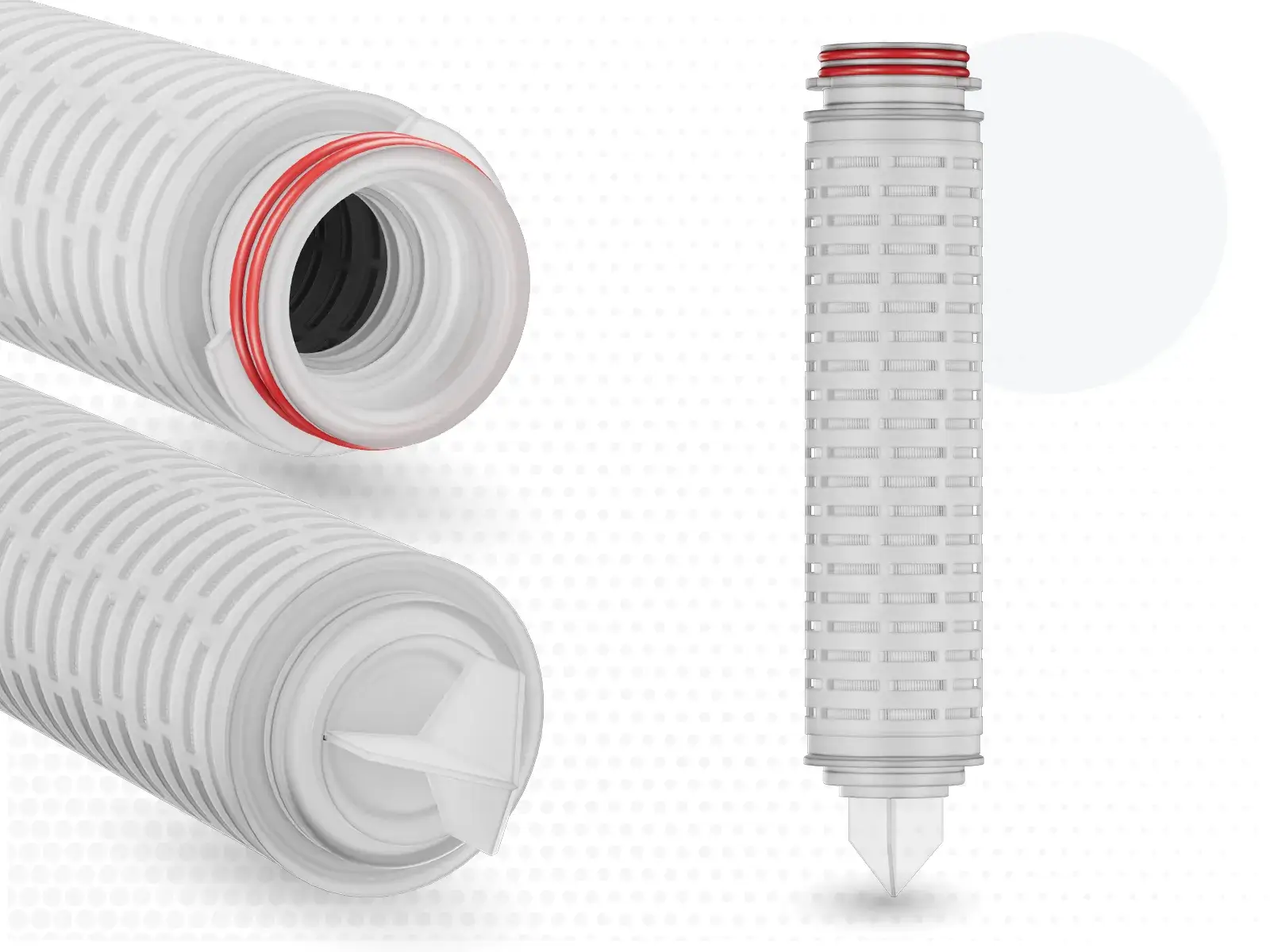
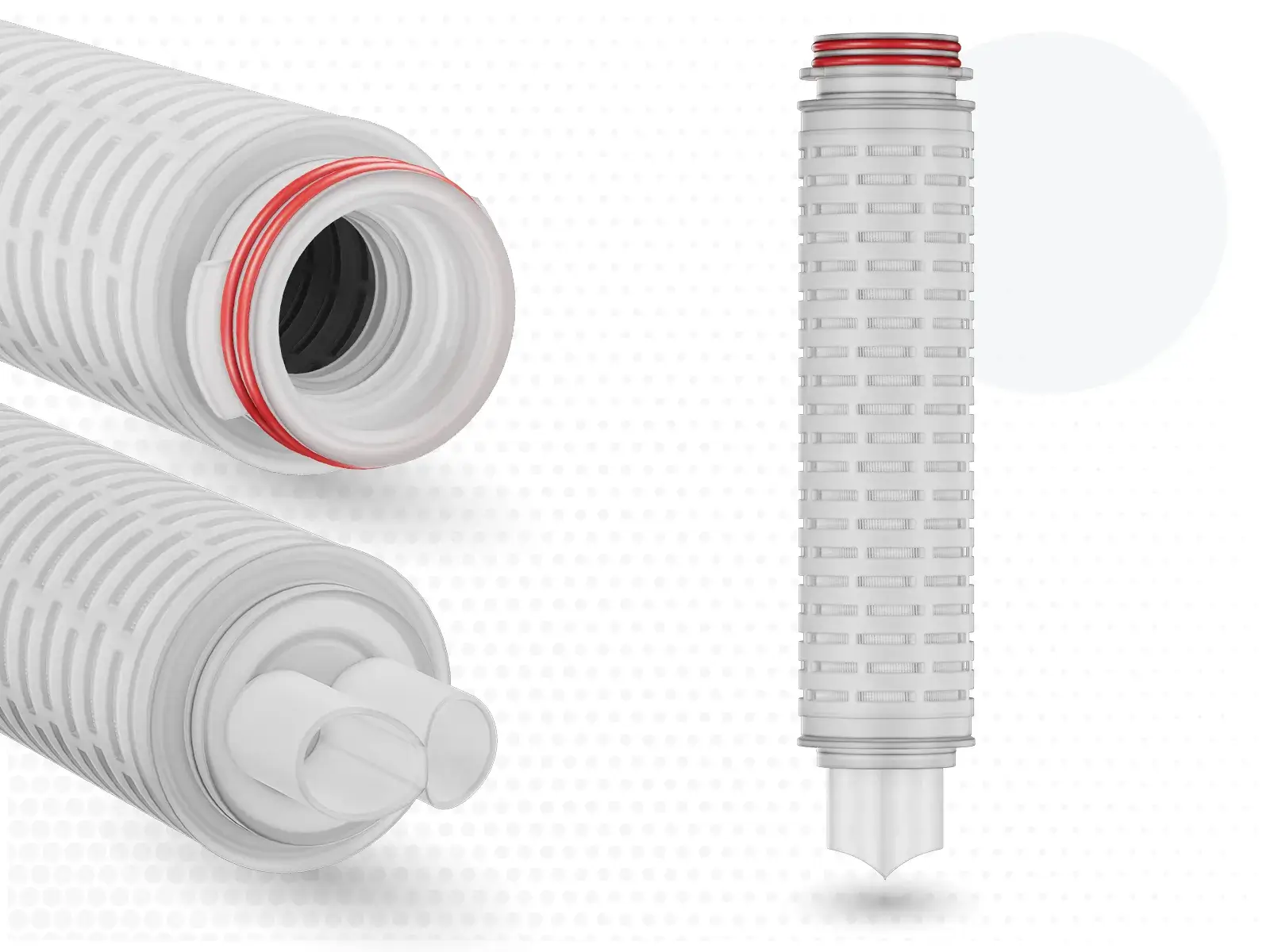
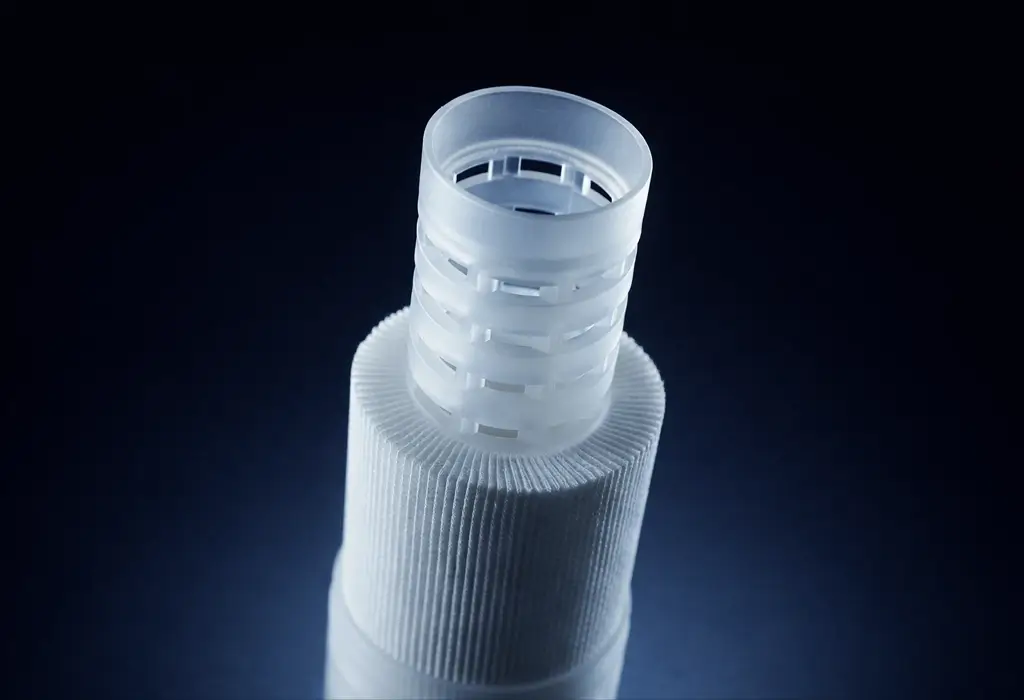
High-surface-area pleated membrane cartridge; polypropylene support cage and rigid inner core.
Connection Options
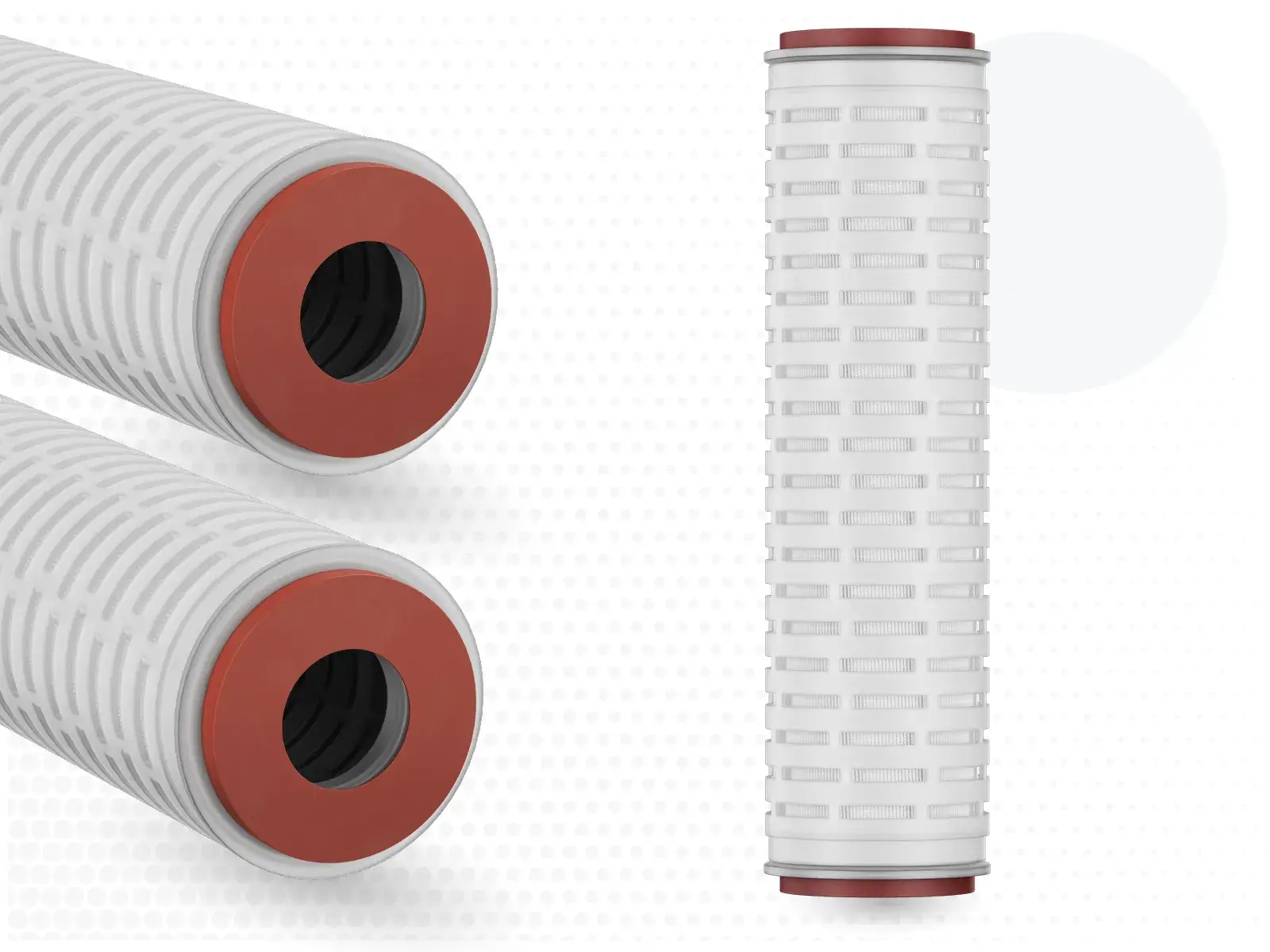
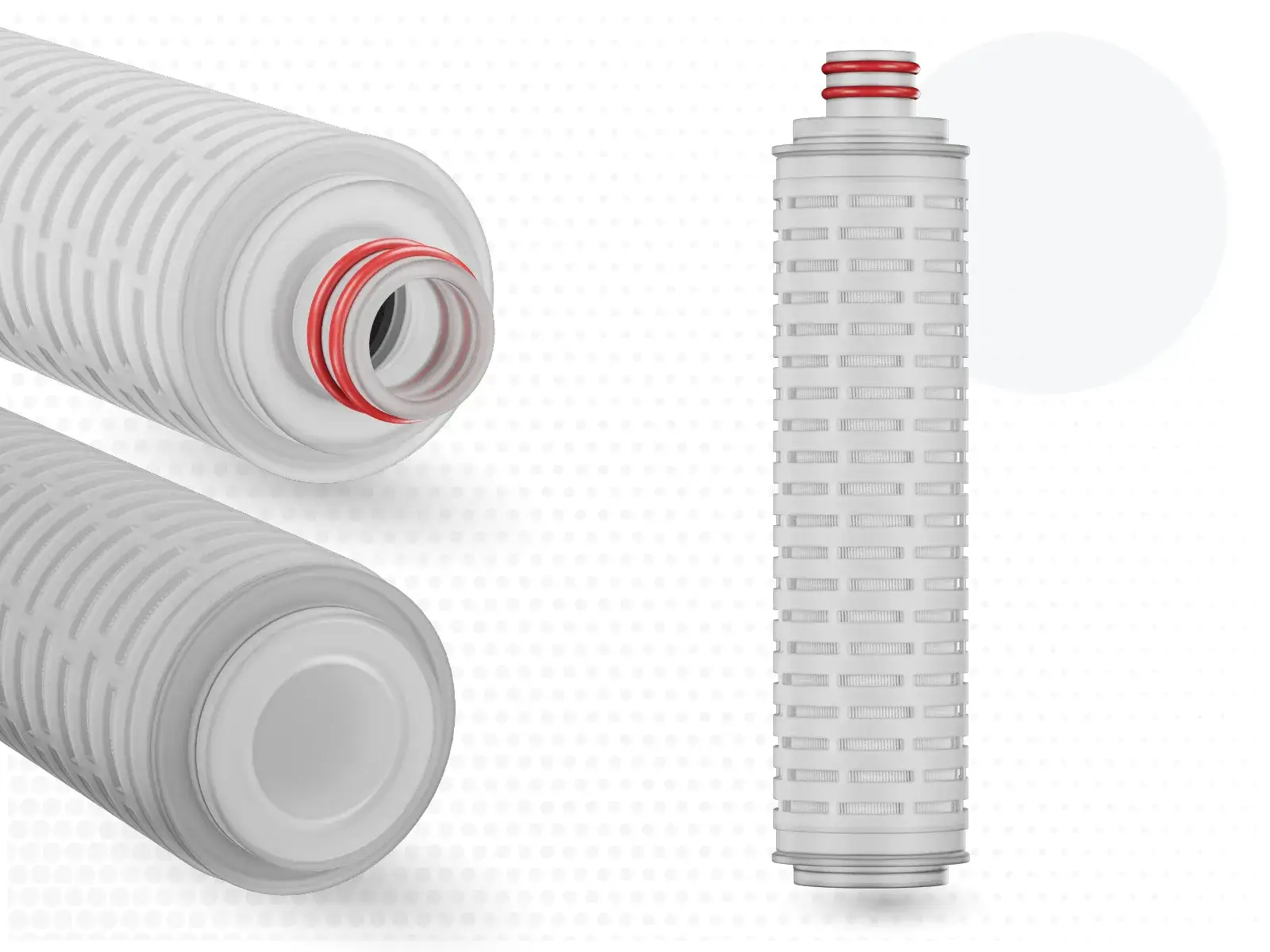
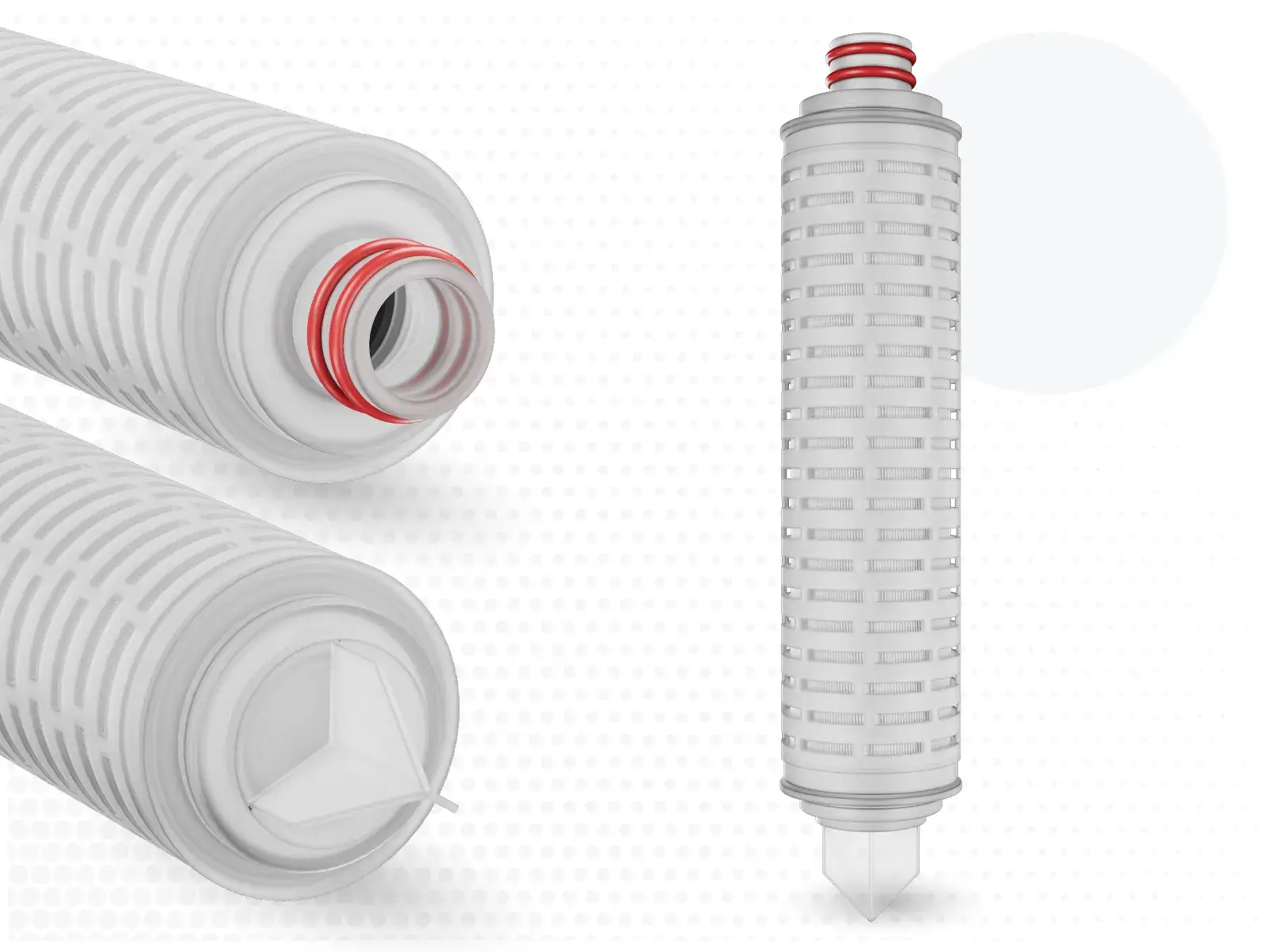
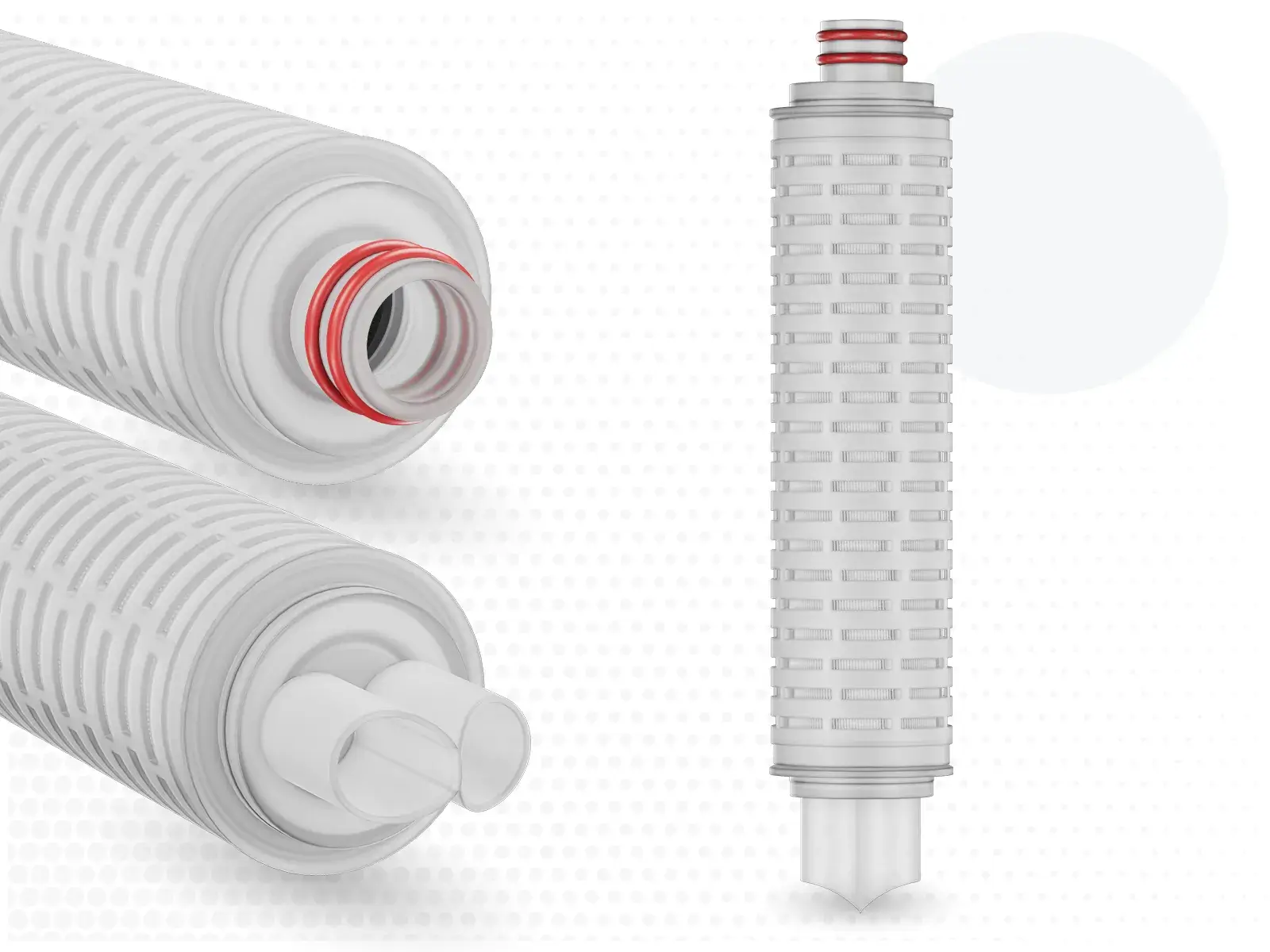
  • DOE (Double Open End)
  • SOE: 215 / 222 / 222 Long / 226 O-ring, BW7
  • Flat / Fin 1 / Fin 2 end cap
Production Model
Standard series production + custom configurations made to process samples and technical drawings.
Quality Control
Post-production bubble point, visual, dimensional and micron precision verification.

Flow Rate and Pressure Performance

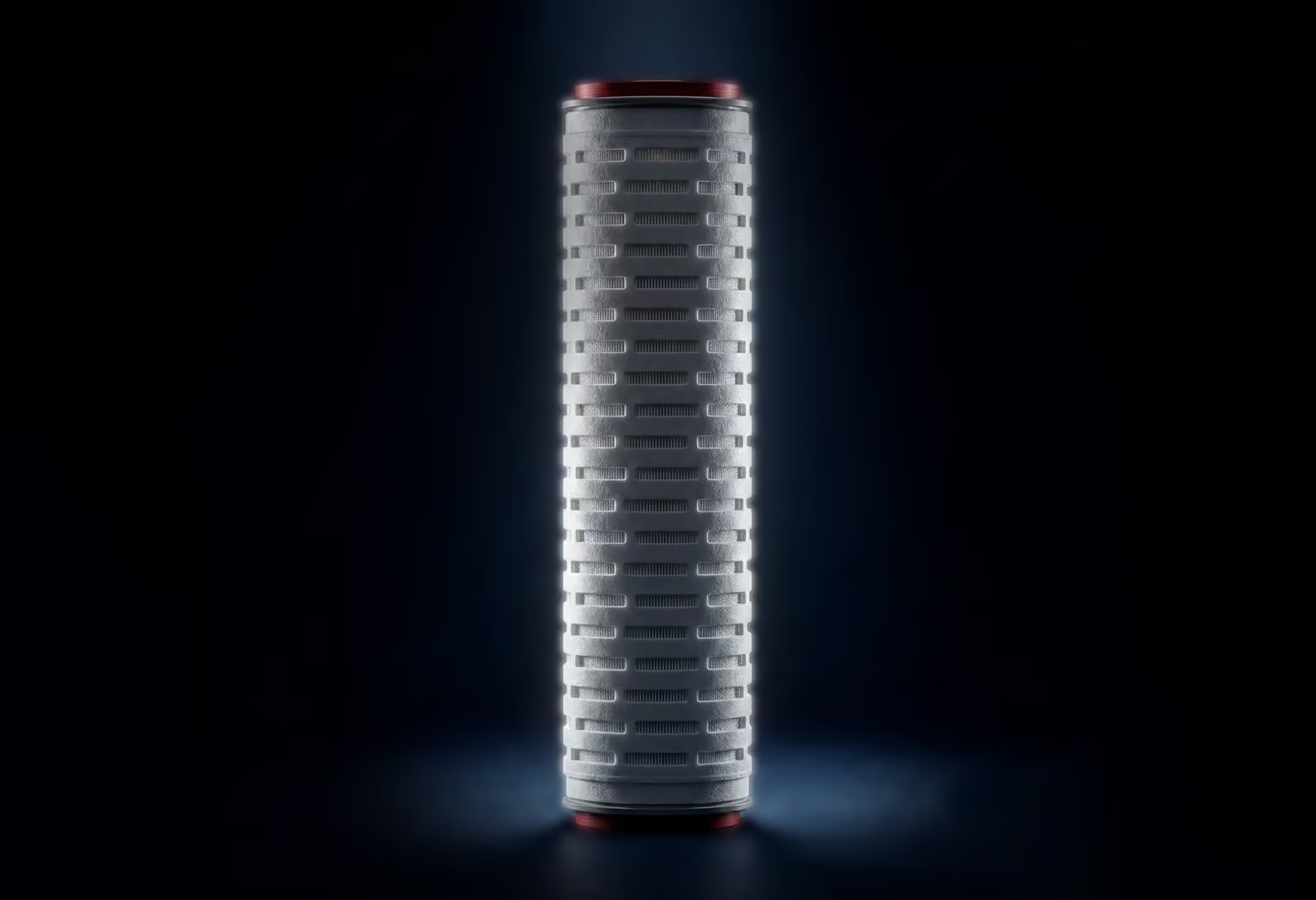
Pleated micro cartridge filters combine high filtration precision with low pressure loss, delivering high performance in critical processes. Their large filtration surface area lets them work at high flow rates while keeping flow resistance to a minimum. The membrane structure, which retains micron-level particles effectively, helps achieve reliable results in water treatment, chemicals, food, beverages, pharmaceuticals and electronics manufacturing. The optimised pleat design gives a longer service life and helps reduce energy consumption and operating costs. Able to meet a range of application requirements with different membrane materials and micron options, these filters are a suitable solution for high efficiency and process safety.

Backlit vertical pleated micro cartridge filter on a dark background

Water and Air Flow Rate Performance

Our pleated micro cartridge filters offer performance documented by pressure drop data measured at different flow conditions in water and air flow systems. Thanks to the large filtration surface area, stable operating characteristics are maintained even at high flow rates, supporting energy efficiency and extending system life. They provide reliable, sustainable filtration performance across a wide range of uses, from industrial processes to HVAC applications.

Pressure Values: Chart Data Points Per 10″ cartridge · chart measurement points
# 0.5 µm 1 µm 2.5 µm 5 µm
1 10 L/min0.083 bar 12 L/min0.069 bar 15 L/min0.069 bar 18 L/min0.069 bar
2 20 L/min0.172 bar 25 L/min0.152 bar 30 L/min0.145 bar 35 L/min0.138 bar
3 32 L/min0.276 bar 38 L/min0.241 bar 45 L/min0.221 bar 50 L/min0.207 bar
4 40 L/min0.345 bar 48 L/min0.310 bar 55 L/min0.276 bar 60 L/min0.262 bar
Values are per 10-inch (254 mm) cartridge.
0.5 µm
1 µm
2.5 µm
5 µm

The pleated micro cartridge filter offers water flow performance optimised for different micron options, providing stable, reliable filtration at high flow rates with low pressure loss. The large pleated surface area creates more active filtration area than standard cartridge filters, increasing flow capacity and supporting dirt-holding efficiency. Balanced differential pressure values are maintained even at increasing flow rates, without a significant drop in filtration efficiency. This design brings important advantages in industrial water filtration in terms of lower energy consumption, protection of process equipment, less frequent maintenance and long service life. Delivering high performance in water conditioning, process water preparation, chemical filtration and systems requiring fine particle removal, the filter adapts easily to different operating conditions. The test data show the pressure-flow relationship that varies with micron grade, providing reliable engineering data for choosing the right filter.

Performance Advantages in Water Filtration

In industrial air filtration applications, the main determinant of performance is the relationship between the filter’s air flow rate and the resulting pressure balance. Thanks to its large surface area, the pleated micro cartridge design provides low pressure drop and stable flow characteristics even at high flow rates. Different micron grades offer air permeability optimised for particle retention precision. This design supports energy efficiency and gives a reliable, sustainable performance advantage in HVAC systems, process air lines and industrial gas and air applications.

Performance Advantages in Air Filtration

Pressure Values: Chart Data Points Per 10″ cartridge · chart measurement points
# 0.5 µm 1 µm 2.5 µm 5 µm
1 50 Nm³/h0.103 bar 100 Nm³/h0.103 bar 150 Nm³/h0.110 bar 200 Nm³/h0.103 bar
2 80 Nm³/h0.207 bar 190 Nm³/h0.207 bar 260 Nm³/h0.207 bar 360 Nm³/h0.207 bar
3 110 Nm³/h0.317 bar 260 Nm³/h0.310 bar 350 Nm³/h0.310 bar 480 Nm³/h0.317 bar
Values are per 10-inch (254 mm) cartridge.
0.5 µm
1 µm
2.5 µm
5 µm

Filtration Architecture and Working Principle

The key feature that sets Prosestim pleated micro cartridge filters apart from other cartridge filters is that they provide high-efficiency, absolute filtration even for particles below 1 micron. This is made possible by a membrane with uniform pores: as the fluid moves from the outer surface to the inner core, particles larger than the membrane’s pore opening are retained at the surface, and the retention rating does not vary with flow rate or pressure. Micron options down to 0.11 µm allow use in processes requiring sterile filtration and fine final filtration; because the pleated form offers a large surface area, this precision is maintained throughout the service life.

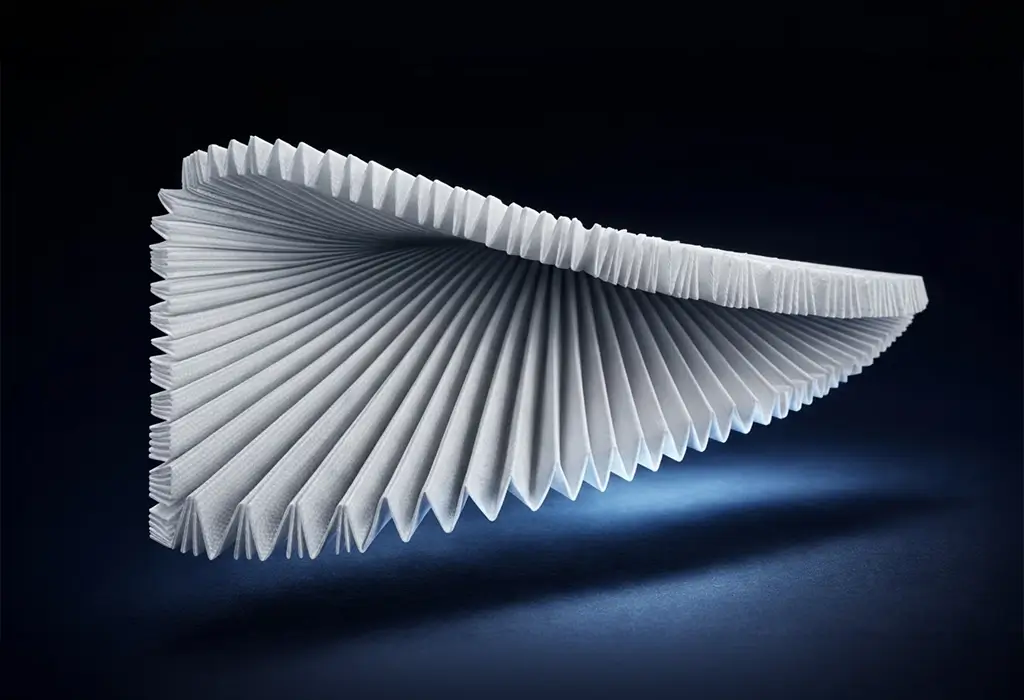
Large pleated surface area of a pleated micro cartridge filter membrane fanned out
STEP 01

Extended Surface Architecture

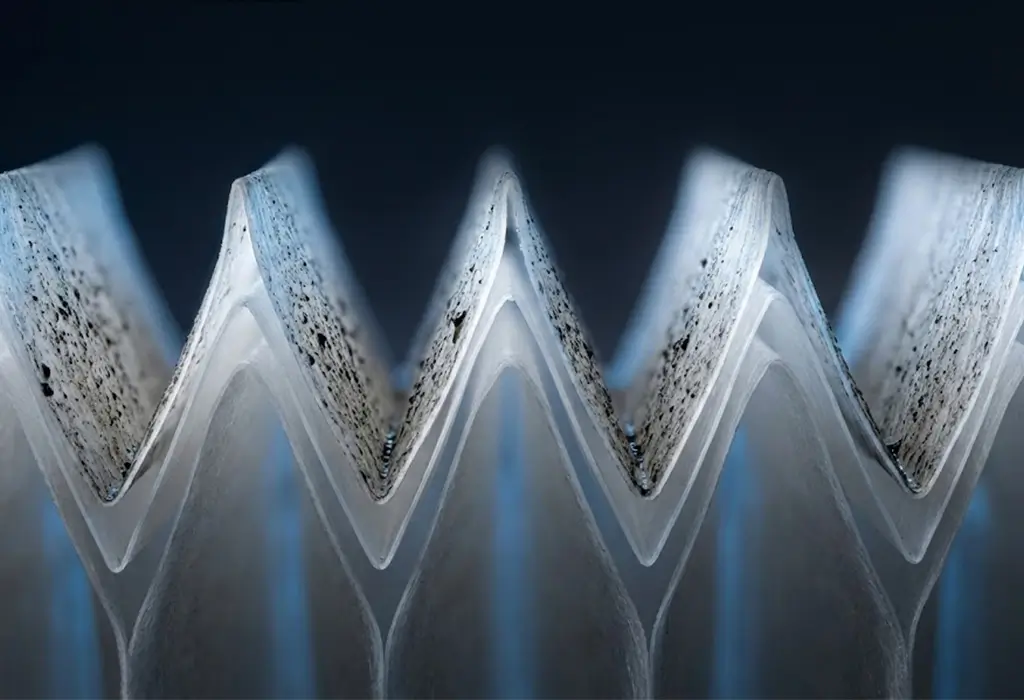
The membrane filter media, together with support layers, is pleated and placed inside the cartridge body in an accordion shape. This folding makes it possible to fit many times more filtration area into the cartridge volume than a flat cylindrical structure of the same outer diameter and length.

Close-up illustration showing particles retained on the surface of pleated membrane folds
STEP 02

Absolute Surface Filtration

The membrane has a defined, uniform pore size. As fluid passes through the membrane, particles larger than the pore opening are retained at the surface (sieve effect); no tortuous depth path forms within the media. Retention therefore does not vary with flow rate or pressure, and the cartridge can be given an absolute micron rating.
Illustration showing the perforated rigid core and pleated media of a pleated micro cartridge filter
STEP 03

Rigid Core Structure

The pleated media is fitted onto a reinforced polypropylene inner cage, and the end caps are welded to the media by thermal fusion; no adhesives, gaskets or mechanical joints are used. The media, core and end caps form a one-piece body.

Physical Construction and Effective Surface Area

The pleated structure offers an effective filtration area of 0.6 m² (6.5 ft²) in a single 10-inch (254 mm) module; by joining several segments in longer lengths such as 20″, 30″, 40″ and 60″, this base module reaches a total surface area of up to 3.6 m². This area is much larger than that of depth filters of the same length; it lowers the flow velocity per unit area, keeps differential pressure low and extends filter life.

The segments are joined by thermal fusion; the joints do not compromise sealing, and flow is distributed evenly along the cartridge even in long lengths. This construction keeps pressure loss low in high-flow processes.

Length Surface Area (m²) Surface Area (ft²)
5 inch 0.3 m² 3.2 ft²
10 inch 0.6 m² 6.5 ft²
20 inch 1.2 m² 12.9 ft²
30 inch 1.8 m² 19.4 ft²
40 inch 2.4 m² 25.9 ft²
60 inch 3.6 m² 38.8 ft²

Filter Material Chemical Compatibility Guide

Pleated micro cartridge filters are made with six different filter media. Chemical resistance varies with the media, temperature, concentration and contact time. The tables below show the resistance of each media to acids, bases, salt solutions, organic solvents, oils, gases and vapours. The gasket material must also be considered in the final choice.

Gloved technician in a laboratory holding a pleated micro cartridge filter for chemical compatibility testing

E: Excellent  ·  G: Good  ·  F: Fair  ·  P: Poor  ·  N/R: Not recommended

Resistance to Liquid Chemicals (Acids, Bases, Salts)

Chemical Group Example Chemical PP PES PTFE Glass Fibre Nylon PVDF
Strong Acids (Dilute) HCl, H₂SO₄ (<30%) E E E E P E
Strong Acids (Concentrated) H₂SO₄ (>70%), HCl (Fuming) P N/R E G N/R E
Weak / Organic Acids Acetic Acid, Phosphoric Acid E E E E F E
Oxidising Acids Nitric Acid, Chromic Acid G N/R E E N/R E
Alkalis (Strong Bases) NaOH, KOH E N/R E P E G
Inorganic Salt Solutions NaCl, CaCl₂, Aluminium Sulphate E E E E E E

E: Excellent  ·  G: Good  ·  F: Fair  ·  P: Poor  ·  N/R: Not recommended

Resistance in Organic Solvent and Hydrocarbon Environments

Chemical Group Example Chemical PP PES PTFE Glass Fibre Nylon PVDF
Alcohols Ethanol, Methanol, IPA E G E E E E
Ketones and Esters Acetone, MEK, Ethyl Acetate G N/R E E E P
Aliphatic Hydrocarbons Hexane, Heptane, Naphtha G G E E E E
Aromatic Hydrocarbons Toluene, Xylene, Benzene F P E E E G
Chlorinated Solvents Dichloromethane, Trichloroethylene P N/R E E G G
Mineral and Vegetable Oils Hydraulic Oil, Machine Oil, Vegetable Oil F G E E E E

E: Excellent  ·  G: Good  ·  F: Fair  ·  P: Poor  ·  N/R: Not recommended

Resistance to Gas and Vapour Environments

Chemical Group Example Chemical PP PES PTFE Glass Fibre Nylon PVDF
Water Vapour Low-Pressure Steam (≤100 °C) G G E E N/R E
Dry Air Industrial Process Air E E E E E E
Oxidising Gases Chlorine, ozone emissions P P E E F E
Acidic Gases SO₂, NOx emissions G G E E P E
Hydrocarbon Vapours Petrol, Solvent Vapours F N/R E E E E

Operating Conditions

Pleated micro cartridge filters are designed to deliver reliable filtration performance under the variable operating conditions of industrial processes. Because factors such as temperature, pressure, flow direction and chemical environment can directly affect the performance of filter elements, the products should be used within their specified operating limits. The optimised structural design helps maintain filtration efficiency under demanding process conditions while supporting system reliability and equipment life. The operating parameters below show the filter’s safe and efficient operating range. These values may vary depending on application conditions, the filter media used and the properties of the process fluid.

Technical Parameter PP PES PTFE Glass Fibre Nylon PVDF
Nominal Operating Temperature 60 °C (140 °F) 60 °C (140 °F) 60 °C (140 °F) 80 °C (176 °F) 60 °C (140 °F) 65 °C (149 °F)
Maximum Operating Temperature 90 °C (194 °F) 90 °C (194 °F) 140 °C (284 °F) 120 °C (248 °F) 95 °C (203 °F) 130 °C (266 °F)
Maximum Operating Pressure (Forward Flow) 4.2 bar 4.2 bar 4.2 bar 3.5 bar 4.0 bar 4.2 bar
Maximum Operating Pressure (Reverse Flow) 2.1 bar 2.1 bar 2.1 bar 1.8 bar 2.0 bar 2.1 bar
pH Compatibility 1–14 2–13 1–14 1–11 3–12 1–12

Sealing and Connection Components

In cartridge filter systems, sealing and mechanical integrity depend on correctly selected gaskets, O-rings, end caps and closures. Chosen with operating pressure, temperature range and chemical compatibility in mind, these components reduce the risk of leakage throughout the system and keep filter performance consistent.

End Caps and Closures

The performance of pleated micro cartridge filters depends not only on the filter media but also on the end cap and closure design. These components at both ends of the filter element play a critical role in structural strength, connection security and process sealing. Different connection types, adapter designs and end cap configurations can be used depending on the application. The right end cap choice ensures the filter sits securely inside the filter housing, makes maintenance easier and increases system reliability.

Engineering Advantage for Process Safety

O-rings

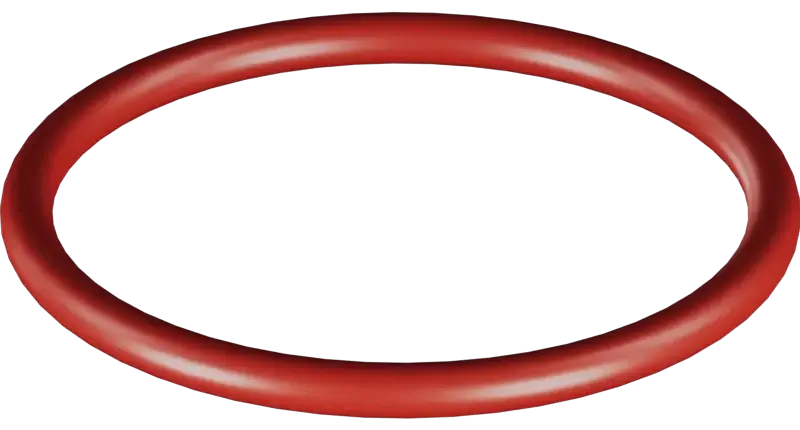
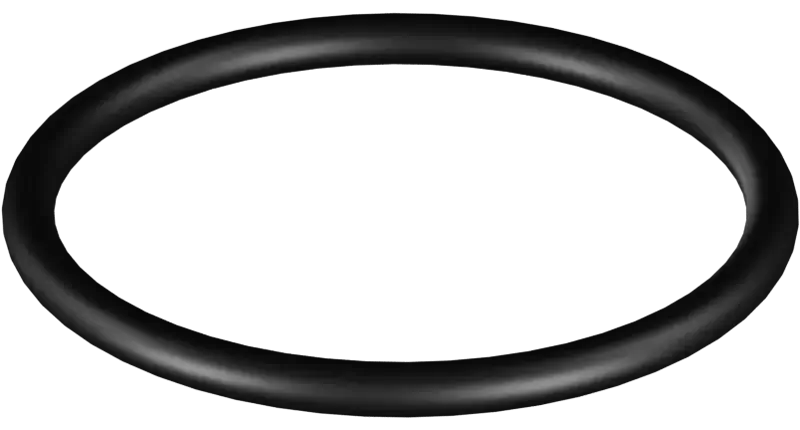
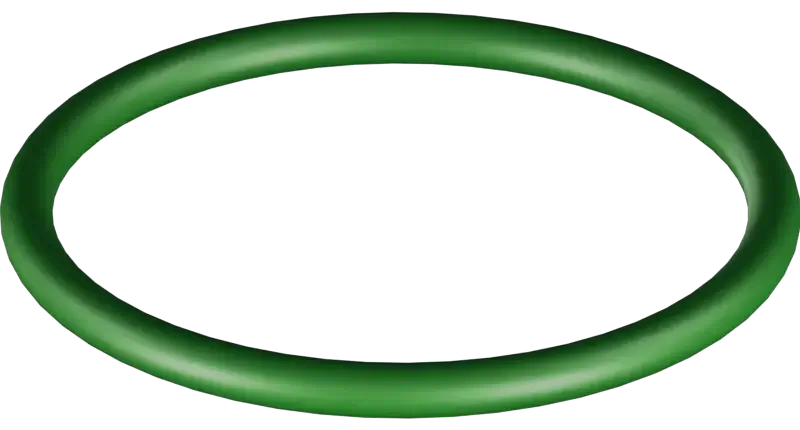
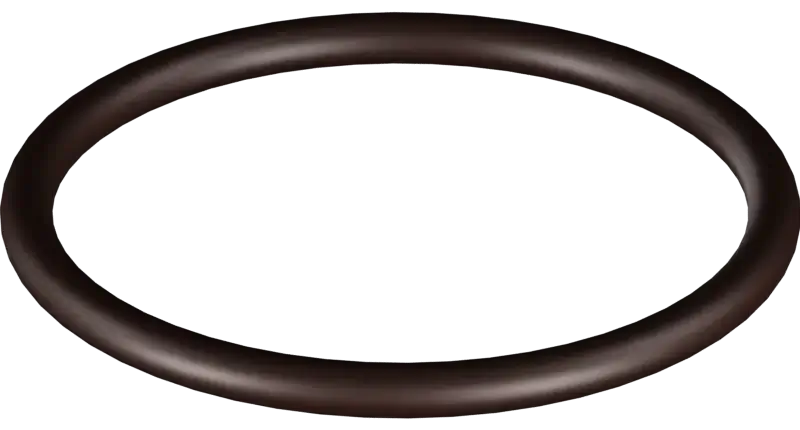
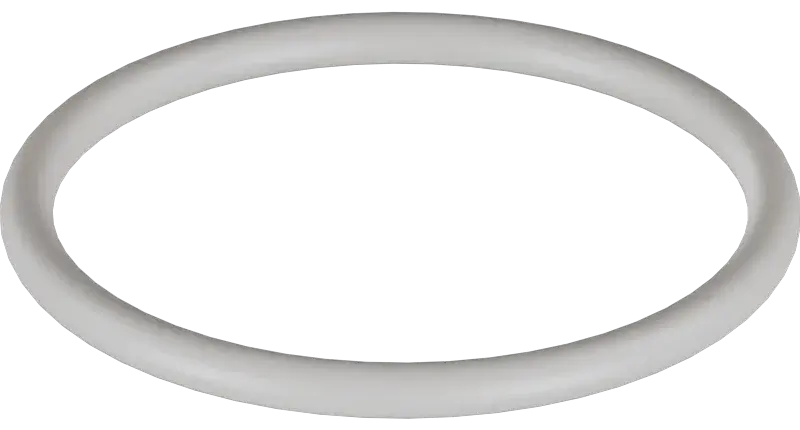
O-rings, used to create a reliable seal between filter elements and the filter housing, are among the most important components of filtration systems. The right O-ring should be chosen according to the chemical nature of the process fluid, the operating temperature and operating conditions. Made from different materials such as silicone, EPDM, NBR, Viton and PTFE, O-rings provide reliable sealing performance in a range of industrial applications. The right material choice reduces the risk of leakage while increasing filter life and system reliability.

High-Performance O-Ring Solutions for Process Safety

Gaskets

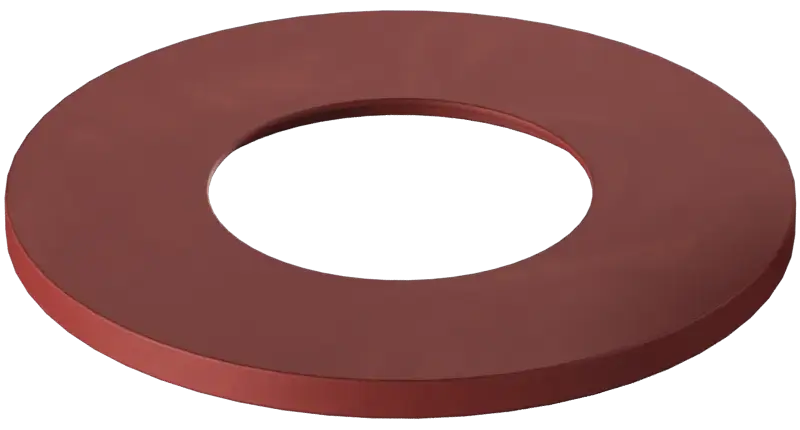
Gaskets are key components that support sealing at the filter element’s connection points in the system and improve process safety. Different gasket types and materials can be chosen depending on factors such as operating pressure, temperature, chemical environment and equipment design. The right gasket helps prevent fluid leaks, maintain filter performance and extend equipment life. Gasket solutions used in industrial filtration are designed to deliver reliable performance even under demanding process conditions.

Gasket Solutions That Safeguard Filtration Efficiency

Sanitisation and Sterilisation

Backwash Note

To preserve the operating life and filtration efficiency of Prosestim micro cartridge filters, full compliance with the sterilisation and backwash limits for each raw material is essential. PP, PES, PTFE, nylon and PVDF filters can be backwashed for up to 50 cycles in 20-minute sessions at a maximum of 60 °C and 1 bar; DOE cartridges are not recommended on lines that are backwashed.

The heat treatment method and temperature vary with the raw material: PP and PES filters are suitable for hot water sanitisation at 90 °C and nylon filters at 95 °C; glass fibre filters are suitable for saturated steam sterilisation at 120 °C and PVDF and PTFE filters at 134 °C. In both methods the period is 30 minutes. The maximum number of sanitisation / sterilisation cycles is 25 for PP, PES, nylon and glass fibre filters, 50 for PVDF filters and 100 for high-performance PTFE filters. For glass fibre and PTFE filters, direct steam sterilisation should be preferred over hot water to preserve the material’s form.

Filter Raw Material Max. Sanitisation / Sterilisation Temperature Max. Number of Cycles (30 min) Backwash Suitability
PP 90 °C (hot water) 25 Cycles Suitable (50 Cycles)
PES 90 °C (hot water) 25 Cycles Suitable (50 Cycles)
PTFE 134 °C (steam) 100 Cycles Suitable (50 Cycles)
Glass Fibre 120 °C (steam) 25 Cycles —
Nylon 95 °C (hot water) 25 Cycles Suitable (50 Cycles)
PVDF 134 °C (steam) 50 Cycles Suitable (50 Cycles)
TECHNICAL ASSESSMENT BASED ON FIELD EXPERIENCE

Engineer's Note

This filtration unit is designed to deliver repeatable, absolute retention efficiency in critical processes thanks to its uniform-pore membrane structure. The mistake we see most often in the field is running it at the limits of its nominal flow values. For ideal efficiency, we recommend that system flow does not exceed 75% of the unit’s capacity.

When should it be chosen? For final filtration and protection before sterilisation in processes requiring high purity, such as food, beverages, pharmaceuticals and electronics. When not to choose it: using it with high-particle-load fluids without pre-filtration quickly clogs the membrane surface; on these lines, pre-filtration with a depth filter should be carried out first.

Application and Selection Criteria

Pre-Filtration Requirement
Pre-filtration is essential with a high particle load; it prevents the pleated cartridge from clogging and significantly extends its service life.
Pressure Gauge Calibration and ΔP Monitoring
Check the calibration of the inlet/outlet differential pressure gauges at least every 6 months; plan replacement at the critical ΔP limit.
Gasket and Lubricant Compatibility
Do not use mineral-based lubricants when changing gaskets and O-rings; use pure silicone grease to protect elastomer integrity.

Industry Applications

Filter cartridges suited to different process needs are used across a wide range of industrial applications to protect product quality, safeguard equipment and support production continuity.

1–6 / 24
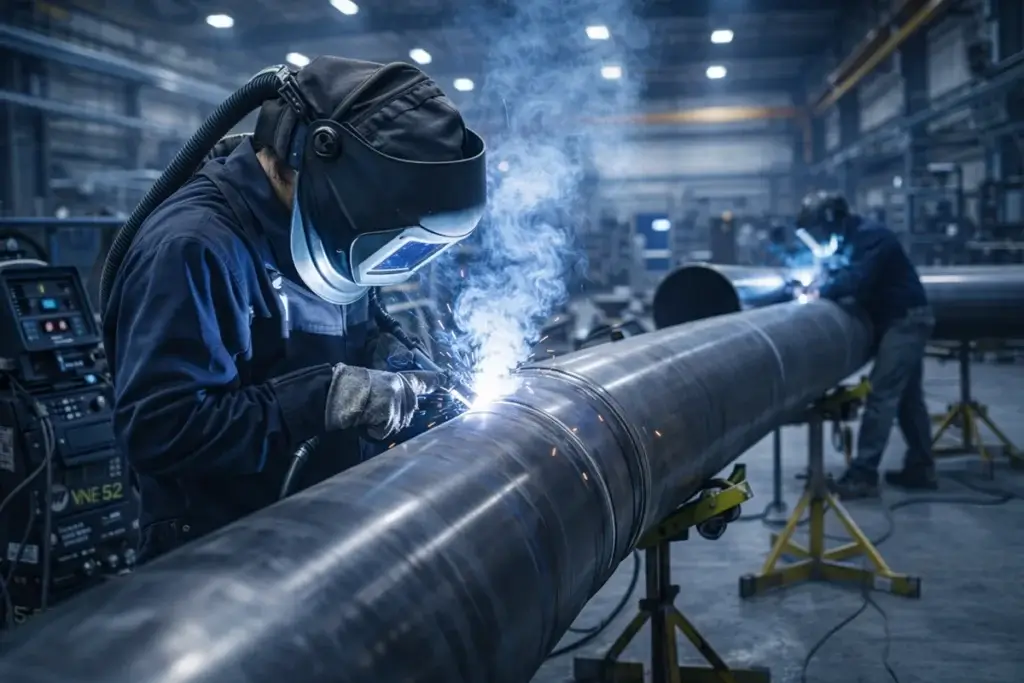
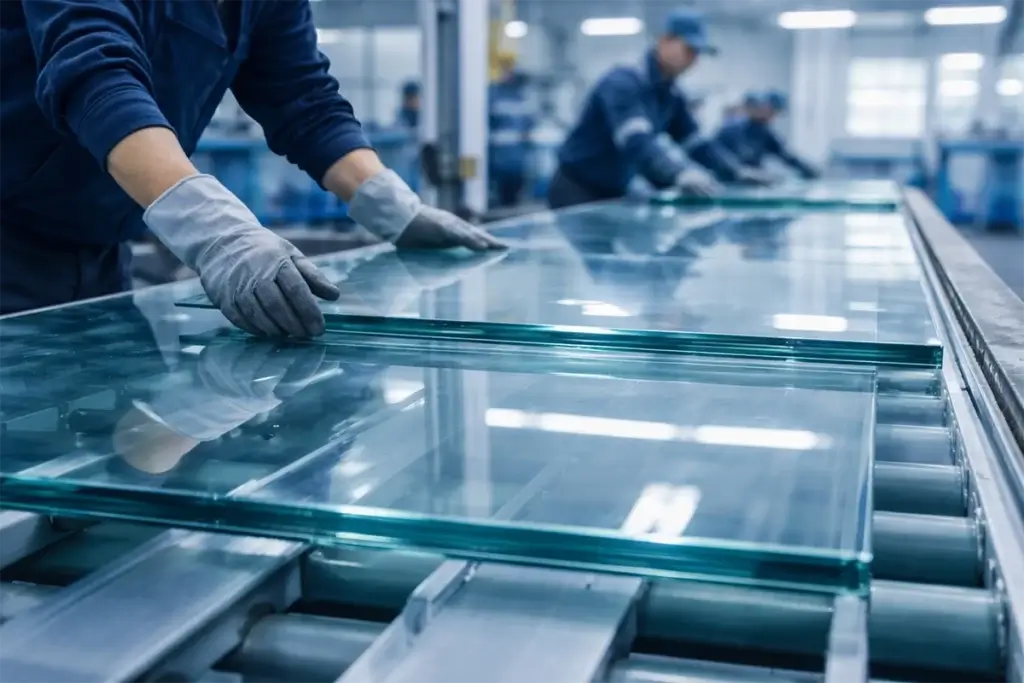
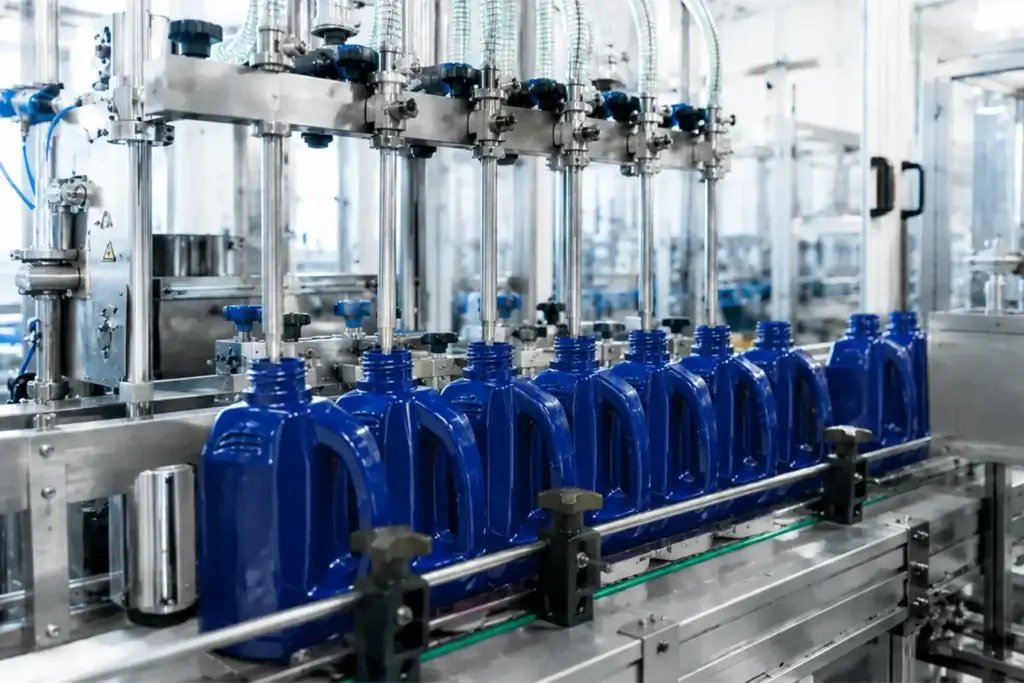
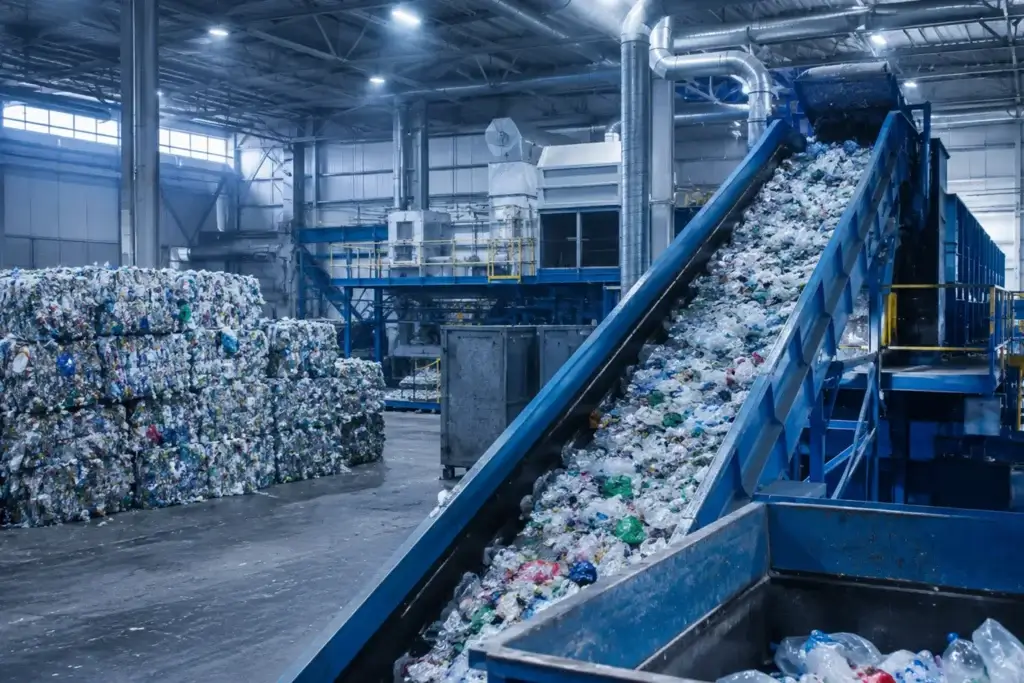
Vegetable Oil 01 Vegetable Oil Clarity, purity and shelf life in vegetable oil and refining. Explore solutions Pipe and Profile 02 Pipe and Profile Cooling water filtration in pipe and profile extrusion. Explore solutions Paint Industry 03 Paint Industry Surface quality and pigment filtration in the paint industry. Explore solutions Glass Industry 04 Glass Industry Furnace and process filtration in the glass industry. Explore solutions Dialysis Centers 05 Dialysis Centers Water preparation and process filtration in dialysis centers. Explore solutions Foundry Industry 06 Foundry Industry Equipment protection and dust filtration in foundries. Explore solutions Industrial Oil 07 Industrial Oil Filtration in industrial oil production and recovery. Explore solutions Energy and Biogas 08 Energy and Biogas Maximum efficiency and turbine protection in energy and biogas. Explore solutions Recycling 09 Recycling Filtration for efficiency and environmental compliance in recycling. Explore solutions Food and Beverage 10 Food and Beverage Hygienic filtration in food and beverage. Explore solutions Pharmaceuticals and Biotechnology 11 Pharmaceuticals and Biotechnology GMP-compliant sterile filtration in pharmaceuticals and biotechnology. Explore solutions Paper and Packaging 12 Paper and Packaging Process water filtration in paper and packaging. Explore solutions Chemical Industry 13 Chemical Industry Corrosion-resistant, safe filtration in the chemical industry. Explore solutions Cosmetics 14 Cosmetics Microbiological safety and precision filtration in cosmetics. Explore solutions Machinery 15 Machinery Precision and technical filtration in the machinery industry. Explore solutions Printing and Ink 16 Printing and Ink Flawless color and print quality in printing and ink. Explore solutions Metal and Surface Treatment 17 Metal and Surface Treatment Flawless surfaces and bath stability in metal and surface treatment. Explore solutions Forest Products 18 Forest Products Resin and glue filtration in forest products and furniture. Explore solutions Automotive 19 Automotive Precision process filtration for zero defects in automotive manufacturing. Explore solutions Oil and Petrochemicals 20 Oil and Petrochemicals Equipment protection and process safety in oil and petrochemicals. Explore solutions Plastic Packaging 21 Plastic Packaging Precision process filtration and raw material purity in plastic packaging. Explore solutions Plastic Injection Molding 22 Plastic Injection Molding Cooling and hydraulic filtration in plastic injection molding. Explore solutions Water and Environment 23 Water and Environment Recovery filtration in water and environmental technologies. Explore solutions Shipyards and Marine 24 Shipyards and Marine Operational safety and efficiency in shipyards and marine. Explore solutions














Products that work with this product

Housings the cartridge fits, alternatives with the same end-cap types and the parts needed for connection.
This product
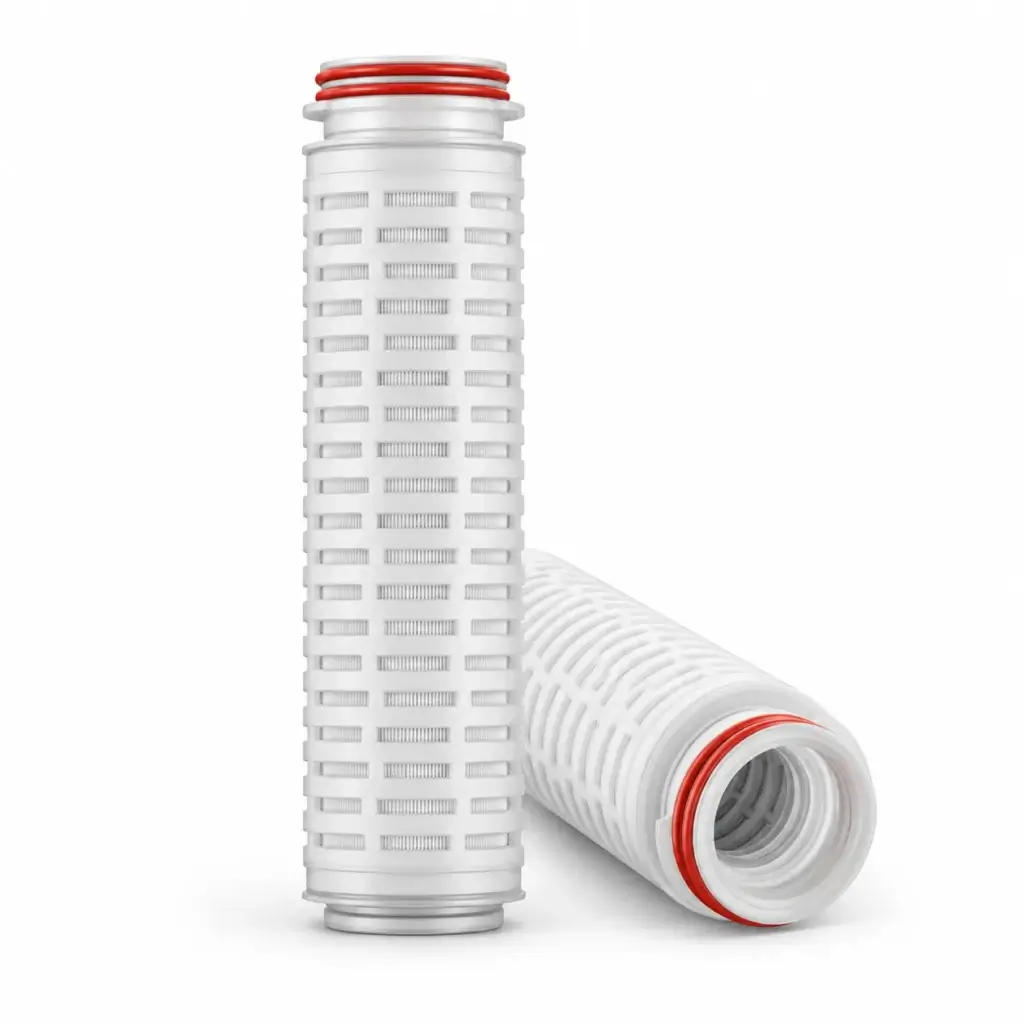
Pleated micro cartridge filter with 222 O-ring

Pleated Micro Cartridge Filter

Cartridge Filters
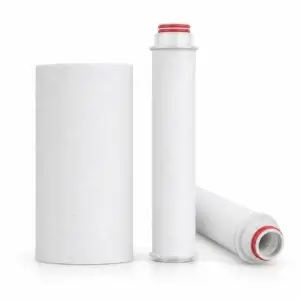
Pleated high flow cartridge filter with handled end cap and red O-ring, vertical and horizontal views

High Flow Cartridge Filter

Large-diameter cartridge for high flow, 10″–60″ lengths.

View →
Melt blown cartridge filter

Melt Blown Cartridge Filter

Economical depth filter, also used as a pre-filter.

View →
Request everything in one quote: let’s size the product, housing and connection parts together.

Your Questions Answered

Frequently Asked Questions

At Prosestim, we are committed to answering your questions and providing technical support for our filtration solutions.
A pleated micro cartridge filter is an outside-in surface filter in which membrane filter media is folded like an accordion and placed in a cylindrical body. The membrane’s uniform pore structure retains particles larger than the absolute micron rating at the surface; unlike depth filters, retention does not change with flow or pressure. The pleated form gives a much larger filtration area for the same outer diameter, which delays clogging and extends the change interval.
The production range is from 0.11 micron to 50 microns. This range covers a wide range of applications, from fine sub-micron filtration to pre-stages of coarse particle removal. The micron rating is chosen according to the particle size to be retained, the acceptable pressure loss and the system flow. A lower micron rating gives higher retention precision but creates higher differential pressure at the same flow; for example, on a 10″ cartridge, a pressure loss of 0.172 bar is measured with 0.5 µm media at a water flow of 20 L/min, while 0.138 bar is measured with 5 µm media at 35 L/min. The micron rating is set at the production stage and precision is verified after production.
The filter media can be chosen from six materials: polypropylene (PP), polyethersulfone (PES), polytetrafluoroethylene (PTFE), glass fibre (GF), polyamide (nylon) and polyvinylidene fluoride (PVDF). The inner cage and end caps are made from reinforced polypropylene; because the end caps are welded to the media by thermal fusion, no adhesives, gaskets or mechanical joints are used. For sealing, silicone, EPDM, NBR, Viton and PTFE gasket/O-ring options are offered. The media is chosen according to the process’s chemical content, pH range and operating temperature: PP or PTFE stand out on strong alkaline lines, and PTFE or PVDF with oxidising acids; nylon media are not recommended with strong acids and low-pressure steam.
Chemical compatibility differs significantly by media, and the right choice directly determines filter life. PTFE and PVDF offer the widest chemical resistance; they are used with oxidising acids (nitric, chromic), concentrated sulphuric acid and gases containing chlorine/ozone. PP performs well with strong bases (NaOH, KOH) and dilute acids and also shows good resistance to oxidising acids (nitric acid). PES is not recommended with strong bases and concentrated acids. Glass fibre is strong at high temperatures and in oxidising environments but weak in alkaline environments. Nylon works well with hydrocarbon vapours and is not recommended with strong acids. In inorganic salt solutions (NaCl, CaCl₂, aluminium sulphate), all six media show high resistance.
pH compatibility varies by media: PTFE offers the widest range at 1–14, followed by PP 1–14, PES 2–13, PVDF 1–12, glass fibre 1–11 and nylon 3–12. On lines with aggressive acids or bases, PTFE or PVDF should be chosen. The pH limit alone is not an adequate selection criterion; because different chemicals can have different effects at the same pH, concentration, temperature and contact time must be considered together.
The effective filtration area varies with cartridge length from 0.3 m² to 3.6 m²: 0.3 m² (3.2 ft²) for 5″, 0.6 m² (6.5 ft²) for 10″, 1.2 m² (12.9 ft²) for 20″, 1.8 m² (19.4 ft²) for 30″, 2.4 m² (25.9 ft²) for 40″ and 3.6 m² (38.8 ft²) for 60″. The pleated construction offers a significantly larger surface than flat cylindrical depth filters of the same outer diameter. This difference lowers the flow velocity per unit area; as a result, differential pressure falls, dirt-holding capacity increases and the change interval is extended, and the number of cartridges and filter housing size needed for the same flow are reduced.
Cartridges are made in 5″, 10″, 20″, 30″, 40″ and 60″ lengths. Longer lengths are made by joining 10″ modules by thermal fusion; because the joints are leak-tight, no bypass path forms and the stated retention rating is maintained throughout the service life. Connection options are DOE (gasket); 215, 222, 222 Long and 226 O-ring; flat, Fin 1 and Fin 2 end caps; and BW7 fittings. These options are compatible with common filter housing and brand standards.
The maximum operating temperature varies with the media from 90 °C to 140 °C: PTFE 140 °C, PVDF 130 °C, glass fibre 120 °C, nylon 95 °C, PP and PES 90 °C. Nominal (continuous) operating temperatures are in the 60–80 °C band, and these values should not be exceeded for a long service life. In the normal flow direction, the maximum operating pressure is 4.2 bar for most media, 4.0 bar for nylon and 3.5 bar for glass fibre. In the reverse flow direction, the limit is 2.1 bar (nylon 2.0 bar, glass fibre 1.8 bar), and 1 bar is recommended for routine backwashing. Because the pressure resistance of polymer media falls as temperature rises, the two parameters must be considered together.
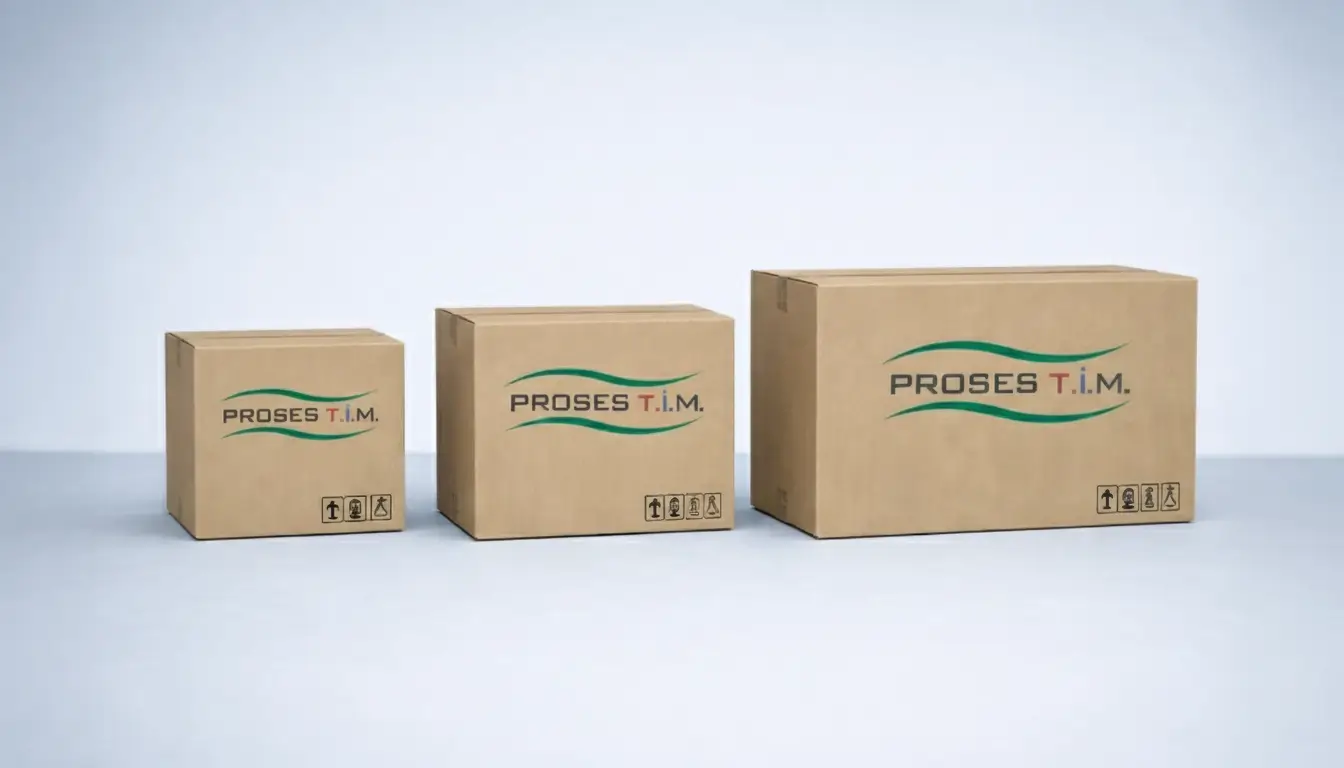
Cardboard cartridge filter shipping boxes in three sizes with the Prosestim logo

Box Dimensions

335 × 410 × 560 mm
Capacity: 30 pcs per carton for 20" / 60 pcs per carton for 10".
335 × 410 × 810 mm
Capacity: standard packing of 25 pcs per carton for 30" cartridges.
335 × 410 × 1055 mm
Capacity: standard packing of 25 pcs per carton for 40" cartridges.
Fast Quote & WhatsApp Consultation

Pleated Micro Cartridge Filter RFQ Configurator

Configure your variation dimensions and technical specifications to receive an instant quote directly on WhatsApp and via email.

1 Select Variation Type
2 Dimensional & Technical Specifications
5 Inch
5 Inch 60 Inch
0.11 Micron
0.11 Micron 50 Micron
Adapter 1:
215
222
226
3 Required Quantity
QUICK QUOTE FORM

Pleated Micro Cartridge Filter

Variation Type: Polypropylene Pleated Micro Cartridge Filter
End Connection Type: DOE
Filter Length: 5 Inch
Micron Rating: 0.11 Micron
Gasket Type: Silicone Gasket
Adapter 1: 215
Adapter 2: Flat
O-Ring Type: Silicone O-Ring
Request Quantity: 10 Units
ISO 9001:2015 Certified Production
Reply from Our Technical Team
Delivery Across Türkiye and Export

Accounting

Billing Details

Copy our registered company name, tax and e-invoice details with one click using the button on each row.

Invoice name (registered company name)

PROSES TİCARET, İMALAT, MÜHENDİSLİK ENDÜSTRİYEL MADDE VE MALZEME İMALATI İNŞAAT VE SANAYİ LİMİTED ŞİRKETİ

Billing address

Musa Gündüz Cad. No:14 Taşköprü – Çiftlikköy – YALOVA, TÜRKİYE

E-invoice / e-archive email address

Tax office

Yalova Tax Office (Yalova V.D.)

Tax ID number

7330379514

MERSIS number

0733037951400013

Please send BA/BS forms, current account reconciliations and any other emails for our Finance and Administrative Affairs Department to [email protected].

Invoice name (registered company name): PROSES TİCARET, İMALAT, MÜHENDİSLİK ENDÜSTRİYEL MADDE VE MALZEME İMALATI İNŞAAT VE SANAYİ LİMİTED ŞİRKETİ Billing address: Musa Gündüz Cad. No:14 Taşköprü – Çiftlikköy – YALOVA, TÜRKİYE E-invoice / e-archive email address: [email protected] Tax office: Yalova Tax Office (Yalova V.D.) Tax ID number: 7330379514 MERSIS number: 0733037951400013